
10 Daily Habits for an Organized Home Simple Routines for a Clutter-Free Life
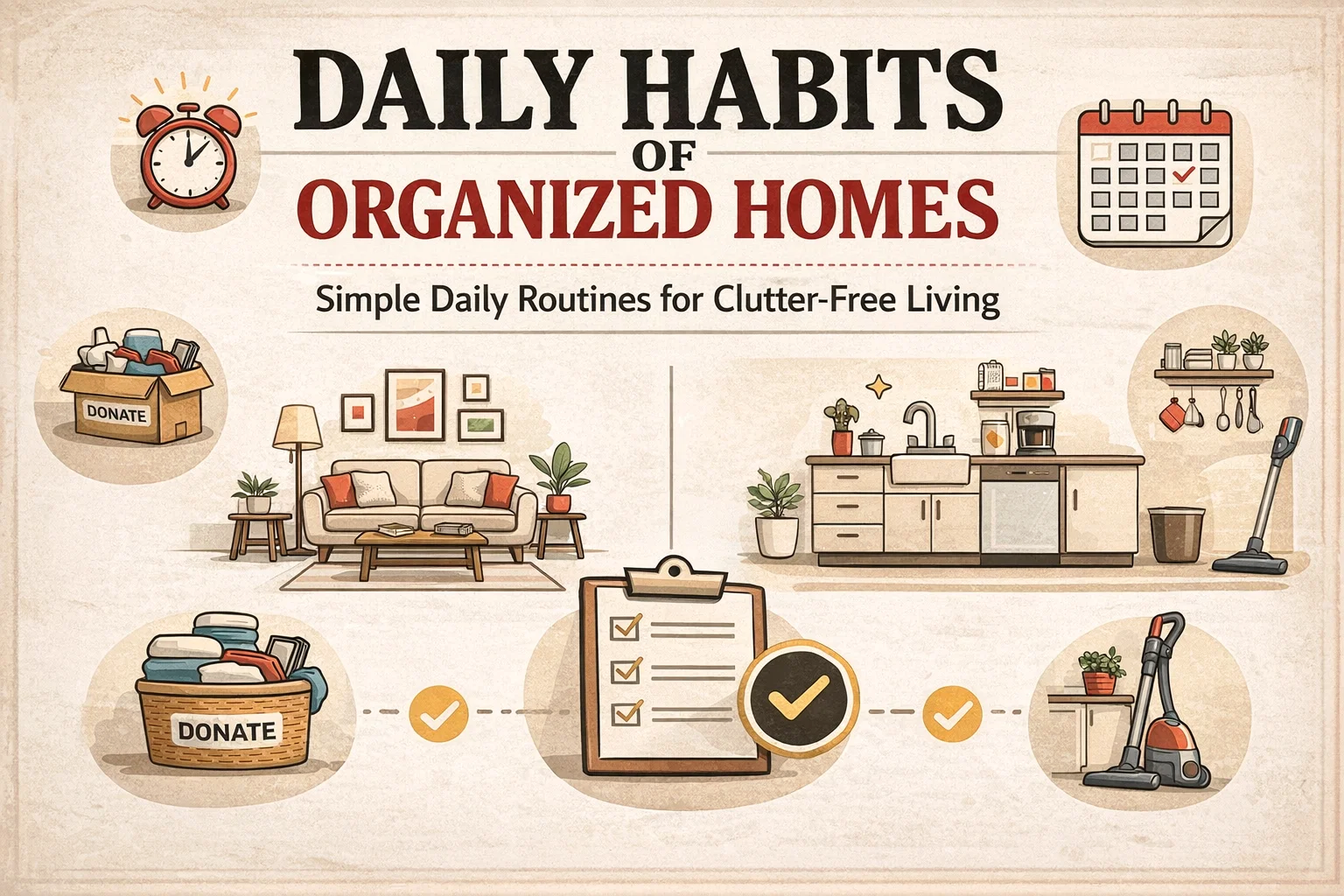
The quest for a perfectly organized home often feels like an uphill battle against an ever-advancing tide of mail, laundry, and miscellaneous clutter. Many of us wait for the weekend to tackle the mess, spending hours scrubbing and sorting only to find the chaos returning by Tuesday afternoon. The image reveals the true secret to a Pinterest-worthy living space: it is not about the grand gestures of deep cleaning, but rather the small, quiet victories of daily systems. By implementing a series of simple routines, you can shift your focus from constant damage control to effortless maintenance, turning your home into a genuine sanctuary of calm.
Creating an organized environment is as much about mindset as it is about physical objects. When your surroundings are tidy, your mental load lightens. You no longer wake up to a sink full of dishes or trip over shoes in the entryway. Instead, you move through your day with a sense of order and purpose. Let us explore the ten foundational habits that will help you reclaim your space and your time, ensuring that your home remains a place of rest rather than a source of stress.
The Power of the Five Minute Morning Reset
How you start your morning sets the tone for your entire day. A house that feels chaotic at 8:00 AM will likely feel overwhelming by 5:00 PM. The morning reset is not about scrubbing floors; it is about visual alignment. By spending just five minutes addressing key areas, you signal to your brain that the day is under control. This habit creates an immediate sense of accomplishment before you even have your first cup of coffee.
The Centerpiece of the Room: Making the Bed
It is a cliché for a reason. The bed is the largest surface in the bedroom. When it is unmade, the entire room looks disheveled, regardless of how clean the floors are. Making your bed takes less than sixty seconds but provides an instant visual reward. It creates a “clean anchor” in your private space, making you less likely to toss clothes on the floor or leave clutter on the nightstand.
Clearing the Visual Noise
Take a quick lap through the main living areas and your bedroom. Remove the water glasses from the night before, put the TV remote back in its designated spot, and open the curtains. Allowing natural light to flood the room instantly makes the space feel larger and more inviting. This quick sweep prevents small items from accumulating into large piles that become much harder to manage later in the week.
The Golden Rule: Don’t Put It Down, Put It Away
Clutter is often defined as a collection of delayed decisions. We tell ourselves we will deal with the mail later, or we leave our coat on the back of a chair because we are in a hurry. These micro-procrastinations are the primary cause of household disorganization. The “Don’t Put It Down, Put It Away” rule is a simple mental shift that requires you to complete the cycle of an action immediately.
Establishing Permanent Homes for High Traffic Items
To follow this rule successfully, every item in your home must have a specific “landing zone.” If you do not know where your keys go, you will naturally drop them on the kitchen counter. If there is no designated hook for your bag, it will end up on the floor. Create systems that work with your natural habits. Place a tray for mail near the door, a rack for shoes in the entryway, and a specific bowl for your daily essentials. When everything has a home, putting things away becomes an automatic reflex rather than a chore.
Dealing with Junk Mail at the Source
Mail is one of the fastest-growing forms of clutter. The moment you bring the mail inside, stand over the recycling bin. Toss the flyers, catalogs, and envelopes you do not need immediately. Only the items that require action should ever make it onto your desk or counter. By filtering the noise at the door, you prevent the dreaded “paper mountain” from taking over your workspace.
Conquering the Laundry Mountain with the One Load System
For many families, laundry is the ultimate source of domestic dread. We wait until the hampers are overflowing, then spend an entire Saturday tethered to the washing machine. This “batch processing” method is exhausting and often leads to clean clothes sitting in baskets for days, becoming wrinkled and forgotten. The solution is the “One Load a Day” system.
The Full Cycle: Wash, Dry, Fold, and Put Away
The key to this habit is completing the entire cycle within a twenty-four hour period. Start a load in the morning or set a delay timer so it is ready for the dryer when you get home. Commit to folding and putting those clothes away before you go to sleep. Because it is only one load, the task takes ten to fifteen minutes rather than hours. This consistency ensures that everyone always has clean clothes and that the sofa is never buried under a pile of “to-be-folded” garments.
Achieving Kitchen Zero Every Evening
The kitchen is the heart of the home, but it is also the room that gets messy the fastest. Waking up to a kitchen filled with the remnants of last night’s dinner is a recipe for morning anxiety. “Kitchen Zero” is the practice of resetting the kitchen to a neutral state every single night. It is perhaps the most impactful habit for maintaining a sense of household peace.
Clearing the Decks for the Morning
Before you head to bed, ensure the dishwasher is loaded and running. Clear the sink of any soaking pots and wipe down the countertops. This does not have to be a deep scrub; it is simply about removing the visual and physical debris of the day. When you walk into the kitchen the next morning to make your coffee, you are greeted by a clean, functional space. This reduces decision fatigue and allows you to start your day with a clear mind.
The Family 10-Minute Night Tidy
Maintaining an organized home should not fall on the shoulders of one person. The 10-minute night tidy is a collaborative effort that prevents small messes from snowballing into permanent fixtures. Set a timer, put on some upbeat music, and have everyone in the household spend ten minutes returning items to their proper places.
Small Resets Prevent Big Messes
During this time, fluff the sofa cushions, fold the throw blankets, and gather any toys or magazines that have migrated to the living room floor. This habit teaches children responsibility and ensures that the “reset” happens daily. It is much easier to spend ten minutes tidying up tonight than it is to spend four hours cleaning the entire house on Saturday morning because the mess became unmanageable.
Implementing the One In, One Out Rule
Organization is not just about where you put things; it is about how much you own. Physical space is a finite resource. To prevent your home from becoming overstuffed, adopt the “One In, One Out” rule. For every new item that enters your home—whether it is a new pair of shoes, a kitchen gadget, or a piece of decor—one equivalent item must leave.
Curating Your Belongings
This habit forces you to be more intentional with your purchases. When you see a beautiful new vase, you have to ask yourself: “Which of my current vases am I willing to give up to make room for this?” This constant curation prevents gradual clutter accumulation and ensures that you are only surrounded by items that you truly use and love. It keeps your storage spaces breathable and prevents drawers from becoming jammed with “just in case” items.
The Permanent Donation Station
Decluttering should be a continuous process, not a seasonal event. We often come across things we no longer need—a shirt that no longer fits or a book we have finished—but we put them back in the closet because we do not have a plan for them. By keeping a designated “Donation Basket” in a closet or the laundry room, you create an immediate destination for these items.
Streamlining the Decluttering Process
The moment you realize an item no longer serves you, drop it in the basket. Once the basket is full, put it in your car and drop it off at a local charity or donation center. This prevents clutter from moving from one room to another. It turns the act of letting go into a simple, frictionless part of your daily routine, keeping your inventory low and your home feeling light.
The Magic of Zone Rotation
Even with daily habits, certain areas of the home need more focused attention. However, you do not need to clean the entire house at once. Zone rotation involves spending fifteen minutes a day on one specific area. For example, Monday could be for bathrooms, Tuesday for the entryway, and Wednesday for the pantry.
- Monday: Quick bathroom refresh (wiping mirrors and faucets).
- Tuesday: Entryway and mudroom organization.
- Wednesday: Pantry audit and fridge wipe-down.
- Thursday: Dusting main living area surfaces.
- Friday: Floors (vacuuming or mopping high-traffic zones).
By rotating your focus, no single part of your home ever gets truly “dirty.” This proactive approach eliminates the need for grueling cleaning days and ensures that the deeper maintenance of your home is handled in small, manageable chunks.
Visual Calm through Containment
The image highlights a crucial principle of organization: containment. When items are left loose on shelves or in drawers, they tend to “bleed” into one another, creating a sense of visual chaos. Using bins, trays, and dividers creates boundaries that keep like-items together and make them easier to find.
Using Trays and Bins as Boundaries
Trays are excellent for grouping items on flat surfaces like coffee tables or consoles. A tray turns a collection of loose items into a intentional “vignette.” In the pantry or bathroom, clear bins allow you to see exactly what you have while keeping categories separate. When everything has a boundary, it is much harder for a mess to spread. Containment provides the structure necessary to maintain the systems you have put in place.
Embracing the Sanctuary of Calm
Transforming your home from a place of chaos to a sanctuary of calm does not happen overnight, but it does happen through the power of consistency. These ten habits are not about perfection; they are about progress. There will be days when the dishwasher does not get emptied or the laundry stays in the dryer, and that is okay. The goal is to return to the routines as quickly as possible.
By shifting your perspective and viewing these daily resets as acts of self-care rather than chores, you will find that maintaining an organized home becomes second nature. You will enjoy more free time, less stress, and a living environment that truly supports your well-being. Start with just one or two of these habits this week, and watch as the atmosphere of your home begins to change. An organized life is built one simple routine at a time. Save these tips and begin your journey toward a clutter-free, peaceful home today.