13 Monk Lessons for Mental Clarity and Inner Peace Life Changing Wisdom
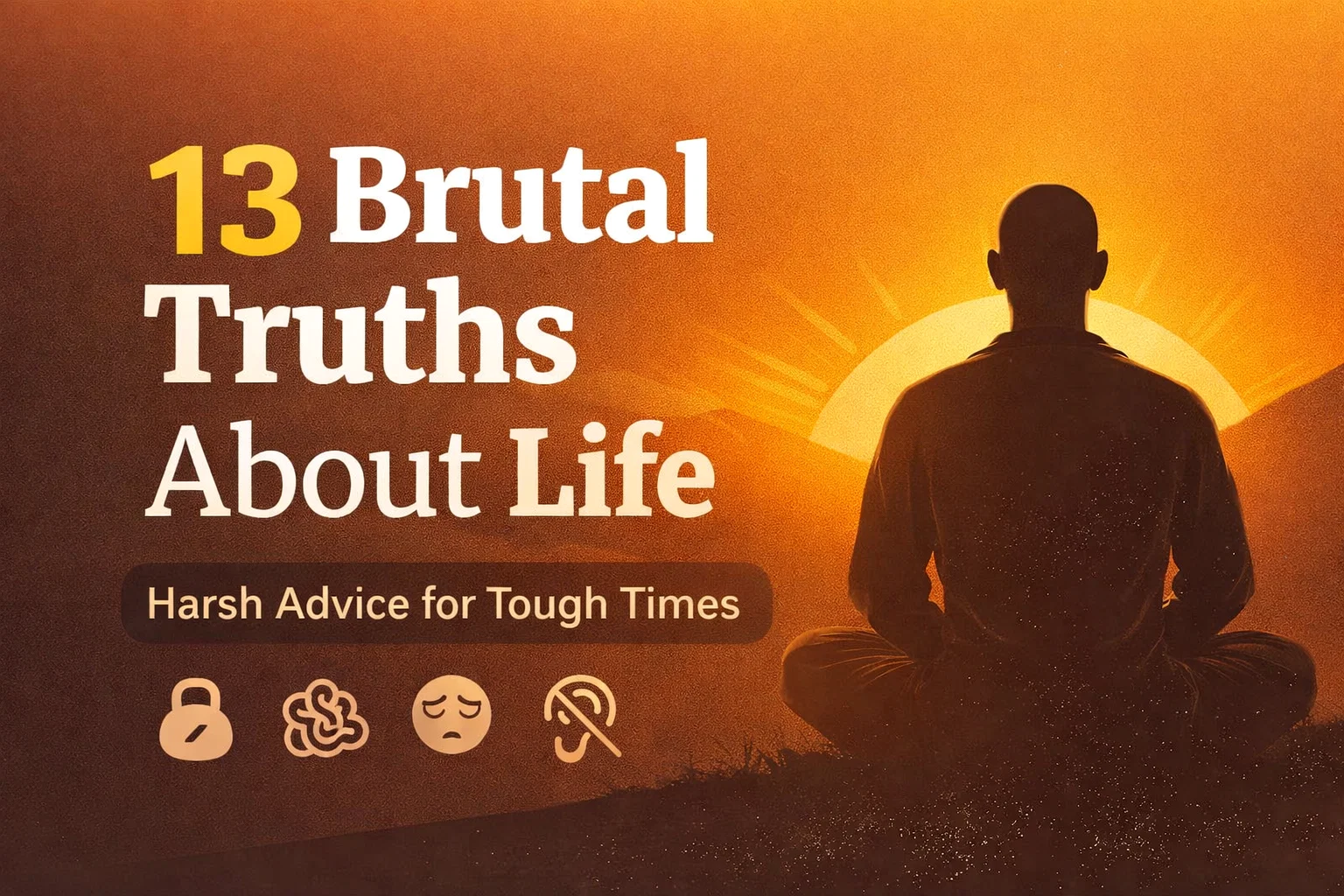
Have you ever felt like your life was a backpack being filled with stones one by one until you could no longer stand up straight? We often move through our days wondering why we feel so exhausted, assuming it is just the pace of modern life. However, there is a profound difference between being busy and being burdened. The wisdom shared by those who have mastered the art of simplicity, like the monks who dedicate their lives to mental clarity, offers a brutal but necessary mirror to our current habits. When we look at these thirteen pieces of advice, we are not just looking at quotes; we are looking at a roadmap for reclaiming our peace in a world that thrives on our distraction.
The Weight of the Unseen Burden
The first and perhaps most striking lesson is that if your life feels heavy, you are likely carrying things you should have let go of long ago. This is not just about physical clutter in your home, though that plays a part. It is about the emotional residue of past arguments, the expectations of people who do not truly know you, and the version of yourself you are still trying to protect even though you have outgrown it. Letting go is often framed as a weakness or a loss, but in reality, it is a strategic removal of weight so that you can move faster and with more grace.
When we refuse to let go, we use up our daily energy reserves just to keep those old burdens afloat. Imagine trying to run a marathon while holding two heavy suitcases. You might be the most talented runner in the world, but the suitcases will eventually dictate your speed and your spirit. By identifying what is heavy and choosing to set it down, you create immediate space for new, lighter experiences to enter your life.
The Power of Non Reaction
In our digital age, we are conditioned to react instantly. A notification pops up, and we check it. Someone sends a sharp email, and we type a defensive reply. A minor inconvenience happens, and we let it ruin our entire afternoon. The monk’s advice tells us that most problems shrink when you stop reacting immediately. This is the art of the pause. By creating a gap between a stimulus and your response, you take the power away from the problem and keep it for yourself.
When you react immediately, you are usually operating from a place of ego or fear. These emotions tend to magnify issues. However, when you wait, the initial surge of chemicals in your brain subsides. You begin to see the situation for what it really is, which is usually much smaller and less threatening than it first appeared. Patience is not just about waiting; it is about how you behave while you are waiting.
Protecting the Tired Mind
A tired mind is a dangerous storyteller. It turns small issues into disasters because it lacks the cognitive resources to process information rationally. Think back to a time when you stayed up too late and suddenly felt like your entire life was falling apart. Then, after a good night of sleep, those same problems felt manageable and even insignificant. This is why protecting your rest is a fundamental pillar of mental health.
If you find yourself spiraling into “what if” scenarios or feeling overwhelmed by a simple to do list, check your energy levels before you trust your thoughts. Often, the solution is not more thinking, but more sleeping. Recognizing that your mind is tired allows you to disregard the dramatic narratives it creates until you are sufficiently recharged to handle the truth.
Environment Versus Intentions
We like to believe that our willpower is our strongest asset, but the truth is that your environment shapes you faster than your intentions do. You can have the best intentions to eat healthy, but if your kitchen is filled with processed snacks, your environment will eventually win. You can intend to be more focused, but if your phone is constantly buzzing next to you, the environment will dictate your attention span.
To succeed in any area of life, you must curate your surroundings to support your goals. This means surrounding yourself with people who inspire you, creating a workspace that minimizes distractions, and ensuring your home is a sanctuary of peace rather than a hub of chaos. When your environment is aligned with your intentions, growth becomes the path of least resistance rather than a constant uphill battle.
The Sanctity of Silence
Noise steals clarity. We live in a world that is louder than ever, not just in terms of decibels, but in terms of information. From podcasts and news cycles to social media feeds and constant chatter, our brains are being bombarded with external input. Protecting your silence is a radical act of self care. Silence is where your own voice lives. It is where you can hear your intuition and process your experiences without the influence of others.
Establishing moments of silence throughout your day, even if it is just five minutes in the morning or a quiet walk in the evening, allows the dust of the day to settle. Without silence, you are simply a collection of other people’s opinions and noises. With it, you become the architect of your own thoughts.
Recognizing the Lessons in Exhaustion
If something drains you repeatedly, it has already taught you enough. We often stay in toxic jobs, draining friendships, or stagnant habits because we feel we haven’t given it enough of a chance. We keep waiting for a different result, hoping that more effort will fix the situation. But repeated drainage is a clear signal from your soul that the lesson is over.
There is no nobility in suffering through something that offers no growth. Once you have realized that a situation is consistently taking more than it gives, you have learned the value of your own energy. Walking away is not giving up; it is an acknowledgment that your time and spirit are too valuable to be wasted on things that are not meant for your journey.
Actions Over Words
People’s patterns matter more than their words. We want to believe what people say, especially when they tell us what we want to hear. However, words are easy and often used as a shield or a mask. Patterns, on the other hand, are the true reflection of a person’s character. If someone says they value you but consistently treats you as an afterthought, believe their behavior.
Paying attention to patterns saves you from a world of disappointment. It allows you to set healthy boundaries and manage your expectations. When you stop listening to the promises and start watching the actions, the truth of every relationship becomes crystal clear.
The Strategy of Early Rest
Rest before exhaustion because late rest turns into recovery. This is a vital distinction. When you rest because you are tired, you are maintaining your health. When you rest because you are burnt out, you are recovering from an illness. Most people wait until they are at a breaking point to take a break, but by then, the damage to the nervous system is already done.
- Maintenance rest: Short breaks, consistent sleep, and weekly downtime.
- Recovery: Weeks or months of trying to repair the physical and mental toll of overextension.
By scheduling rest into your life as a non negotiable appointment, you stay in the maintenance phase. This allows you to stay consistent and productive over the long term, rather than swinging between bursts of intensity and periods of total collapse.
Simplifying Your Way to Success
We often think that to improve our lives, we need to add more. We add new habits, new supplements, new apps, and new routines. But the monk’s wisdom suggests that you should remove one bad habit instead of adding a new good one. The subtraction of a negative influence often has a much larger impact than the addition of a positive one. If you stop drinking soda, that one change will likely do more for your health than adding a multivitamin while still consuming the sugar.
Focusing on removal clarifies your life. It clears the path so that your natural good qualities can shine through. Simplicity is not about having less for the sake of it; it is about making room for what truly matters. As the advice says, simplicity is strength, not sacrifice. When you simplify, you are choosing to focus your power on a few meaningful things rather than spreading it thin over a hundred distractions.
Walking Through the Tangled Thoughts
When your thoughts feel tangled, walk. The physical act of moving your body helps to move your mind. There is a physiological connection between the rhythm of walking and the processing of thoughts. As you step, your brain enters a different state of flow, allowing you to look at problems from a fresh perspective. If you are stuck at a desk trying to think your way out of a mental knot, you are likely just tightening the string. Get up, change your scenery, and let the movement do the work for you.
The Golden Hour: Clean Mornings
Keep your mornings clean because they decide your day. How you spend the first hour of your morning sets the tone for your entire nervous system. If you wake up and immediately check your phone, you are starting your day in a reactive state, letting the world’s demands dictate your mood. A clean morning involves silence, intentionality, and a lack of digital interference. By protecting this time, you build a reservoir of peace that can carry you through even the most chaotic afternoons.
Acceptance Versus Resistance
Acceptance saves more energy than resistance. Much of our daily stress comes from fighting things we cannot change. We resist the weather, the traffic, the choices of others, and the inevitable passage of time. This resistance is like trying to swim upstream; it is exhausting and ultimately futile. Acceptance does not mean you agree with a situation or that you have given up. It simply means you acknowledge reality as it is.
Once you accept reality, you can finally use your energy to make an informed decision about what to do next. You stop wasting power on “it shouldn’t be this way” and start using power on “this is the way it is, so how will I respond?” This shift in perspective is the ultimate energy saver.
Cultivating a Stronger, Simpler Life
Integrating these thirteen lessons into your daily existence is not about reaching perfection; it is about shifting your trajectory. It is about choosing clarity over noise, patterns over words, and rest over recovery. By embracing the monk’s brutal advice, you stop being a victim of your circumstances and start being the guardian of your own peace. Remember that your life is a reflection of what you allow, what you tolerate, and what you carry. Today is the perfect day to look at your backpack, find the stones that no longer belong there, and leave them on the side of the road as you walk toward a simpler, stronger future.