23 Common English Idioms and Their Meanings Every Learner Should Know
Mastering a new language is about more than just memorizing grammar rules and expanding your vocabulary. To truly sound like a native speaker, you have to dive into the colorful world of idioms. These unique phrases often make little sense if you translate them literally, but they carry deep cultural meanings and add a layer of personality to your conversations. Whether you are aiming for fluency or just want to understand what your favorite movie characters are saying, understanding idioms is your secret weapon.
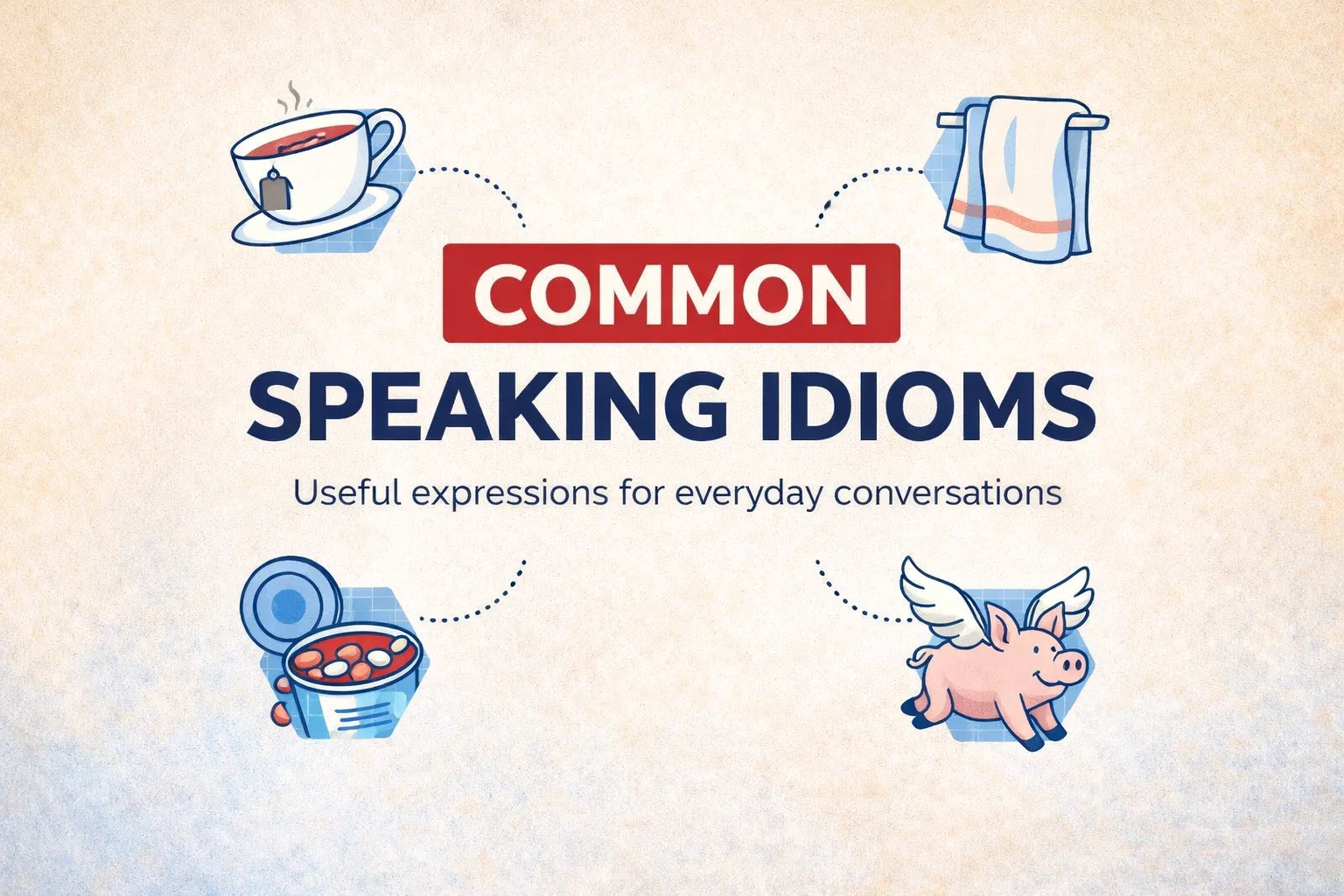
The image provided offers a fantastic roadmap through some of the most common expressions used in the English language today. From describing your health to expressing your frustration, these 23 “Speaking Idioms” are essential tools for any modern communicator. Let’s break them down and explore how you can start using them in your daily life to sound more natural and engaging.
The Power of Figurative Language in Everyday English
Why do we use idioms? Why not just say exactly what we mean? Idioms allow us to express complex feelings or situations with just a few words. They create a shared cultural shorthand that makes communication faster and more evocative. Instead of saying you are feeling a bit sick, saying you are under the weather immediately paints a picture of being weighed down by a gloomy day. It adds texture to the language.
For English learners, idioms can be a bit of a hurdle. If someone tells you to “zip your lip,” and you start looking for a literal zipper on your face, you might be a bit confused. However, once you grasp the imagery behind these phrases, they become much easier to remember. Let us look at the idioms from our list and see how they function in real-world scenarios.
Health and Well-being: Fiddles and Weather
Two of the most common idioms on our list relate to how we feel physically. These are great icebreakers and common responses to the question, “How are you?”
- As fit as a fiddle: This means you are in excellent health and feeling very strong. It is a positive, upbeat way to describe your physical state.
- Under the weather: On the opposite end of the spectrum, if you have a cold or just feel a bit sluggish, you are under the weather. It is a polite way to say you are not at 100 percent without going into too much detail about your symptoms.
Expressing Personal Preferences and Social Situations
Communication is not just about facts; it is about sharing our likes, dislikes, and how we interact with others. Idioms help us navigate these social waters with ease.
Finding Your Interest with “Cup of Tea”
When someone says something is “not my cup of tea,” they are saying they are not interested in it or they do not particularly enjoy it. It is a very British, polite way to decline an invitation or express a lack of interest in a hobby. For example, you might say, “I know everyone loves horror movies, but they just aren’t my cup of tea.” This sounds much softer than saying, “I hate horror movies.”
The Social Cold Shoulder and Being a Fish Out of Water
Social dynamics can be tricky, and idioms often capture the discomfort or intentional distance we sometimes feel. “Giving someone the cold shoulder” is a vivid way to describe ignoring someone on purpose, perhaps because you are upset with them. On the other hand, if you find yourself in a situation where you feel awkward or out of place, you are a “fish out of water.” Imagine a fish gasping for air on land; that is exactly how it feels to be in a social situation where you don’t belong.
Navigating Conflict and Setting Boundaries
Language is a tool for negotiation. Sometimes we need to set limits, express anger, or admit defeat. The idioms in this category are incredibly useful for professional and personal life alike.
Drawing the Line and Hitting the Roof
Setting boundaries is essential for healthy relationships. When you “draw the line,” you are establishing a limit that you will not cross or allow others to cross. It is a firm way to say “enough is enough.” Conversely, if someone crosses that line and you become extremely angry, you might “hit the roof.” This phrase perfectly captures the explosive nature of sudden, intense frustration.
Throwing in the Towel and Hands Being Tied
Sometimes, we have to admit that a situation is beyond our control. “Throwing in the towel” comes from the world of boxing, where a coach would literal throw a towel into the ring to stop a fight. It means to give up or quit. However, if you want to help but simply cannot because of rules or circumstances, you can say “my hands are tied.” This is a common phrase in the workplace when a manager wants to grant a request but is restricted by company policy.
Clarity and Communication in the Workplace
In a professional setting, being concise and clear is vital. Several idioms from our list are staples of office culture and project management.
Cutting to the Chase and Being on the Same Page
Time is money, as they say. If a meeting is dragging on, someone might suggest you “cut to the chase,” which means to get to the most important point without wasting time on fluff. Once you reach that point, it is crucial that everyone is “on the same page.” This means everyone agrees on the goals and understands the plan. Without being on the same page, a team can quickly fall into chaos.
Falling on Deaf Ears
One of the most frustrating things in a professional environment is when your ideas or warnings are ignored. In this case, your suggestions have “fallen on deaf ears.” It implies that the listener heard the words but chose not to act on them or value them. It is a powerful way to describe a lack of communication or respect in a hierarchy.
Timing and Spontaneity: From Blue Moons to Dropping Hats
English has many ways to describe the frequency and timing of events. These idioms add flair to your storytelling and help you set the scene for your listeners.
Once in a Blue Moon and When Pigs Fly
If something happens very rarely, it happens “once in a blue moon.” It is a poetic way to describe an infrequent occurrence. But what if something is never going to happen? That is “when pigs fly.” It is a humorous way to express total disbelief in a possibility. If someone asks if you think a certain lazy coworker will get a promotion, you might reply, “Sure, when pigs fly!”
At the Drop of a Hat and Out of the Blue
Spontaneity is a big part of life. If you are willing to do something immediately without any hesitation, you do it “at the drop of a hat.” It shows enthusiasm and readiness. However, if something happens to you that you didn’t expect at all, it came “out of the blue.” This phrase refers to a clear blue sky where a sudden bolt of lightning might appear, representing total surprise.
Secrets, Silence, and Missing Opportunities
Information is power, and how we handle that information is often described through idiomatic expressions. Whether we are keeping a secret or failing to act, these phrases are incredibly common.
- Spill the beans: This means to reveal a secret. It is often used in a playful way among friends. “Come on, spill the beans! Who is she dating?”
- Zip your lip: This is a more forceful (and sometimes rude) way to tell someone to be quiet or keep a secret. It is a favorite of teachers and parents alike.
- Miss the boat: If you wait too long to make a decision and the opportunity passes you by, you have missed the boat. It is a reminder that timing is everything in life and business.
How to Effectively Learn and Use Idioms
Now that we have explored the meanings of these 23 idioms, the question is: how do you make them a part of your own vocabulary? It is one thing to know what they mean, but it is another to use them naturally in conversation.
Context is Everything
The best way to learn idioms is to see them in context. Watch movies, listen to podcasts, and read contemporary books. Notice how native speakers use these phrases. Pay attention to the tone of voice and the situation. Is the speaker being funny? Serious? Professional? Understanding the “vibe” of an idiom is just as important as knowing its definition.
Start Small and Be Patient
Do not try to use all 23 of these idioms in one day. You will likely sound a bit forced. Instead, pick one or two that resonate with you and try to find a natural opening to use them. Maybe tomorrow you can tell a friend you are feeling a bit under the weather, or tell a colleague that you are glad you are both on the same page about a project. As you get more comfortable, your use of figurative language will become more fluid.
Don’t Be Afraid to Ask
If you hear an idiom you don’t recognize, ask! Most native speakers are happy to explain these phrases, as they are often proud of the quirky nature of their language. Learning idioms is a journey, and every new phrase you master brings you one step closer to true linguistic fluency.
Conclusion: Your Journey to Fluent English
Idioms are the seasoning of the English language. They add flavor, depth, and personality to our speech. By mastering the 23 idioms we have discussed today, you are not just learning new words; you are gaining insight into the way English speakers think and interact. From being as fit as a fiddle to zipping your lip, these expressions give you a more nuanced and “human” way to communicate your thoughts and feelings.
Remember that language is a living, breathing thing. Idioms evolve, and new ones are created all the time. Keep your ears open, stay curious, and don’t be afraid to experiment with these phrases in your own conversations. Before you know it, you will be using them as naturally as a native speaker, and you won’t feel like a fish out of water anymore. Keep practicing, stay enthusiastic, and enjoy the process of making English truly your own.