6 Powerful Herbal Immune Support Allies for Cold and Flu Season Natural Wellness Guide
As the air turns crisp and the days grow shorter, our bodies naturally begin to shift their focus toward internal protection. Cold and flu season is more than just a time of year; it is a physiological challenge that requires us to be proactive about our health. While modern medicine has its place, there is a profound and ancient wisdom found in the world of botanical medicine. Turning to the earth for support is not just a trend, it is a return to a lifestyle that honors the synergy between humans and plants. By incorporating specific herbal allies into your daily routine, you can build a robust foundation of wellness that helps you navigate the changing seasons with grace and vitality.
The Foundations of Herbal Immune Support
Understanding how to support the immune system requires a look at the different ways plants interact with our biology. Some herbs act as immediate stimulants, waking up our white blood cells to fight off an invading pathogen. Others are adaptogens or immunomodulators, which work more slowly to balance our systems and build long term resilience. The beauty of herbalism lies in its diversity. Whether you are looking for a warming circulatory stimulant to break up congestion or a deep acting mushroom to strengthen your vital energy, nature provides a specific tool for every stage of the wellness journey.
The key to successful herbal support is consistency and timing. Many of these plants work best when taken at the very first sign of a scratchy throat, while others should be part of your daily ritual for weeks before the peak of winter. By learning the unique personalities of these six powerful allies, you can create a customized home apothecary that keeps your family healthy and vibrant throughout the colder months.
Elderberry: The Seasonal Viral Defender
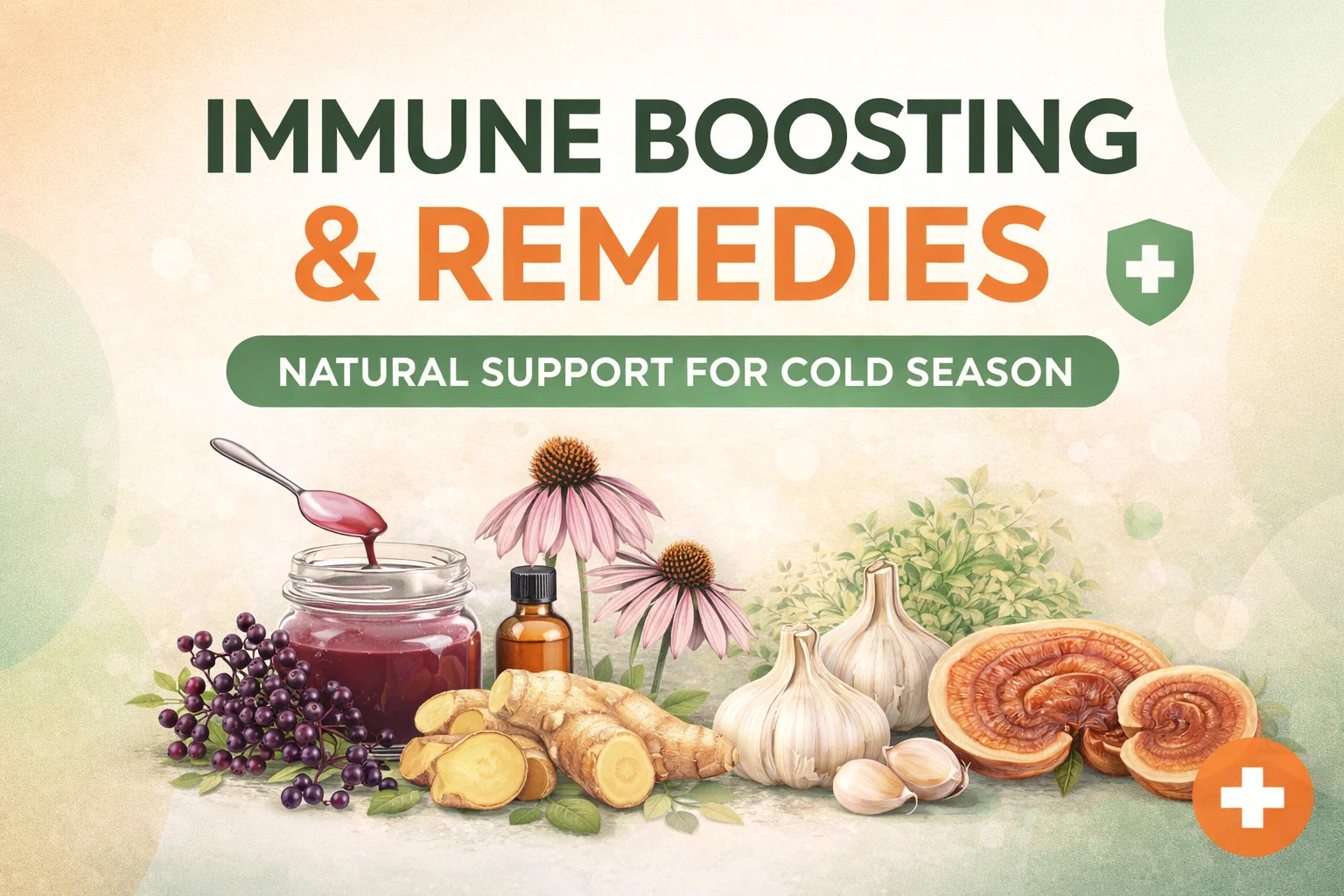
Elderberry, known scientifically as Sambucus nigra, is perhaps one of the most famous berries in the world of natural health. Historically referred to as the medicine chest of the common people, these dark, purple berries are packed with anthocyanins and antioxidants. Their primary role is to support the body during seasonal viral challenges. Research suggests that elderberry can help prevent viruses from entering our cells, effectively shortening the duration of discomfort if you do happen to catch a bug.
How to Use Elderberry
- Elderberry Syrup: This is a favorite for both adults and children. It is often simmered with honey, ginger, and cinnamon for a delicious daily tonic.
- Gummies: A convenient way to get your daily dose of antioxidants while on the go.
- Hot Teas: Dried elderberries can be steeped into a tart, nourishing tea that warms the body from the inside out.
Elderberry is best used as a preventative measure or at the very onset of symptoms. Its ability to bolster the respiratory system makes it an essential ally when everyone around you seems to be coming down with something. It is a gentle yet powerful fruit that reminds us that some of the best medicine grows right on the hedgerow.
Echinacea: The Quick Response Stimulant
When you feel that unmistakable tickle in your throat, Echinacea angustifolia is the herb you want by your side. Unlike herbs that you take every single day for months, Echinacea is often used as a focused immune stimulant. It encourages the body to respond quickly to illness by increasing the activity of various immune cells. This beautiful purple coneflower is more than just a garden ornament; it is a potent tool for acute support.
Echinacea works by signaling the immune system to stay alert. It is particularly effective for supporting the upper respiratory tract. Many herbalists recommend taking Echinacea in frequent, small doses during the first forty eight hours of a cold to maximize its effectiveness. It helps the body mount a defense before a minor sniffle turns into a week long ordeal.
Astragalus: Building Long Term Resilience
While Echinacea is for the “right now,” Astragalus mongholicus is for the “long term.” In Traditional Chinese Medicine, Astragalus is revered as a premier tonic for building Wei Qi, or the protective energy that surrounds the body. It is an immunomodulator, meaning it helps to balance and coach the immune system rather than just pushing it in one direction. This makes it an ideal herb for those who tend to catch every cold that goes around.
The Benefits of Astragalus
- Deep Immunity: It works on a fundamental level to strengthen the body’s baseline defenses.
- Energy Support: As a mild tonic, it helps maintain vitality during periods of stress.
- Stress Recovery: It helps the body adapt to physical and emotional stressors that might otherwise deplete the immune system.
Because Astragalus is a root, it is often added to soups, stews, and bone broths. It has a slightly sweet, earthy flavor that blends seamlessly into savory dishes, making it an easy addition to your winter cooking routine. Think of Astragalus as the shield that you build over time to stay protected throughout the year.
Ginger: The Warming Circulatory Ally
Zingiber officinale, or Ginger, is a household staple that doubles as a powerful medicinal root. In the winter, our circulation can become sluggish and we may feel “cold” in our bones. Ginger is a warming circulatory stimulant that helps mobilize the body’s defenses. By increasing blood flow, it helps deliver immune cells to where they are needed most. Furthermore, its antiviral properties and ability to ease congestion make it a powerhouse for respiratory health.
If you are struggling with a damp, productive cough or sinus pressure, ginger acts as a natural expectorant. It helps to thin mucus and soothe the lining of the throat. A simple cup of fresh ginger tea with a squeeze of lemon and a bit of raw honey can do wonders for opening up the airways and bringing a sense of comfort on a chilly afternoon.
Garlic: Nature’s Antimicrobial Ally
No list of immune allies is complete without Allium sativum. Garlic is one of the most potent antimicrobial plants available to us. It contains a compound called allicin, which is released when the clove is crushed or chopped. Garlic has been used for centuries as a traditional ally for colds and flu because it directly challenges pathogens while supporting the body’s natural flora.
To get the most out of garlic, it is best consumed raw or very lightly cooked. Many people create “Fire Cider,” a traditional herbal vinegar infusion, using garlic as a base. If raw garlic is too intense for your palate, you can mince it and spread it on toast with a bit of avocado or stir it into a warm soup just before serving. It is a humble kitchen ingredient that packs a massive punch when it comes to staying healthy.
Reishi: The Mushroom of Immortality
In the world of functional fungi, Ganoderma lucidum, or Reishi, reigns supreme. Known as the “Mushroom of Immortality,” Reishi is a legendary adaptogen. It is not just about fighting off a cold; it is about promoting total vitality and longevity. Reishi helps to strengthen immunity while simultaneously calming the nervous system, which is crucial because high stress levels are one of the quickest ways to suppress your immune function.
Reishi is quite woody and bitter, so it is rarely eaten as a culinary mushroom. Instead, it is typically taken as a powder, a tincture, or simmered for a long time into a dark, earthy tea. By incorporating Reishi into your routine, you are supporting your body’s ability to stay balanced in the face of environmental and internal challenges. It provides a grounded, stable energy that is perfect for the introspective nature of the winter season.
Creating Your Personal Wellness Ritual
Integrating these herbs into your life does not have to be complicated. You might start your morning with a Reishi infused coffee or tea, enjoy a bowl of soup enriched with Astragalus for lunch, and take a spoonful of Elderberry syrup before bed. The goal is to create a lifestyle where these plants become your partners in health. When we work with nature, we are not just treating symptoms; we are nourishing our entire being.
As you build your herbal toolkit, remember to listen to your body. Everyone is unique, and you may find that you resonate more with certain plants than others. Perhaps the warming heat of ginger is exactly what you need, or maybe the steadying influence of Reishi feels more aligned with your goals. By experimenting mindfully, you will discover the perfect combination of allies to keep you feeling your best.
Embracing a Holistic Approach to Winter
While herbs are incredible tools, they work best when paired with other healthy habits. During the cold season, prioritize deep sleep, stay hydrated with warm fluids, and eat seasonal, nutrient dense foods. The combination of botanical support and mindful living creates a synergistic effect that makes your immune system nearly unstoppable. Take this time to slow down, reflect, and care for yourself with the same gentleness that the earth shows as it goes into its winter rest.
In conclusion, the journey toward better health is often found in the simplest of places: the roots, berries, and fungi that have supported humanity for millennia. By welcoming Elderberry, Echinacea, Astragalus, Ginger, Garlic, and Reishi into your home, you are choosing a path of empowerment and natural vitality. Stay warm, stay nourished, and let these herbal allies guide you through a healthy and vibrant cold season.