
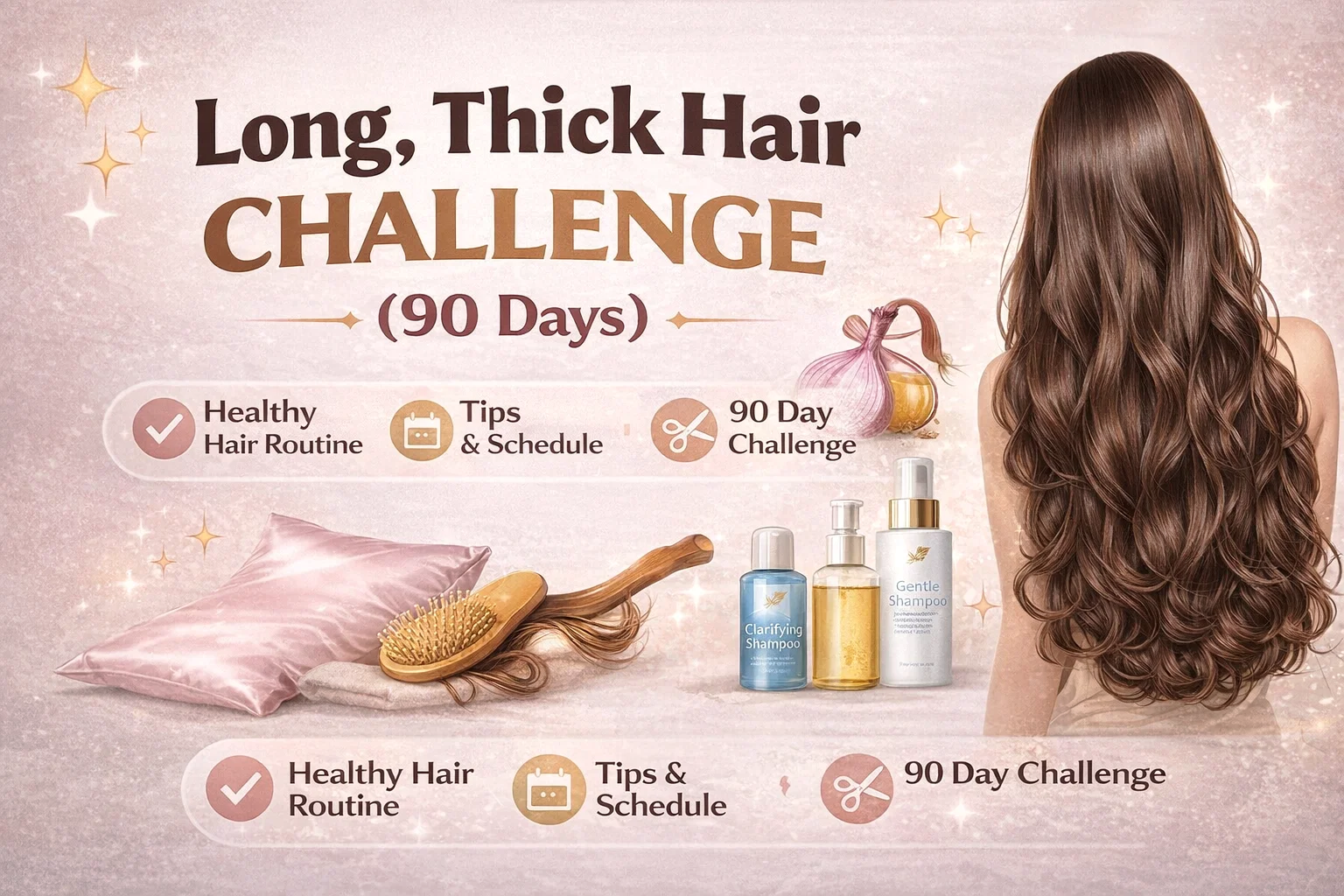
90 Day Long Thick Hair Growth Challenge Best Hair Care Routine for Healthy Hair
If you have ever looked at photos of women with flowing, waist-length tresses and wondered what their secret is, you are not alone. Achieving long, thick, and healthy hair often feels like a genetic lottery, but the truth is much more grounded in daily habits. Growing your hair is a marathon, not a sprint, and it requires a dedicated approach that nurtures the scalp while protecting the ends. This 90 day challenge is designed to overhaul your current routine and replace it with scientifically backed methods to maximize your hair growth potential.
Understanding the 90 Day Hair Growth Cycle
The reason we focus on a 90 day window is that hair growth happens in stages. Most people see about half an inch of growth per month. By committing to a three month cycle, you allow enough time for new growth to become visible and for the health of your existing strands to transform. During this time, the goal is twofold: stimulating the follicles to produce hair more efficiently and ensuring that the hair you already have does not break off before it reaches your desired length.
The Foundations of a Healthy Wash Routine
One of the most common mistakes people make is washing their hair too frequently. While a clean scalp is essential, over-washing strips away the natural oils that keep your hair elastic and hydrated. For this challenge, aim to wash your hair only twice to three times a week. This allows your natural sebum to travel down the hair shaft, providing a built-in protective barrier.
Mastering the Double Shampoo Technique
To keep your scalp healthy while only washing a few times a week, you should adopt the double shampoo method. The first wash should be with a clarifying shampoo. This acts as a deep cleanser to remove product buildup, hard water minerals, and excess oil. Once the canvas is clean, your second wash should be with a gentle, soothing shampoo that focuses on scalp health and hydration. This ensures your follicles are clear of debris without leaving your hair feeling like straw.
The Importance of Temperature Control
The temperature of the water you use can significantly impact your hair texture. Always start your shower with lukewarm water. This helps to open the cuticle slightly so the shampoo can do its job. However, the most important step happens at the very end. Always perform your final rinse with cold water. Cold water seals the hair cuticle, which locks in moisture and creates a natural, reflective shine that makes your hair look instantly healthier.
Natural Remedies and Targeted Scalp Care
Your scalp is essentially an extension of the skin on your face, and it requires targeted treatments to function at its best. If you want thicker hair, you have to go straight to the source: the follicle.
The Power of Onion Juice
It might sound unconventional, but applying onion juice to the scalp once a week is a powerhouse move for hair thickness. Onions are rich in sulfur, which is a key component of keratin. Sulfur also helps promote collagen production, which aids in the production of healthy skin cells and hair growth. Simply apply the juice to your scalp, leave it for two hours, and then wash it out thoroughly with your double shampoo routine.
Scalp Oiling for Circulation
In addition to onion juice, incorporating a scalp oiling session once a month can work wonders. Use a high-quality hair oil and massage it into your scalp for several minutes to boost blood circulation. Increased blood flow means more nutrients are reaching your hair follicles. Leave the oil in for two hours before washing. This deep conditioning treatment helps to soothe a dry scalp and provides the lubrication necessary to prevent thinning.
Protective Habits for Length Retention
You can grow your hair as fast as possible, but if the ends are breaking off at the same rate, you will never see a change in length. This is why length retention is just as important as growth stimulation.
Ditching Cotton for Silk
Standard cotton pillowcases are actually quite abrasive. As you toss and turn at night, the cotton fibers create friction against your hair, leading to tangles, frizz, and eventually breakage. Switching to a silk or satin pillowcase is a game changer. Silk allows your hair to glide effortlessly across the surface, significantly reducing the amount of mechanical damage your hair sustains while you sleep.
Handling Wet Hair with Care
Hair is at its weakest and most vulnerable state when it is wet. The water causes the hair shaft to swell and the cuticle to lift, making it much easier to snap. To protect your length, avoid brushing your hair while it is wet. Instead, use a wide-tooth comb or your fingers to gently detangle after applying a leave-in conditioner. Furthermore, never go to sleep with wet hair. The combination of moisture and friction against a pillow is a recipe for severe breakage and can even lead to scalp issues like fungal growth.
Advanced Maintenance and Styling Tips
Consistency is the secret ingredient to this 90 day challenge. Small adjustments to your styling habits will pay off in dividends by the time you reach the end of the third month.
The 30 Day Dusting Rule
While it seems counterintuitive to cut your hair when you are trying to grow it, regular trims are vital. You do not need a major chop, but you should “dust” your split ends every 30 days. Split ends act like a zipper; if you do not cut them off, the split will continue to travel up the hair shaft, damaging the healthy hair above it. By trimming just a few millimeters every month, you keep the ends crisp and prevent the need for a much larger haircut later on.
Avoid Tight Hairstyles
High, tight ponytails and buns might look sleek, but they put an immense amount of tension on the hair follicles around your hairline and the nape of your neck. Over time, this can lead to traction alopecia, where the hair begins to thin or stop growing entirely in those areas. Opt for loose braids, low ponytails with silk scrunchies, or use claw clips to keep your hair up without the damaging tension.
Deep Hydration and Masks
Twice a week, you should replace your standard conditioner with a deep hydrating hair mask. These products are formulated with smaller molecules that can penetrate deeper into the hair shaft. Look for ingredients like shea butter, argan oil, or hydrolyzed silk proteins. Applying a mask twice a week ensures that your hair remains elastic. Elasticity is what allows the hair to stretch rather than snap when it is pulled or styled.
What to Expect During the 90 Day Journey
During the first 30 days, you might not see a dramatic change in length, but you will notice a change in texture. Your hair will feel softer, and you will likely see less shedding in your hairbrush. This is a sign that your scalp is becoming healthier and your retention strategies are working.
By day 60, the cumulative effect of the scalp treatments and the silk pillowcase will start to show. You will notice more “baby hairs” around your temples, indicating new growth. Your hair will have more natural volume because it is no longer being weighed down by heavy product buildup or damaged by over-washing.
By day 90, the results should be undeniable. With a consistent trim schedule, your ends will look thick and blunt rather than wispy. The overall health of your hair will be at its peak, and you will have established a sustainable routine that you can carry forward indefinitely.
Conclusion: Your Path to Radiant Hair
Transforming your hair is not about finding a miracle product; it is about respecting the biological process of hair growth. By limiting washes, utilizing natural scalp stimulants like onion juice, and protecting your strands with silk and cold water rinses, you are giving your hair the best possible environment to thrive. This 90 day challenge is more than just a beauty routine; it is a commitment to self-care that results in the long, thick, and lustrous hair you have always wanted. Start today, stay consistent, and watch as your hair reaches new lengths of health and beauty.