
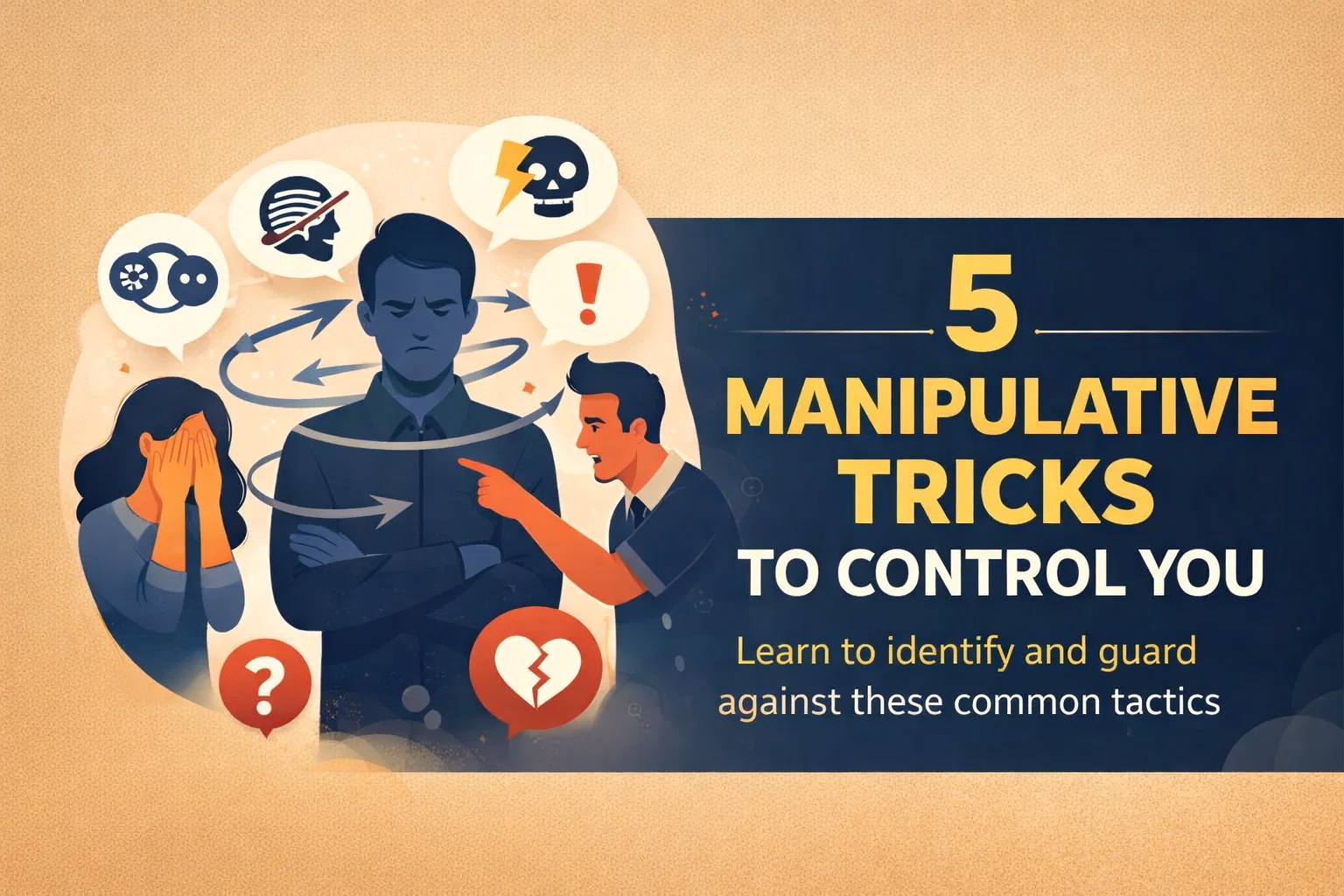
5 Dark Psychology Secrets How to Stop Manipulation and Emotional Control Tactics
Relationships, whether professional, romantic, or platonic, are built on the foundation of trust and mutual respect. However, there is a darker side to human interaction that often goes unnoticed until the damage is already done. Manipulation is a subtle art used by individuals to gain power, avoid accountability, or steer situations in their favor at your expense. Understanding these psychological tactics is not about becoming cynical; it is about developing the emotional intelligence necessary to protect your mental health and maintain your autonomy. When you can name the behavior, it loses its power over you. Let us dive deep into the five most common manipulative tricks used to control your narrative and how you can stand your ground.
1. The Silence Tactic: Using Quiet as a Weapon
Most of us view silence as a moment of reflection or a simple pause in conversation. In the hands of a manipulator, however, silence is a calculated tool designed to create intense psychological discomfort. This is often referred to as the silent treatment or stone-walling. The goal is simple: by refusing to respond after you have spoken, the manipulator forces you to sit in a growing cloud of anxiety. Because humans are naturally social creatures who seek validation and closure, an unanswered statement feels like a vacuum that we feel compelled to fill.
How the Silence Tactic Forces Over-Explanation
When you share a concern or ask a question and are met with a cold, blank stare or total silence, your brain begins to scramble for reasons why. You might start thinking that you were too harsh, that your point did not make sense, or that you have offended the other person. To fix the perceived tension, you begin to over-explain. You might say, I didn’t mean it that way, or let me rephrase that. By doing this, you are inadvertently giving the manipulator more information to use against you and, more importantly, you are apologizing for things you did not do wrong. They have successfully shifted the power dynamic without saying a single word.
2. The Guilt Trip: Flipping the Script on Your Concerns
Have you ever approached someone with a valid hurt, only to end the conversation feeling like the one who needs to apologize? This is the classic guilt trip. It is a diversionary tactic used to avoid taking responsibility for harmful actions. Instead of addressing the issue you raised, the manipulator focuses on your reaction to their behavior, labeling it as the real problem. They might bring up past favors they did for you or claim that your high standards are making them feel inadequate.
The Psychology of Deflection
The guilt trip works by exploiting your empathy. Manipulators know that if they can make you feel like a bad person for having feelings, you will stop expressing those feelings. For instance, if you tell a partner you feel neglected, they might respond with, I work sixty hours a week to provide for us and all you do is complain. Suddenly, your need for connection is framed as selfishness. By turning your valid concerns into reasons why you are the problem, they effectively shut down any hope of a healthy resolution and keep you in a state of perpetual debt.
3. The Interruption: Dominating the Frame
Communication is supposed to be a two-way street, but a manipulator views it as a battlefield for dominance. The act of cutting you off mid-sentence is rarely about excitement or having a quick thought; it is about establishing who holds the floor. By interrupting, the other person communicates that their thoughts are more valuable than yours and that your perspective does not require a full hearing. This is a method of dominating the frame of the conversation to ensure it only moves in a direction they control.
Reclaiming Your Voice
When someone constantly interrupts, it can make you feel small and unheard. Over time, you might stop trying to speak altogether because you know you will be shut down. To counter this, it is essential to stop talking the moment they cut you off. Wait for them to finish their interjection, and then calmly state, I was not finished with my point. Do not raise your voice or become aggressive, as this gives them more ammunition to use a guilt trip against you. Simply reclaiming the space they tried to steal is a powerful way to signal that you will not be dominated.
4. The False Apology: Shifting Blame to Your Emotions
A real apology requires an acknowledgment of an action and an expression of regret. A false apology, often characterized by the phrase I am sorry you feel that way, does neither. This is one of the most insidious manipulative tricks because it wears the mask of politeness while actually being a subtle insult. It does not apologize for the behavior that caused the pain; instead, it identifies your emotions as the problem. It implies that the issue is not what they did, but rather your sensitivity or your inability to handle the situation.
Why the False Apology is a Trap
By shifting the blame back to your emotions, the manipulator avoids changing their behavior. If the problem is just your feelings, then they have no reason to stop doing what they are doing. This tactic leaves you feeling frustrated and isolated because it denies you the validation you need to move forward. To handle this, you must recognize that an apology that begins with a condition is not an apology at all. You can respond by saying, I appreciate that you recognize my feelings, but I am looking for an acknowledgment of the specific action that caused them.
5. The Gaslight: Distorting Your Reality
Gaslighting is perhaps the most dangerous tactic on this list because it targets your very perception of reality. When a manipulator says, That never happened, or You are imagining things, they are attempting to make you doubt your own memory and sanity. If they can make you believe that you cannot trust your own mind, you will become entirely dependent on their version of the truth. This is the ultimate form of control because it strips away your internal compass.
Trusting Your Memory Over Their Narrative
Gaslighting usually starts small with minor details and escalates over time until you find yourself questioning major life events. The key to surviving gaslighting is to trust your intuition and, if possible, keep a record of events. Whether it is through journaling or speaking with a trusted third party, having an external reference point helps you stay grounded. Remember that you do not need their permission to believe your own eyes and ears. If someone consistently denies things that you know to be true, the problem is not your memory; it is their integrity.
Building Your Emotional Defense System
Recognizing these five tactics is the first step toward building a life free from manipulation. It is important to remember that manipulators often use these tricks because they lack the communication skills to handle conflict in a healthy way. While you cannot change their behavior, you can change how you react to it. Setting firm boundaries is your best defense. A boundary is not a way to control the other person; it is a clear statement of what you will and will not tolerate in your presence.
- Practice Pausing: Before reacting to a guilt trip or an interruption, take a breath. Giving yourself three seconds of space allows you to respond logically rather than emotionally.
- Stay Objective: Stick to the facts of the situation. Manipulators thrive on emotional chaos, so the more objective you remain, the harder it is for them to twist the narrative.
- Seek Support: Isolation is a manipulator’s best friend. Stay connected with friends, family, or professionals who can provide a reality check when things feel confusing.
Conclusion: Empowering Yourself Through Awareness
The journey toward emotional freedom begins with the realization that you are not responsible for someone else’s manipulative behavior. By understanding the silence tactic, the guilt trip, constant interruptions, false apologies, and gaslighting, you are equipping yourself with a psychological shield. These tricks only work when they remain hidden in the shadows of social interaction. Once you shine a light on them, their influence begins to fade. Stand firm in your truth, trust your instincts, and remember that you deserve to be in environments where your voice is heard and your reality is respected. Protecting your peace is not a selfish act; it is a necessary one for a healthy and fulfilling life.