
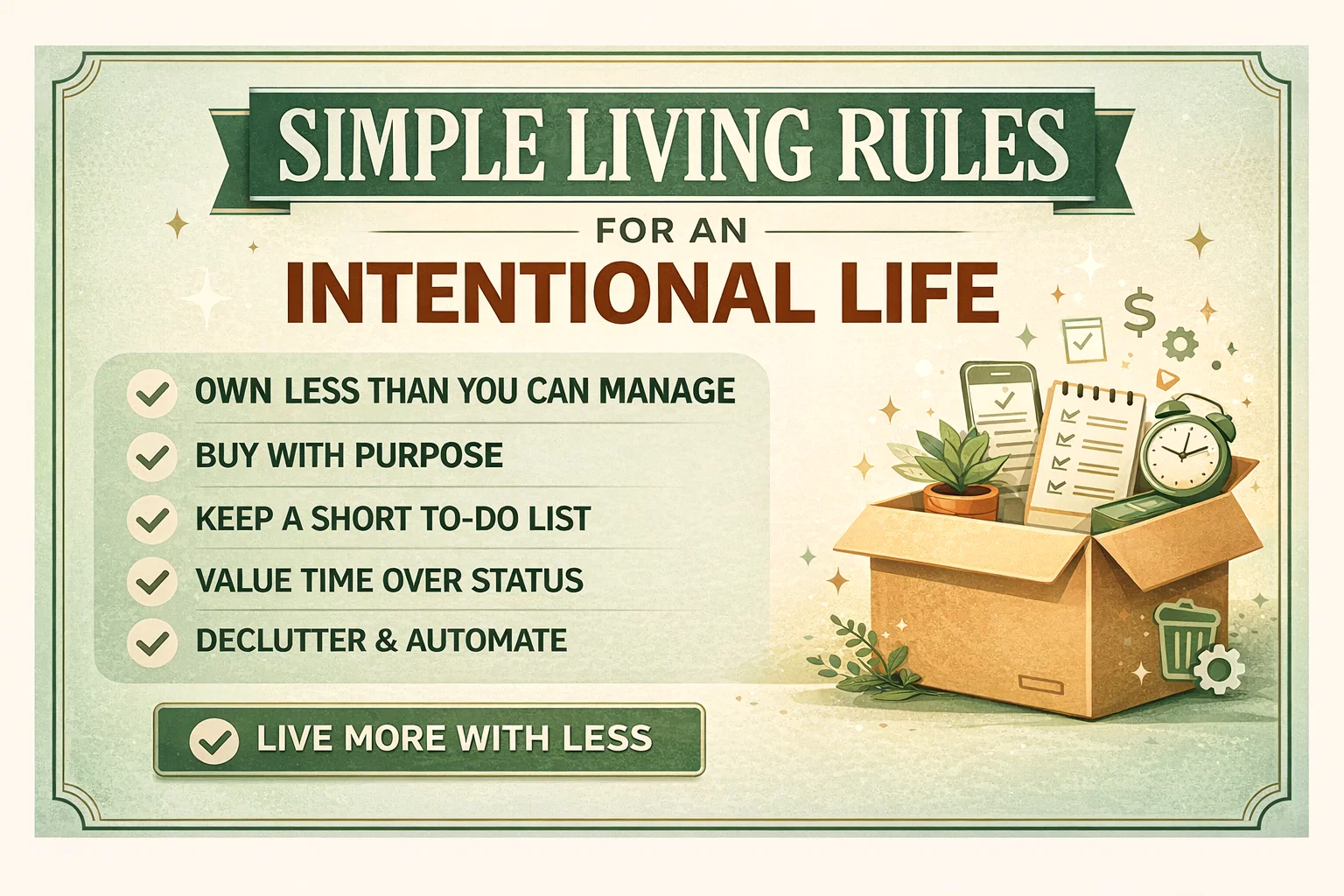
15 Minimalist Rules for a Simple Intentional Life Daily Habits for Less Stress and Focus
The modern world is a whirlwind of notifications, endless to-do lists, and a constant pressure to perform. We often find ourselves buried under physical clutter and digital noise, wondering where the time went and why we feel so drained. Reclaiming your peace does not require a massive life overhaul or moving to a remote cabin. Instead, it starts with a shift in perspective and the adoption of intentional habits that prioritize quality over quantity. By embracing a few core principles of simple living, you can create a life that feels lighter, more focused, and deeply fulfilling.
The Foundations of a Clutter-Free Environment
Our physical surroundings have a profound impact on our mental state. When your home is filled with items you do not use, need, or even like, it creates a constant background hum of visual stress. The first step toward an intentional life is learning to own only what you can truly manage. If you cannot clean it, maintain it, or find a regular use for it, it is likely taking up more space in your mind than it is worth in your home.
Mastering the One In, One Out Rule
One of the most effective ways to prevent clutter from rebounding is the one in, one out rule. This simple boundary ensures that your possessions stay at a manageable level. Every time a new item enters your home, whether it is a piece of clothing, a kitchen gadget, or a book, a corresponding item must leave. This practice forces you to evaluate the true value of every new purchase and prevents the slow creep of accumulation that leads to a cramped living space.
The Power of Clear Surfaces
There is a unique kind of psychological relief that comes from looking at a clean countertop or an empty desk. Surfaces are magnets for clutter, often becoming landing zones for mail, keys, and miscellaneous items. By making it a rule to keep your surfaces clear, you reduce visual noise and create a sense of order. This habit encourages you to put things away immediately rather than leaving them for later, which ultimately saves time and reduces the mental load of a messy environment.
Cultivating a Mindful Approach to Consumption
In a culture designed to encourage impulsive spending, buying with purpose is a radical act. Every purchase we make represents a trade-off of our time and energy. Before clicking the buy button or heading to the checkout counter, try implementing a 24-hour pause for all non-essential items. Often, the initial spark of desire fades within a day, and you realize the item was a want rather than a need. This cooling-off period is a powerful tool for eliminating impulse buys and ensuring that the things you do bring home serve a genuine purpose.
Fixing Before Replacing
We live in a disposable society where it is often easier to buy something new than to repair what we already own. However, choosing to fix an item before replacing it is a hallmark of intentional living. It fosters a sense of gratitude for our belongings and reduces the environmental impact of constant consumption. Whether it is mending a favorite shirt or repairing a leaky faucet, the act of restoration connects us more deeply to our environment and saves money in the long run.
Protecting Your Mental and Digital Space
Simple living is as much about your internal world as it is about your physical one. The way you start your day often dictates the tone for the remaining hours. Protecting your mornings by avoiding your phone for the first 30 to 60 minutes allows you to start with intention rather than reaction. Instead of immediately absorbing the world’s problems or other people’s highlight reels, you can use that time for reflection, movement, or a quiet cup of tea. This small boundary creates a buffer of peace that carries you through the day.
The Necessity of Digital Decluttering
Our digital lives can be just as cluttered as our physical ones. An overflowing inbox, hundreds of unorganized photos, and a feed full of accounts that don’t inspire you can create significant mental fatigue. Dedicating time each week to a digital declutter is essential. Unsubscribe from newsletters you no longer read, delete blurry photos, and organize your files. A clean digital environment mirrors a clear mind, allowing you to focus on the tasks that actually matter without the distraction of digital debris.
Scheduling White Space
In our quest for productivity, we often forget the importance of doing nothing. Not every hour of the day needs to be optimized or filled with a task. Scheduling white space, or intentional downtime, gives your brain room to breathe and process information. This isn’t wasted time; it is the time where creativity flourishes and burnout is kept at bay. Whether it is a quiet walk or sitting by a window, these moments of stillness are vital for long-term well-being.
Streamlining Daily Life with Simple Routines
Decision fatigue is a real phenomenon that drains our willpower throughout the day. The more small decisions we have to make, the less energy we have for the big ones. Creating simple, repeatable routines is the ultimate antidote. This could mean eating the same nourishing breakfast every weekday, designating a specific day for laundry, or sticking to a consistent bedtime. While it might sound boring to some, these routines actually provide freedom by automating the basics of life.
Automating the Basics
Modern technology offers incredible tools for simplification if used correctly. Automating your bills, savings contributions, and even grocery deliveries can take a massive weight off your shoulders. When the foundational aspects of your life are running on autopilot, you free up mental bandwidth for creativity, relationships, and personal growth. Look for the repetitive tasks in your life that can be streamlined or automated to give yourself the gift of time.
The Importance of a Short To-Do List
Many people fall into the trap of writing massive to-do lists that are impossible to complete, leading to a sense of failure at the end of every day. An intentional approach involves keeping a short, focused list. Aim for three to five important tasks per day. When you focus on the essentials, you are more likely to complete them with excellence rather than rushing through a dozen tasks with mediocrity. Achievement is about the impact of your work, not the volume of items crossed off a list.
Shifting Perspective: Values Over Status
At the heart of simple living is the decision to value time and peace over status and appearances. It is easy to get caught up in the cycle of wanting more to impress people we may not even like. True contentment grows when we stop comparing our lives to others and start appreciating what we have. Choosing convenience and peace of mind over a high-status item that requires more maintenance or debt is a sign of true maturity and self-awareness.
Practicing Gratitude Daily
Gratitude is the ultimate tool for a simple life. It shifts our focus from what is missing to the abundance that is already present. Whether it is the warmth of the sun, a good meal, or a conversation with a friend, acknowledging these small joys builds a foundation of contentment. When you are grateful for what you have, the urge to constantly acquire more begins to diminish, making room for a life lived with true purpose.
Learning to Say No Quickly
Overcommitment is one of the fastest paths to overwhelm. Many of us say yes out of obligation or a fear of missing out, only to regret it later. Learning to say no quickly and gracefully is a vital skill for protecting your peace. By saying no to the things that do not align with your values or current capacity, you are saying a bigger yes to your health, your family, and your most important goals. Your time is your most precious resource; guard it with intention.
Final Thoughts on Embracing Simplicity
Living an intentional life is not a destination you reach, but a series of choices you make every single day. It is found in the decision to fix a broken chair instead of buying a new one, the discipline to put your phone away during dinner, and the courage to say no to a social event that would leave you exhausted. By implementing these fifteen rules, you create a framework that supports your well-being and allows you to focus on what truly matters.
The journey toward simplicity is deeply personal. What works for one person may look different for another, but the underlying goal remains the same: to strip away the non-essential so the essential can shine. Start small, perhaps by clearing one surface or protecting your morning for just fifteen minutes. As you begin to feel the benefits of less stress and more focus, you will find the motivation to dive deeper into the beautiful, quiet world of intentional living. Embrace the process, be patient with yourself, and enjoy the newfound clarity that comes with a simpler way of being.