How to Preserve Cheese Without Refrigeration The Forgotten Heritage of Ash-Coated Cheese
Imagine walking into a primitive kitchen centuries ago. There are no humming refrigerators, no plastic wrap, and no chemical preservatives. Yet, sitting on a wooden shelf is a wheel of cheese, perfectly preserved and safe to eat. How did our ancestors manage such a feat? The secret lies in a simple, grey substance gathered from the remains of a hearth: campfire ash. This traditional method, known as ash-coating, is a brilliant example of ancient food science that remains just as relevant for modern homesteaders and off-grid enthusiasts today.
The Science of Ash-Coated Cheese
At first glance, rubbing a pristine wheel of cheese with dirty campfire ash might seem counterintuitive. However, this practice is rooted in a deep understanding of pH levels and microbiology. Fresh cheese is naturally acidic. This acidity, while part of the flavor profile, can also attract certain types of unwanted bacteria and molds that cause rapid spoilage. When you apply a layer of fine, alkaline ash to the surface, it neutralizes that acidity.
Neutralizing Acidity for Better Aging
By creating a more neutral pH environment on the surface of the dairy, the ash discourages the growth of blue and green molds that thrive in acidic conditions. Instead, it paves the way for “good” molds and yeasts to develop, which contribute to the ripening process rather than the rotting process. This chemical shift is the primary reason why many famous French cheeses, like Morbier or Sainte-Maure de Touraine, historically featured ash as a core component of their production.
Natural Protection Against the Elements
Beyond the chemical benefits, ash provides a physical barrier that is remarkably effective. In a world before climate-controlled storage, dairy products were constantly under siege from the environment. Ash-coating serves as a breathable shield, allowing the cheese to “breathe” and lose moisture slowly, which is essential for developing a firm texture and concentrated flavor. This slow dehydration is a key part of the preservation cycle.
Repelling Pests and Insects
One of the biggest challenges in traditional food storage was the presence of flies. The scent of aging dairy is a magnet for insects looking for a place to lay eggs. A thick coating of fine ash masks the scent of the cheese and creates a dusty, unappealing surface for flies. This simple layer acts as a natural deterrent, ensuring that the food remains hygienic even when stored in open-air larders or cellars.
The Legacy of the Campfire Hack
The use of ash is often referred to as a “campfire hack” because of its accessibility. For centuries, wood ash was a byproduct of daily life. Our ancestors realized that the white, powdery ash from hard woods was not just waste, but a valuable tool for hygiene and preservation. It was used to make soap, to preserve eggs, and most famously, to protect cheese during the long trek from mountain pastures down to the valleys.
From Necessity to Gourmet Tradition
While we now have the luxury of refrigeration, the tradition of ash-coated cheese has not disappeared. It has evolved from a survival necessity into a gourmet delicacy. Today, many artisanal cheesemakers still use vegetable ash to create a striking visual contrast and a unique rind texture. When you see that thin black line in the middle of a Morbier or the grey, velvety rind of a goat cheese, you are looking at a direct link to our ancestral heritage.
How to Apply This Knowledge Today
If you are interested in food self-sufficiency or off-grid living, understanding these traditional methods is empowering. While modern food safety standards are important, learning how to use natural materials like ash provides a backup plan for when modern technology fails. It encourages a deeper connection with the food we eat and the methods used to produce it.
Choosing the Right Ash
Not all ash is created equal. For food preservation, it is essential to use ash from clean, untreated hardwoods like oak, maple, or fruitwoods. Softwoods like pine contain resins that can impart a bitter taste. The ash must be gathered once it is completely cool and then sifted through a fine mesh to remove any large charcoal chunks or debris. The result should be a soft, silk-like powder that adheres easily to the moist surface of a fresh cheese wheel.
Step by Step Preservation
The process begins with a fresh round of cheese that has been lightly salted. Once the surface is slightly tacky, the fine ash is rubbed gently over the entire exterior until no white spots remain. This blackened wheel is then placed in a cool, dark environment with moderate humidity. Over the following weeks, the ash will integrate with the rind, creating a protective “skin” that allows the interior to transform into a rich, creamy masterpiece.
The Benefits of Off-Grid Food Skills
Mastering the art of ash-coating is about more than just cheese. It represents a shift in mindset toward resilience. In a society that relies heavily on a fragile electrical grid, knowing how to keep food fresh for months using only the remnants of a fire is a monumental skill. It reduces waste, saves energy, and honors a history of innovation that dates back thousands of years.
Sustainable and Low Impact
Using ash is perhaps the most sustainable preservation method available. It requires zero electricity, creates no plastic waste, and utilizes a byproduct that would otherwise be discarded. It is a closed-loop system where the wood that warms the home and cooks the food also provides the means to keep the harvest safe for the winter months.
Embracing the Wisdom of the Past
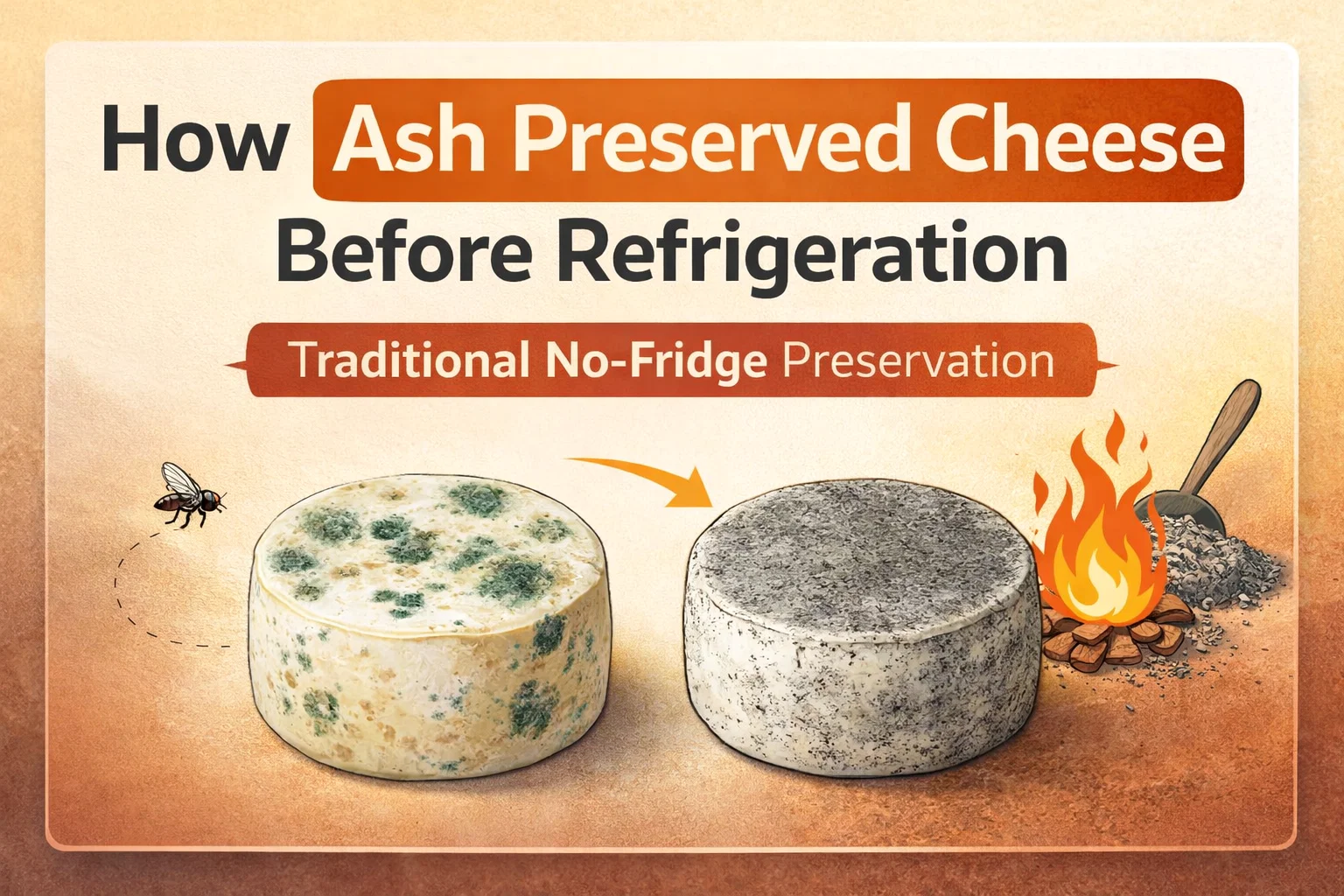
The image of a spoiled, moldy block of cheese next to a perfectly preserved, ash-coated wheel is a powerful reminder of how much we have to learn from the past. Our ancestors did not have labs or computers, but they had observation and intuition. They saw that ash kept the flies away and kept the mold at bay, and they passed that knowledge down through generations.
A Call to Action for Modern Makers
Whether you are a professional chef, a backyard homesteader, or simply someone curious about history, there is a lot of joy to be found in reviving these “forgotten” techniques. The next time you sit by a campfire, look at the grey powder at the base of the logs with a new sense of respect. It is not just soot; it is a tool of vitality, a shield of protection, and a testament to human ingenuity.
Final Thoughts on Ash-Coated Heritage
The story of ash-coated cheese is a story of survival and flavor. It proves that some of the most effective solutions to our most basic problems are often the simplest ones. By neutralizing acidity and creating a breathable barrier, campfire ash allowed our predecessors to thrive in environments where food spoilage was a constant threat. As we move forward into an uncertain future, bringing these traditional skills back into our kitchens ensures that we remain connected to the earth and to the brilliant heritage of those who came before us. Save these ideas, share the knowledge, and let the legacy of the campfire live on in your pantry.