9 Mean Personality Traits Toxic Behaviors Explained Psychology Infographic Guide
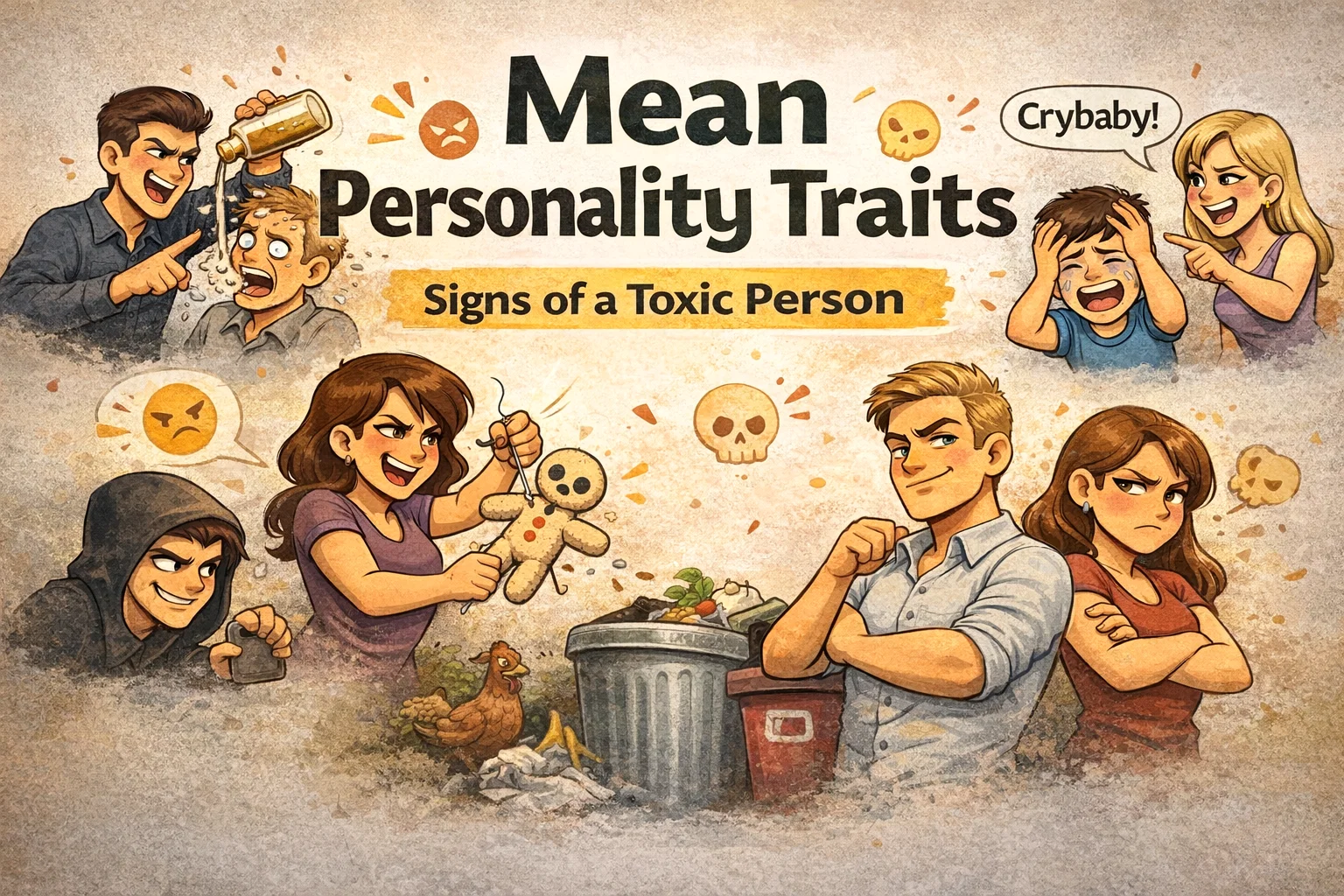
Understanding the complexities of human behavior is like navigating a vast and often unpredictable ocean. While most of us strive to be kind, empathetic, and supportive, we all encounter individuals whose personality traits lean toward the more challenging side of the spectrum. Sometimes, we might even spot these tendencies within ourselves during moments of high stress or frustration. The illustration provided offers a fascinating and clear breakdown of nine specific mean personality traits that can disrupt social harmony and damage relationships. By diving deep into these behaviors, we can better understand the psychology behind them and learn how to protect our own mental well-being when we encounter them in the wild.
The Anatomy of Spiteful Behavior
At the top of our list is the trait of being spiteful. As the image suggests, a spiteful person is someone who hurts others on purpose, often without any clear gain for themselves. This is not just a reactive strike; it is a calculated choice to cause distress. Unlike someone who acts out of immediate anger, a spiteful individual might wait for the perfect moment to pour that metaphorical bottle of water over someone’s head just to see them flustered.
Psychologically, spite is often linked to a lack of empathy and a high level of competitiveness. It stems from a desire to see others brought down to a lower level, especially if the spiteful person feels inadequate. Dealing with a spiteful person requires firm boundaries. Since their goal is to get a reaction, the best defense is often a calm and indifferent exterior. When you refuse to give them the satisfaction of seeing you hurt, the behavior loses its primary reward.
Vindictiveness and the Cycle of Revenge
Vindictiveness takes spite a step further by adding a timeline. A vindictive person seeks revenge. In the illustration, we see a character focused on a voodoo doll, representing the mental energy spent on planning a comeback for a perceived slight. For the vindictive individual, the world is a scoreboard where every debt must be settled with interest.
This trait is particularly toxic because it prevents healing. Instead of moving past a conflict, the vindictive person ruminates on it, fueling their own internal bitterness. If you find yourself dealing with someone vindictive, it is crucial to document interactions and avoid escalating the situation. Revenge cycles only end when one party decides to step off the carousel and walk away entirely.
Callousness: The Absence of Emotional Sensitivity
Callousness is characterized by a profound lack of emotional sensitivity. When someone is crying or in pain, a callous person might respond with a mocking crybaby comment. They are not necessarily trying to be mean in a creative way; they simply do not care about the feelings of others. To them, emotions are a sign of weakness or an annoyance that gets in the way of their objectives.
This trait is often associated with the darker side of personality psychology. Callous individuals struggle to form deep, meaningful bonds because they cannot mirror the emotions of those around them. If you have a callous person in your life, do not expect them to provide comfort during hard times. Managing your expectations is the key to maintaining your own sanity in these interactions.
The Impact of Callousness on Group Dynamics
In a workplace or a family setting, a callous individual can act as a chilling force. They shut down vulnerability and make others feel unsafe to express their true thoughts. Over time, this leads to a culture of silence and resentment where no one feels truly heard or valued.
Hostility and Open Aggression
Hostility is perhaps the most visible trait on our list. It is defined by open aggression. We see this in the image where a character is yelling and physically intimidating someone smaller or more vulnerable. Hostility is a blunt instrument. It uses fear and volume to dominate a space and force others into submission.
Hostile people often have poor impulse control and a low threshold for frustration. They view the world as a series of threats that must be met with force. When facing hostility, your safety is the priority. Engaging in a shouting match rarely helps; instead, removing yourself from the immediate environment or involving a neutral third party is usually the most effective course of action.
The Sneaky Nature of Malicious Intent
While hostility is loud, malice is often quiet. Malicious behavior is defined by the intention to harm. In the illustration, we see a hooded figure hiding in the shadows, waiting for the right moment to strike. This represents the calculated nature of malice. It is not about a sudden burst of temper; it is about a deep-seated desire to cause damage, whether to someone’s reputation, their property, or their peace of mind.
Malice is difficult to combat because it often happens behind your back. It involves rumors, sabotage, and manipulation. The best way to handle malicious individuals is to live with integrity and maintain a strong support network. When your character is consistent and your friends are loyal, the arrows of malice have a much harder time finding their mark.
Petty Behavior: Obsession with Small Issues
We have all encountered a petty person. This is the individual who gets obsessed with small, insignificant issues, like a trash bin being slightly over a property line. Pettiness is a way for people who feel powerless in the big areas of their lives to exert control over the small areas. By making a huge deal out of a minor infraction, they force others to acknowledge their presence and their rules.
Dealing with pettiness can be incredibly draining because it feels like death by a thousand papercuts. The trick is to refuse to play the game. If someone wants to argue about an inch of space, give them the inch and move on. Conserving your energy for things that actually matter is the best way to win against a petty personality.
How Pettiness Destroys Productivity
In professional environments, pettiness can bring projects to a grinding halt. When team members focus on who gets credit for a minor task or who sits where in a meeting, the actual work suffers. Identifying and discouraging petty behavior early is essential for any healthy organization.
Mocking and the Use of Ridicule
Mocking involves making fun of others to make them feel small. It is often disguised as a joke, but the intent is to belittle. The image shows someone laughing at another person’s misfortune or appearance. This is a common tactic used by bullies to establish a social hierarchy where they are at the top and the target is at the bottom.
The danger of mocking is that it can be gaslighting. If you get upset, the mocker will often say you are being too sensitive or that they were just kidding. It is important to call out this behavior directly. Simply asking, Why do you think that is funny? can often strip the mocker of their power by forcing them to explain their cruelty.
Arrogance: Looking Down on Others
Arrogance is a trait where a person genuinely believes they are better than everyone else. In the illustration, the arrogant character stands with their chest out, looking down their nose at a peer. Arrogance is a defensive mechanism. It creates a wall of perceived superiority to protect a fragile ego underneath.
An arrogant person rarely listens to feedback because they believe no one is qualified to give it to them. They dominate conversations and dismiss the ideas of others. To work with an arrogant person, you must be confident in your own abilities. Do not let their self-inflation diminish your sense of worth. Stick to the facts and remain professional, as their arrogance is ultimately a reflection of their own insecurities, not your lack of value.
Resentful: The Burden of Holding Grudges
Finally, we look at resentment. A resentful person holds grudges for a long time. The image depicts two people where one is smiling and the other is crossed-armed and scowling, clearly replaying an old injury in their mind. Resentment is like drinking poison and waiting for the other person to die. It keeps the individual trapped in the past, unable to enjoy the present.
Resentment often stems from a lack of communication. Instead of addressing an issue when it happens, the person lets it fester. If you realize you are dealing with a resentful person, try to open a channel for honest dialogue. If they refuse to let go of the grudge, you may need to distance yourself, as their internal bitterness will eventually spill over onto you.
The Psychological Toll of Resentment
Chronic resentment is linked to higher stress levels and poorer physical health. It creates a constant state of internal conflict. Learning to forgive, not necessarily for the other person’s sake but for your own, is the only real cure for this particular trait.
Navigating a World of Difficult Personalities
Understanding these nine traits is not about labeling people as villains. It is about recognizing patterns of behavior that can be harmful. Most people who exhibit these traits are doing so out of their own unresolved trauma, insecurity, or lack of social skills. However, understanding the why does not mean you have to accept the what.
Setting boundaries is the most powerful tool you have. Whether it is a spiteful coworker, an arrogant boss, or a petty neighbor, you have the right to protect your peace. Recognize the behavior for what it is, label it internally so it loses its mystery, and choose a response that aligns with your values rather than reacting to their provocation.
Conclusion: Building a Culture of Kindness
The goal of identifying mean personality traits is ultimately to foster the opposite: kindness, humility, and empathy. By seeing the damage that spite, malice, and callousness can cause, we are reminded of the importance of being the person who lifts others up rather than tearing them down. In a world where you can be anything, being aware of these pitfalls allows you to choose to be kind.
Next time you encounter one of these behaviors, take a deep breath. Remember the illustrations and the psychology behind them. You have the power to break the cycle of negativity by responding with integrity and maintaining your own emotional balance. By doing so, you contribute to a more positive and understanding world for everyone.