Ability vs. Skill Learn the Difference Between Natural Talent and Learned Practice
Understanding the nuances of language is about more than just memorizing definitions. It is about unlocking the way we perceive our own potential and the progress of those around us. When we look at the terms ability and skill, they are often used interchangeably in casual conversation, yet they represent two very different pillars of human development. One is a gift you are born with, while the other is a trophy earned through hours of dedicated practice. By distinguishing between the two, we can better navigate our personal growth, career paths, and even the way we encourage our children to learn and grow.
The Fundamental Difference Between Ability and Skill
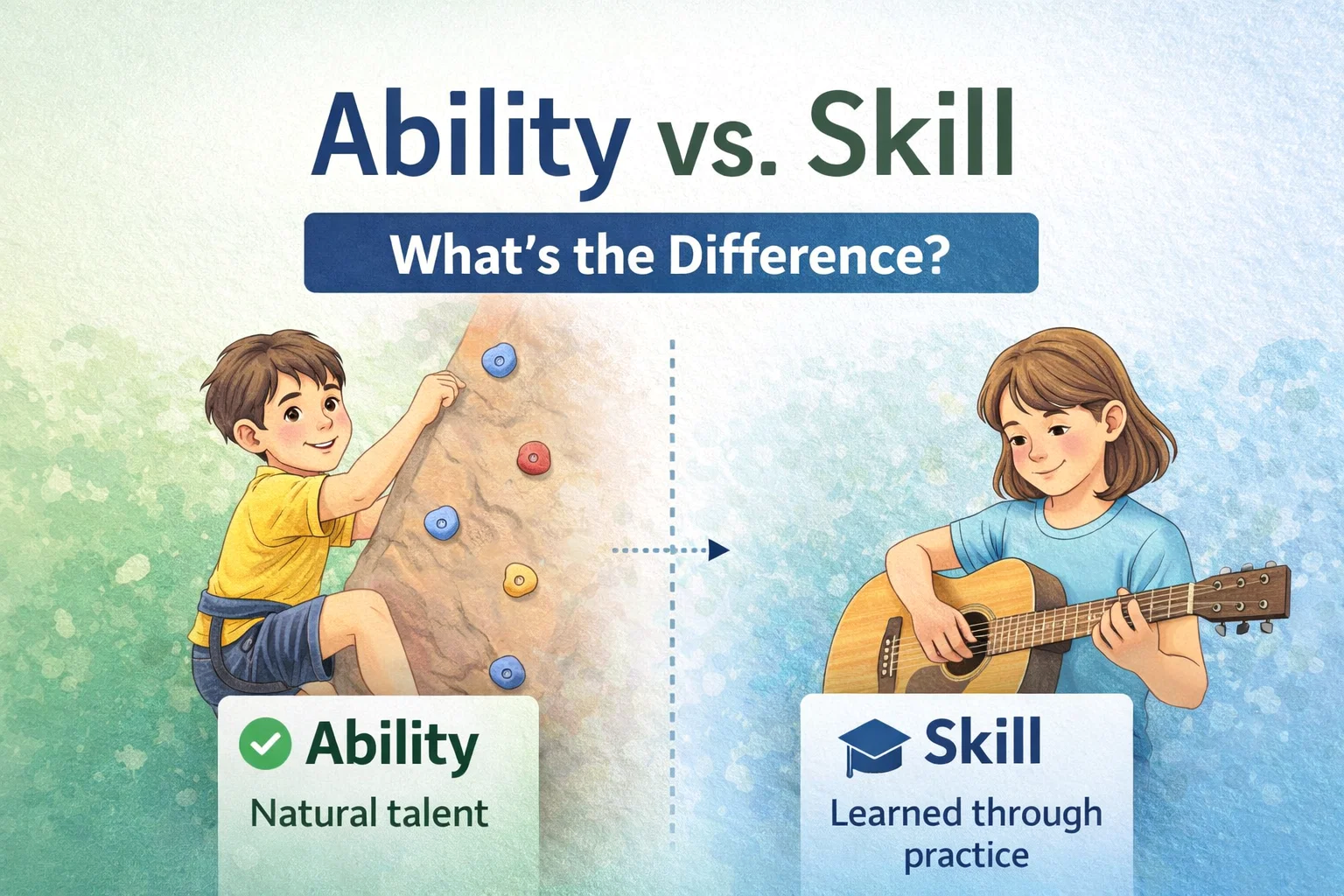
At its core, the distinction between an ability and a skill lies in its origin. An ability is often described as a natural or innate capacity. It is something you are born with, a latent talent that exists before you even pick up a tool or a book. For example, some people have a natural physical ability to climb, possessing the grip strength and balance required to scale heights with ease. This is their starting point, the raw material that nature provided. It represents potential talent that can be refined over time, but it exists independently of formal training.
A skill, on the other hand, is the result of deliberate effort and training. While ability is a gift, a skill is a craft. It is learned through study and honed through relentless practice. Take the example of playing an instrument like the guitar. No one is born knowing how to transition from a G major chord to a C major chord perfectly. That is a skill. It requires instruction, hours of finger exercises, and the mental discipline to stay with the process until it becomes second nature. While a natural ability for rhythm might help, the skill itself is something that must be built from the ground up.
The Power of Potential: Exploring Natural Ability
Natural abilities are the building blocks of our unique personalities and physical capabilities. These are the traits that seem to come easily to us without much explanation. You might notice a child who has an incredible ability to visualize 3D shapes or someone who has a natural ear for music. These are not things they studied; they are simply part of how their brain or body is wired. Identifying these abilities early on is a fantastic way to find a path that feels authentic and rewarding.
However, it is important to remember that having a natural ability is only the first step. Without action, an ability remains just a potential. You might have the natural lung capacity and height to be a great swimmer, but if you never get in the pool, that ability remains dormant. The beauty of ability is that it provides a head start, making the process of acquiring related skills feel more fluid and intuitive.
The Art of Mastery: Why Skill Requires Effort
Skills are the equalizers of the world. While we cannot choose the abilities we are born with, we have total control over the skills we choose to develop. This is where the true magic of human achievement happens. A skill is earned through blood, sweat, and tears. It involves a cycle of learning, failing, correcting, and repeating. This process is what transforms a novice into an expert.
Because skills require training, they are deeply tied to our sense of accomplishment. When you master a complex coding language, learn to bake a perfect sourdough loaf, or become a fluent speaker of a second language, you are looking at the direct result of your own hard work. Skills are transferable and can be showcased to the world as evidence of your competence and reliability. In the professional world, skills are often the currency that determines your value in the marketplace.
How Abilities and Skills Work Together
While they are different, abilities and skills are not mutually exclusive. In fact, the most successful people in any field are usually those who have found a way to marry their natural abilities with rigorous skill development. Think of an elite athlete. They likely started with a high level of physical ability, such as speed or coordination. But those natural traits alone would not get them to the Olympics. They had to spend years developing technical skills, like specific footwork or breathing techniques, to maximize that raw potential.
When you align your skills with your abilities, you experience what psychologists often call flow. This is a state where the work feels challenging but deeply satisfying because it utilizes your natural strengths while pushing your learned capabilities. If you have a natural ability for empathy and listening, you might find that developing the skill of professional counseling feels like a natural extension of who you are. The skill gives structure to your ability, making it useful and impactful for others.
Developing Skills When Ability is Low
One of the most encouraging aspects of this topic is the realization that you can develop a skill even if you do not feel you have a natural ability for it. This is the essence of the growth mindset. While someone with a natural ability might learn a specific task faster, someone with high discipline can often surpass them through sheer persistence. Hard work often beats talent when talent fails to work hard. If you want to learn to paint but feel you have no natural artistic ability, you can still become a great painter by studying color theory, perspective, and brush techniques. Your progress might be slower at first, but the end result is still a high level of skill.
Improving Your Natural Abilities
It is a common misconception that abilities are fixed and cannot be changed. While the baseline might be set by genetics, abilities can absolutely be improved. A person with a natural ability for public speaking can still improve their vocal projection and presence. Physical abilities like flexibility or strength can be enhanced through consistent activity. The key is to recognize that your natural gifts are not a ceiling but a foundation. By focusing on your abilities, you can make your strengths even stronger, giving you a unique edge in whatever you choose to do.
Practical Examples in Everyday Life
To truly grasp this concept, let us look at some common scenarios where the difference between ability and skill becomes clear. These examples show up in our schools, our workplaces, and our personal interests every day.
- Writing: Some people have a natural ability for storytelling or a rich imagination. However, the skill of writing requires learning grammar, structure, and how to edit one’s own work. A great novelist needs both.
- Leadership: You might have a natural ability to command attention in a room. But the skill of leadership involves learning how to manage conflict, delegate tasks fairly, and inspire a diverse team toward a common goal.
- Technology: A child might have a natural ability to understand how digital interfaces work intuitively. But the skill of software engineering requires years of learning complex logic and syntax.
- Cooking: Having a natural ability for tasting flavors and understanding pairings is a great start. However, the skill of a professional chef is built on mastering knife techniques, temperature control, and kitchen management.
The Role of Training and Education
Since skills must be learned, the role of education and mentorship cannot be overstated. Training provides the roadmap for turning interest into expertise. Whether it is a formal university degree, an online course, or a hands-on apprenticeship, training provides the structured environment necessary for skill acquisition. It allows us to learn from the mistakes of others and adopt best practices that have been refined over generations.
In many cases, the training process actually helps us discover abilities we didn’t know we had. You might sign up for a woodworking class just to learn a new skill and discover that you have a natural ability for spatial reasoning and hand-eye coordination. This synergy between learning and discovery is what makes lifelong education so fulfilling.
Why Understanding This Matters for Your Career
In the modern job market, being able to articulate your abilities and skills is essential. When you write a resume or go for an interview, you are essentially selling your combination of both. Employers look for abilities because they indicate how well you will fit into the company culture and how much potential you have to grow. They look for skills because they need to know you can perform the specific tasks required for the role right now.
If you are looking to change careers, focus on your transferable skills. These are things you have learned in one job that can be applied to another, such as project management or technical writing. At the same time, lean on your natural abilities to help you stand out. If you are naturally charismatic, use that ability to excel in sales or client relations, even if you are still learning the specific skills of the industry.
Nurturing Growth in Others
If you are a parent, teacher, or manager, understanding the difference between ability and skill changes how you give feedback. Instead of just praising someone for being smart (which is an ability), try praising them for the effort they put into practicing a difficult task (which is a skill). This encourages a growth mindset. When we focus on the effort and the learning process, we empower people to keep going even when things get tough. We remind them that while their abilities gave them the start, their skills will take them to the finish line.
Conclusion: Embrace Your Journey of Growth
In the end, the journey of self-improvement is about honoring your natural abilities while relentlessly pursuing new skills. Do not be discouraged if you feel you lack a certain natural talent; remember that skills are built through effort and that effort is entirely within your control. Conversely, do not let your natural abilities go to waste by failing to back them up with the necessary training and practice.
By recognizing the difference between what you were born with and what you have earned, you gain a clearer perspective on your achievements. Be proud of the skills you have mastered through your own hard work, and be grateful for the abilities that make you uniquely you. Whether you are climbing a mountain or mastering a musical instrument, remember that every step forward is a combination of your inner potential and your outward dedication. Keep learning, keep practicing, and watch as your abilities and skills take you further than you ever thought possible. Save these tips for your next self-reflection session!