Life Lessons from Chess Inspirational Quotes Success Strategy for Personal Growth
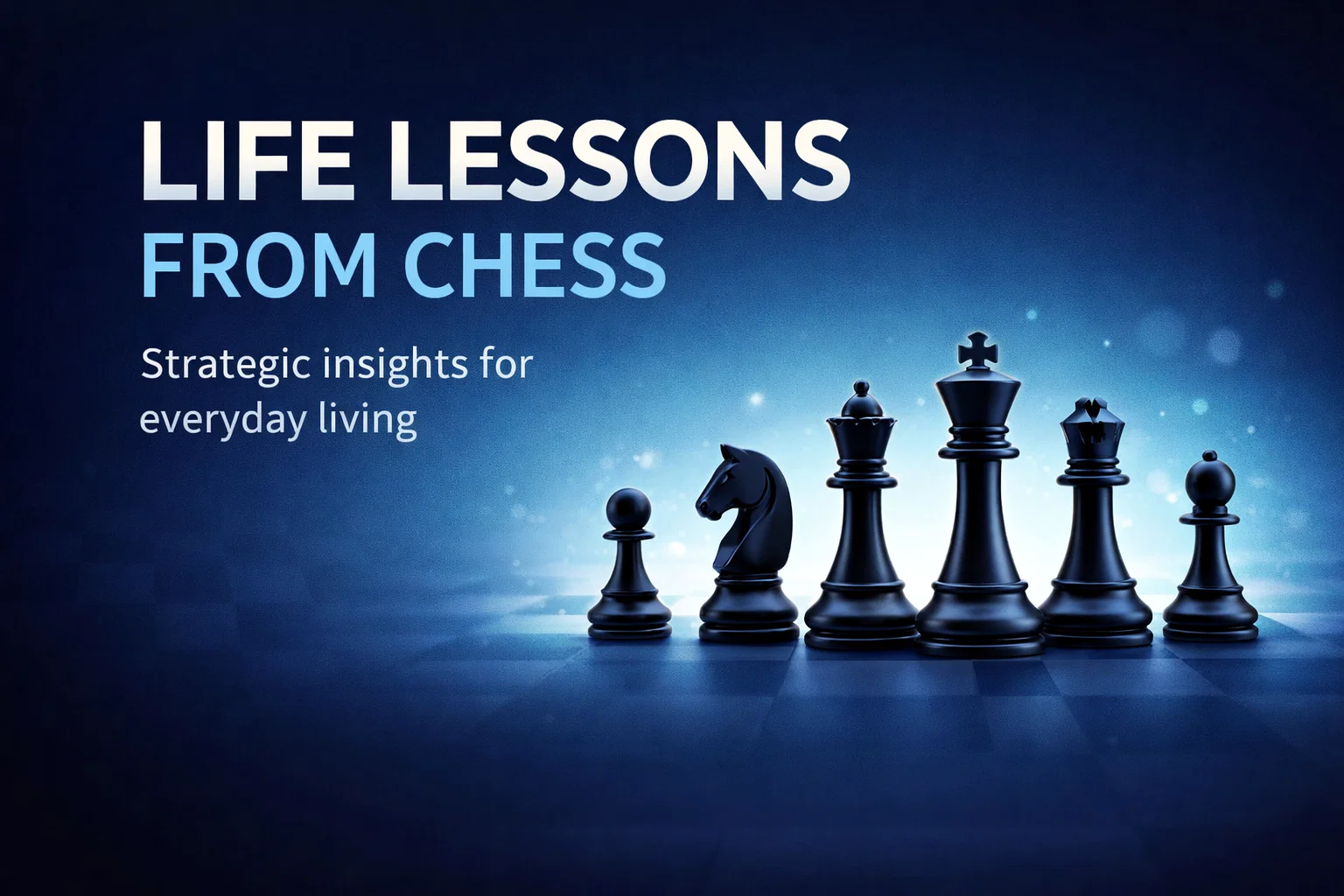
The game of chess has long been celebrated as the ultimate test of the human mind. For centuries, grandmasters and beginners alike have stared at the sixty four squares, calculating risks and dreaming of victory. But if you look closer at the silhouettes of the pawn, the knight, and the king, you will realize that chess is not just a game of capturing pieces. It is a profound blueprint for navigating the complexities of human existence. The board is a microcosm of the world, and every move we make reflects the strategies we use to survive and thrive in our daily lives.
The Humble Pawn: The Power of Incremental Progress
In the hierarchy of chess, the pawn is often dismissed as the most basic unit. It moves slowly, one square at a time, and is frequently sacrificed for the sake of more powerful pieces. However, the pawn carries the most vital lesson of all: progress begins one square at a time. In a world obsessed with overnight success and viral moments, the pawn reminds us that the journey toward a massive goal is built on the back of small, consistent actions.
Every expert was once a beginner who decided to take that first step. When you look at your long term ambitions, they can often feel overwhelming. The pawn teaches us to focus only on the next available square. If you can move forward today, you are closer to your goal than you were yesterday. This philosophy of marginal gains is what separates those who dream from those who achieve. Over time, these small increments compound, leading to a position of strength that was previously unimaginable.
The Reward of Persistence
Perhaps the most inspiring aspect of the pawn is its potential for transformation. If a pawn reaches the other side of the board, it can become a queen. This is the ultimate metaphor for social mobility and personal growth. It suggests that your starting position does not define your ending. Through persistence, grit, and the willingness to keep moving forward despite the odds, even the lowliest member of the board can achieve the highest level of influence.
The Knight: Embracing Non-Linear Paths
Most pieces on the chess board move in straight lines or diagonals, but the knight is different. It moves in an L shape, jumping over obstacles that block others. The lesson here is clear: not all paths to success are straight. If you find yourself hitting a wall or feeling stuck in your career or personal life, it might be time to stop trying to push through the barrier and instead try to leap over it.
Life rarely follows a predictable trajectory. We are often taught that the shortest distance between two points is a straight line, but in a complex world, that line is often crowded or blocked. The knight encourages us to embrace unconventional thinking. Sometimes, taking a side step or a seemingly backward move is exactly what is needed to position yourself for a future breakthrough. Lateral thinking allows you to see opportunities that others miss because they are too focused on the path directly in front of them.
The Art of the Unexpected
Because the knight moves so uniquely, it is often the piece that delivers the most surprising checks and forks. In your own life, being unpredictable can be a significant advantage. When you develop a diverse set of skills that do not traditionally go together, you become a knight in your industry. You can solve problems from angles that others cannot even perceive, making you an invaluable asset in any environment.
The Bishop: Why Direction Defines Effectiveness
A bishop is a powerful long range piece, but it is forever restricted to the color of the square it starts on. This represents the concept that direction defines effectiveness. A bishop on a white square can be the most powerful piece on the board, but only if the action is happening on the white squares. If the struggle shifts to the dark squares, that bishop becomes a spectator.
In our professional lives, this translates to finding your niche. You can have all the talent and energy in the world, but if you are operating in the wrong “direction” or the wrong industry, your effectiveness will be neutralized. Understanding your strengths and staying aligned with your core values ensures that you are always in a position to exert influence. It is about choosing the right battles and knowing where your specific “color” of expertise is most needed.
The Rook: Building Power Through Structure
The rook is a symbol of stability and strength. It moves in straight, unwavering lines and is most effective when the board has been cleared of clutter. The lesson of the rook is that power comes from structure. Without a solid foundation and a clear framework, even the most ambitious plans will eventually crumble under pressure.
Structure in life can take many forms. It might be a disciplined daily routine, a strong financial plan, or a supportive network of family and friends. When things get chaotic, we rely on our structure to keep us grounded. The rook reminds us that while creativity and flair are important, they must be supported by a reliable system. By building a solid “castle” around your goals, you create a safe space from which you can launch your most powerful offensives.
The Importance of Connection
In chess, two rooks working together on the same file or rank are almost unstoppable. This highlights the importance of collaboration and alignment. When your personal habits, professional goals, and internal values are all lined up and supporting one another, you possess a level of momentum that is very difficult for any obstacle to stand against. Structure is not about restriction; it is about creating the channels through which your power can flow freely.
The Queen: Freedom Multiplies Power
The queen is the most versatile and feared piece on the board because she has the most freedom of movement. She can go in any direction for any distance. This represents the idea that freedom multiplies power. The more options you have in life, the more influential you can be. This is why we strive for financial independence, education, and health, as these things provide us with the “squares” we need to move effectively.
However, the queen also carries a heavy burden. Because she is so valuable, she is often the primary target. In life, with great freedom comes great responsibility. Having the ability to go anywhere means you must be incredibly intentional about where you actually go. Use your freedom not just to move, but to move with purpose. When you have the resources and the liberty to make a change, you have the greatest capacity to impact the world around you.
The King: Survival Comes First
Finally, we come to the king. He is not the most powerful piece in terms of movement, but he is the most important. If the king falls, the game is over. The lesson is simple but profound: survival comes first. You cannot win the game if you are no longer on the board. This is a call to prioritize your well being, your mental health, and your core stability above all else.
In the heat of competition or the stress of a career, it is easy to sacrifice your “king” for a temporary advantage. We burn out, we ignore our health, or we compromise our integrity for a quick win. But chess teaches us that all other pieces are secondary to the safety of the king. You must protect your core. Without a healthy mind and body, no amount of success or “captured pieces” will matter. Knowing when to retreat and how to castle for safety is just as important as knowing when to attack.
Synthesizing the Strategy of Life
When we look at these pieces together, we see a complete philosophy for living. We need the patience of the pawn to start our journey and the flexibility of the knight to navigate the twists and turns. We must find our direction like the bishop and build our systems like the rook. We should strive for the freedom of the queen while never forgetting to protect the king at the center of it all.
Chess is a game of consequences. Every move leads to a new reality, and every choice carries weight. By applying these life lessons, we can move through our own lives with more intentionality and grace. We stop reacting to the world and start participating in it with a grand strategy in mind.
Applying These Lessons Today
Take a moment to look at your current situation. Are you trying to leap like a knight when you should be moving steadily like a pawn? Or are you neglecting your “king” in pursuit of a “queen” that might not be worth the cost? The beauty of these lessons is that they are evergreen. No matter what stage of life you are in, the wisdom of the board remains relevant.
Conclusion: Mastering Your Own Game
Life is the most complex game any of us will ever play. There are no do overs, and the clock is always ticking. However, by viewing our challenges through the lens of chess, we gain a sense of perspective and control. We realize that even when we feel like a small pawn, we have the potential for greatness. We understand that a lack of a straight path is not a failure, but an opportunity for a knight’s leap. Most importantly, we learn that success is not just about winning, but about playing the game with wisdom, structure, and a commitment to our own survival. So, take a breath, look at the board of your life, and make your next move with confidence.