6 Common Types of Taxes Explained Simple Guide to Income, GST, Property Excise Tax
Navigating the world of finance often feels like trying to learn a completely new language. Between the complicated terminology and the endless forms, it is easy to feel overwhelmed. However, understanding the core pillars of how our economy functions starts with one specific topic that affects every single one of us: taxes. While the word itself might bring a sense of dread, breaking down the different types of taxes into simple, digestible concepts is the first step toward true financial literacy. When you understand where your money goes and why it is being collected, you gain a much clearer picture of your personal budget and the broader world around you.
Most people interact with various tax systems every single day without even realizing it. Whether you are looking at your paycheck, buying a coffee, or paying for a car registration, you are participating in a structured system designed to fund public services. This guide is designed to take the mystery out of the most common types of taxes. By the end of this post, you will have a solid grasp of everything from income tax to customs duties, allowing you to manage your finances with newfound confidence and clarity.
The Foundation of Personal Finance: Income Tax
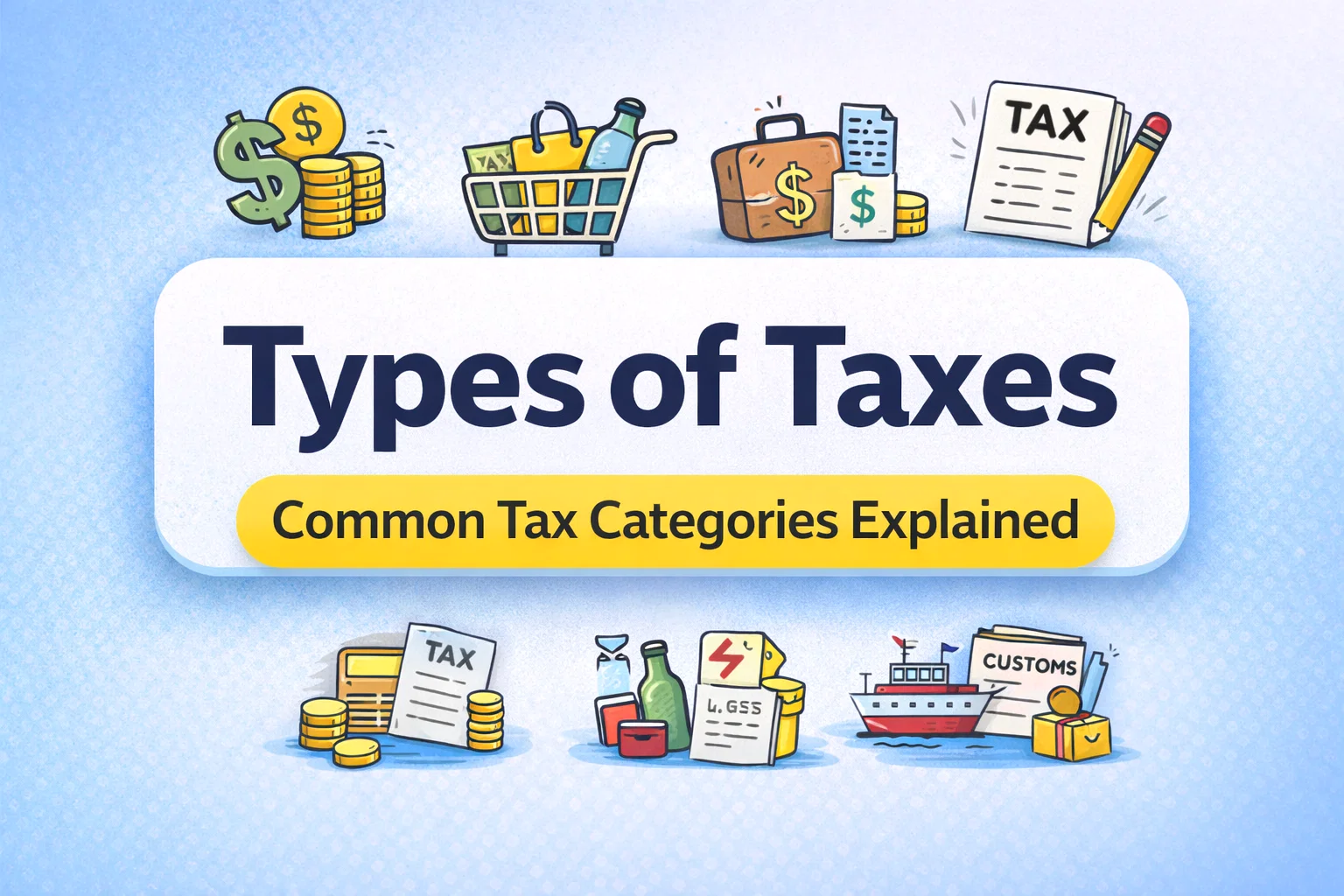
Income tax is perhaps the most recognizable form of taxation for the average person. Simply put, this is the tax on the money you earn. Whether you are a full time employee, a freelancer, or a business owner, a portion of your earnings is generally required to be paid to the government. This money is used to fund everything from infrastructure projects like roads and bridges to essential public services like schools and emergency response teams.
In many regions, income tax is progressive. This means that the more money you earn, the higher the percentage of tax you might pay on higher tiers of that income. Understanding your tax bracket is crucial because it helps you estimate your take home pay more accurately. For those who are employed by a company, this tax is often withheld automatically from each paycheck. If you are self employed, you are responsible for calculating and paying this yourself, which makes staying organized throughout the year even more important.
Active vs. Passive Income Taxation
It is also worth noting that not all income is taxed the same way. Wages from a job are considered active income, but money earned from investments or rental properties might fall under different rules. For example, capital gains taxes apply when you sell an asset like stocks or real estate for a profit. Being aware of these distinctions allows you to make smarter investment choices and plan for the future without being surprised by a large bill during tax season.
Spending and Consumption: Goods and Services Tax (GST)
While income tax is taken from what you make, the Goods and Services Tax, commonly known as GST, is applied to what you spend. This is a consumption tax levied on the sale of most goods and services. If you have ever looked at a receipt after a shopping trip and noticed an extra percentage added to the subtotal, you have seen GST in action. In some countries, this might also be referred to as Value Added Tax (VAT) or Sales Tax.
The primary characteristic of GST is that it is collected by the business at the point of sale and then passed on to the government. For the consumer, it is a transparent cost of purchasing items. However, for business owners, managing GST involves a bit more paperwork, as they often need to track the tax they pay on business inputs versus the tax they collect from customers. Because it applies to such a wide range of items, from electronics to professional consulting services, it is one of the most consistent ways for a government to generate revenue.
The Business Perspective: Corporate Tax
Just as individuals pay tax on their earnings, businesses are required to pay tax on their profits. Corporate tax is a specific levy on the money a company makes after all its operating expenses, salaries, and costs of goods sold have been deducted. This is a significant factor in how companies operate, as it influences everything from hiring decisions to where a business chooses to locate its headquarters.
Corporate taxation can be quite complex because businesses have access to various deductions and credits that individuals might not. For instance, a company might be able to deduct the cost of new equipment or research and development expenses. Understanding the basics of corporate tax is essential if you are an aspiring entrepreneur. It ensures that you are setting aside enough capital to cover your obligations while also taking advantage of legal ways to reinvest in your own growth.
Ownership and Assets: Property Tax
If you own land, a house, or commercial buildings, you will likely encounter property tax. Unlike income tax or GST, which are based on transactions, property tax is usually based on the value of the asset itself. Local governments typically assess the value of real estate within their jurisdiction and charge a percentage of that value annually or semi annually.
Property tax is a vital source of funding for local communities. In many areas, these funds go directly toward local school districts, libraries, parks, and local police and fire departments. For homeowners, property tax is a recurring cost of ownership that must be factored into the monthly housing budget. Even if you have paid off your mortgage entirely, you will still be responsible for property taxes for as long as you own the land.
How Property Values Affect Your Taxes
Because property tax is tied to value, your tax bill can change over time. If the real estate market in your area booms and your home value increases, your property tax might go up as well. Conversely, some areas offer exemptions for primary residences or for senior citizens, which can help lower the overall burden. It is always a good idea to check with your local assessor to understand exactly how your property is being valued.
Targeted Levies: Understanding Excise Tax
Excise tax is a bit different from the broad sales taxes we discussed earlier. While GST applies to almost everything, an excise tax is a specific tax on certain goods. Common examples include alcohol, tobacco, and fuel. These are often referred to as inland taxes because they are applied to goods produced or sold within the country.
There are usually two main reasons for excise taxes. First, they provide a focused way to raise revenue. Second, they can be used to discourage the consumption of certain products that might have health or environmental costs. For example, high taxes on tobacco are often intended to reduce smoking rates. Similarly, taxes on gasoline can help fund road repairs necessitated by vehicle use. When you see the price at the pump or the cost of a bottle of wine, a significant portion of that price is often the hidden excise tax already included in the sticker price.
International Trade: The Role of Customs Duty
In our modern, globalized world, we often purchase products that were manufactured thousands of miles away. When goods are imported from other countries, they are often subject to Customs Duty. This is a tax imposed on imports by the customs authority of a country. The primary goal is to protect local industries by making imported goods slightly more expensive, thereby encouraging consumers to buy locally produced alternatives.
The amount of customs duty can vary wildly depending on the type of product, its value, and the country of origin. Some countries have free trade agreements that eliminate these duties for specific partners, while others might impose heavy tariffs on certain categories of goods. If you are an online shopper who frequently buys from international retailers, you might have occasionally received an extra bill for “import duties” before your package could be delivered. This is the customs duty at work.
Why Understanding Taxes Matters for Your Future
It might seem like a lot of information to take in, but viewing these different taxes as a cohesive system helps remove the anxiety surrounding them. When you are financially literate, you are no longer a passive participant in the economy. Instead, you become an informed individual who can make strategic decisions. You can look at a job offer and understand the difference between gross and net pay. You can evaluate a real estate investment while accounting for annual property taxes. You can even plan your international purchases more wisely by anticipating potential customs fees.
Knowledge is the ultimate tool for wealth building. By understanding the rules of the game, you can better navigate the complexities of modern life. It allows you to advocate for yourself, ensure you are paying exactly what you owe and not a penny more, and utilize the various deductions and credits available to you. Taxes are a certainty of life, but they do not have to be a source of stress.
Conclusion: Empowering Your Financial Journey
Taking the time to learn about the various types of taxes is an investment in yourself. From the income tax that supports our public infrastructure to the GST that fuels our retail economy, every tax serves a specific purpose in the grand design of society. While the details can get complex, the basic concepts are accessible to everyone. By keeping these categories in mind, you are setting yourself up for a more organized and successful financial future.
As you move forward, keep this guide as a reference. The next time you see a deduction on your paycheck or a tax line on a receipt, you will know exactly what it represents. Financial freedom starts with understanding, and you have just taken a massive leap toward mastering your money. Stay curious, stay informed, and remember that every bit of financial knowledge you gain is a step toward a more secure and empowered life. Happy budgeting!