
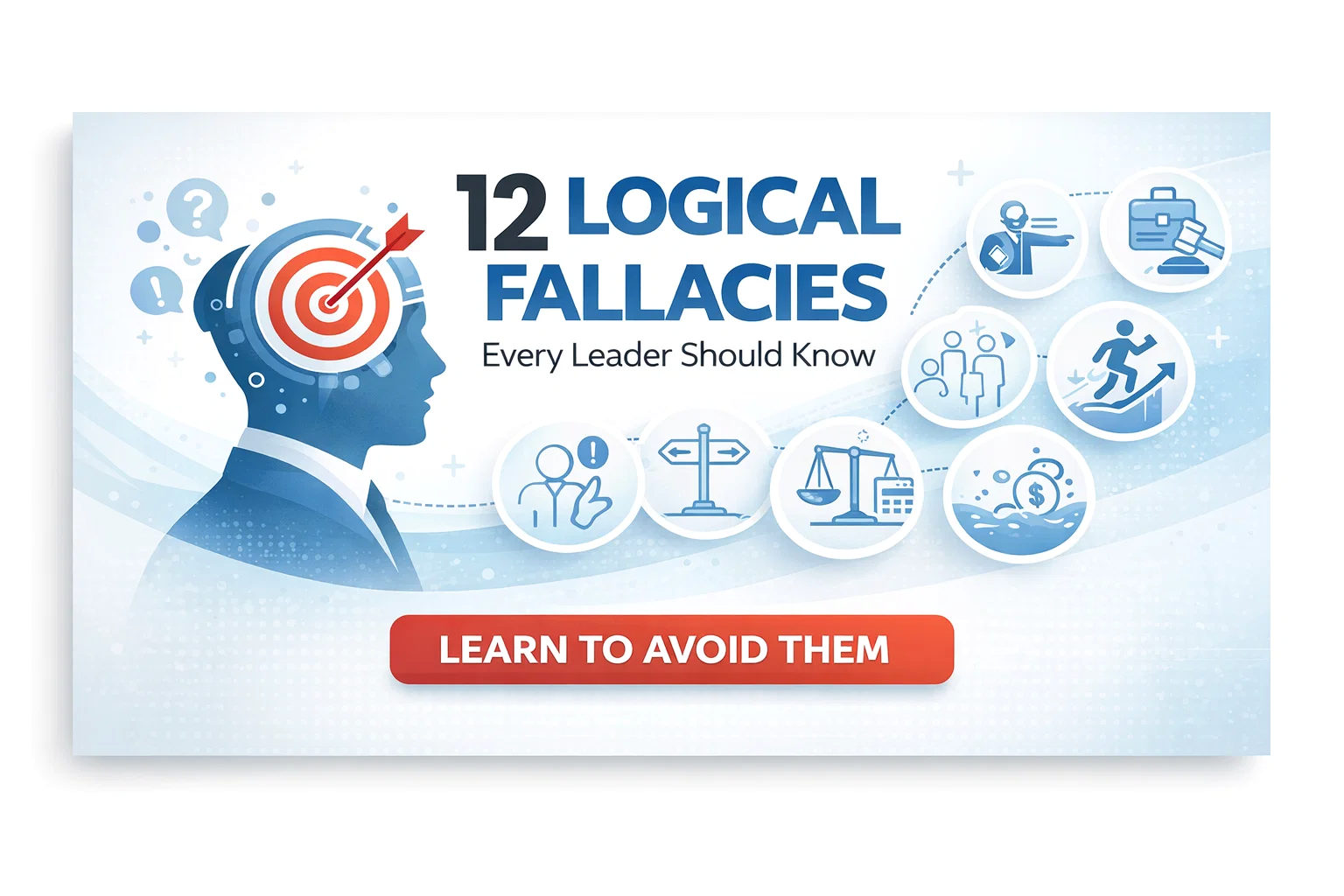
12 Logical Fallacies for Leaders Critical Thinking Decision Making Skills
Effective leadership is not just about making big moves or having a vision; it is about the quality of the decisions you make every single day. In a fast paced professional environment, our brains often take shortcuts to process information quickly. While these shortcuts can be helpful, they often lead us into the trap of logical fallacies. These are flaws in reasoning that can undermine your authority, damage team morale, and lead to costly strategic errors. Understanding these 12 logical fallacies is a foundational step in becoming a more objective, respected, and successful leader.
The Impact of Logical Fallacies on Professional Leadership
When a leader falls victim to a logical fallacy, the consequences ripple throughout the entire organization. It is not just a matter of being wrong in a debate. It is about how you perceive reality and how your team perceives your fairness. Logical fallacies often act as invisible barriers to innovation. If a team feels that arguments are won by seniority rather than evidence, they will eventually stop bringing new ideas to the table. By mastering the art of sound reasoning, you create a culture of intellectual honesty where the best ideas win, regardless of where they come from.
Improving Team Communication Through Clear Logic
Clear communication is the lifeblood of any successful project. When you eliminate fallacies from your vocabulary, your instructions become more precise and your feedback becomes more constructive. Instead of attacking a person character when a mistake happens, a logical leader focuses on the process and the data. This shift from personal to structural analysis fosters a safe environment where employees feel empowered to take risks and own their growth.
Detailed Breakdown: The 12 Fallacies You Need to Identify
To navigate the complexities of management, you must be able to spot these twelve common errors in real time. Let us dive deep into each one to understand how they manifest in a workplace setting and how you can avoid them.
1. Ad Hominem: Attacking the Messenger
The Ad Hominem fallacy occurs when someone ignores the actual argument and instead attacks the character or traits of the person making it. In a business meeting, this might look like dismissing a junior developer strategy because they lack years of experience. Even if someone is new, their data could be flawless. As a leader, always separate the message from the messenger to ensure you do not miss out on brilliant insights from unexpected sources.
2. The Straw Man: Misrepresenting the Opposition
This fallacy involves oversimplifying or twisting someone else argument to make it easier to attack. If an employee asks for more time to ensure a product is bug-free, a Straw Man response would be, So you want us to stop shipping features entirely? By creating a distorted version of their request, you avoid addressing the actual concern of quality control. True leadership involves engaging with the strongest version of an opponent argument, not the weakest.
3. Appeal to Authority: Power Over Proof
While expertise matters, relying solely on a title as proof of an argument is a dangerous path. If a CEO says a plan is perfect just because they are the CEO, they are committing an Appeal to Authority. In a healthy workplace, evidence should always outweigh rank. Encourage your team to ask for the data behind the decisions so that everyone understands the logic driving the company forward.
4. The Bandwagon: The Danger of Popularity
Just because everyone else is doing it does not mean it is the right move for your specific business. The Bandwagon fallacy drives companies to adopt expensive new tools or trends simply because they fear falling behind. A logical leader evaluates trends based on internal needs and ROI, not just because a competitor mentioned it in a press release.
5. False Dilemma: The Illusion of Limited Choice
This is the classic either or trap. A False Dilemma presents only two options when, in reality, there is a whole spectrum of possibilities. For example, telling a team we either hit this deadline or the project is a failure ignores the possibility of adjusting scope or reallocating resources. Recognizing a False Dilemma allows you to find the third way that others might have missed.
6. Slippery Slope: The Fear of Small Changes
The Slippery Slope fallacy suggests that one small step will inevitably lead to a chain of disastrous events. While it is important to consider long term consequences, assuming that allowing one person to work from home on Fridays will lead to the total collapse of office culture is irrational. Base your fears on evidence and probability rather than a hypothetical domino effect.
7. Hasty Generalization: Jumping to Conclusions
Making a broad rule based on a tiny sample size is a Hasty Generalization. If one marketing campaign fails in a specific region, concluding that the entire region is unreachable is a mistake. Professional leaders look for patterns across larger data sets before making sweeping changes to corporate policy or strategy.
8. Red Herring: The Art of Distraction
A Red Herring is a distraction from the real issue. If a manager is asked about why a project is over budget and they respond by talking about how hard the team has been working lately, they are using a Red Herring. While the hard work is appreciated, it does not answer the question about the budget. Stay focused on the core problem to find real solutions.
9. Tu Quoque: The You Too Defense
This happens when someone avoids criticism by pointing out that the person giving the feedback has made the same mistake. If a lead developer is called out for missing a deadline and they respond by saying the manager was late to a meeting last week, they are dodging accountability. Great leaders admit their flaws without trying to deflect blame onto others.
10. Sunk Cost Fallacy: Throwing Good Money After Bad
One of the hardest fallacies to overcome is the Sunk Cost Fallacy. This is the tendency to stay committed to a failing project just because you have already invested significant time or money into it. A logical leader knows when to cut their losses. If the data shows a project will not work, the past investment is irrelevant to the future decision.
11. No True Scotsman: Moving the Goalposts
This fallacy involves changing the definition of a group to protect a claim from criticism. In leadership, this often sounds like saying, A real leader would never struggle with this task. If someone does struggle, you simply say they were never a real leader to begin with. This prevents honest conversation about the difficulties of the job. Embrace the reality that leadership is messy and does not fit into rigid, idealized boxes.
12. Moral Equivalence: Comparing Apples to Oranges
Moral Equivalence attempts to equate two unrelated situations as if they carry the same weight. Claiming that missing a single deadline is just as bad as losing a major client is an example of this. By blowing small mistakes out of proportion or minimizing large ones, you lose the ability to prioritize issues effectively.
How to Foster a Culture of Critical Thinking
Identifying these fallacies in yourself is only the beginning. To truly lead, you must build a team that values logic as much as results. This starts by rewarding honesty. When an employee points out a flaw in your reasoning, thank them. This shows that you value the truth more than your ego. Over time, this creates a resilient organization that can pivot based on facts rather than being led astray by emotional or logical biases.
- Implement Peer Reviews: Encourage teams to look for logical gaps in each other proposals before they reach the final stage.
- Host Training Sessions: Use the 12 fallacies mentioned here as a guide for workshops on decision making.
- Lead by Example: Openly discuss your own thought process and admit when you realize you have fallen for a fallacy like the Sunk Cost trap.
The Long Term Benefits of Logical Leadership
When you commit to being a logically sound leader, you are investing in the long term health of your career and your company. You will find that your meetings are more productive because the fluff and distractions have been stripped away. Your strategy will be more robust because it is built on a foundation of solid evidence rather than popular trends or emotional reactions. Perhaps most importantly, you will earn the deep respect of your peers and subordinates. People follow leaders they can trust, and there is nothing more trustworthy than a leader who values the truth above all else.
Conclusion
Navigating the world of leadership is complex, but it becomes much easier when you have the right mental tools. By learning to identify and avoid these 12 logical fallacies, you protect yourself from the common pitfalls that bring down even the most ambitious professionals. Remember that logic is a muscle; the more you use it to evaluate your daily interactions and big picture decisions, the stronger it becomes. Start today by looking at your current projects and asking if any of these fallacies are influencing your choices. The path to better leadership starts with a single, logical step. Are you ready to lead with a clearer mind and a more focused vision?
Would you like me to create an infographic or a quick reference guide based on these logical fallacies for your team?