
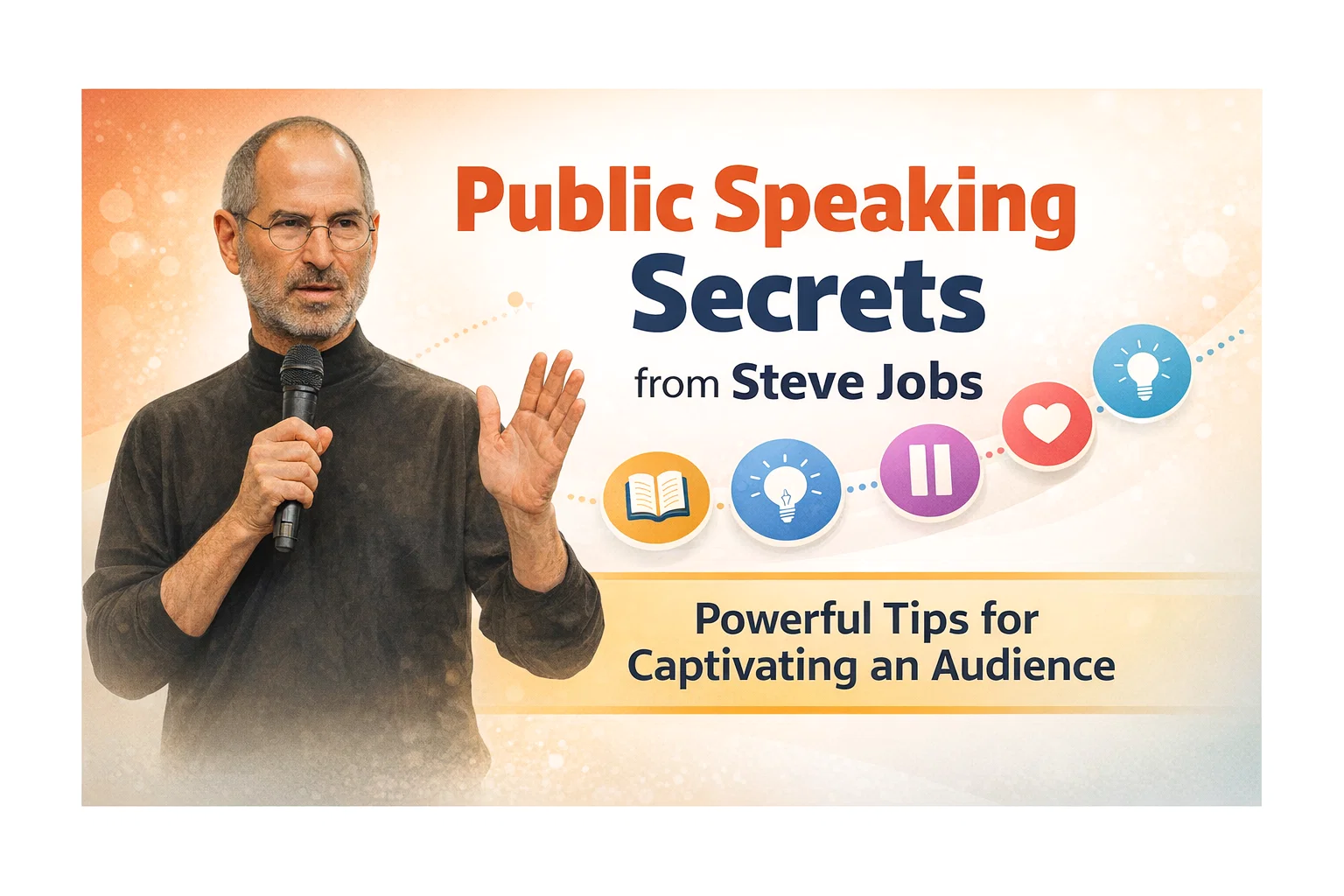
10 Steve Jobs Public Speaking Tips Presentation Secrets for Impactful Communication
Public speaking is often cited as one of the most common fears, yet it remains one of the most critical skills for personal and professional success. When we think of the absolute masters of the stage, one name consistently rises to the top: Steve Jobs. He did not just deliver presentations; he created experiences that felt like high stakes theater. Whether he was pulling a MacBook Air out of a manila envelope or introducing the first iPhone, Jobs understood that a speech is a tool for connection, not just information delivery. By deconstructing his methods, we can find a blueprint for anyone looking to command a room with confidence and clarity.
The Heart of the Presentation: Connection Over Impression
Many speakers approach a podium with the goal of looking smart or impressive. This is a fundamental mistake. Steve Jobs approached every keynote with the intent to connect. He wanted the audience to believe in a vision, to feel the excitement of a new era, and to remember the core message long after the lights went down. This shift in mindset from “me” to “them” is what separates a dry lecture from a transformative talk. To speak like Jobs, you must treat your audience as partners in a journey rather than passive recipients of data.
Mastering the Art of Storytelling
The first secret to an unforgettable presentation is the use of stories. Human beings are hardwired for narrative. We forget statistics, but we remember how a story made us feel. Jobs used personal anecdotes and customer success stories to ground his technical innovations in reality. When you tell a story, your ideas become emotional and real. If you are presenting a new business strategy, do not just show the numbers. Tell the story of the problem that led to this solution. Use the struggle of a real person to make your points stick in the minds of your listeners.
Creating the Unforgettable Moment
Every great Steve Jobs presentation had what many call the “Holy Sh!t” moment. This is a carefully choreographed beat designed to shock and delight the audience. It is the moment that everyone talks about at the water cooler the next day. Think of it as the climax of a movie. You build up tension, hint at something revolutionary, and then deliver a surprise that no one saw coming. This requires a deep understanding of pacing. You cannot have a surprise without the buildup. By intentionally crafting one “wow” moment, you ensure that your presentation has a peak that defines its success.
The Magnetic Power of Passion
You cannot expect an audience to be excited about your topic if you aren’t radiating enthusiasm yourself. Energy is magnetic. Jobs was famous for his “reality distortion field,” a term used to describe how his sheer belief and passion could convince others of the impossible. When you speak, let your body language and your voice reflect your excitement. If you are passionate about your project, show it. Stand tall, move with purpose, and let your tone convey the importance of what you are saying. People are drawn to those who truly believe in their own message.
The Rule of Three and Structural Clarity
The human brain is optimized to process information in small batches, and the number three is the magic number in communication. Steve Jobs almost always structured his speeches around three big ideas. This makes the content easy to follow and even easier to remember. If you have ten points to make, your audience will likely forget seven of them. However, if you group those points into three main categories, you provide a mental map that the audience can follow effortlessly. Before you even open your slide deck, identify the three pillars of your message and build everything around them.
Utilizing the Power Pause
Silence is a tool that most speakers are afraid to use, yet it is one of the most effective ways to command attention. A power pause gives your message time to sink in. After you deliver a key point or a shocking statistic, stop talking for two to three seconds. This silence signals to the audience that what you just said is important. It allows the “idea to land” and creates a natural rhythm in your delivery. Embracing the silence shows that you are in total control of the room and aren’t rushing to get through your material.
Defining the Narrative: The Villain and the Hero
Great communication often mirrors great literature. To make a solution feel necessary, you must first make the problem feel real. Jobs was a master at introducing a “villain” before showing the “hero.” The villain is the pain point, the old way of doing things, or the frustration the audience currently faces. By describing this struggle in a way that the audience can feel, you create a vacuum that needs to be filled. Once the tension is high, you bring in the hero: your product, your idea, or your solution. The bigger the contrast between the struggle and the solution, the more persuasive your pitch becomes.
Keeping Your Visuals Simple and Clean
A common pitfall in public speaking is the cluttered slide deck. Many presenters use their slides as a teleprompter, filling them with bullet points and tiny text. Jobs took the opposite approach. He kept his slides visually simple, often featuring only a single image or a few words. One idea per slide is the golden rule. Use large fonts and high quality images to support what you are saying, not to replace it. Your slides should provide clarity, not clutter. If the audience is busy reading your slides, they aren’t listening to you.
The Importance of the One Sentence Summary
If you cannot describe your core idea in one sharp line, it is not memorable enough. Jobs was a master of the “Twitter friendly” headline. When he introduced the iPod, he didn’t talk about gigabytes or hard drive speeds. He said, “One thousand songs in your pocket.” This single sentence captured the entire essence of the product. When preparing your talk, boil your message down to its simplest form. Write a single sentence that captures your vision and repeat it throughout your presentation. If it is short and punchy, it will stick.
Rehearsing Ruthlessly for Effortless Delivery
Perhaps the biggest secret of Steve Jobs was that his “effortless” style was the result of weeks of intense rehearsal. He practiced every movement, every joke, and every slide transition until they were second nature. To truly excel, you must rehearse ruthlessly. If possible, practice in the actual venue where you will be speaking. Film yourself and watch it back to identify any distracting habits or awkward pacing. The goal of rehearsal isn’t to sound like a robot; it is to become so comfortable with the material that you can be truly present and conversational with your audience.
Conclusion: Finding Your Own Voice
While we can learn an immense amount from the secrets of Steve Jobs, the ultimate goal is to find your own authentic voice. Public speaking is a performance, but it must be a performance rooted in truth. By using storytelling, maintaining simplicity, and preparing with dedication, you can transform your communication from a chore into a powerful asset. Remember that your primary job is to connect and to share something of value. When you focus on serving the audience through clear, passionate delivery, you will find that your influence grows naturally. Start small, apply these principles, and watch as your ability to inspire others reaches new heights.