30 Tiny Decluttering Tips to Make Your Home Feel Lighter Minimalist Home Organization Ideas
Have you ever walked into a room and felt a sudden, inexplicable sense of heaviness? It is not always about the size of the space or the color of the walls. Often, it is the invisible weight of the items we carry with us. From the clothes that no longer fit our personal style to the “just in case” boxes taking up precious real estate in the closet, physical clutter often translates directly into mental clutter. The good news is that reclaiming your home does not require a massive, week-long overhaul. By focusing on tiny, manageable decluttering tasks, you can transform your environment and make your entire life feel lighter and more intentional.
The Psychology of the Tiny Declutter
Most people procrastinate on organization because the task feels gargantuan. We look at a garage or a packed wardrobe and see a mountain that is impossible to climb. However, the secret to a minimalist and peaceful home lies in the power of micro-actions. A tiny declutter is a task that takes less than ten minutes but provides an immediate hit of accomplishment. When you remove thirty small things that no longer serve a purpose, the cumulative effect is a profound shift in how your home breathes.
Psychologically, clearing out physical objects helps us process emotional transitions. When we let go of a gift we kept out of guilt or decor from an old relationship, we are essentially telling ourselves that our current peace is more important than our past attachments. This practice builds “decisional muscle,” making it easier to stay organized in the long run.
Refreshing Your Wardrobe and Personal Style
The closet is often the primary source of household congestion. We tend to hold onto items for a version of ourselves that no longer exists. To make your home feel lighter, start by evaluating your clothing through the lens of your current identity.
Clothes That Do Not Fit Your Style
We all have those pieces that looked great on the mannequin but never felt right on our own bodies. Perhaps it is a trendy jacket that feels too loud or a dress that is just a bit too formal for your lifestyle. If you find yourself passing over an item every single morning, it is taking up more than just physical space; it is creating a micro-moment of dissatisfaction. Donating these items allows someone else to find joy in them while giving you back your closet clarity.
The Trap of Aspirational Clutter
Aspirational clutter refers to the things we buy for the “future version” of ourselves. This might include expensive gym equipment we never touch, “one day” goal weight clothing, or even specialized kitchen gadgets for a hobby we never actually started. While it is good to have goals, keeping these items as a constant reminder of what you are NOT doing can lead to unnecessary guilt. Clearing these out allows you to focus on who you are today.
Shoes and Jewelry That Cause Discomfort
Heels you cannot walk in and jewelry that irritates your skin or simply is not your style anymore are prime candidates for a tiny declutter. Accessories should make you feel confident and comfortable. If an item causes physical pain or stays tucked away in a tangled box for years, it has lost its utility. Keep the pieces that tell your story and let the rest go.
Tackling the Hidden Clutter in Your Living Spaces
Often, the most burdensome clutter is the stuff we stop seeing because it has been there so long. These are the items tucked into drawers or sitting on shelves that have blended into the background of our lives.
Emotional and Sentimental Weight
Sentimental clutter is perhaps the hardest to tackle. This includes items tied to bad memories, old relationships, or gifts kept out of obligation. It is important to remember that the memory lives within you, not the object. If an item brings up a twinge of sadness or regret when you look at it, it does not belong in your sanctuary. Surrounding yourself only with things that spark genuine happiness or serve a vital function is the fastest way to lighten your home’s energy.
Furniture and Decor Overload
Sometimes we keep furniture simply because we have it, even if we do not love it or it blocks the flow of a room. If a side table only serves as a landing pad for more junk, or if a piece of decor feels dated and drab, consider removing it. Open space is a luxury in itself. A room with fewer, more beloved items will always feel more expensive and peaceful than a room packed with “okay” furniture.
Streamlining Your Digital and Functional Life
Clutter is not just fabric and wood; it is also the functional items that have become obsolete or redundant. These items often hide in the “junk drawer” or the home office, creating a quiet sense of chaos.
The “Just in Case” Tech Trap
Are you holding onto tech boxes for products you bought three years ago? Or perhaps a drawer full of tangled cables for devices you no longer own? Tech clutter is incredibly common. We keep the boxes “just in case” we move or sell the item, but usually, they just gather dust and spider webs. Recycle the cardboard, organize the cables you actually use, and reclaim that storage space for something meaningful.
Unused Planners and Stationery
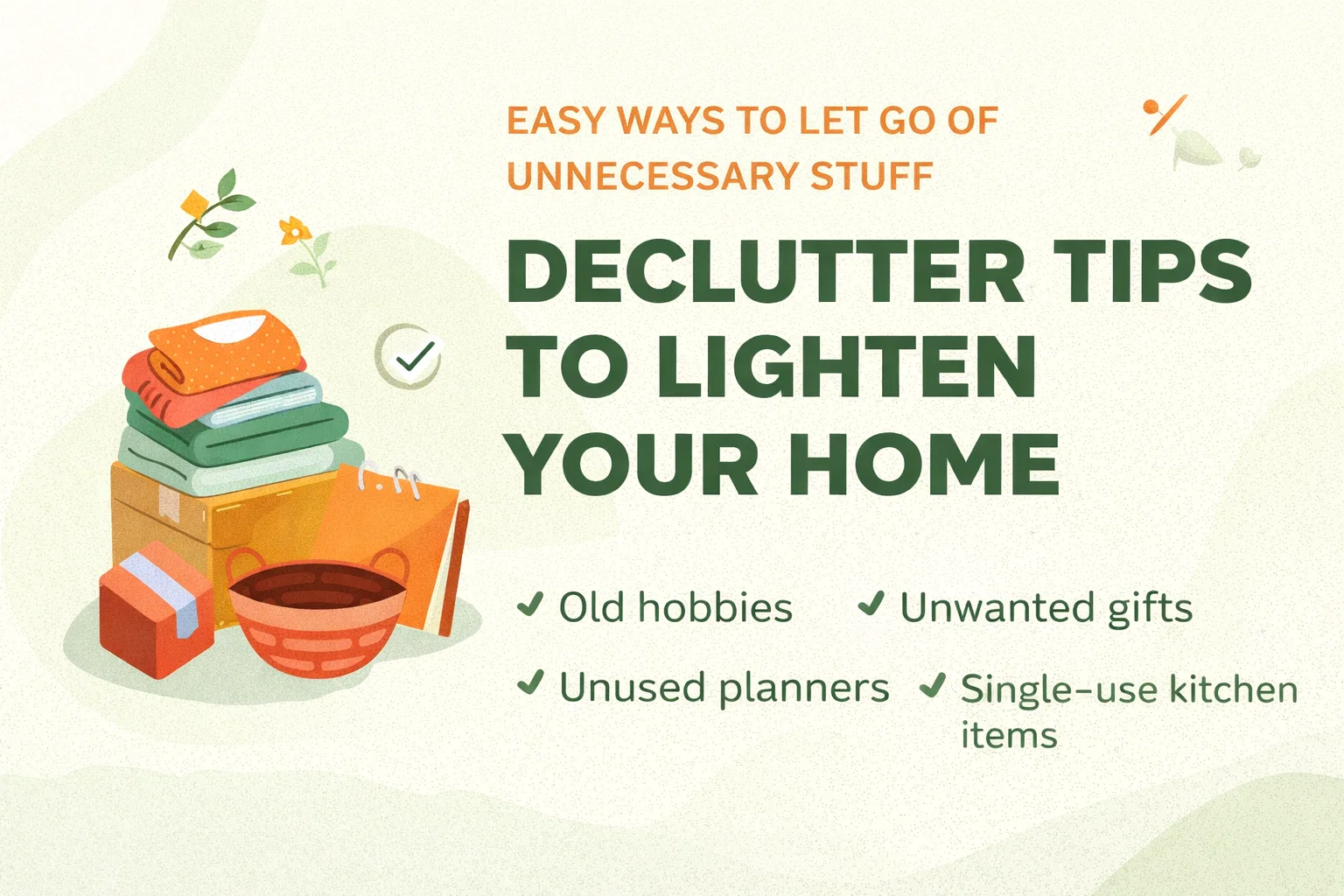
Many of us fall into the trap of buying a beautiful new planner every January, only to stop using it by February. These half-filled notebooks and unused planners can create a sense of failed productivity. If you have moved on to a digital system or a different style of journaling, there is no need to keep the ghosts of past organization attempts. Keep the notes that are truly important and recycle the rest.
The Kitchen and Bathroom Refresh
These two rooms are the functional engines of the home. When they are cluttered, daily routines like cooking and self-care become chores rather than rituals.
Single-Use Kitchen Gadgets
The kitchen is often home to “storage for no reason.” If you have a specialized tool that only performs one task—and you haven’t performed that task in a year—it is time for it to find a new home. Clearing your countertops and cabinets of rarely used appliances makes meal preparation faster and much more enjoyable.
Self-Care and Beauty Products
We often accumulate perfumes that do not quite suit our scent profile or makeup shades that looked different under store lights. In the bathroom, “aspirational” self-care items like bath salts you never use or hair products that didn’t work for your texture often sit at the back of the cabinet. Go through your vanity and keep only the products that make you feel pampered and refreshed. Discard expired items and donate unopened products that simply were not a match for you.
Creating Lasting Habits for an Organized Home
Decluttering is not a one-time event; it is a lifestyle. Once you have cleared these thirty categories, the goal is to prevent the weight from returning. This requires a shift in how you bring new items into your environment.
The One-In, One-Out Rule
To maintain your new, lighter home, adopt the rule that for every new item you bring in, one old item must leave. This forces you to evaluate whether a new purchase is truly worth the space it will occupy. It encourages mindful consumption and ensures that your home stays curated rather than crowded.
Evaluating Storage for No Reason
Storage bins are often the enemies of a decluttered home. We buy bins to hide the mess, but all we are doing is organizing our clutter. Before you buy a new basket or storage container, ask yourself if you actually need the items inside it. Often, the best storage solution is simply having fewer things to store.
Reclaiming Your Sanctuary
A home should be a place of restoration. When we fill it with things that no longer fit, tools we do not use, and reminders of things we “should” be doing, we turn our sanctuary into a source of stress. By methodically working through small, tiny declutters, you are not just cleaning a room; you are practicing self-respect.
Start with the easiest category first. Maybe it is the drawer of old purses or the pile of unused storage baskets in the laundry room. As you see the physical space open up, you will likely find that your mind feels clearer and your energy levels improve. The beauty of the “tiny declutter” philosophy is that it is sustainable. You do not need a massive dumpster or a professional organizer; you just need a few minutes and the willingness to let go.
Conclusion
Transformation does not have to be loud or dramatic. Sometimes, the most powerful changes happen quietly, one discarded tech box or donated sweater at a time. As you move through your home and identify the items that have survived long enough without being used, you gain a new perspective on what you truly value. A lighter home leads to a lighter heart, providing you with the space to breathe, create, and focus on the experiences that matter far more than possessions. Take the first step today by choosing just one item from this list and letting it go. Your future, lighter self will thank you.