
Hair Porosity Guide How to Test and Care for Low, Medium, High Porosity Hair
Have you ever felt like your hair has a mind of its own? You buy the most expensive masks, follow every viral TikTok trend, and yet your strands still feel like straw or, conversely, look like an oil slick by noon. The missing piece of the puzzle usually isn’t the brand of shampoo you’re using; it’s your hair porosity. Understanding this single biological factor can completely transform your hair care routine from a guessing game into a science. If you have been struggling with frizz, breakage, or product buildup, it is time to get back to the basics and learn exactly what your hair needs to thrive.
What Exactly Is Hair Porosity?
At its core, hair porosity refers to your hair’s ability to absorb and retain moisture. Think of each strand of hair as being covered in tiny shingles, much like a roof. These shingles are known as the cuticles. When these cuticles are laid flat and tight, it is difficult for water to get in. When they are lifted or damaged, water enters easily but escapes just as quickly. Genetics play a massive role in your natural porosity, but external factors like heat styling, chemical treatments, and environmental exposure can change your porosity over time.
The Three Levels of Porosity
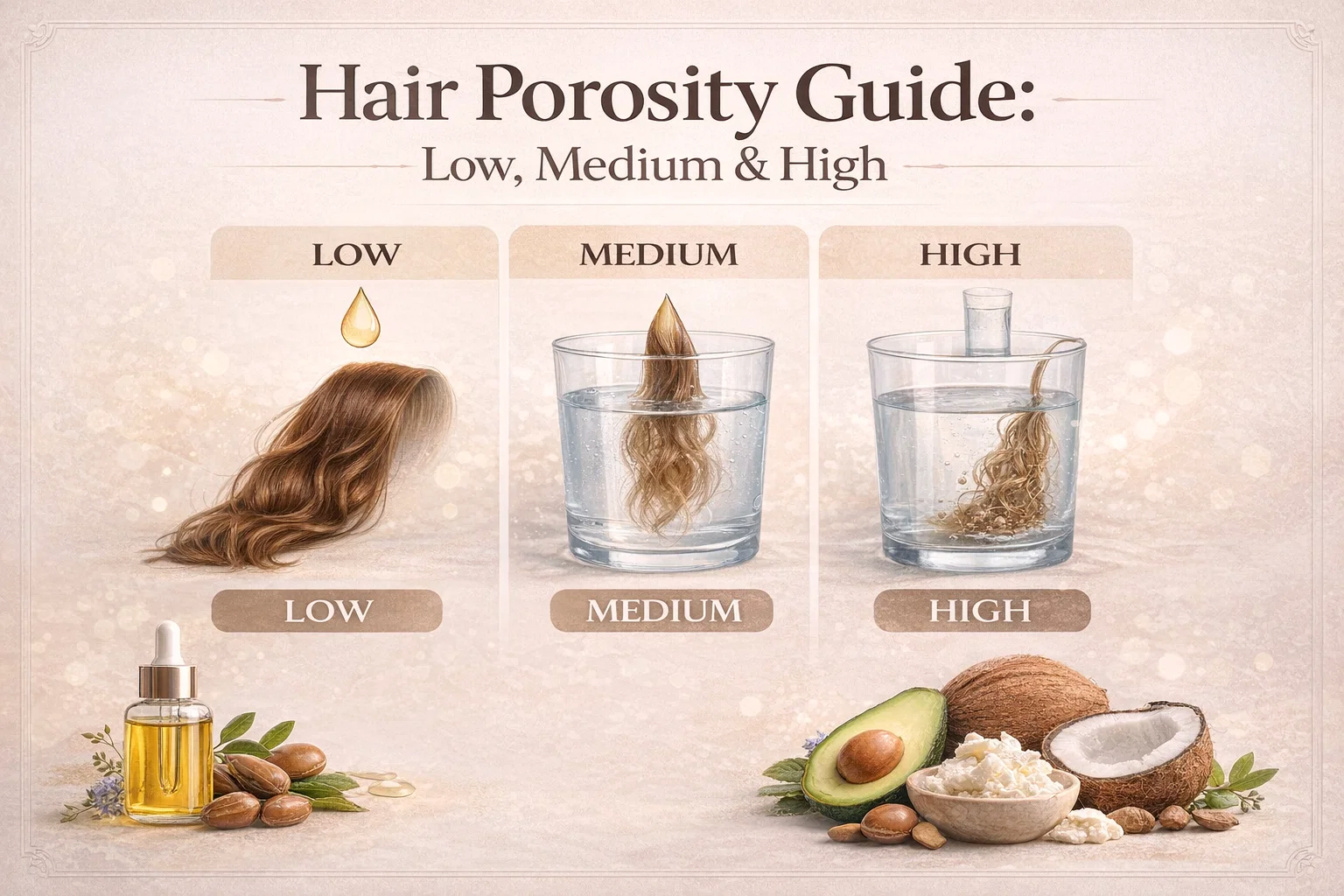
Most people fall into one of three categories: low, medium, or high. Low porosity hair has cuticles that are tightly bound, making it water-resistant. Medium porosity is the “Goldilocks” zone where moisture moves in and out at a healthy rate. High porosity hair has gaps and holes in the cuticle, often due to damage, which leads to chronic dryness because the moisture simply evaporates as soon as it is applied.
The Simple Hair Porosity Test: Step by Step
Before you go out and buy a whole new shelf of products, you need to know where you stand. The easiest way to do this is the Float Test. It is simple, free, and takes less than five minutes. All you need is a clear glass of room temperature water and a single strand of clean hair.
- Step 1: Start with clean, dry hair. It is vital that your hair is free of oils or leave-in conditioners, as these can coat the strand and skew the results.
- Step 2: Drop the hair strand into the glass of water.
- Step 3: Watch what happens over the next 2 to 4 minutes.
Interpreting Your Results
If the hair floats on the very top of the water even after several minutes, you have low porosity. The water cannot penetrate the tight cuticle. If the hair slowly sinks and settles somewhere in the middle of the glass, congratulations, you have medium porosity. If the hair immediately or quickly sinks to the bottom of the glass, you have high porosity, meaning the hair absorbed the water instantly and became heavy.
Managing Low Porosity: The Challenge of Penetration
Low porosity hair is often described as “stubborn.” Because the cuticles are so tightly closed, products tend to sit on top of the hair rather than soaking in. This leads to heavy buildup and a greasy feeling, even if the hair feels dry underneath. If you notice that water beads up on your hair when you step into the shower, you are likely in this category.
Best Practices for Low Porosity
The secret to managing low porosity hair is warmth. Heat helps to gently lift those stubborn cuticles so that moisture can actually enter the shaft. When you apply a deep conditioner, use a hooded dryer or a warm towel to “open the door” for the ingredients. Stick to lightweight, water-based products rather than heavy creams or butters which will only cause buildup.
The Best Oils for Low Porosity
- Jojoba Oil: This oil is molecularly very similar to our natural scalp sebum, making it light enough to penetrate.
- Argan Oil: A “dry” oil that provides shine without weighing down the hair.
- Grapeseed Oil: Extremely lightweight and great for sealing in moisture without a greasy residue.
Medium Porosity: The Sweet Spot of Hair Health
If you have medium porosity hair, consider yourself lucky. Your cuticles are slightly raised just enough to let moisture in while keeping it trapped inside. This hair type usually requires the least amount of maintenance and holds styles, curls, and color very well. It looks healthy and bouncy with minimal effort.
Maintenance Tips for Medium Porosity
The goal here is balance. You want to maintain the perfect ratio of moisture and protein. While your hair is resilient, it can still be pushed into the high porosity category if you overdo it with bleach or high-heat tools. Regular use of a standard rinse-out conditioner followed by a light leave-in treatment is usually all you need to keep your strands in peak condition.
The Best Oils for Medium Porosity
- Sweet Almond Oil: Provides a great boost of vitamins and seals the cuticle perfectly.
- Olive Oil: A bit heavier, but excellent for maintaining elasticity.
- Coconut Oil: Great for preventing protein loss, though it should be used in moderation to avoid stiffness.
High Porosity: The Struggle with Retention
High porosity hair is like a sponge. It takes in water immediately, which is why it gets wet the second you step into the rain. However, because the cuticles are raised or damaged, that moisture exits just as fast. This leads to hair that feels dry shortly after washing, tangles easily, and is prone to intense frizz in humid weather.
Care Strategies for High Porosity
For high porosity hair, the focus shifts from getting moisture in to sealing it in. You need thick, creamy products that act as a physical barrier. The LOC method (Leave-in, Oil, Cream) is often a lifesaver for this hair type. You should also try rinsing your hair with cool water at the end of your shower to help manually flatten the cuticles.
The Best Oils and Butters for High Porosity
- Shea Butter: A heavy hitter that provides a thick protective layer.
- Jamaican Black Castor Oil: Highly viscous and excellent for strengthening damaged strands.
- Avocado Oil: Rich in fatty acids that help fill the gaps in the hair cuticle.
Common Myths About Hair Porosity
One of the biggest misconceptions is that porosity never changes. In reality, your hair’s porosity can vary along the length of a single strand. The hair closest to your scalp is usually “newer” and might have lower porosity, while your ends, which have seen more sun and styling, might be highly porous. This is why many people find that their ends need much heavier products than their roots.
Another myth is that high porosity always means damaged hair. While chemical damage is a frequent cause, some people are simply born with naturally high porosity hair. In these cases, it isn’t about “fixing” the hair but rather learning how to coat and protect it so it doesn’t lose its natural luster.
Building Your New Routine
Now that you know your type, it is time to audit your bathroom cabinet. If you have low porosity hair and you’ve been using heavy shea butter, it is time to swap it for a light argan oil. If you have high porosity hair and have been wondering why your light spray-in conditioner isn’t working, it is time to upgrade to a rich cream. Remember that consistency is key. It might take a few weeks for your hair to adjust to a new routine, but once you start feeding your hair exactly what it lacks, the results will be undeniable.
Pay attention to how your hair reacts to different environments. Does it puff up the moment you walk outside? That is a sign your seal isn’t strong enough. Does it feel “crunchy” after using a specific product? You might be experiencing protein overload. Your hair is constantly communicating with you; you just need to know the language of porosity to understand what it is saying.
Conclusion: Embrace Your Unique Texture
Learning your hair porosity is like receiving a manual for your own head. No two people have the exact same hair journey, but understanding the science of the cuticle gives you the power to make informed decisions. Whether you are battling the “water-resistant” nature of low porosity or the “leaky” nature of high porosity, there is a solution that will lead to soft, manageable, and healthy hair. Take the float test today, experiment with the recommended oils, and start treating your hair with the specific care it deserves. Your best hair days are just one porosity check away!
Would you like me to create a customized weekly hair care schedule for your specific porosity type?