9 Essential Healthy Hair Care Tips Routine for Shiny, Strong Hair Healthy Hair Guide
Have you ever looked in the mirror and wished your hair had that extra bounce, shine, and vitality often seen in professional hair commercials? Achieving radiant, healthy hair is not just about the expensive salon treatments you get once every few months. Instead, it is a daily commitment to a holistic routine that starts from within and extends to how you handle your strands every single day. The journey to luscious locks is paved with consistent, gentle habits that protect your hair from damage while providing it with the nutrients it needs to thrive.
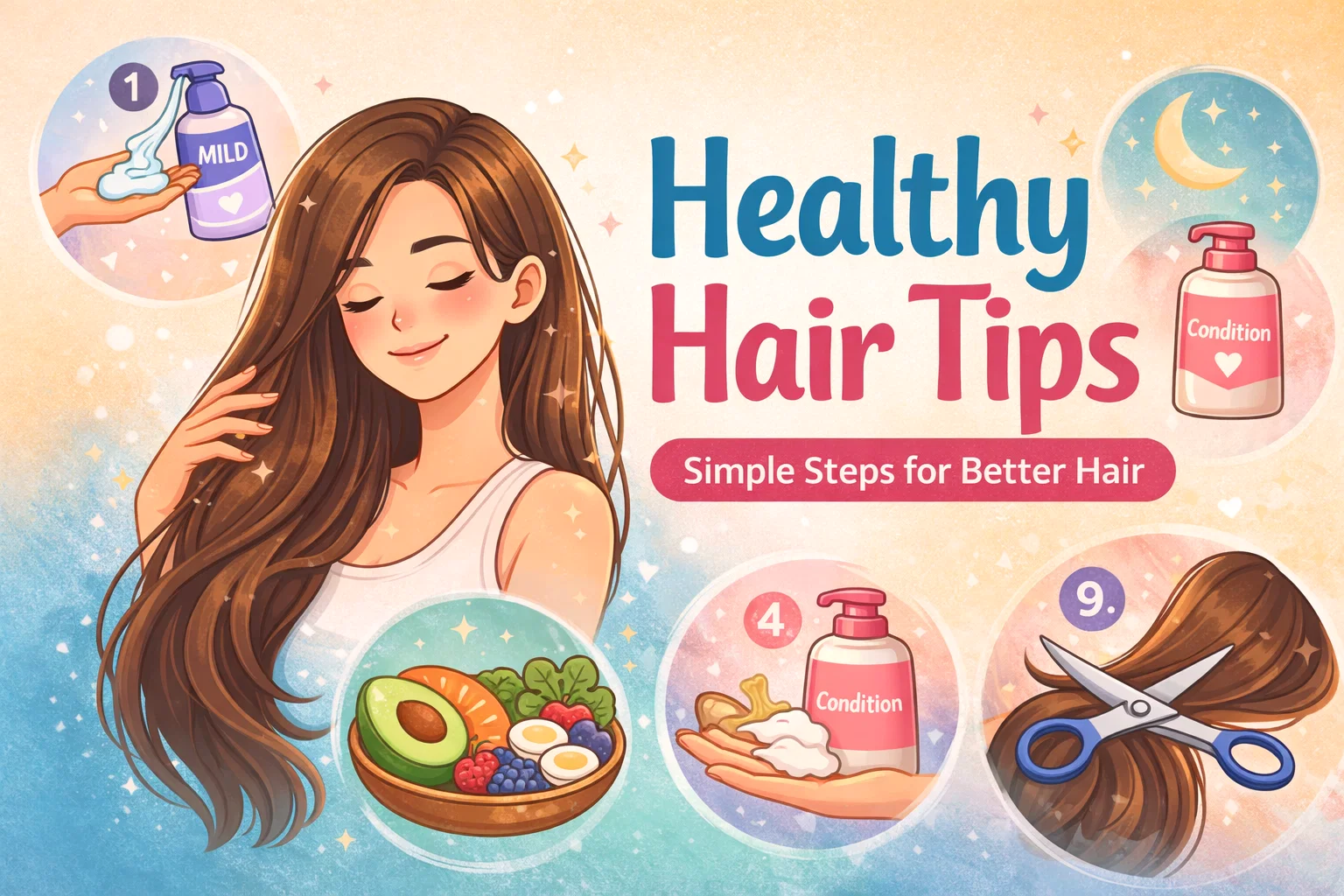
The image we are looking at today serves as a perfect roadmap for anyone wanting to revitalize their hair care regimen. It highlights nine essential pillars of hair health, ranging from the products you use in the shower to the food you put on your plate. By following these simple yet effective tips, you can transform dull, brittle hair into a crowning glory that radiates health. Let us dive deep into each of these steps and explore the science and strategy behind a perfect hair care routine.
1. The Foundation: Using a Mild Shampoo
Every great hair care routine starts with a clean slate, but the way you cleanse matters more than you might think. Many commercial shampoos are formulated with harsh sulfates and detergents that strip away the natural oils your scalp produces to keep your hair moisturized. When you use a mild, sulfate-free shampoo, you are effectively removing dirt and excess sebum without compromising the integrity of the hair cuticle.
Think of your hair like a delicate fabric. You would not wash silk with a heavy duty industrial cleaner, and your hair deserves the same level of care. A mild shampoo maintains the natural pH balance of your scalp, which prevents irritation and dryness. When your scalp is healthy and balanced, it provides the perfect environment for strong hair follicles to grow.
Choosing the Right Formula for Your Hair Type
When searching for a mild shampoo, look for ingredients like aloe vera, glycerin, and natural oils. These components provide moisture while the cleansing agents do their job. If you have color treated hair, a mild shampoo is even more critical as it prevents your color from fading prematurely. By making this one small switch, you will notice that your hair feels softer and looks much more vibrant over time.
2. The Power of Regular Conditioning
If shampooing is about cleansing, conditioning is about restoration. Conditioning regularly is non negotiable if you want to maintain elasticity and shine. A good conditioner works by sealing the hair cuticle, which is the outermost layer of the hair shaft. When the cuticle is flat and sealed, light reflects off it more easily, giving your hair that coveted glossy appearance.
Conditioner also acts as a shield against environmental stressors like pollution and wind. It replenishes the moisture lost during the washing process and makes detangling much easier. Without regular conditioning, hair becomes prone to knots, which leads to breakage during brushing. Make sure to focus the product on the mid lengths and ends of your hair, as these are the oldest parts of the strand and need the most hydration.
3. Mastering the Frequency of Your Routine
One of the most common mistakes people make is over washing their hair. The infographic suggests a frequency of two to three times a week, and there is a very good reason for this. Washing your hair every single day can lead to a rebound effect where your scalp overproduces oil to compensate for what is being stripped away. This creates a cycle of greasiness that is hard to break.
By spacing out your washes, you allow your natural oils to travel down the hair shaft, providing natural nourishment. This frequency also reduces the amount of mechanical stress placed on the hair from scrubbing and drying. On the days you do not wash, you can use a dry shampoo to refresh your roots or simply rinse with water if you have had a particularly sweaty workout.
4. Minimizing Heat Damage
We all love the look of a professional blowout or perfectly curled waves, but excessive heat is the enemy of healthy hair. High temperatures from blow dryers, flat irons, and curling wands can literally cook the proteins in your hair, leading to permanent structural damage and split ends. The red “X” over the heat tools in our guide is a reminder to give your hair a break.
Whenever possible, embrace your natural texture and let your hair air dry. If you must use heat, always apply a heat protectant spray first. This creates a thin barrier that slows down the conduction of heat and preserves moisture. Try to use the lowest heat setting that still gets the job done, and never use a flat iron on damp hair, as this can cause the water inside the strand to boil and burst the hair shaft.
5. The Benefits of Gentle Scalp Massage
A gentle scalp massage is one of the most underrated tools in your hair care arsenal. It is not just about relaxation; it is about biology. Massaging your scalp increases blood flow to the hair follicles. This boost in circulation ensures that oxygen and vital nutrients reach the roots of your hair more efficiently, which can actually stimulate faster and thicker growth.
You can perform a scalp massage while you are in the shower or as a nightly ritual before bed. Use the pads of your fingers and move in small, circular motions across your entire scalp. Spending just five minutes a day on this practice can improve scalp health, reduce tension, and even help to distribute natural oils more evenly across your roots.
6. Nutritional Support: Eating for Hair Growth
What you put into your body is just as important as what you put on your hair. Hair is primarily made of a protein called keratin, so a diet rich in high quality protein is essential. The image shows a bowl filled with eggs, salmon, avocado, and leafy greens. These are the building blocks of healthy hair.
- Salmon: Rich in omega 3 fatty acids that provide shine and support scalp health.
- Eggs: A great source of biotin and protein, both of which are crucial for hair strength.
- Avocado: Packed with vitamin E, which protects the hair from oxidative stress.
- Leafy Greens: Provide iron and folate, which help red blood cells carry oxygen to your scalp.
Hydration also plays a massive role. Drinking plenty of water ensures that your hair remains hydrated from the inside out. When you are dehydrated, your body directs water to essential organs first, meaning your hair and skin are the first to suffer. Keep a water bottle handy to ensure your strands stay supple.
7. Nighttime Protection Habits
Did you know that your cotton pillowcase might be causing hair breakage? Standard cotton creates friction as you toss and turn at night, which can lead to tangles and frizz. Protecting your hair at night is a game changer for maintaining your style and the health of your strands. Using a silk or satin bonnet, or even switching to a silk pillowcase, allows your hair to glide smoothly without snagging.
If you have long hair, consider braiding it loosely before bed. This prevents it from tangling during the night and reduces the amount of brushing required the next morning. These small nighttime adjustments ensure that you wake up with hair that is manageable and healthy rather than a matted mess.
8. The Importance of Gentle Combing
Brushing your hair should be a gentle ritual, not a race. When you pull harshly at tangles, you are essentially snapping the hair fibers. Always start detangling from the ends and slowly work your way up to the roots. This method prevents small knots from turning into giant clumps that are impossible to remove without damage.
Using a wide tooth comb or a brush designed specifically for detangling is highly recommended, especially when your hair is wet. Wet hair is much more fragile and prone to stretching and breaking than dry hair. By being patient and using a light hand, you preserve the length and thickness of your hair over time.
9. Regular Trims to Maintain Health
It might seem counterintuitive to cut your hair when you are trying to grow it out, but regular trims are essential for long term health. Split ends are like a tear in a piece of fabric; if you do not fix it, the tear will continue to travel up the length of the hair. This leads to hair that looks thin and frizzy at the bottom.
Getting a trim every eight to twelve weeks removes those damaged ends before they can cause further issues. This keeps your hair looking thick, full, and neat. A regular “dusting” of the ends ensures that the hair that remains is strong and healthy, allowing you to reach your length goals with hair that actually looks good.
Consistency is the Secret to Results
In conclusion, achieving the hair of your dreams is a marathon, not a sprint. It is the combination of these nine habits that creates a truly effective routine. By choosing mild products, nourishing your body with nutrient dense foods, and handling your hair with the respect it deserves, you are investing in your long term confidence and beauty.
Start by implementing one or two of these tips this week. Perhaps you can swap your shampoo or start a nightly scalp massage. As these habits become second nature, you can add more layers to your routine. Your hair is an extension of your overall health, and with a little bit of patience and care, you can enjoy a vibrant, healthy mane that shines from every angle. Remember, your hair is the crown you never take off, so treat it with the love it deserves!