
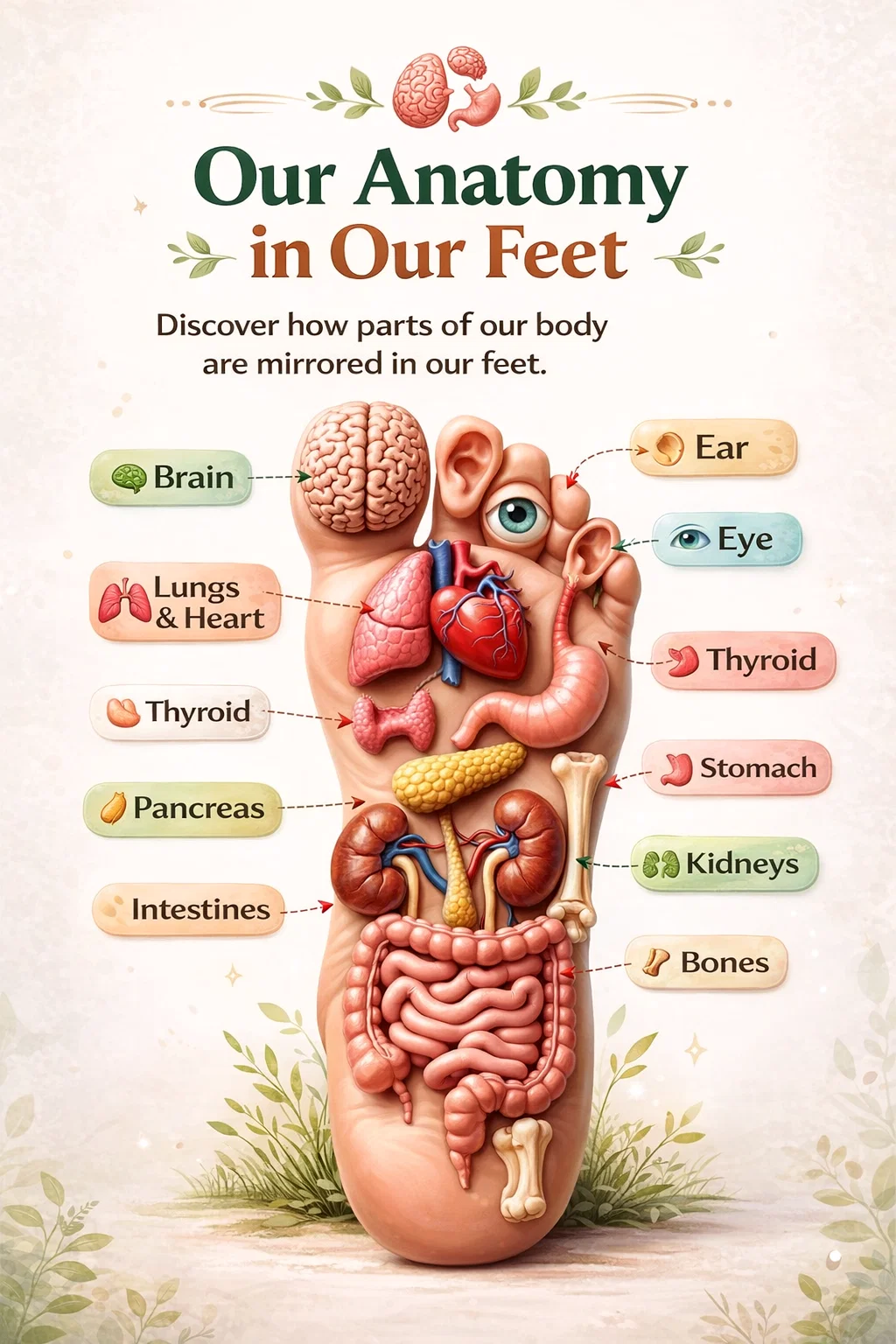
Foot Reflexology Map Guide Learn How Your Feet Connect to Your Organs
Have you ever noticed how a simple foot rub can suddenly make your entire body feel lighter? It is not just your imagination. For centuries, various cultures have looked at the human foot not just as a means of transportation, but as a complex map of our entire internal anatomy. The concept of reflexology suggests that every organ, gland, and system in your body has a corresponding reflection point on your feet. When you look at the intricate details of a foot map, you start to realize that your wellness might literally be standing right under you.
The Fascinating History of Foot Reflexology
The practice of using the feet to heal the body is far from a modern trend. While many people associate it with contemporary spa treatments, its roots go deep into ancient history. Evidence suggests that similar practices existed in ancient Egypt, China, and among indigenous tribes in the Americas. These civilizations understood that the body is an interconnected web of energy and physical pathways.
In the early 20th century, Western medicine began to take notice. Dr. William Fitzgerald, often called the father of zone therapy, discovered that applying pressure to specific zones on the hands and feet could provide an anesthetic effect in other parts of the body. This laid the groundwork for what we now recognize as modern reflexology. It is a practice built on the idea that clearing blockages in the feet can help restore the natural flow of energy throughout the entire system.
Decoding the Map: How Your Feet Mirror Your Body
If you look closely at the anatomy of the foot through the lens of reflexology, the layout is quite logical. The toes generally represent the head and neck area. As you move down the foot, you move down the body. The ball of the foot corresponds to the chest and heart, the arch relates to the digestive organs, and the heel is connected to the lower back and pelvic region.
The Upper Zone: Brain, Eyes, and Ears
The tips of your toes are considered the gateway to your neurological health. The big toe is heavily associated with the brain and pituitary gland. If you are feeling mentally fatigued or struggling with a foggy head, many practitioners suggest focusing on the pads of the big toes. Moving slightly down, the areas beneath the smaller toes are linked to the eyes and ears. This is why some people find that a focused foot massage helps relieve the strain from staring at screens all day.
The Vital Center: Heart and Lungs
Just below the toes lies the ball of the foot, which is the reflex area for the heart and lungs. This area is vital for our life force. In a world where stress often causes shallow breathing and chest tension, working on this part of the foot can encourage deeper respiration and a calmer heart rate. It is the center of our physical and emotional rhythm.
The Core: Digestion and Metabolism
The arch of the foot is a busy area, mirroring the complexity of our abdominal cavity. Here you will find points for the stomach, liver, pancreas, and kidneys. If you struggle with sluggish digestion or low energy levels, this central zone is often where tension is held. The intricate relationship between the gut and the brain is well documented in modern science, and reflexology has been addressing this connection for ages by treating the mid-foot area.
The Science and Theory Behind the Practice
While skeptics might wonder how a point on the heel can affect the lower back, there are several theories that explain how reflexology works from a physiological standpoint. One of the most common explanations involves the nervous system. Our feet are packed with thousands of nerve endings. By stimulating these nerves, we send signals to the central nervous system, which in turn can modulate pain and tension in related areas of the body.
Another theory focuses on the concept of vital energy, often called Qi or Prana. When this energy becomes blocked due to stress or illness, it can manifest as physical pain. Reflexology aims to break up these “congestions” or crystalline deposits that form at the nerve endings in the feet. By smoothing out these bumps, practitioners believe they are clearing the pathways for health to return.
Benefits of Integrating Foot Wellness into Your Routine
You do not need to be a professional reflexologist to reap the rewards of foot-focused wellness. Integrating simple foot care into your daily life can lead to significant improvements in your overall quality of life. Here are some of the primary benefits people experience:
- Deep Relaxation: In our fast paced world, the nervous system is often stuck in a fight or flight state. Stimulating reflex points helps shift the body into a parasympathetic state, which is where healing and rest occur.
- Improved Circulation: Massaging the feet encourages blood flow to the extremities and assists the lymphatic system in removing toxins from the body.
- Pain Management: Many people find relief from headaches, back pain, and menstrual cramps by targeting specific points on their feet.
- Better Sleep: A foot ritual before bed can signal to your brain that it is time to wind down, leading to deeper and more restorative sleep.
How to Practice Self-Reflexology at Home
Taking care of your own feet is a wonderful act of self-love. You can start by finding a comfortable place to sit where you can easily reach your feet. Using a bit of natural oil or lotion can help your hands glide smoothly across the skin. Start with general strokes to warm up the foot, then use your thumb to apply steady pressure to areas that feel tight or tender.
Focusing on Stress Relief
If your goal is to reduce anxiety, spend extra time on the area just below the ball of the foot, in the center. This is often associated with the solar plexus, a major nerve center for stress. Deep, circular motions here can help you feel more grounded and centered.
Boosting Your Energy
For a morning pick-me-up, try “walking” your thumbs across the entire bottom of your foot. Start at the heel and move toward the toes. This stimulates the various nerve endings and helps wake up your internal organs, giving you a natural boost of vitality for the day ahead.
The Emotional Connection to Our Feet
In many holistic traditions, the feet represent our connection to the earth and our foundation in life. If we feel unsupported or “unbalanced” emotionally, it often shows up in the way we carry ourselves and the health of our feet. By paying attention to our anatomy at our feet, we are essentially checking in with our foundation. It is a way of asking ourselves if we are standing on solid ground.
When we ignore our feet, we are ignoring the part of us that bears the weight of our entire existence. Giving them attention is a symbolic way of acknowledging everything we do and everywhere we go. It fosters a sense of gratitude for the body’s incredible ability to function and support us day after day.
Modern Wellness and the Reflexology Trend
Today, reflexology is finding its place alongside conventional medicine in integrative health clinics. Doctors and nurses are increasingly recognizing it as a valuable tool for patient comfort, particularly in oncology and maternity wards. It is a non-invasive, drug-free way to improve patient outcomes and reduce the perception of pain. The beauty of this practice is that it complements other treatments without interference.
As we move toward a more holistic understanding of health, the “map” of the foot serves as a perfect metaphor. It reminds us that no part of the body exists in isolation. Everything is connected. When we treat one part, we treat the whole.
Conclusion: A Step Toward Better Health
The intricate anatomy displayed at our feet is a testament to the wonder of the human body. Whether you view reflexology as a spiritual practice, an ancient tradition, or a neurological stimulus, the results are hard to ignore. By taking the time to understand this internal map, you gain a powerful tool for self-care that is literally always within reach.
Next time you feel overwhelmed or physically drained, take a moment to look at your feet. They carry your history, your weight, and quite possibly, the key to your relaxation. Embracing foot wellness is a simple, effective, and beautiful way to honor your health. So, go ahead and give your feet the attention they deserve. Your whole body will thank you for it.