
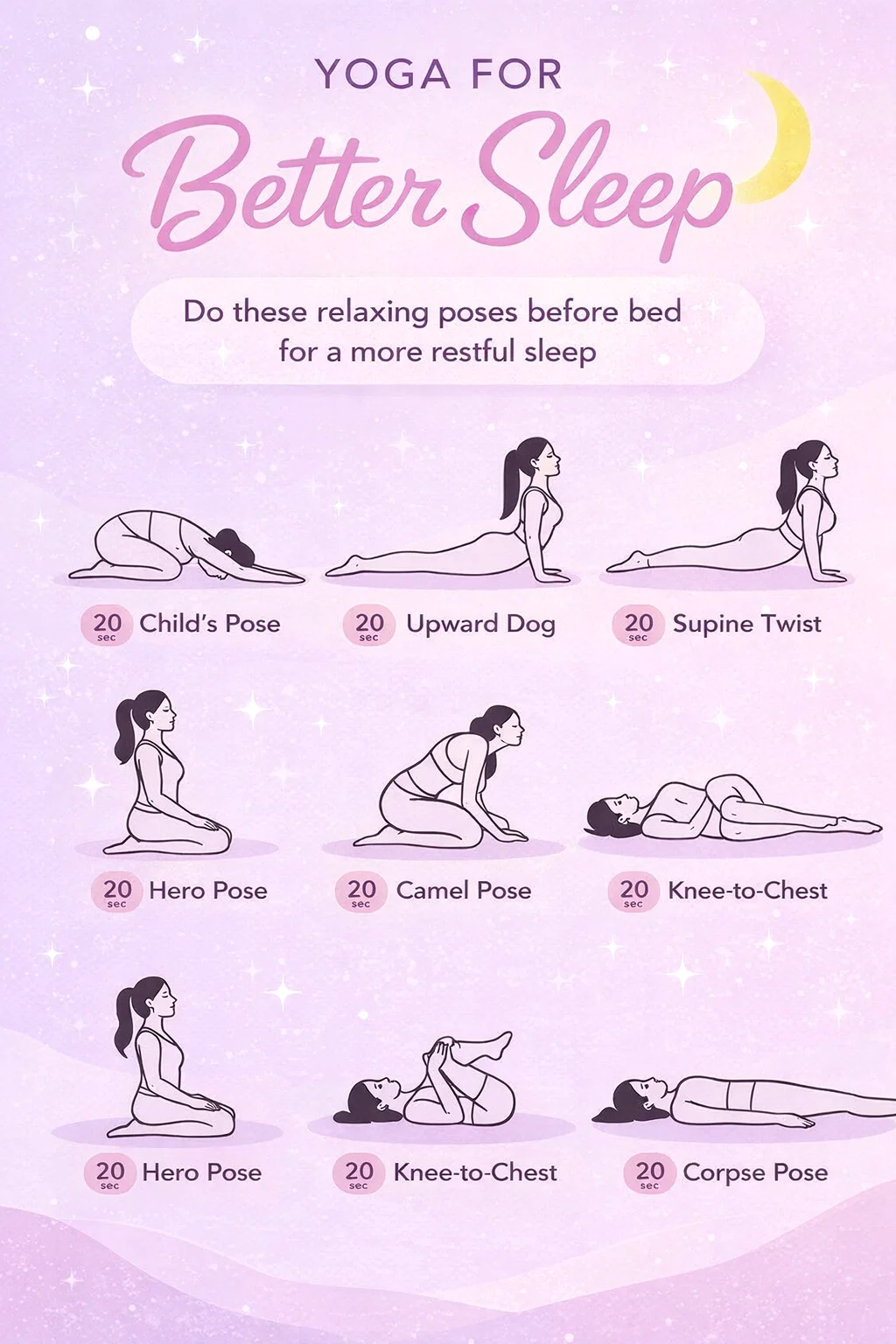
9 Relaxing Yoga Poses for Better Sleep Nighttime Stretching Routine Deep Sleep Tips
In a world that never seems to stop moving, finding a moment of true peace can feel like a Herculean task. We spend our days hunched over laptop screens, navigating stressful commutes, and scrolling through endless digital feeds. By the time our heads finally hit the pillow, our bodies are often humming with residual tension and our minds are racing at a hundred miles per hour. It is no wonder that so many of us struggle to fall asleep or wake up feeling like we have barely rested at all. However, the secret to a deeper, more restorative slumber might not be found in a pill or a high-tech gadget, but in the ancient practice of yoga. By dedicating just a few minutes before bed to intentional movement and mindful breathing, you can signal to your nervous system that it is finally time to power down.
The Science of Stretching for Sleep
Before we dive into the specific poses, it is helpful to understand why yoga is such an effective tool for insomnia and poor sleep quality. When we are stressed, our bodies operate in a state of sympathetic nervous system dominance, better known as the fight or flight response. This state increases our heart rate and keeps our muscles primed for action, which is the exact opposite of what we need for sleep.
Yoga helps shift the body into the parasympathetic nervous system, or the rest and digest state. By combining physical postures with slow, rhythmic breathing, you actively lower your cortisol levels and reduce physical tightness. Stretching specifically targets the areas where we hold the most stress: the hips, the neck, and the lower back. When you release that physical grip, the mental grip often follows suit.
Shutterstock
Preparation: Creating Your Sanctuary
To get the most out of this routine, you should create an environment that encourages relaxation. Dim the lights in your bedroom, perhaps light a lavender-scented candle, and ensure your space is at a comfortable, cool temperature. You do not need a professional yoga studio to do these movements; your bedroom floor or even a firm mattress will work perfectly. The goal here is comfort, not athletic performance.
1. Hero Pose (Virasana)
We begin our journey to sleep with the Hero Pose. This is a grounded, seated posture that helps to stretch the tops of the feet and the thighs while encouraging a tall, straight spine. It is an excellent way to center yourself and begin focusing on your breath.
To perform this, kneel on the floor with your knees together and your feet slightly wider than your hips. Sit back so your seat rests on the floor between your heels. If this feels too intense for your knees, place a pillow or a rolled-up blanket between your feet to sit on. Rest your hands on your thighs and take deep, steady breaths for 20 seconds. Focus on the sensation of your breath entering and leaving your body.
2. Child’s Pose (Balasana)
Next, we move into perhaps the most iconic restorative posture: Child’s Pose. This pose is a literal retreat from the world. It gently stretches the lower back and hips while providing a sense of safety and introspection.
From your kneeling position, bring your big toes together and widen your knees. Fold your torso forward, resting your forehead on the ground or a pillow. Extend your arms out in front of you or let them rest by your sides. As you breathe, feel your back expanding with every inhale. This is a perfect moment to let go of any lingering thoughts from the day.
Shutterstock
3. Upward Dog (Urdhva Mukha Svanasana)
After being curled up, it is time to open the front of the body. Upward Dog is fantastic for reversing the effects of sitting at a desk all day. It opens the chest, lungs, and abdomen, allowing for fuller, deeper breaths.
Lie on your stomach and place your hands on the floor next to your lower ribs. Press into the tops of your feet and your palms to lift your torso and legs off the floor. Keep your shoulders pulled back and away from your ears. Look slightly upward, but do not strain your neck. Hold this for 20 seconds, feeling the stretch across your heart center.
Moving into Deeper Releases
Now that we have awakened the spine and calmed the initial mental chatter, we move into poses that target deeper muscle groups and encourage a profound sense of physical release.
4. Camel Pose (Ustrasana)
Camel Pose is a powerful heart-opener. It can be intense, as it stretches the entire front of the body including the throat and chest. Many people find that heart-opening poses can release stored emotional tension, which is a great way to clear the deck before sleep.
Kneel with your knees hip-width apart. Place your hands on your lower back for support and slowly lean back, reaching your chest toward the ceiling. If you feel flexible enough, you can reach back to grab your heels. Keep your neck long and comfortable. Remember, we are looking for a gentle opening, not a painful stretch. If it feels like too much, stay in the supported version with your hands on your hips.
5. Butterfly Fold (Baddha Konasana)
We often hold a significant amount of stress in our hips. The Butterfly Fold targets the inner thighs and groin, while the forward fold aspect calms the brain.
Sit with the soles of your feet together and your knees dropping out to the sides. Hold your feet or ankles and slowly fold your chest toward your feet. Do not worry about how far down you go. Focus on the sensation of your hips softening. This pose is like a physical “off” switch for the tension accumulated from walking and sitting throughout the day.
Shutterstock
6. Supine Twist (Supta Matsyendrasana)
Twists are often described as “detoxifying” for the spine. They help to neutralize the back and stimulate the digestive organs, which can be very helpful if you have a habit of eating late dinners.
Lie on your back and bring your knees into your chest. Drop both knees over to the right side while keeping your left shoulder pressed firmly into the floor. You can look toward the left to complete the twist. Hold for 20 seconds, then switch sides. This rhythmic wringing out of the spine feels incredibly therapeutic and helps the body feel “aligned” before settling in for the night.
The Final Descent into Rest
The final three poses in our sequence are designed to bring your energy levels as low as possible, preparing your brain for the transition into the sleep cycles.
7. Bridge Pose (Setu Bandhasana)
Bridge Pose is a gentle inversion. By having your heart slightly higher than your head, you encourage a soothing effect on the nervous system. It also strengthens the legs and opens the shoulders.
Lie on your back with your knees bent and feet flat on the floor, hip-width apart. Press into your feet to lift your hips toward the ceiling. You can keep your arms by your sides or interlace your fingers underneath your back. Keep your chin slightly tucked toward your chest to protect your neck. This pose builds a small amount of heat that then dissipates, leaving you feeling heavy and relaxed.
8. Knee-to-Chest (Apanasana)
This pose is also known as the “wind-relieving pose.” It is a wonderful way to massage the abdominal organs and completely flatten the lower back against the earth, which can relieve the pressure that causes tossing and turning.
While lying on your back, simply hug your knees into your chest. You can rock gently from side to side to give your lower back a mini-massage against the floor. This is a very nurturing, comforting position that signals to the brain that you are safe and supported.
9. Corpse Pose (Savasana)
The most important pose of all is the Corpse Pose. While it looks like just lying down, it is actually an active practice of total stillness and surrender. This is the bridge between your yoga practice and sleep.
Lie flat on your back, arms by your sides, palms facing up. Let your feet flop open naturally. Close your eyes and scan your body from your toes to the top of your head, consciously relaxing every single muscle. Feel the weight of your body sinking into the floor. Stay here as long as you like. In many cases, you might even choose to do this pose in bed so that you can drift off directly from this state of total relaxation.
Shutterstock
Explore
Maximizing Your Results: Consistency is Key
While doing this routine once will certainly help you feel better tonight, the true benefits of yoga for sleep come with consistency. Over time, your body will begin to recognize these poses as a “sleep trigger.” As soon as you move into Hero Pose, your brain will start producing the melatonin needed for a good night’s rest. Try to commit to this 20-second-per-pose routine for at least one week. You will likely find that you fall asleep faster, stay asleep longer, and wake up with less stiffness in your joints.
Beyond the physical poses, remember to keep your breathing slow. Inhale for a count of four, and exhale for a count of six. This extended exhale is the fastest way to calm the vagus nerve and tell your heart to slow down. Yoga is not just about the shapes your body makes; it is about the internal state you create.
Conclusion: Your Path to Better Rest
We often treat sleep as a luxury or something that should just happen automatically. In reality, sleep is a skill that requires the right preparation. By using these nine simple poses, you are taking an active role in your own well-being. You are choosing to set aside the stress of the day in favor of a peaceful night. Whether you are a seasoned yogi or someone who has never touched a yoga mat before, this routine is accessible, effective, and deeply healing. Tonight, instead of reaching for your phone, try reaching for your toes. Your body and mind will thank you in the morning.
Would you like me to create a printable PDF guide of these poses or perhaps generate a 5-minute guided meditation script to accompany this routine?