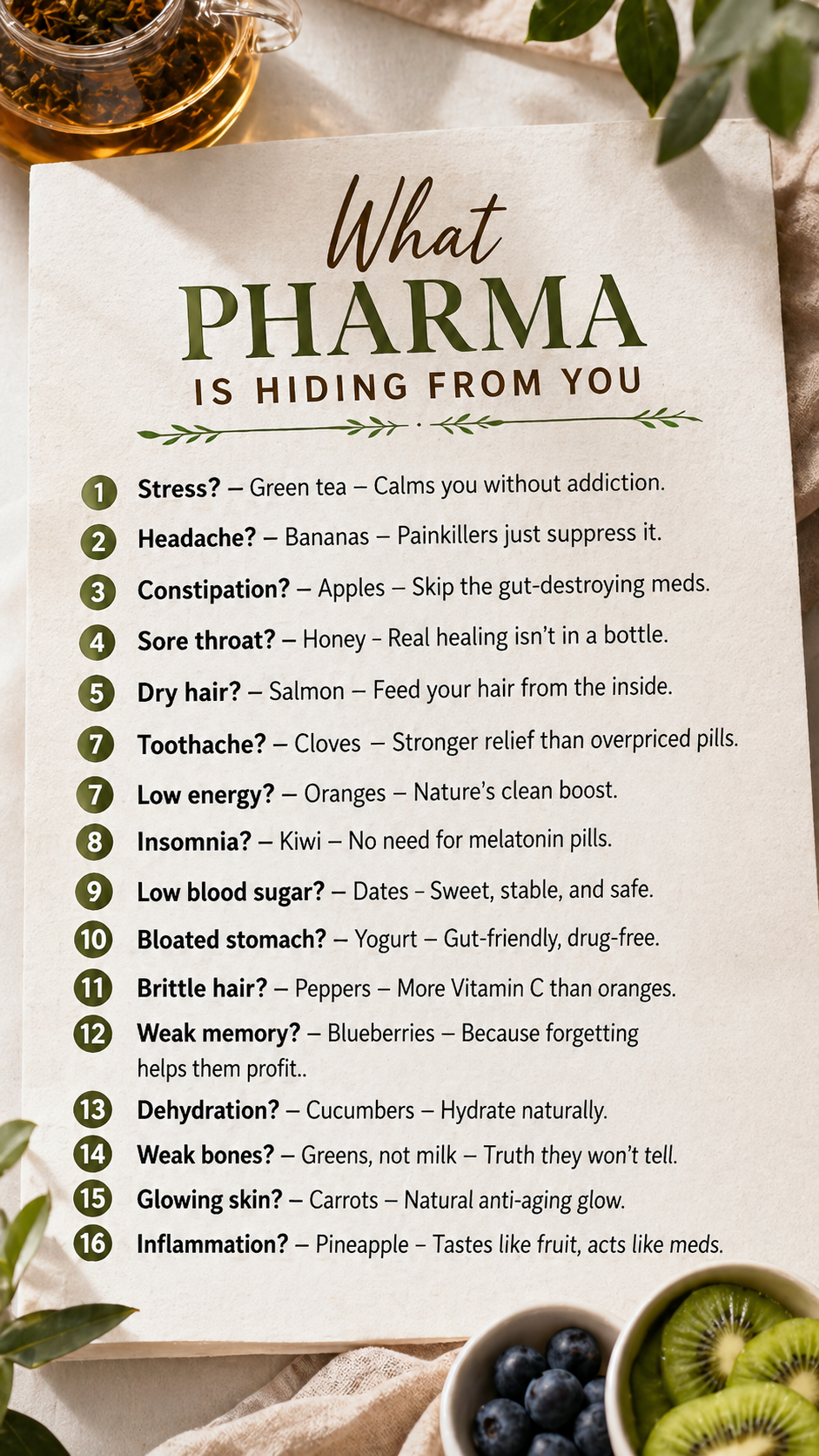
16 Natural Remedies Big Pharma Doesnt Want You to Know About
Natural wellness tips are everywhere, and food-based remedies are one of the most popular topics in healthy living. From green tea for calm energy to honey for a scratchy throat, many people love the idea of using simple kitchen staples to support everyday comfort. The key is knowing what these foods can realistically do, how to use them safely, and when it is better to seek professional medical care.
This guide explores common natural remedies inspired by everyday foods, herbs, fruits, and nutrient-rich ingredients. Think of it as a practical, balanced starting point for building a more mindful wellness routine, not a replacement for medical treatment.
Key Takeaways
- Many everyday foods can support hydration, digestion, energy, and general wellness.
- Natural remedies may help with mild discomfort, but they should not replace needed medical care.
- Foods like berries, citrus, cucumbers, greens, and yogurt fit easily into a healthy routine.
- Herbs and pantry staples such as honey, cloves, and green tea have long-standing traditional uses.
- The safest approach is to use natural options as supportive habits, not guaranteed cures.
Why Food-Based Natural Remedies Are So Popular
People are drawn to natural remedies because they feel familiar, affordable, and easy to try. A banana, apple, cup of tea, spoon of honey, or bowl of yogurt is less intimidating than a long label full of unfamiliar ingredients. These options also fit into daily life without requiring a complicated wellness plan.
Another reason food-based remedies are so appealing is that they connect health with prevention. Instead of waiting until the body feels completely run down, many people use nourishing foods to support energy, digestion, skin, immunity, and comfort over time.
Important: Natural does not always mean risk-free. Some foods and herbs can interact with medications, affect blood sugar, trigger allergies, or worsen certain conditions. Use these ideas thoughtfully and speak with a qualified healthcare professional if symptoms are severe, unusual, or persistent.
Everyday Foods That Support Common Wellness Goals
The most useful natural remedies are often simple foods that already belong in a balanced diet. They may not work like medicine, but they can provide hydration, fiber, antioxidants, vitamins, minerals, and soothing effects that support overall well-being.
Green Tea for Calm Focus
Green tea is often associated with calm energy because it contains caffeine along with L-theanine, a compound linked with relaxation and focus. For people who feel jittery from coffee, green tea may offer a gentler ritual.
A warm cup can also create a calming pause in the day. Sometimes the habit itself matters as much as the ingredient. Sitting down, breathing slowly, and sipping something warm can help signal the body to slow down.
Bananas for Quick Energy and Nutrient Support
Bananas are convenient, soft, naturally sweet, and easy to digest for many people. They provide carbohydrates for quick energy and potassium, an important mineral involved in normal muscle and nerve function.
While bananas are not a headache cure, they can be a smart snack if discomfort is related to skipped meals, low energy, or dehydration. Pairing a banana with nut butter or yogurt can make it more satisfying.
Apples for Fiber and Digestive Routine
Apples are a classic high-fiber fruit that can support regular digestion when eaten as part of an overall fiber-rich diet. The peel contains much of the fiber, so eating whole apples is usually more beneficial than drinking apple juice.
For constipation, hydration, movement, and total fiber intake all matter. Apples can help, but they work best as part of a broader routine that includes vegetables, whole grains, legumes, and enough water.
Soothing Pantry Staples for Mild Discomfort
Some traditional remedies remain popular because they are comforting and easy to use. Honey, cloves, citrus fruits, and warm drinks are commonly reached for during seasonal changes, busy weeks, or moments of minor discomfort.
Honey for a Scratchy Throat
Honey has a thick texture that can coat the throat and provide temporary soothing comfort. It is often stirred into warm water or tea with lemon. This simple combination is popular because it feels gentle and comforting.
Honey should not be given to babies under one year old. Anyone with blood sugar concerns should also be mindful of portions, since honey is still a form of sugar.
Cloves for Traditional Oral Comfort
Cloves have a long history in traditional oral care, largely because clove oil contains eugenol, a compound associated with a numbing sensation. However, clove oil is strong and can irritate tissue if used incorrectly.
Pro Tip: Tooth pain should never be ignored. Food or spice-based comfort may offer temporary relief, but toothaches often need dental evaluation to address the real cause.
Oranges and Citrus for Bright, Refreshing Nutrition
Oranges are rich in vitamin C and water, making them a refreshing option when energy feels low. Their natural sweetness and bright flavor can also make them an appealing alternative to sugary snacks.
Citrus fruits support a nutrient-dense diet, but they are not a magic fix for fatigue. Low energy can come from sleep issues, stress, dehydration, low iron, thyroid concerns, or many other factors. Food helps, but context matters.
Why This Matters
The best natural wellness habits are not about rejecting modern care. They are about using nourishing foods wisely, listening to your body, and knowing when everyday support is enough and when expert help is needed.
Foods for Sleep, Digestion, and Balanced Energy
Sleep, digestion, and energy are three wellness concerns that often overlap. Poor sleep can affect appetite. Digestive discomfort can affect energy. Skipping meals can affect mood and focus. That is why simple nutrition habits can make a noticeable difference.
Kiwi as a Bedtime-Friendly Fruit
Kiwi is often discussed in wellness circles as a sleep-friendly fruit. It is light, tangy, and rich in nutrients. For some people, having a small fruit-based snack in the evening can feel satisfying without being too heavy.
A consistent bedtime routine matters more than any single food. Dim lights, less screen time, calming rituals, and regular sleep schedules all play important roles.
Dates for Natural Sweetness
Dates are naturally sweet and provide carbohydrates, fiber, and minerals. They can be a useful option when you want something sweet with more nutritional value than candy.
Because dates are concentrated in natural sugar, portion size matters, especially for anyone monitoring blood sugar. Pairing dates with nuts can slow down the snack and make it more balanced.
Yogurt for Gut-Friendly Eating
Yogurt can be a gut-friendly food when it contains live and active cultures. It also provides protein and calcium. Plain yogurt is often a better everyday choice than heavily sweetened varieties.
Add berries, sliced banana, chia seeds, or a drizzle of honey for flavor. This turns yogurt into a balanced snack that supports digestion, fullness, and overall nutrition.
Beauty and Wellness Foods for Hair, Skin, and Bones
Many natural remedy lists include foods for glowing skin, strong hair, and healthy bones. While appearance is influenced by genetics, hormones, sleep, stress, and overall health, nutrition still plays a meaningful role.
Salmon for Hair and Skin Nutrients
Salmon is valued for protein and omega-3 fatty acids. Protein supports the body’s repair and maintenance processes, while omega-3 fats are part of a heart-healthy eating pattern.
For people who do not eat fish, other options include chia seeds, flaxseeds, walnuts, and algae-based omega-3 supplements, depending on personal needs and preferences.
Peppers for Vitamin C
Bell peppers are excellent sources of vitamin C, which helps support normal collagen formation. Collagen is important for skin, connective tissue, and overall structure in the body.
Red, yellow, orange, and green peppers can be added to salads, wraps, stir-fries, omelets, and snack plates. Their crunch makes healthy meals feel more colorful and satisfying.
Greens for Bone-Supportive Nutrients
Leafy greens provide minerals and vitamins that support a nutrient-rich diet. Some greens contain calcium, magnesium, and vitamin K, all of which are connected to bone health.
Milk is not the only food associated with bone support, but dairy can still be part of a healthy diet for many people. The bigger picture includes calcium, vitamin D, protein, strength training, and overall dietary quality.
Important: Strong bones are built through consistent habits. A single food will not do the job alone. Combine calcium-rich foods, vitamin D awareness, movement, and regular checkups for the best long-term support.
Hydration, Antioxidants, and Inflammation Support
Hydrating foods and antioxidant-rich fruits often appear in natural wellness routines because they are simple, colorful, and easy to enjoy. They help make healthy eating feel fresh instead of restrictive.
Cucumbers for Hydration
Cucumbers are mostly water, which makes them a refreshing addition to meals and snacks. They are especially useful in salads, infused water, sandwiches, and snack plates.
Hydration is not just about drinking plain water. Fruits and vegetables with high water content can contribute to daily fluid intake while adding texture and nutrients.
Blueberries for Memory-Friendly Nutrition
Blueberries are widely loved for their antioxidants and deep color. They fit easily into oatmeal, smoothies, yogurt bowls, salads, and healthy desserts.
No single food can guarantee better memory, but antioxidant-rich fruits can be part of a brain-supportive lifestyle that includes sleep, learning, movement, social connection, and balanced meals.
Pineapple for a Bright Anti-Inflammatory Eating Pattern
Pineapple contains bromelain, an enzyme that is often discussed in relation to inflammation. More importantly for everyday meals, pineapple is flavorful, hydrating, and rich in vitamin C.
Use pineapple in smoothies, salsa, fruit bowls, grilled dishes, or yogurt. It adds sweetness and acidity without needing heavy sauces or extra sugar.
How to Use Natural Remedies Safely
Natural wellness works best when it is practical and balanced. A good rule is to start with food habits that support your whole body, rather than chasing quick fixes for every symptom.
- Choose whole foods most of the time.
- Stay hydrated throughout the day.
- Pay attention to patterns in sleep, digestion, stress, and energy.
- Use herbs and concentrated oils carefully.
- Seek medical or dental care for serious, recurring, or worsening symptoms.
It is also smart to avoid extreme claims. Phrases that promise instant cures or suggest that one food can replace all medicine are usually oversimplified. Real wellness is built through consistent choices and informed decisions.
Simple Ways to Add These Foods to Your Routine
You do not need to overhaul your entire kitchen to benefit from nutrient-rich foods. Start with small swaps and easy additions.
Morning Ideas
Try green tea instead of a second coffee, yogurt with blueberries, oatmeal topped with banana, or a smoothie with kiwi and spinach.
Afternoon Ideas
Snack on apple slices, oranges, cucumbers with hummus, bell pepper strips, or dates paired with almonds.
Evening Ideas
Enjoy salmon with greens, warm tea with honey, a light kiwi snack, or a colorful salad with peppers and pineapple salsa.
At a Glance
- Green tea, honey, and cloves are traditional comfort staples.
- Fruits like bananas, oranges, kiwi, dates, and blueberries offer everyday nutrition.
- Cucumbers and pineapple add hydration and freshness.
- Yogurt, salmon, peppers, and greens support a balanced wellness routine.
- Use natural remedies as support, not as a substitute for proper care.
Conclusion: Build a Smarter Natural Wellness Routine
Food-based natural remedies can be a wonderful way to feel more connected to your health. Green tea, bananas, apples, honey, salmon, oranges, kiwi, dates, yogurt, peppers, blueberries, cucumbers, greens, carrots, and pineapple all bring something useful to the table. They are colorful, accessible, and easy to include in everyday meals.
The healthiest approach is not about choosing between natural remedies and modern care. It is about understanding what everyday foods can support, respecting their limits, and making choices that help your body feel nourished. Use these ideas as inspiration for a balanced lifestyle, and always get professional guidance when symptoms need more than home support.
Tags
Natural Remedies Home Remedies Holistic Health Healthy Living Wellness Tips Food as Wellness Clean Eating