
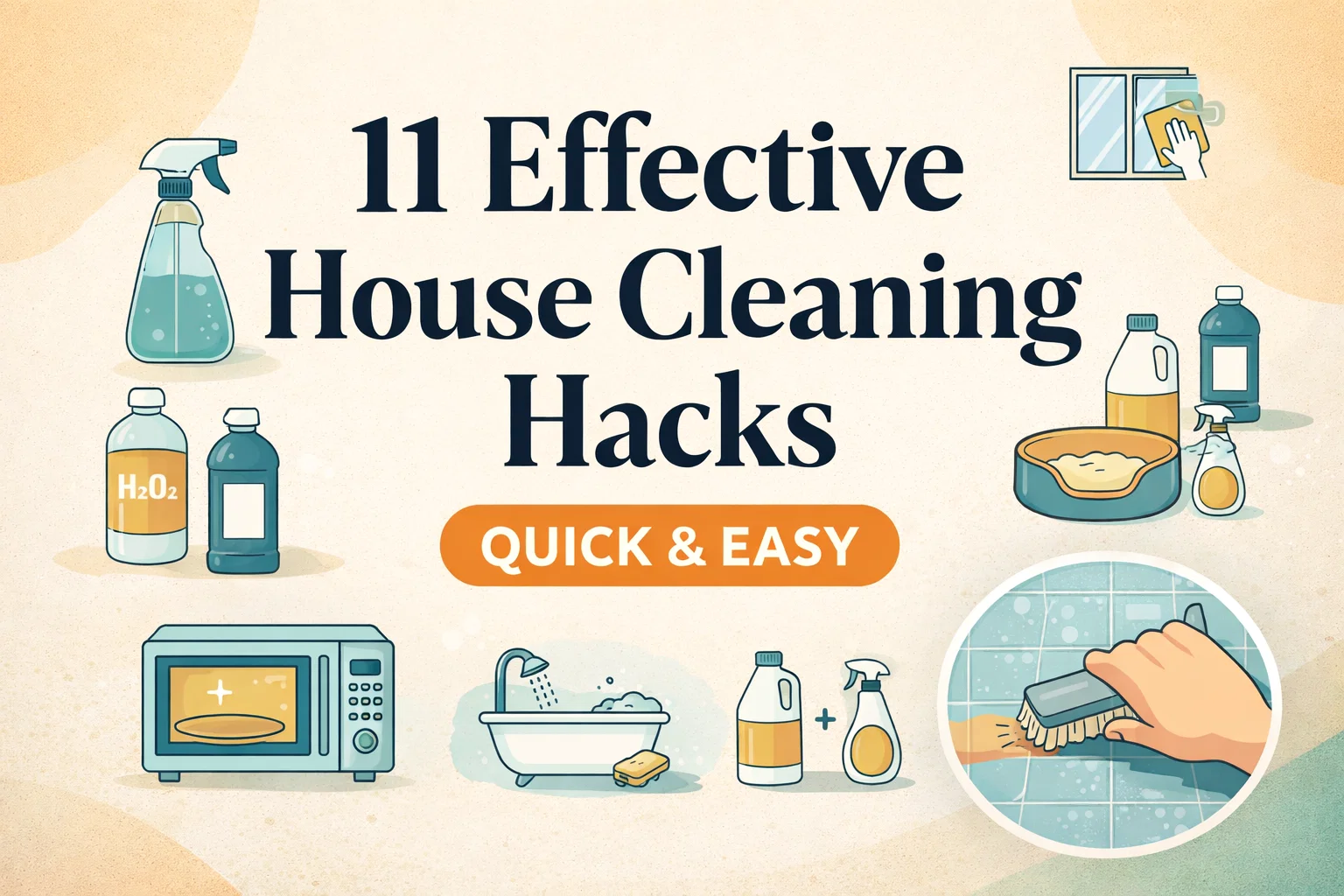
11 Quick and Effective House Cleaning Hacks That Actually Work Deep Cleaning Tips
Maintaining a clean and organized home often feels like a full time job that nobody actually applied for. We all want that sparkling, magazine-ready living space, but the reality of busy schedules, kids, pets, and daily life usually gets in the way. Most of us reach for expensive, chemical-heavy cleaners the moment we see a smudge or a stain, yet the secret to a pristine home might already be sitting in your kitchen pantry. From the surprising power of cornstarch to the disinfecting magic of simple rubbing alcohol, these eleven house cleaning hacks are designed to save you time, money, and a whole lot of elbow grease. Let us dive into the ultimate guide to cleaning smarter, not harder.
The Science of Natural Cleaning Ingredients
Before we jump into the specific hacks, it is worth understanding why these simple ingredients work so well. Many people assume that if a cleaner does not smell like a laboratory, it is not working. However, basic chemistry tells a different story. Ingredients like white vinegar, baking soda, and hydrogen peroxide have specific properties that make them formidable opponents for grime and bacteria.
The Power of Acetic Acid in Vinegar
White vinegar is a staple in natural cleaning because of its acetic acid content. This mild acid is powerful enough to dissolve mineral deposits, cut through grease, and even kill certain types of bacteria and mold. When used as a steam agent, it breaks the molecular bonds of dried-on food, which is why it is the perfect solution for a messy microwave.
Baking Soda as a Deodorizer and Abrasive
Baking soda, or sodium bicarbonate, is a base. This makes it incredible at neutralizing acidic odors, like those found in carpets or refrigerators. Its slightly gritty texture also provides a gentle abrasive quality that can scrub away stains without scratching delicate surfaces like tile or porcelain. When combined with a liquid, it forms a paste that can lift deep-seated dirt from grout lines.
Transforming Your Kitchen with Minimal Effort
The kitchen is often the heart of the home, but it is also the room that collects the most grease and grime. Cleaning the kitchen usually involves hours of scrubbing, but these hacks change the game entirely.
The Microwave Steam Trick
One of the most hated chores is scrubbing the inside of a microwave. Those splatters of tomato sauce and hardened cheese seem to weld themselves to the walls. To fix this without scrubbing, simply fill a microwave-safe bowl with a mixture of water and two tablespoons of white vinegar. Run the microwave on high for five minutes until it is filled with steam. Let it sit for another two minutes before opening the door. The steam will have loosened all the food particles, allowing you to wipe the entire interior clean with a single paper towel.
Cutting Grease with Isopropyl Alcohol
Stovetops and range hoods are notorious for developing a sticky, tacky layer of grease that soap and water just spread around. Isopropyl alcohol, or rubbing alcohol, is a powerful solvent. It dissolves oils on contact. By applying a small amount of alcohol to a microfiber cloth, you can cut through that stubborn grease in seconds, leaving your stainless steel and glass surfaces completely smooth and residue-free.
Deep Cleaning the Bathroom Without Harsh Chemicals
The bathroom presents its own set of challenges, specifically mold, mildew, and soap scum. While many reach for bleach, there are safer and more effective ways to get that deep-clean feeling.
Whitening Grout with Baking Soda and Peroxide
Grout is porous, meaning it soaks up dirty mop water and moisture, eventually turning gray or yellow. To restore it to its original brightness, mix baking soda and hydrogen peroxide into a thick paste. Apply the paste to your grout lines and let it sit for about ten to fifteen minutes. The peroxide acts as a natural bleaching agent while the baking soda lifts the dirt. After a quick scrub with an old toothbrush, your floor or shower will look brand new.
Eliminating Mold with a Potent Duo
Mold thrives in the damp corners of a shower. A mixture of white vinegar and hydrogen peroxide is a potent one-two punch for mold spores. While you should not pre-mix them in a bottle because they can create peracetic acid, using them in succession or safely diluted can effectively kill mold and prevent it from returning. Always ensure you have proper ventilation when performing deep cleans in small spaces.
Crystal Clear Windows and Glass
If you have ever cleaned a window only to see streaks the moment the sun hits it, you know how frustrating glass cleaning can be. Most commercial glass cleaners contain soaps that actually leave a film behind.
The Secret Ingredient: Cornstarch
It sounds strange, but adding a tablespoon of cornstarch to your glass cleaning solution is the secret to a streak-free finish. Cornstarch is a very fine abrasive that helps remove stubborn bird droppings or pollen, and it helps the liquid dry uniformly. Mix it with water and vinegar in a spray bottle, and you will never go back to the blue stuff again.
Refreshing Your Living Spaces
Living rooms and bedrooms often suffer from “hidden” dirt, such as odors trapped in fabric and dust on leather furniture. Keeping these areas fresh contributes significantly to the overall feel of your home.
Neutralizing Pet Odors
We love our furry friends, but we do not always love how they make the house smell. To neutralize pet odors on furniture or in the air, mix white vinegar with a few drops of your favorite essential oils, like lavender or lemon. The vinegar kills the odor-causing bacteria, and the essential oils leave a light, natural fragrance behind. Do not worry about the vinegar smell; it dissipates completely once dry.
Revitalizing Leather Furniture
Leather is a skin, and it needs to be conditioned to prevent cracking over time. You do not need expensive leather balms. A simple DIY leather conditioner can be made using natural oils. Using a tiny amount of olive oil or specialized flaxseed oil on a soft cloth can buff out small scratches and provide a protective moisture barrier that keeps your sofa looking luxurious for years.
Disinfecting and Germ Control
In a post-pandemic world, we are all more conscious of germs. However, you do not need to douse your home in bleach to keep it safe. High-touch surfaces like doorknobs, light switches, and remote controls need frequent attention.
The 70 Percent Rule
When it comes to disinfecting, 70 percent isopropyl alcohol is actually more effective than 91 percent or 99 percent versions. This is because the water content in the 70 percent solution slows down evaporation, allowing the alcohol to penetrate the cell walls of bacteria and viruses more effectively. Keeping a small spray bottle of this in your kitchen or entryway is an easy way to sanitize surfaces instantly without needing to rinse them off.
Tackling Clogged Drains Safely
A slow-draining sink is a major inconvenience. While caustic soda is a powerful tool for unclogging drains, it must be handled with extreme caution. It is highly effective at dissolving hair and grease, but it can damage PVC pipes if used incorrectly or too frequently. Always wear gloves and eye protection, and consider using a drain snake first to minimize the need for heavy chemicals.
Practical Tips for a Sustainable Cleaning Routine
Adopting these hacks is not just about a cleaner home; it is about a more sustainable lifestyle. By moving away from single-use plastic bottles and harsh synthetic fragrances, you are creating a healthier environment for your family and reducing your ecological footprint.
- Invest in Microfiber: These cloths trap dirt rather than just moving it around, and they can be washed and reused hundreds of times.
- Label Your DIY Sprays: Always clearly mark your homemade cleaning bottles with their ingredients and the date you made them.
- Clean in Zones: Do not try to do the whole house at once. Pick one hack, like the microwave steam or the grout whitening, and master it before moving on.
The Psychological Benefits of a Clean Home
There is a proven link between a tidy environment and reduced stress levels. When our physical space is cluttered or dirty, our brains often feel the same way. By using these quick hacks, you remove the barrier of “it takes too long to clean,” making it easier to maintain a baseline of tidiness. Walking into a kitchen with a grease-free stove or a bathroom with white grout provides a sense of accomplishment and calm that carries over into the rest of your day.
Conclusion: Simple Changes, Big Results
Cleaning your home does not have to be an expensive or grueling ordeal. By leaning on the chemical properties of everyday household items, you can achieve professional-level results with a fraction of the effort. Whether you are using vinegar to blast through microwave grime or cornstarch to get your windows perfectly clear, these eleven hacks prove that the best solutions are often the simplest ones. Start with just one of these tips today, and you will be amazed at how quickly your home transforms into the sanctuary you deserve. Grab your spray bottle and get started on a fresher, brighter living space!
Would you like me to create a custom cleaning schedule or a shopping list for these DIY ingredients to help you get started?