Essential Vitamins Guide Why You Need Them What They Do for Your Body
Ever find yourself staring at the supplement aisle in the grocery store, completely overwhelmed by the rows of colorful bottles? We have all been there. Whether it is Vitamin A for your eyes or Vitamin B12 for your nerves, understanding what these tiny powerhouses actually do for your body is the first step toward a more vibrant and energized life. The secret to feeling your best often lies in the simple, everyday choices we make at the dinner table. When we eat smart, we truly do live better. This guide is designed to peel back the curtain on the world of vitamins, helping you navigate your nutritional needs with confidence and ease.
The Foundation of Vitality: Why Vitamins Matter
Vitamins are organic compounds that our bodies need in small quantities to function correctly. Think of them as the spark plugs in a car engine; while they are not the fuel itself, the engine simply cannot run without them. Most vitamins cannot be produced by the body in sufficient amounts, which means we must get them from the foods we eat or, when necessary, through high quality supplements. They play a role in everything from repairing cellular damage to converting food into useable energy.
When you maintain optimal vitamin levels, you are essentially giving your body the tools it needs to maintain its own internal machinery. This leads to clearer skin, stronger bones, a sharper mind, and a more resilient immune system. In a world full of processed options, returning to the basics of vitamin rich whole foods is one of the most radical acts of self care you can perform.
Fat Soluble vs. Water Soluble Vitamins
Before we dive into the specific roles of each vitamin, it is helpful to understand how the body processes them. Vitamins generally fall into two categories: fat soluble and water soluble. This distinction changes how they are stored and how often you need to consume them.
- Fat Soluble Vitamins (A, D, E, and K): These are stored in the body’s liver and fatty tissues. Because they are stored for long periods, you do not necessarily need to consume them every single day, but you do need healthy fats in your diet to help your body absorb them properly.
- Water Soluble Vitamins (C and the B-Complex family): These vitamins dissolve in water and are not stored by the body. Any excess is usually passed through your system, which means you need a steady, daily supply of these nutrients to keep your levels consistent.
A Deep Dive into Your Essential Vitamin Guide
Let us break down the specific benefits of the vitamins that keep you running at peak performance. Each one has a unique “personality” and a specific job to do within your biological systems.
Vitamin A: The Visionary Nutrient
Vitamin A is most famous for its role in maintaining healthy vision, particularly in low light conditions. It helps protect the surface of the eye and is essential for the health of your retina. Beyond your eyes, Vitamin A is a major player in skin health and immune function. It helps your skin cells regenerate, which is why you will often see it as a star ingredient in high end skincare products under the name retinol.
The B-Complex: Your Internal Power Plant
The B vitamins are a family of eight distinct nutrients that often work together to manage your metabolism and energy levels. If you are feeling sluggish, a B-complex deficiency might be the culprit.
- Vitamin B1 (Thiamine): This is your primary energy vitamin. It helps the body convert carbohydrates into energy, which is vital for heart function and healthy nerve cells.
- Vitamin B2 (Riboflavin): Focuses on growth and the production of red blood cells. It also helps in releasing energy from proteins.
- Vitamin B3 (Niacin): This is the metabolism master. It supports the digestive system, skin health, and nerve function by helping the body process fats and sugars.
- Vitamin B5 (Pantothenic Acid): Essential for the production of hormones and cholesterol. It plays a key role in the breakdown of fats and carbohydrates for energy.
- Vitamin B6 (Pyridoxine): A heavy hitter for immunity. It helps the body make antibodies to fight many diseases and maintains normal nerve function.
- Vitamin B7 (Biotin): The beauty vitamin! Biotin is widely known for strengthening hair and improving skin texture by helping the body process amino acids.
- Vitamin B9 (Folate): Crucial for cell growth and the formation of DNA. This is especially important during periods of rapid growth, such as pregnancy.
- Vitamin B12 (Cobalamin): The nerve protector. It is required for the proper function and development of the brain, nerves, and blood cells.
Vitamin C: The Healer and Protector
When you think of Vitamin C, you probably think of orange juice and the common cold. While it is excellent for the immune system, its primary role is healing. Vitamin C is necessary for the growth and repair of tissues in all parts of your body. It helps build collagen, a protein used to make skin, cartilage, tendons, and blood vessels. It is also a powerful antioxidant that blocks some of the damage caused by free radicals.
Vitamin D: The Sunshine Secret for Strong Bones
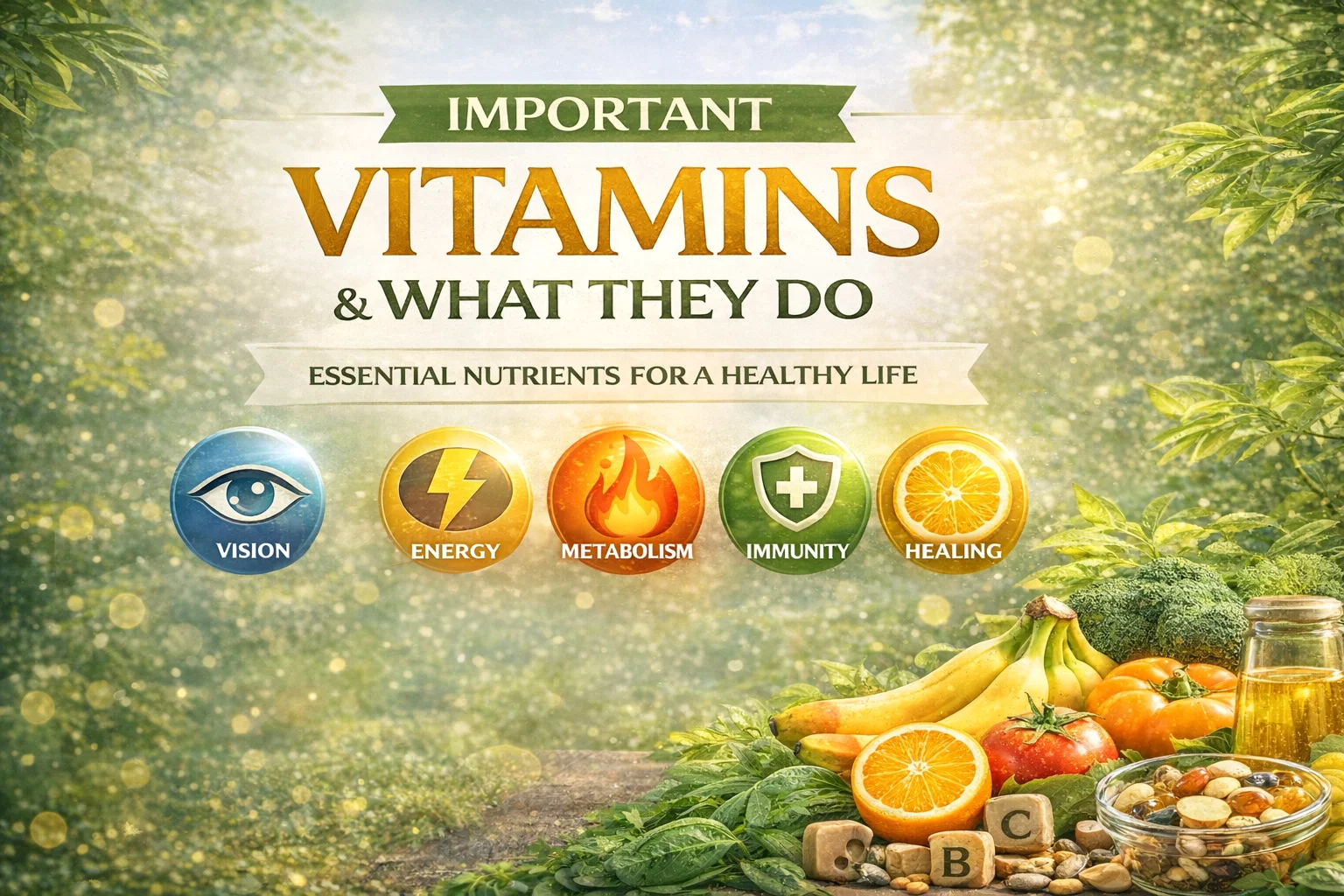
Vitamin D is unique because your body can actually produce it when your skin is exposed to sunlight. Its main job is to help the body absorb calcium, which is why it is labeled “for bones” on our guide. Without enough Vitamin D, bones can become thin, brittle, or misshapen. In recent years, researchers have also linked Vitamin D to improved mood and a lower risk of certain chronic illnesses.
Vitamin K: The Blood Guardian
Vitamin K is often the unsung hero of the vitamin world. Its primary responsibility is blood clotting. Without it, the body would not be able to stop bleeding after an injury. It also works in tandem with Vitamin D to ensure that calcium is deposited in your bones rather than in your arteries, making it vital for cardiovascular health as well.
How to Get Your Daily Dose Naturally
While supplements have their place, the gold standard for nutrition is always whole foods. When you eat a variety of colorful vegetables, fruits, and healthy fats, you are getting a complex “synergy” of nutrients that a pill simply cannot replicate.
Fill Your Plate with Color
One of the easiest ways to ensure you are getting a full spectrum of vitamins is to “eat the rainbow.” Bright orange carrots and sweet potatoes are loaded with Vitamin A. Deep leafy greens like spinach and kale provide a massive hit of Vitamin K and Folate. Vibrant citrus fruits and bell peppers are your best friends for Vitamin C. By varying the colors on your plate, you automatically vary the nutrients you are consuming.
The Role of Healthy Fats
Remember those fat soluble vitamins we mentioned earlier? To get the most out of your salads and roasted veggies, you need to include a source of healthy fat. Drizzling your greens with olive oil, adding a few slices of avocado to your toast, or tossing some walnuts into your morning oatmeal ensures that your body can actually absorb the Vitamins A, D, E, and K you are consuming.
Understanding Fortified Foods
In the modern world, many foods are “fortified,” meaning vitamins have been added during processing. Milk is often fortified with Vitamin D, and many cereal grains are fortified with B vitamins. While these can help fill gaps in your diet, they should be viewed as a backup to a diet primarily composed of fresh, unprocessed ingredients.
Signs Your Body Might Need More Support
Your body is incredibly communicative. When it is lacking a specific nutrient, it will often send out “warning signals” in the form of physical symptoms. Learning to listen to these cues can help you adjust your diet before a minor deficiency becomes a major health hurdle.
- Brittle hair and nails: Often a sign that you need more Biotin (B7) or iron.
- Mouth ulcers or cracks in the corners of the mouth: This can be linked to deficiencies in B vitamins, particularly Riboflavin (B2).
- Bleeding gums: While this can be a dental issue, it is also a classic sign of low Vitamin C levels.
- Poor night vision: A common early symptom of Vitamin A deficiency.
- Unexplained fatigue: This is a broad symptom, but it is frequently tied to low levels of Vitamin B12 or Vitamin D.
If you notice these symptoms persisting, it is always a good idea to consult with a healthcare professional. A simple blood test can often reveal exactly what your body is missing, allowing you to tailor your nutrition plan perfectly.
The Connection Between Vitamins and Mental Wellness
We often focus on the physical benefits of vitamins, but the impact on our mental state is just as profound. The brain is an energy intensive organ, and it requires a constant supply of nutrients to regulate mood, focus, and memory. The B-complex vitamins, in particular, are essential for the production of neurotransmitters like serotonin and dopamine, which are responsible for feelings of happiness and motivation.
Low levels of Vitamin D have been closely linked to seasonal affective disorder and general feelings of low mood. By ensuring your vitamin levels are optimized, you are not just protecting your body; you are creating a stable foundation for your mental and emotional health. Nutrition is a powerful tool in your mental health toolkit.
Practical Tips for a Vitamin Rich Lifestyle
Transitioning to a more nutrient dense lifestyle does not have to happen overnight. Small, sustainable changes are often more effective than radical overhauls. Here are a few practical ways to start today:
Start a “Daily Green” Habit
Try to incorporate at least one handful of dark leafy greens into your diet every single day. Whether you blend them into a morning smoothie, sauté them with garlic as a side dish, or use them as a base for a large salad, this one habit will significantly boost your intake of Vitamin K, Vitamin C, and various B vitamins.
Swap Your Snacks
Instead of reaching for processed crackers or sugary bars, try snacking on whole foods. An orange provides a burst of Vitamin C and hydration. A handful of almonds offers healthy fats and Vitamin E. These small swaps add up to a massive difference in your total daily nutrient intake.
Check Your Cooking Methods
Did you know that how you cook your food can affect its vitamin content? Water soluble vitamins, like C and B, can leach out into water if you boil your vegetables for too long. Steaming or roasting your veggies helps preserve more of their nutritional integrity, ensuring that the goodness ends up in your body rather than down the drain.
Conclusion: Your Journey to Better Health Starts Now
Taking control of your nutrition is one of the most empowering things you can do for your long term health. By understanding the roles of these essential vitamins, you are moving away from guesswork and toward a lifestyle of intentionality. Remember that your body is a complex, beautiful system that thrives when it is given the right building blocks. From the healing power of Vitamin C to the energy boost of Vitamin B1, every nutrient plays a part in the masterpiece that is your health.
As you go forward, keep it simple. Focus on variety, prioritize whole foods, and listen to the signals your body sends you. Eating smart is not about perfection; it is about making better choices one meal at a time. Here is to a healthier, more vibrant you! Save this guide, share it with a friend, and start your journey toward living better today.