
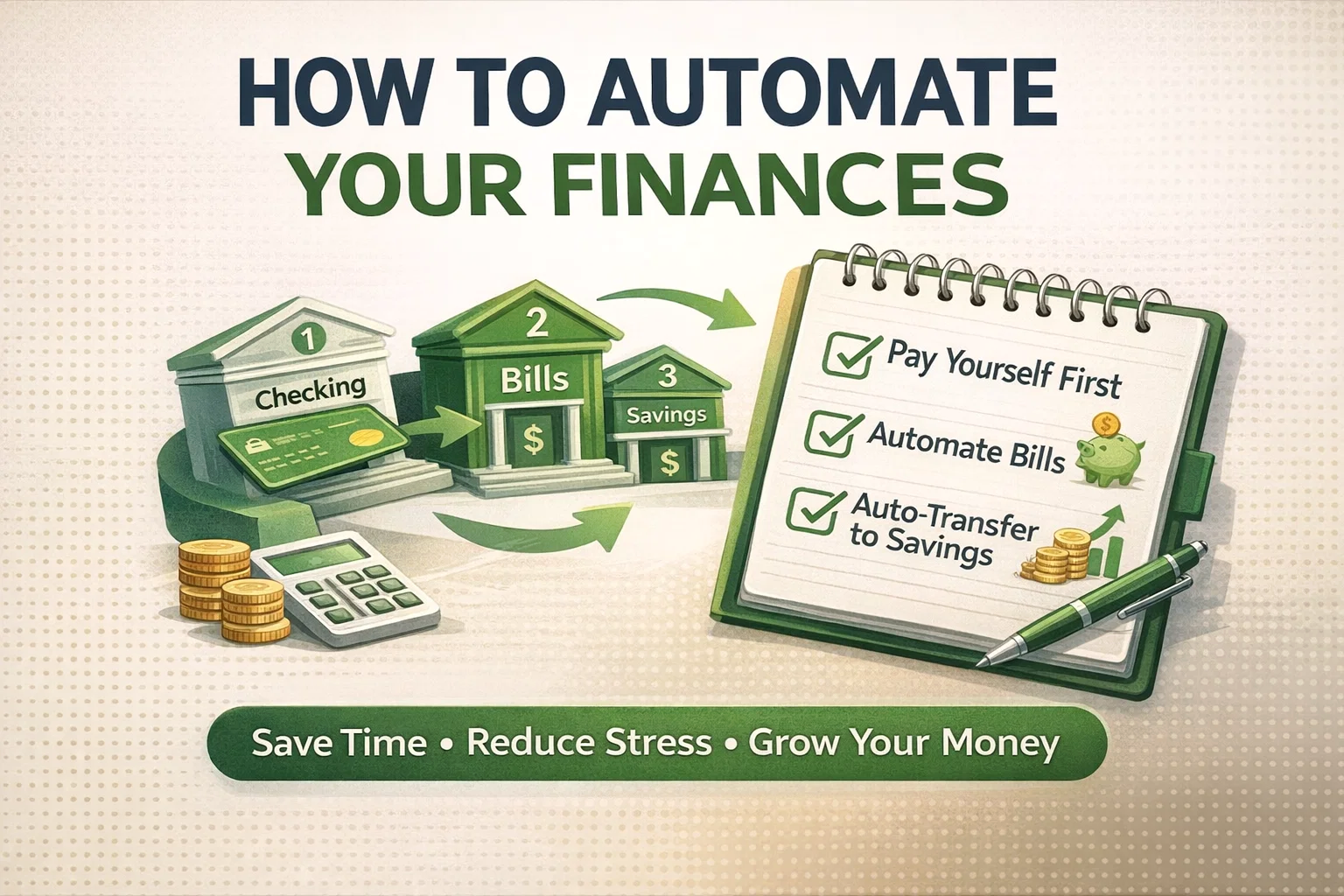
How to Automate Your Finances The 3-Bank System for Saving Money and Budgeting Like a Boss
Managing money often feels like a second full time job that nobody actually wants to do. We all know the drill: the paycheck arrives, the bills start rolling in, and by the middle of the month, we are left wondering where all that hard earned cash actually went. It is a cycle of reactive spending that leaves most people feeling stressed and stuck. But what if you could take the emotion and the manual labor out of your banking? The image provided outlines a brilliant, simplified strategy known as the Three Bank System. This is not just about keeping track of pennies; it is about building a foolproof infrastructure that forces you to save, ensures your bills are paid, and gives you the freedom to spend what is left without a shred of guilt.
The Philosophy of Paying Yourself First
At the heart of any successful financial plan is a single, powerful concept: paying yourself first. Most people approach their finances by paying their rent, their utilities, and their grocery bills, then seeing what is left over to put into savings. The problem is that there is rarely anything left over. Parkinson’s Law suggests that our spending will always expand to fill the amount of money we have available. If your entire salary sits in one account with a debit card attached, you will likely spend it.
By automating your finances, you flip this script. You decide how much you want to save or invest and you move that money out of your reach the moment your salary hits your account. This forces you to live on the remainder. It is a psychological shift that turns saving from a choice you have to make every month into a default setting that happens while you sleep.
Account Number One: The Hub of Your Financial Life
Think of your first Current Account as the landing strip for your income. This is where your employer deposits your salary and where the initial distribution of funds begins. However, unlike a traditional bank account where everything happens in one place, this account has a very specific and limited role in the Three Bank System.
The Purpose of the Primary Account
This account is your operational base. You should have a card or a mobile app attached to this account because this is where your daily life happens. After you have sent money away to your bills and your savings, whatever remains in this account is yours to live off. This is your “guilt-free spending” money. Whether it is a morning coffee, a dinner out with friends, or a new pair of shoes, you know exactly how much you can afford because the important stuff has already been taken care of elsewhere.
Managing the Flow
The key to making this account work is discipline in the setup phase. You must calculate your true cost of living and your savings goals first. Once those numbers are set, you can enjoy the peace of mind that comes with knowing the balance in this account is truly available for your lifestyle. You do not have to do mental math at the grocery store to remember if the electricity bill has cleared yet.
Account Number Two: The Bill Clearing House
The second pillar of this system is a dedicated Current Account specifically for bills and fixed expenses. This is perhaps the most underrated part of the strategy. By separating your “spending money” from your “commitment money,” you eliminate the risk of accidentally spending your rent on a weekend getaway.
What Goes Into the Bills Account
This account should handle every recurring, non-negotiable expense in your life. We are talking about your mortgage or rent, council tax, utilities, insurance premiums, and even your digital subscriptions like Netflix or Spotify. You calculate the total cost of these monthly commitments and set up a standing order to transfer that exact amount from Account One to Account Two every payday.
The Golden Rule of the Bills Account
The most important rule for this account is that you must not have a physical debit card for it. Or, if you do have one, you should leave it in a drawer at home or even cut it up. You do not want easy access to this money. By setting up direct debits for all your bills to come out of this specific account, you automate your responsibilities. As long as the transfer from your primary account is scheduled correctly, your bills will always be paid on time, protecting your credit score and your sanity.
Account Number Three: The High Interest Savings Sanctuary
The third account is where the magic of wealth building happens. This is your High Interest Savings Account. This is not just a place to park cash; it is the foundation of your future financial security. It serves two primary purposes: your emergency fund and your short term savings goals.
Creating a Spending Speed Bump
The image highlights a brilliant concept: the spending speed bump. One of the biggest reasons people fail to save is because their savings are too accessible. If you can transfer money from your savings to your checking account instantly via an app, it is not really a savings account; it is just a delayed spending account. By choosing a high interest account that requires a phone call or a branch visit to withdraw funds, or even just one that takes 24 hours to transfer, you create a barrier. That extra time gives your logical brain a chance to override an impulsive purchase.
The Emergency Fund Priority
Before you start buying stocks or planning luxury vacations, this account needs to house your emergency fund. Financial experts typically recommend three to six months of expenses. Having this “moat” around your financial life ensures that a car repair or a sudden medical bill does not send you spiraling into high interest debt. Once this fund is full, you can continue using this account for specific goals like a house deposit or a wedding.
The Bonus Account: Investing for the Future
Once you have mastered the three bank system and your emergency fund is looking healthy, it is time to look at the “Bonus Account.” This is typically an investment account, such as an Individual Savings Account (ISA) or a brokerage account. While the first three accounts are about stability and management, this fourth account is about growth.
Beating Inflation with Index Funds
As the image suggests, the goal here is to beat inflation. Cash sitting in a standard bank account often loses purchasing power over time. By investing in low cost index funds, you are betting on the long term growth of the economy. This is where you build true wealth. Because you have automated the rest of your finances, you can set a monthly contribution to your investment account and let the power of compound interest work its wonders over the decades.
Step by Step: How to Set Up Your Automation
Transitioning to this system might seem daunting, but it can be done in a few simple stages. You do not need to do everything in a single afternoon. Start by opening the necessary accounts. Many modern digital banks allow you to open “pots” or “spaces” which can act as these separate accounts within a single banking interface, though having them at different banks can provide that extra layer of “speed bump” security.
Calculate Your Numbers
Sit down with your bank statements from the last three months. Identify your fixed bills (Account 2) and your average spending (Account 1). Determine a realistic but challenging savings goal (Account 3). Once you have these three numbers, the rest is just administrative work.
Schedule the Transfers
Log into your primary bank account and set up scheduled transfers to trigger one or two days after your payday. Order the transfers so that the savings (Account 3) happens first. This ensures that you are “paying yourself first” before the bills or daily spending can get their hands on the money. Then, schedule the transfer to your Bills Account (Account 2). Whatever is left in Account 1 is your allowance.
The Benefits of a Frictionless Financial Life
The real beauty of the Three Bank System is the psychological freedom it provides. Most people spend a significant amount of “cognitive load” worrying about money. They check their balances daily, they fret over upcoming payments, and they feel guilty when they treat themselves. When you automate, that mental clutter disappears.
You no longer need to “be good” at budgeting because the system is designed to be good for you. You are essentially “outsourcing” your willpower to your bank’s computer system. If the money isn’t in your spending account, you can’t spend it. If the money is already in your bills account, the bills are already handled. It is a state of financial Zen that allows you to focus your energy on your career, your hobbies, and your family instead of your spreadsheets.
Conclusion: Start Building Your System Today
Financial freedom is rarely the result of a single lucky break or a massive windfall. Instead, it is the result of consistent, disciplined systems. The Three Bank System is one of the most effective ways to bridge the gap between where you are now and where you want to be. It takes the guesswork out of money management and replaces it with a structured, automated flow that prioritizes your future self.
Remember, the best time to start was years ago, but the second best time is today. Take the first step by auditing your expenses and looking into a high interest savings account. Once you see the first automated transfer hit your savings account, you will realize just how powerful it feels to be in control. Budget like a boss, give every pound a job, and watch your financial growth accelerate on autopilot.