Appalachian Hot Toddy Recipe The Classic Old-Time Winter Comfort Drink
There is something inherently comforting about the idea of a drink born from necessity. When the nights grow long, the wind howls against the windowpanes, and the chill of winter settles deep into the bones, we often look to the past for solace. This is exactly where the Appalachian Hot Toddy finds its roots. It is not a fussy, modern mixology creation requiring obscure ingredients or expensive tools. Instead, it is a testament to the ingenuity of folks who used exactly what they had on hand to soothe a cough, warm the spirit, and get through a harsh season.
In this post, we are exploring the simplicity and the history behind this iconic mountain drink. Whether you are feeling a bit under the weather or simply want to curl up with a book and a steaming mug, this timeless recipe offers the perfect balance of heat, sweetness, and bite.
What Exactly Is an Appalachian Hot Toddy?
At its core, the Appalachian Hot Toddy is a variation of the classic hot toddy, adapted to the resources available in the rugged mountains of the American South. Historically, these regions were often isolated, meaning people had to be self-reliant. If someone had a cold or the “chills,” they did not have access to a local pharmacy. They had the hearth, they had honey from local hives, and they had whiskey, which was a staple in many mountain households.
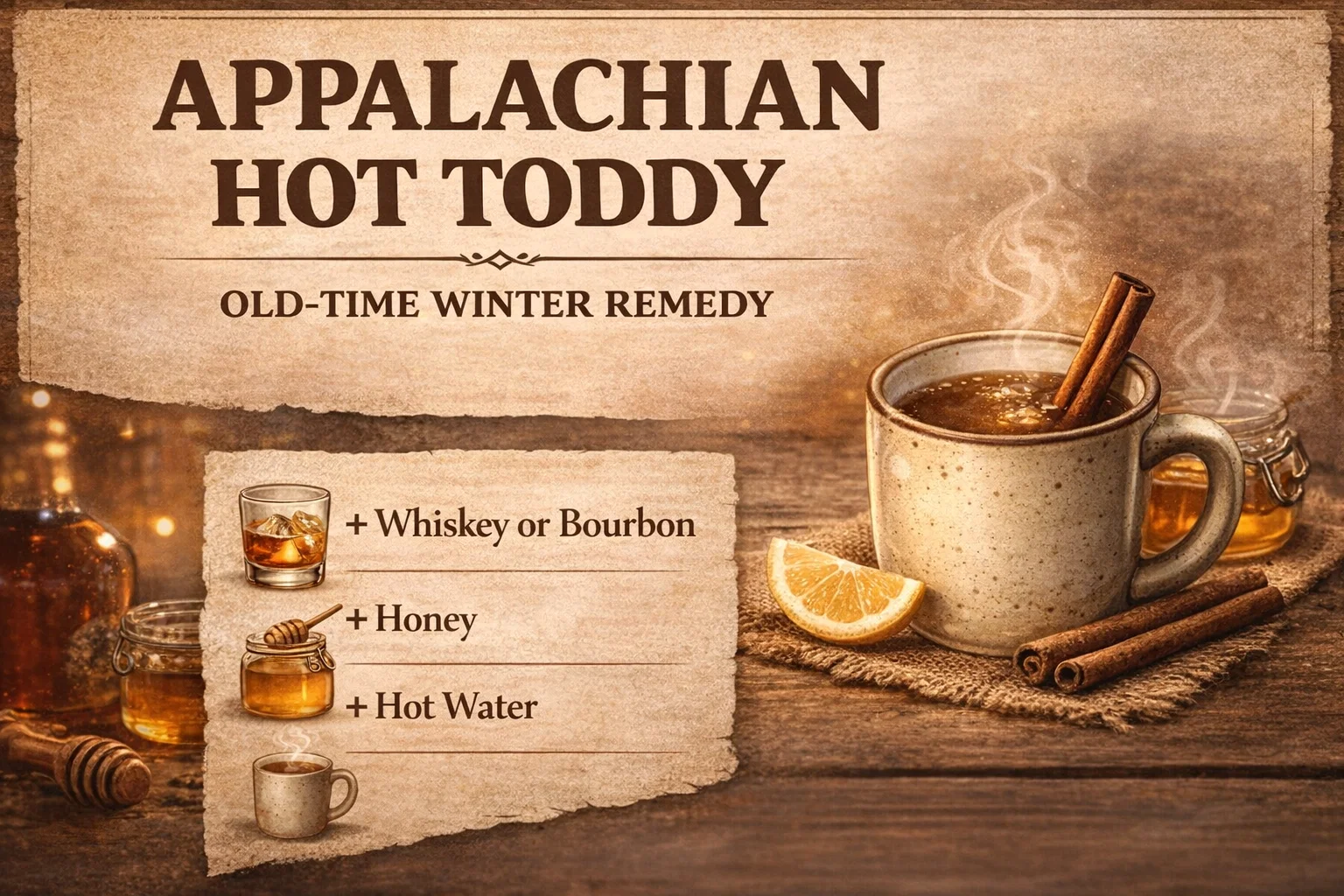
The beauty of this drink lies in its minimalism. It requires only three main ingredients: whiskey or bourbon, a sweetener like honey or sorghum, and hot water. While lemon is a common addition today, historical accounts suggest that fruit was a luxury item. If you had a lemon, you used it, but if not, the drink was considered just as effective without it.
The Science and Soul of the Ingredients
Each component of this drink serves a purpose, both for flavor and for the perceived health benefits that made it a household staple for generations.
The Spirit: Whiskey or Bourbon
The choice of spirit provides the warming sensation that defines the drink. The alcohol content helps to dilate blood vessels slightly, which can provide a temporary feeling of warmth and relaxation. When combined with hot water, the ethanol vapors can also help clear nasal passages, making it a popular choice for those suffering from the common cold.
The Sweetener: Honey, Sorghum, or Molasses
Honey is the gold standard for many, thanks to its natural ability to coat the throat and soothe irritation. However, in Appalachian history, sorghum and molasses were often more readily available than store-bought sugar or even honey. Sorghum, in particular, offers a rich, earthy sweetness that pairs beautifully with the charred notes of a good bourbon. These sweeteners are more than just flavor—they add body and a thick, comforting mouthfeel to the drink.
The Heat: Why Water Temperature Matters
One of the most important aspects of the directions is the instruction to use hot, but not boiling, water. If you pour boiling water directly into your whiskey, you risk scorching the delicate aromatic compounds in the spirit, which can lead to a harsh, medicinal taste. By using water just off the boil, you maintain the integrity of the whiskey’s flavor profile while ensuring the drink is hot enough to sip slowly.
How to Perfect Your Appalachian Hot Toddy
While the recipe is simple, technique makes all the difference. Follow these steps to ensure you get the perfect cup every time.
- Warm your mug first: This is a pro-tip that many people skip. By pouring hot water into your mug and letting it sit for a minute before discarding it, you ensure that the glass is warm. This keeps your drink at the perfect temperature for longer.
- Dissolve your sweetener well: Thick sweeteners like molasses or sorghum can sink to the bottom of the mug. Be sure to stir well once the hot water is added to ensure that the sweetness is evenly distributed throughout the drink.
- Customize your experience: While the base is traditional, you can add your own flair. A cinnamon stick adds a wonderful woodsy aroma, and a pinch of ginger can provide a gentle, spicy kick that further helps with congestion.
The Tradition of the “Winter Night” Sip
There is a ritualistic aspect to the Appalachian Hot Toddy that we often lose in our fast-paced modern lives. Historically, this was a drink consumed right before bed. It was the final act of the day, a way to signal to the body that the work was done and it was time to rest. The slow, intentional act of stirring the honey and sipping the warm liquid serves as a form of meditation.
It reminds us that sometimes, the best remedies for the stress of modern living are the simplest ones. It does not require a complex kitchen setup or a trip to a specialty grocery store. It just requires a quiet moment and a warm mug.
Why We Still Reach for This Recipe
Even with all our modern medical advancements, there is something deeply satisfying about making a remedy from scratch. When you prepare this drink, you are connecting with a piece of history. You are using the same ingredients that ancestors used to endure harsh winters and long, difficult nights.
Moreover, the Hot Toddy is incredibly versatile. You can scale it up for a gathering or keep it singular for a solo night of relaxation. It is a drink that feels tailored to the individual—you can make it stronger, sweeter, or spicier depending on your mood.
Embracing the Seasonal Slow Down
Winter often feels like a season to be endured, but the Appalachian Hot Toddy helps shift that perspective. It encourages us to find beauty in the cold. When you hold a warm, heavy mug in your hands, the temperature outside matters just a little bit less. It is a sensory experience: the smell of the whiskey and spices, the heat radiating against your palms, and the soothing sweetness on your tongue.
Final Thoughts on Keeping Traditions Alive
The Appalachian Hot Toddy is more than just a cocktail; it is a survivor. It has persisted through generations, moving from the wood-fired stoves of the Appalachian mountains to the modern homes of people all over the world. Its endurance is proof that good, simple ideas never really go out of style.
The next time the temperature drops, or you feel that familiar tickle in your throat, skip the artificial remedies. Reach for a little whiskey, a spoonful of good honey, and a mug of hot water. Take the time to warm your glass, stir slowly, and sip with intention. You might find that the best part of the cold season is the time you take to warm yourself back up.
Remember that the best drinks are often the ones with a story behind them. Whether you use the traditional sorghum or go for a classic wildflower honey, make this recipe your own. Enjoy the process, savor the flavor, and stay warm out there.