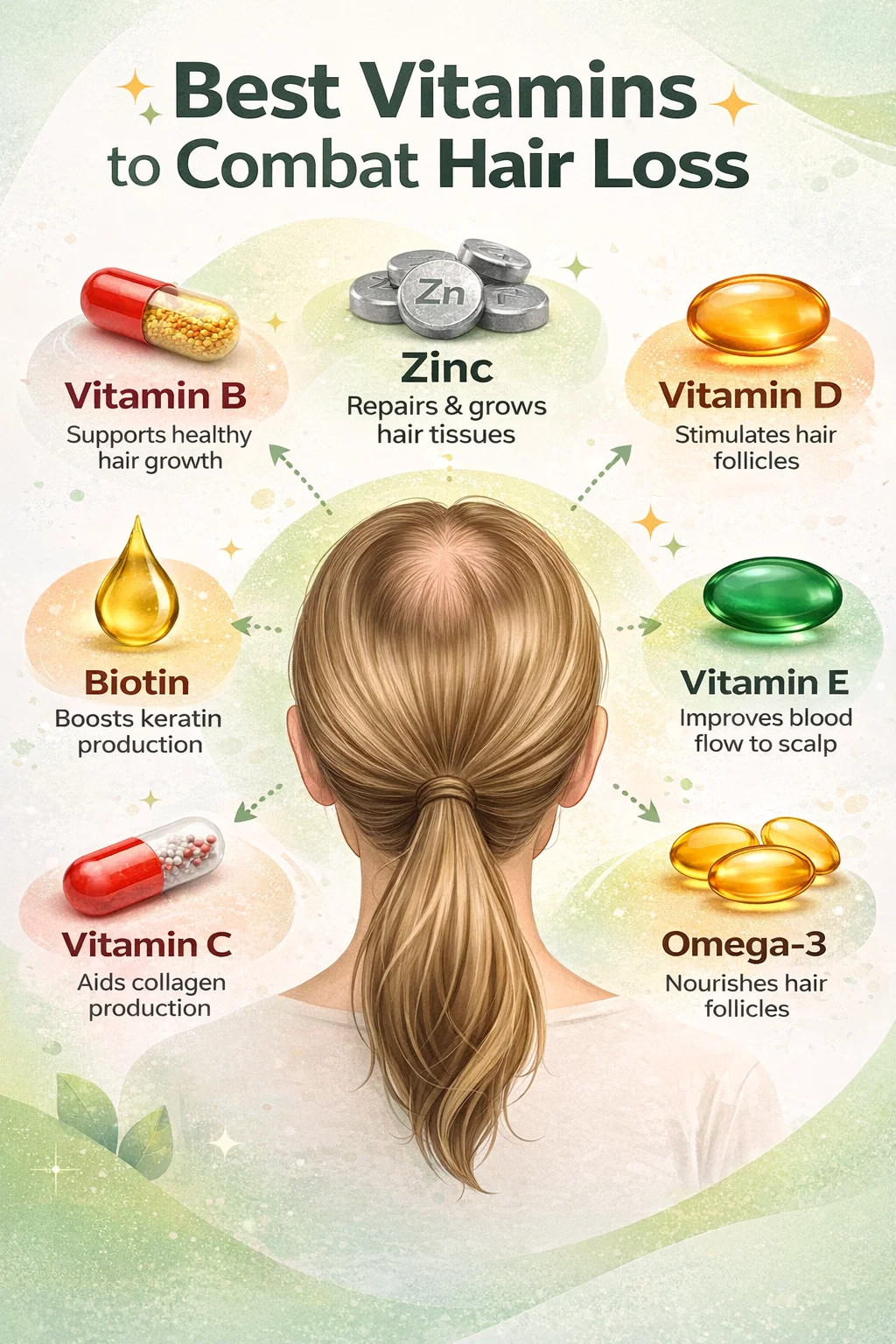
Best Vitamins for Hair Loss Regrow Strengthen Your Hair naturally
Watching your hair thin out can be a deeply personal and often stressful experience. Whether you notice more strands than usual in your hairbrush or see a bit more scalp than you would like in the mirror, the search for a solution usually leads to one critical realization: healthy hair starts from the inside out. While expensive shampoos and topical treatments have their place, your hair follicles are living organs that require a specific cocktail of nutrients to function at their peak. If your body is running low on essential building blocks, hair growth is often the first non-essential process to be sidelined.
The good news is that many forms of hair thinning are linked to nutritional gaps that are entirely reversible. By understanding the specific roles of vitamins and minerals like Zinc, Biotin, and Vitamin D, you can provide your scalp with the biological tools it needs to repair tissue, stimulate dormant follicles, and produce the strong, vibrant hair you deserve. Let’s dive deep into the science-backed nutrients that act as the ultimate defense against hair loss.
The Power of Zinc for Tissue Repair
Zinc is a trace mineral, meaning our bodies only need it in small amounts, but its impact on hair health is massive. It plays a foundational role in DNA and RNA production, which is vital for the rapid division of hair follicle cells. When you have adequate zinc levels, your body can efficiently repair damaged hair tissue and keep the oil glands surrounding the follicles working properly.
A deficiency in zinc is one of the most common nutritional culprits behind shedding. Without it, the protein structure of the hair follicle weakens, leading to premature shedding. By incorporating zinc-rich foods or supplements into your routine, you are essentially providing the glue that holds your hair fibers together. It is not just about stopping the loss; it is about ensuring that the new hair growing in is resilient and less prone to breakage.
Biotin and the Keratin Connection
If there is one name synonymous with hair growth, it is Biotin, also known as Vitamin B7. Biotin is a powerhouse because it stimulates the production of keratin, the fibrous protein that makes up the bulk of your hair, skin, and nails. Think of keratin as the bricks and Biotin as the mason who lays them down. Without enough B7, your hair can become brittle, dull, and thin.
Most people get a baseline of Biotin from their diet, but increasing your intake can significantly boost the rate of hair growth and improve the diameter of individual strands. This results in a fuller, more voluminous appearance. Because Biotin is water-soluble, your body does not store it for long, making daily intake through eggs, nuts, or high-quality supplements a smart strategy for long-term hair maintenance.
Vitamin D: Waking Up Dormant Follicles
Often called the sunshine vitamin, Vitamin D is actually a hormone that plays a sophisticated role in the hair growth cycle. Research suggests that Vitamin D helps create new follicles—the tiny pores in the scalp where new hair can grow. Perhaps more importantly, it is crucial for waking up follicles that have entered a resting phase and stayed there too long.
Low levels of Vitamin D are frequently linked to alopecia and general thinning. Since many of us spend our days indoors or live in climates with limited sunlight, Vitamin D deficiency is incredibly common. Ensuring your levels are optimized helps maintain the hair cycle’s transition from the resting phase back into the active growth phase, ensuring your scalp stays “populated” with active hair production.
Vitamin C for Collagen and Protection
You might associate Vitamin C with immune health, but it is an unsung hero for your scalp. First, Vitamin C is essential for the synthesis of collagen. Collagen provides the amino acids needed to build hair proteins and strengthens the skin that contains your hair roots, preventing thinning associated with aging. A strong scalp environment means better-anchored hair.
Secondly, Vitamin C is a potent antioxidant. Your hair follicles are susceptible to oxidative stress caused by free radicals from pollution and UV rays. This stress can age your hair and cause it to fall out prematurely. Vitamin C neutralizes these free radicals, protecting the integrity of your hair. Furthermore, it helps your body absorb iron, another mineral that is absolutely non-negotiable for preventing hair loss.
Omega-3 Fatty Acids: Nourishing from the Root
Omega-3 fatty acids are the healthy fats that provide the shine and lubrication your hair needs to look healthy. Since our bodies cannot produce these fats on our own, we must get them from our diet. Omega-3s work by nourishing the hair at the follicle level. They provide essential proteins and nutrients to hair follicles and skin, preventing follicle inflammation—a direct contributor to hair loss.
Regular intake of Omega-3s, found in fatty fish, flaxseeds, and walnuts, helps to increase hair density and reduce the “telogen” or shedding phase. If your hair feels chronically dry or your scalp is flaky and irritated, a boost in these healthy fats can restore the lipid barrier, ensuring your hair stays hydrated and elastic rather than dry and snapping off.
Vitamin E and Scalp Circulation
The health of your hair is limited by the blood flow reaching your scalp. Blood carries the oxygen and nutrients that follicles need to survive. Vitamin E is famous for its ability to improve blood circulation by protecting the integrity of blood vessels. When circulation is optimized, your hair follicles receive a steady stream of the vitamins we have discussed so far.
In addition to its circulatory benefits, Vitamin E reduces oxidative stress in the scalp. Studies have shown that people experiencing hair loss often have lower levels of antioxidants in their scalp tissue. By supplementing with Vitamin E, you create a protected, high-oxygen environment that is perfect for stimulating new growth and maintaining the longevity of existing strands.
The Essential B-Complex Group
While Biotin gets most of the spotlight, the entire B-vitamin complex is necessary for a healthy head of hair. Vitamins like B12 and B6 help create red blood cells, which carry oxygen and nutrients to the scalp and hair follicles. These processes are vital for hair growth because the cells at the base of the hair follicle are among the fastest-dividing cells in the entire human body.
A well-rounded B-complex ensures that your metabolism is functioning correctly, allowing your body to break down the proteins you eat and turn them into the amino acids that build hair. If you are feeling fatigued and noticing hair thinning, it is often a sign that your B-vitamin levels need a closer look. They are the energy engines that keep the hair production factory running 24 hours a day.
Creating a Holistic Hair Growth Strategy
While loading up on vitamins is a fantastic start, the best results come from a holistic approach. Nutrition provides the raw materials, but how you treat your hair externally matters too. Avoid excessive heat styling and harsh chemical treatments that can cause physical breakage, making your hair look thinner than it actually is. Gentle scalp massages can also complement your Vitamin E intake by manually stimulating blood flow to the area.
Consistency is the most important factor. Hair grows at an average rate of about half an inch per month. This means it can take three to six months to see the visible impact of your nutritional changes. Be patient with your body as it rebalances its internal chemistry. When you provide the right environment, your hair has an incredible ability to bounce back and thrive.
Final Thoughts on Hair Health
Combating hair loss does not always require drastic measures or invasive procedures. Very often, our hair is simply a reflection of our internal nutritional status. By focusing on a diet rich in Zinc, Biotin, Vitamin D, Vitamin C, Vitamin E, and Omega-3s, you are addressing the root causes of thinning rather than just masking the symptoms. You are giving your body the permission and the resources to prioritize hair growth again.
Take a look at your daily routine and identify where you can swap in more of these hair-loving nutrients. Whether it is through a rainbow of colorful vegetables, healthy fats, or a targeted supplement, your scalp will thank you. Remember that every small change contributes to a stronger, fuller, and more confident version of yourself. Start nourishing your follicles today, and watch as your hair regains the strength and luster you thought was gone for good.
Would you like me to help you create a meal plan or a shopping list based on these specific hair-growth nutrients?