Best vs Worst Vitamin Forms Ultimate Supplement Guide
Walk down the supplement aisle of any health food store or pharmacy, and you are immediately bombarded with hundreds of bottles promising better health, endless energy, and a robust immune system. The wellness industry is booming. However, there is a massive secret hiding in plain sight right on the ingredient labels. Not all vitamins and minerals are created equal. In fact, you might be throwing your hard-earned cash straight down the drain if you are buying the wrong forms of these essential nutrients. Simply seeing “Magnesium” or “Vitamin B12” on the front of a bottle is not enough. You need to flip that bottle around and investigate exactly what form of the nutrient is inside.
The core issue boils down to a concept called bioavailability. Bioavailability refers to the proportion of a nutrient that actually enters your systemic circulation and is able to have an active effect on your body. Many mainstream, cheaper supplement brands use synthetic or poorly absorbed forms of vitamins and minerals. They do this because these raw materials are incredibly cheap to manufacture. While the label might boast a high milligram count, your body might only be absorbing a tiny fraction of it. The rest is simply flushed out of your system, sometimes causing digestive distress along the way. If you want to stop wasting your money and start seeing real results from your daily routine, it is time to upgrade your supplement knowledge.
The Ultimate Guide to the Best and Worst Supplement Forms
To help you navigate the confusing world of nutritional labels, we need to break down the most common vitamins and minerals. We will look at exactly which chemical forms you should aggressively avoid and which highly bioavailable forms you should actively seek out.
Magnesium: A Crucial Mineral That Needs the Right Carrier
Magnesium is responsible for over three hundred biochemical reactions in the human body. It helps with muscle recovery, sleep regulation, and stress management. Yet, the most common form found on store shelves is the absolute worst one you can buy.
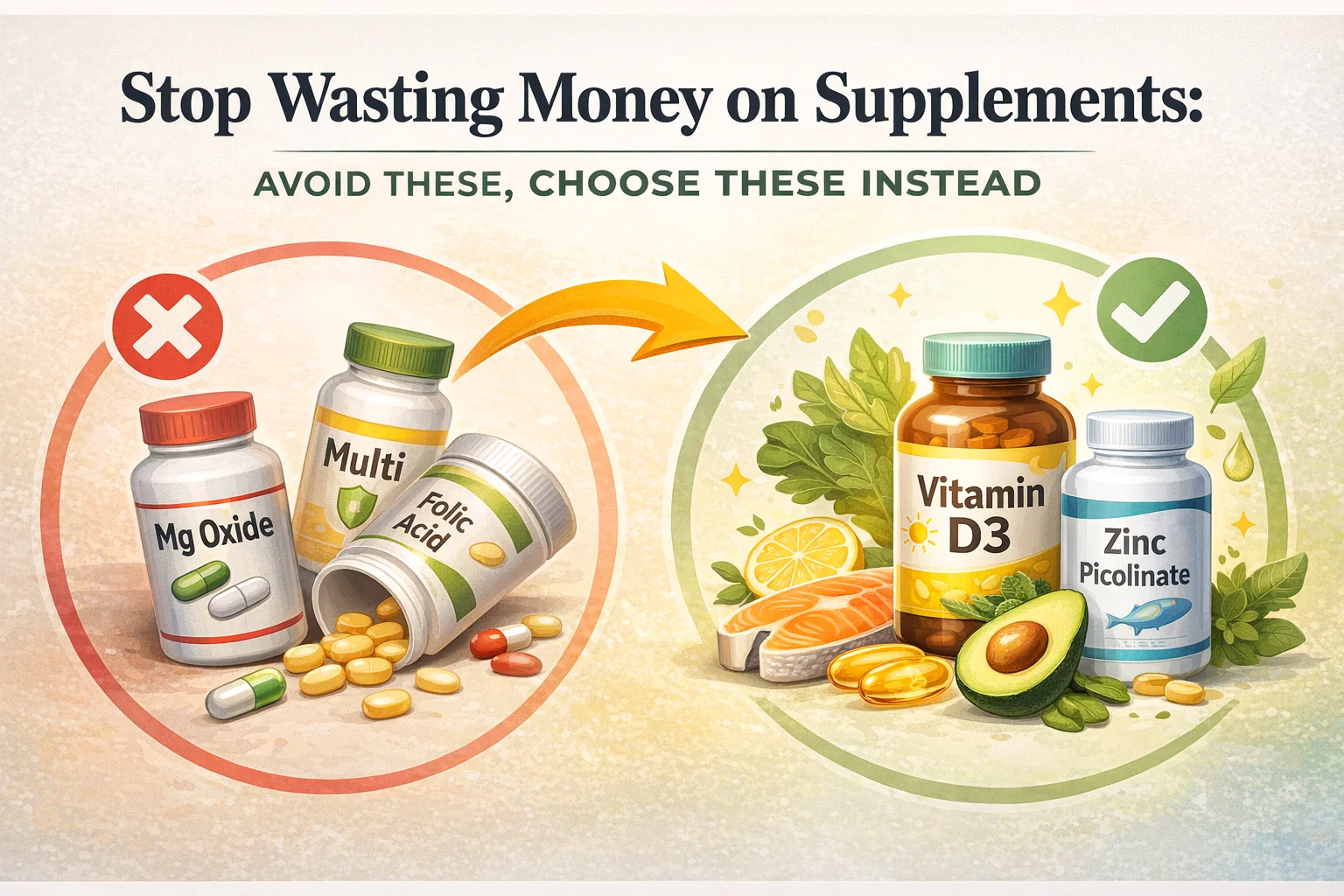
Avoid: Magnesium Oxide. This form has an incredibly low absorption rate, often cited as being around four percent. Because it is so poorly absorbed by the intestines, it pulls water into your bowels and acts as a strong laxative. If your magnesium supplement sends you running to the bathroom, it is likely oxide.
Choose: Magnesium Glycinate, Citrate, or Malate. These are chelated forms, meaning the magnesium is attached to an amino acid or organic compound that your body easily recognizes and absorbs. Magnesium glycinate is fantastic for relaxation and sleep. Magnesium citrate is great for general supplementation and mild constipation relief. Magnesium malate is highly recommended for daytime use as it supports cellular energy production.
Vitamin D: Maximizing the Sunshine Vitamin
Vitamin D is essential for bone health, immune function, and mood regulation. Many people are deficient due to modern indoor lifestyles. However, popping just any Vitamin D pill will not solve the problem.
Avoid: Vitamin D2 (Ergocalciferol). This is a plant-based form of the vitamin, often derived from irradiated mushrooms. While it can raise your blood levels slightly, it is much less effective and degrades much faster in the body than its counterpart.
Choose: Vitamin D3 (Cholecalciferol). This is the exact form of Vitamin D that your own body synthesizes when your skin is exposed to sunlight. It is far superior at raising and maintaining optimal Vitamin D levels in your bloodstream. You can find it sourced from sheep lanolin or vegan-friendly lichen.
Vitamin C: Getting Antioxidant Power Without the Upset Stomach
Vitamin C is a powerhouse antioxidant that supports the immune system and is vital for collagen synthesis. During cold and flu season, people often take massive doses of it.
Avoid: High-dose Ascorbic Acid (if sensitive). Standard ascorbic acid is highly acidic. Taking large doses of it can cause severe gastric irritation, heartburn, and digestive upset for many individuals.
Choose: Buffered Vitamin C or Liposomal Vitamin C. Buffered Vitamin C binds the ascorbic acid to a mineral like calcium or sodium, neutralizing the acidity and making it incredibly gentle on the stomach. Liposomal Vitamin C encapsulates the nutrient in tiny fat bubbles called liposomes, which allows the vitamin to bypass the digestive system and absorb directly into your cells for maximum potency.
Vitamin B12: Fueling Your Nervous System Properly
Vitamin B12 is non-negotiable for nerve health, DNA production, and sustained energy levels. Vegans and vegetarians are particularly at risk for deficiency, but the form of the supplement matters immensely.
Avoid: Cyanocobalamin. This is a synthetic form of B12 entirely created in a laboratory. It contains a cyanide molecule. While the amount of cyanide is considered physiologically safe, your body still has to expend valuable energy and resources to strip that cyanide molecule away and convert the vitamin into a usable form.
Choose: Methylcobalamin or Adenosylcobalamin. These are the active, naturally occurring forms of B12. Methylcobalamin is already methylated, meaning your body can use it the exact second it enters your system. It is the gold standard for neurological support and energy metabolism.
Zinc: Supercharging Your Immune Defenses
Zinc is a trace mineral necessary for immune cell function, wound healing, and hormone production. Like magnesium, the cheapest form is the least effective.
Avoid: Zinc Oxide. You might recognize this ingredient from thick white sunscreens. While great for blocking UV rays on your skin, it is notoriously difficult for your digestive tract to break down and utilize.
Choose: Zinc Picolinate or Zinc Gluconate. Zinc picolinate is widely considered one of the most highly absorbable forms available. The picolinic acid acts as an incredibly efficient transport mechanism, carrying the zinc directly through the intestinal wall.
Multivitamins: Decoding the Daily Pill
A daily multivitamin is viewed as an insurance policy for your diet. Sadly, many popular brands are formulated with the cheapest ingredients legally allowed.
Avoid: “One-a-day” mega blends with proprietary formulas. If a label lists a “proprietary blend” without disclosing the exact amount of each ingredient, they are likely hiding a formula composed mostly of cheap fillers. Cramming a full day of nutrients into one tiny, hard tablet usually guarantees poor absorption.
Choose: Transparent formulas with active forms and moderate doses. Look for brands that list out exactly what you are getting. A high-quality multivitamin will often require you to take two to four capsules a day. This ensures there is enough physical space in the capsules for bulky, bioavailable nutrients rather than compressed, synthetic rocks.
Iron: Rebuilding Red Blood Cells Gently
Iron deficiency is common, especially among women. It causes extreme fatigue and weakness. Unfortunately, the standard medical prescription for iron often makes people feel worse.
Avoid: Ferrous Sulfate (if sensitive). This is the most commonly prescribed iron supplement. It is infamous for causing severe constipation, stomach cramps, and nausea. Many people stop taking their iron simply because the side effects are unbearable.
Choose: Iron Bisglycinate or Ferrous Fumarate. Iron bisglycinate is a chelated form of iron. Because it is bound to glycine, it does not interact with other nutrients in the gut and is incredibly gentle on the stomach. It absorbs efficiently without the dreaded digestive blockages.
Folate: A Crucial Distinction for Genetic Health
Folate is vital for cell division and creating DNA. It is especially critical during pregnancy. This is perhaps the most important distinction on this entire list due to widespread genetic variations.
Avoid: Folic Acid. Folic acid is a completely synthetic compound. Up to forty percent of the population has a mutation in their MTHFR gene, which makes it very difficult for their bodies to convert synthetic folic acid into the active form the brain and body need.
Choose: L-methylfolate (5-MTHF). This is the biologically active form of folate. By supplementing with L-methylfolate, you completely bypass the MTHFR gene mutation issue. Your body can utilize it immediately for crucial methylation processes, mood support, and cardiovascular health.
Probiotics: Surviving the Gut Journey
Gut health is the foundation of overall wellness. Taking a probiotic can help balance your microbiome, but only if the bacteria actually survive.
Avoid: Products without strain names or CFU count. If a bottle just says “Lactobacillus acidophilus” without letters and numbers after it, you have no idea what specific strain you are getting. Furthermore, if it only lists the CFU count at the “time of manufacture,” most of those bacteria might be dead by the time you buy it.
Choose: Multi-strain probiotics with named strains and expiry-dated CFUs. You want specific, clinically researched strains. The bottle must guarantee the CFU count through the expiration date, ensuring you are swallowing living organisms capable of colonizing your digestive tract.
Calcium: Building Strong Bones Smartly
Calcium is necessary for skeletal strength, but taking it incorrectly can lead to calcification in the wrong parts of the body.
Avoid: Calcium Carbonate (especially without food). This form requires a massive amount of stomach acid to break down. If you take it on an empty stomach, or if you are older and naturally produce less stomach acid, it will simply sit in your gut and cause bloating and constipation.
Choose: Calcium Citrate. Calcium citrate does not rely on stomach acid for absorption. You can take it at any time of day, with or without food, making it much more versatile and easier for your body to process.
Omega-3: Seeking Purity and Concentration
Fish oil provides EPA and DHA, essential fatty acids for brain health and lowering inflammation. The quality of the oil is paramount.
Avoid: Low-dose non-purified fish oil. Cheap fish oils often contain heavy metals like mercury. If your fish oil gives you terrible “fish burps,” it is likely rancid and oxidized, which can actually cause inflammation rather than cure it.
Choose: IFOS-certified fish oil or algae oil. IFOS certification guarantees the oil has been independently tested for purity, heavy metals, and freshness. For vegans or those allergic to fish, algae oil is a phenomenal alternative that provides direct EPA and DHA right from the original source.
Collagen: Targeted Support for Skin and Joints
Collagen is the glue that holds our connective tissues together. Production declines as we age, making supplementation incredibly popular for anti-aging routines.
Avoid: Collagen without type disclosure. Generic collagen that does not specify the type is usually poorly processed. If the molecular weight is too high, your body cannot absorb it into the bloodstream.
Choose: Hydrolyzed collagen peptides with Type I and III. Hydrolyzed means the collagen proteins have been broken down into tiny, easily absorbed peptides. Type I and III are specifically beneficial for hair, skin, nails, and bone support.
How to Audit Your Supplement Cabinet Today
Now that you possess this knowledge, it is time to take action. Go to your pantry or medicine cabinet and pull out every single supplement you currently take. Turn the bottles around and look closely at the “Supplement Facts” panel. Do not look at the large, flashy marketing text on the front. Look exclusively at the tiny print on the back.
Pay close attention to the words in parentheses next to the main ingredients. If it says Magnesium (as magnesium oxide) or Vitamin B12 (as cyanocobalamin), you know exactly what you are dealing with. Do not feel bad if you discover your cabinet is full of low-quality forms. The supplement industry intentionally makes these labels confusing to the average consumer.
You do not need to throw everything in the trash immediately. Finish what you have if you wish, but make a commitment to upgrade your choices the next time you restock. Spending a few extra dollars on a highly bioavailable form means you are actually getting the health benefits you are paying for.
Conclusion: Empowering Your Wellness Journey
Taking control of your health requires more than just good intentions. It requires continuous education and a critical eye. By understanding the profound difference between cheap, synthetic vitamin forms and high-quality, bioavailable nutrients, you transform yourself from a passive consumer into an empowered patient.
Your body is incredibly resilient and intelligent, but it needs the right raw materials to function optimally. Stop wasting your money on supplements that your digestive system simply flushes away. By choosing glycinates over oxides, methyl groups over synthetic cyanides, and active folates over standard folic acid, you give your cells exactly what they need to thrive. Invest in quality, read your labels diligently, and watch how much better you feel when your body actually absorbs the nutrition you provide it.