Daily Winter Mineral Infusion Recipe Nettle Oat Straw Herbal Tea for Winter Wellness
Winter often brings a natural shift in our energy. As the days grow shorter and the air turns crisp, our bodies instinctively crave warmth, grounding, and deeper nourishment. While many reach for a quick cup of coffee or a sugary seasonal latte, there is a traditional, more soul-sustaining way to fortify your system from the inside out. Enter the Daily Winter Mineral Infusion, a gentle yet powerful herbal remedy designed to replenish the vital minerals that are often depleted during the colder months.
This isn’t just a standard cup of tea that steeps for three minutes. A true mineral infusion is a slow, intentional process that extracts the life force of the plants, providing you with a bioavailable dose of calcium, magnesium, and iron. If you have been feeling a bit sluggish or disconnected lately, this earthy, fortifying brew might be exactly what your wellness routine is missing. Let’s dive deep into why this specific blend of herbs is a winter essential and how you can easily incorporate it into your daily life.
The Magic of Mineral-Rich Herbs
When we talk about “nourishing the bones” or “grounding the spirit,” we are often talking about minerals. Minerals are the building blocks of our physical structure and are essential for everything from nerve function to maintaining a steady mood. In the winter, our bodies work harder to maintain core temperature and immunity, making mineral density more important than ever. The beauty of using herbs like nettle and oat straw is that they offer these nutrients in a form the body recognizes and absorbs with ease.
Stinging Nettle: The Multivitamin of the Plant World
Don’t let its prickly reputation fool you. Once dried and steeped, stinging nettle becomes one of the most nutrient-dense plants on the planet. It is famously high in iron, making it a favorite for those looking to support their energy levels and blood health. Beyond iron, nettle is a powerhouse of chlorophyll and vitamin K. In the context of a winter infusion, nettle acts as a deeply tonifying herb that supports the kidneys and helps the body process stress more effectively.
Oat Straw: A Hug for Your Nervous System
If nettle is the strength, oat straw is the softness. Derived from the same plant that gives us our morning oatmeal, oat straw is the green stalk harvested while the plant is still in its “milky” stage. It is incredibly high in calcium and magnesium, two minerals that work in tandem to support bone health and relax the nervous system. If you find yourself feeling “tired but wired” during the holiday rush, oat straw is the perfect ally to help mellow out your stress response while providing long-term nourishment.
Why the “Long Steep” Matters
You might be used to dunking a tea bag for a few minutes and heading out the door. However, to truly unlock the mineral content of tough, fibrous herbs like nettle and oat straw, time is your best friend. A quick steep primarily extracts the volatile oils and flavors, but the minerals are tucked away deep within the plant’s cellular structure. This is why the Daily Winter Mineral Infusion calls for a steep time of anywhere from 20 minutes to 4 hours (or even overnight).
By letting the herbs sit in hot water for an extended period, the water has time to break down the plant material. The result is a much darker, richer, and more potent liquid. You will notice that a long-steeped infusion has a “weight” to it that regular tea lacks. It feels substantial and satisfying, almost like a thin broth, which is a clear sign of its high mineral content.
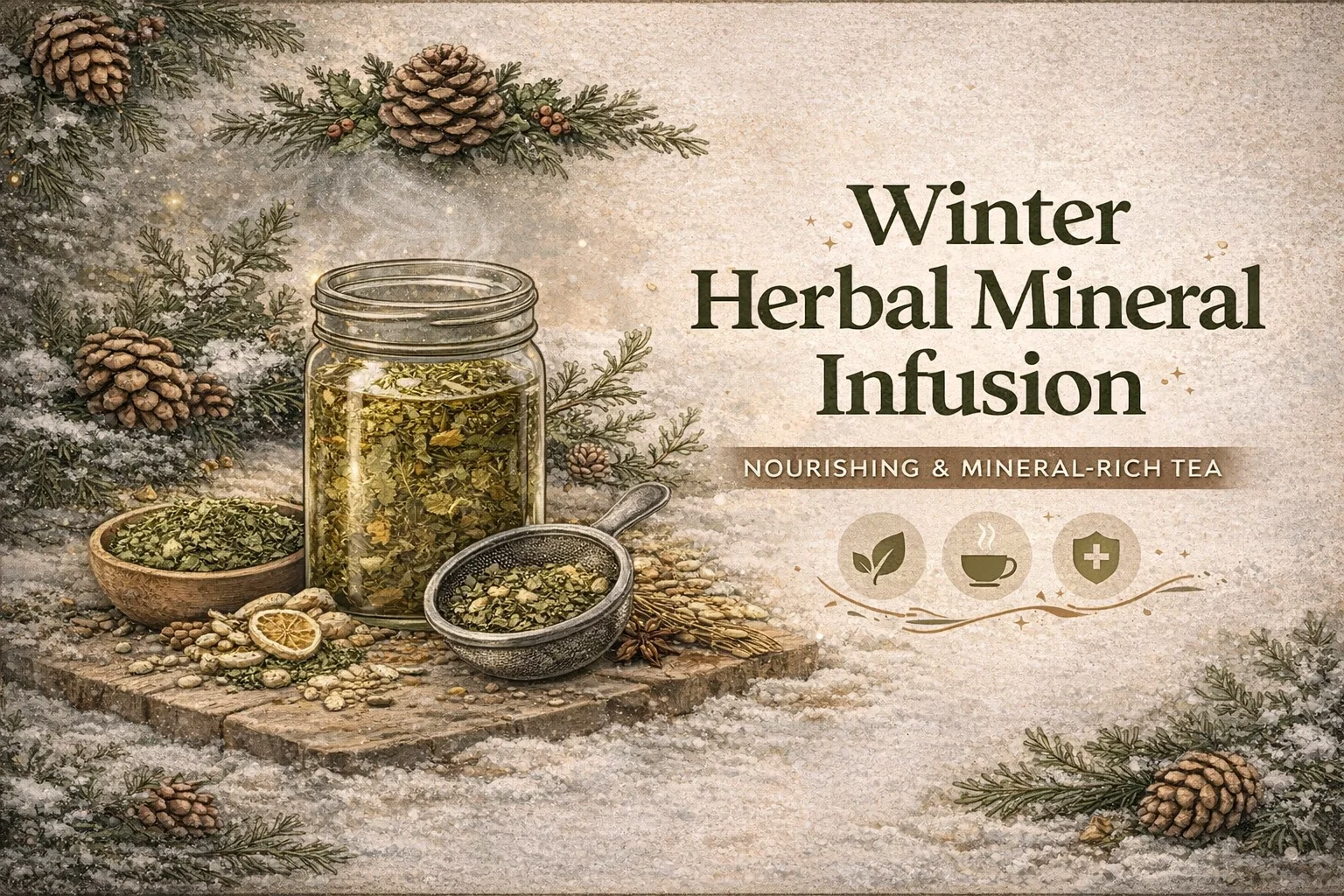
How to Craft Your Daily Winter Mineral Infusion
Creating this infusion is a simple ritual that fits perfectly into a slow morning or a cozy evening. Because it requires a bit of waiting time, many people find it helpful to prep their infusion the night before so it is ready to strain and drink first thing in the morning. Here is the breakdown of how to get the most out of your herbs.
Step 1: The Foundation
In a large mason jar or a heatproof glass container, combine your dried herbs. The standard ratio for a strong infusion is about one tablespoon of each primary herb per two cups of water. Use one tablespoon of dried nettle and one tablespoon of dried oat straw (or red raspberry leaf if you prefer a slightly more floral, feminine-leaning tonic).
Step 2: The Flavor Boosters
While the primary herbs are earthy and slightly grassy, you can customize the flavor to suit your palate. Adding a teaspoon of dried lemon peel introduces a bright, citrusy note and a boost of antioxidants. If you prefer something refreshing, dried peppermint is a fantastic addition that is also lightly energizing. These “optional” ingredients make the infusion more palatable for those who are new to the world of herbal tonics.
Step 3: The Infusion Process
Pour two cups of just-boiled water over your herbs. Give it a quick stir to make sure all the plant material is submerged, then cover the jar with a tight lid. Covering the jar is crucial because it prevents the steam (and the beneficial volatile oils) from escaping. Let it sit on your counter for at least 20 minutes, though 4 hours is the sweet spot for maximum mineral extraction.
Step 4: Straining and Sipping
Once the time is up, use a fine-mesh strainer to separate the liquid from the herbs. You can drink it as is, or if you prefer a warm beverage, reheat it gently on the stove. Avoid boiling it again, as you want to preserve the delicate nutrients you just worked so hard to extract. Sip it slowly and mindfully, feeling the warmth spread through your body.
Customizing Your Blend for Extra Benefits
One of the best things about herbalism is that it is never one-size-fits-all. Once you get comfortable with the base of nettle and oat straw, you can start experimenting with other additions based on your specific needs during the winter season.
- Red Raspberry Leaf: This is a wonderful substitute or addition to oat straw. It is highly mineralized and specifically supportive of the reproductive system and uterine health.
- Rose Hips: If you are worried about the winter flu, adding a few crushed rose hips will significantly increase the Vitamin C content of your brew.
- Ginger Root: For those who always have cold hands and feet, adding a few slices of fresh ginger to the steep will help move the blood and add a spicy, warming kick.
- Dandelion Root: If your winter diet has been a bit heavy, a little dried dandelion root can support liver function and digestion.
The Ritual of Grounding
Beyond the chemical composition of the minerals, there is a psychological benefit to the Daily Winter Mineral Infusion. In a world that moves incredibly fast, the act of waiting for something to steep is a form of meditation. It forces us to slow down. The earthy scent of the nettle and the golden hue of the oat straw remind us of our connection to the earth, even when the ground outside is frozen or covered in snow.
Making this infusion a daily habit creates a “nourishing reset” in your schedule. Whether you drink it while journaling in the morning or as a way to decompress after a long day of work, it serves as a physical reminder that you are taking care of yourself. It is a small but significant act of self-love that pays dividends in how you feel physically and mentally.
Maintaining Your Winter Apothecary
To make this a sustainable habit, it helps to keep your “winter warming herbs” organized and accessible. Buying herbs in bulk is often more cost-effective and ensures you won’t run out mid-January. Store your dried nettle and oat straw in airtight glass jars away from direct sunlight to keep them potent for as long as possible.
Treat your herb cabinet like a natural pharmacy. When you see those jars sitting on your shelf, it becomes much easier to reach for them instead of a processed snack. You can even pre-mix your nettle and oat straw in a large “winter blend” jar so that all you have to do is scoop and pour when you are ready to make your infusion.
Frequently Asked Questions About Mineral Infusions
Can I drink this every day?
Yes! For most people, these herbs are considered “nutritive tonics,” meaning they are gentle enough to be consumed daily over long periods. In fact, the benefits of mineral infusions are cumulative. The more consistent you are, the more your body can build up its mineral stores.
What do I do with the leftover herbs?
Don’t just toss them in the trash! The spent herbs (the “marc”) are still full of organic matter. They make an excellent addition to your compost pile, or you can even use them as a mulch for your indoor plants. It’s a great way to close the loop and give back to the earth.
Can I add honey or sweetener?
Absolutely. While the infusion has a pleasant, earthy taste on its own, a teaspoon of raw local honey can add extra antimicrobial properties and make the experience even more enjoyable. Just be sure to add the honey after the liquid has cooled slightly to preserve its enzymes.
Final Thoughts on Winter Wellness
Winter doesn’t have to be a season of depletion and fatigue. By leaning into the wisdom of traditional herbalism and taking the time to properly extract the minerals our bodies crave, we can transform our health. The Daily Winter Mineral Infusion is more than just a drink; it is a tool for resilience. It strengthens our bones, soothes our nerves, and keeps us grounded when the world feels cold.
As you move through the next few months, listen to what your body is asking for. If it’s calling for more rest and deeper nourishment, answer that call with a jar of herbs and a little bit of patience. Your future self will thank you for the extra iron, the calm nerves, and the quiet moments of peace found at the bottom of a mason jar. Stay warm, stay nourished, and enjoy the slow magic of the winter season.