Defeat the Demons Bible Verses for Anxiety, Depression, Stress, and Spiritual Healing
Life has a way of throwing heavy emotional and spiritual challenges our way when we least expect them. Whether it is the nagging pull of anxiety before a big meeting, the weight of grief that feels impossible to lift, or the quiet sting of loneliness in a crowded room, these experiences are universal to the human condition. However, for those who look toward faith as a compass, these feelings are often viewed as more than just psychological hurdles. They are seen as spiritual battles, often referred to as “demons” that target our peace, our purpose, and our connection to the divine. Navigating these trials requires a toolkit that combines emotional intelligence with spiritual fortification.
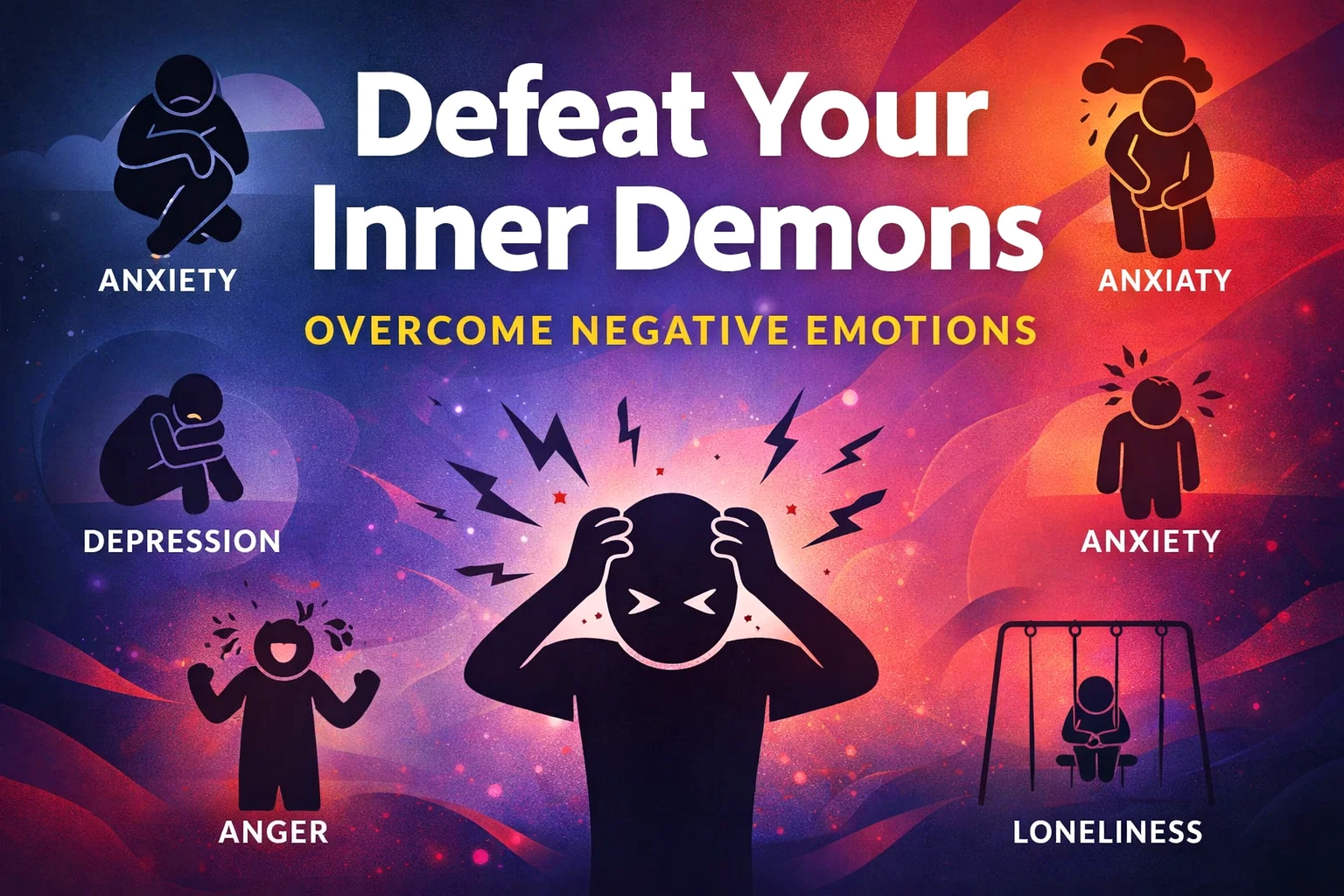
Understanding that you are not alone in these struggles is the first step toward reclaiming your joy. The visual guide we are exploring today highlights nineteen specific emotional and spiritual “demons” that frequently target individuals, ranging from shame and fear to confusion and trauma. By pairing these struggles with timeless wisdom and specific scriptural references, we can begin to build a bridge from despair to hope. This guide is designed to help you identify what is targeting you and provide the words you need to speak back to the darkness.
The Heavy Hitters: Overcoming Shame, Fear, and Anxiety
Shame is perhaps one of the most isolating emotions. It tells us that we are fundamentally flawed and unworthy of love or forgiveness. Unlike guilt, which says “I did something bad,” shame says “I am bad.” When shame targets you, it creates a barrier between you and your potential. The antidote to this is found in the concept of grace. By reflecting on the idea that there is no condemnation for those who seek a higher path, we can strip shame of its power. You are not your past mistakes, and your value is not defined by your darkest moments.
Fear and anxiety often go hand in hand, acting as a constant background noise that prevents us from living in the present. Fear usually has a specific object, while anxiety is a general sense of dread about the future. When Isaiah 41:10 encourages us not to fear because we are upheld by a righteous hand, it is a reminder that we do not have to carry the weight of the world on our shoulders. Combating anxiety involves a practice of “casting” those cares elsewhere. It is about trading your “what-ifs” for a sense of “even if,” knowing that you have the internal and spiritual resources to handle whatever comes your way.
Breaking the Cycle of Worry and Stress
In our modern, fast paced world, stress and worry have become almost normalized. We wear our busyness like a badge of honor, but underneath that exterior, our spirits are often fraying. Stress is the physical and emotional response to external pressures, while worry is the internal repetition of those pressures in our minds. To defeat these demons, we must practice the art of presence. Matthew 6:34 reminds us that each day has enough trouble of its own. By focusing strictly on the next right step, we prevent the overwhelming shadow of tomorrow from blocking today’s sunlight.
Navigating the Shadows of Depression and Despair
Depression and despair are deeper, more persistent versions of sadness. While sadness might come and go with the weather, depression can feel like a thick fog that obscures every exit. Despair is the belief that things will never get better. These are among the most difficult demons to defeat because they sap the very energy required to fight. During these times, it is vital to remember that feelings are not facts. Just because it feels like the fog will never lift does not mean the sun has stopped shining above it.
The scriptures often point to the idea of “hope deferred” making the heart sick, but they also provide a roadmap for the “downcast soul.” By asking ourselves why we are discouraged and intentionally shifting our focus toward past victories or small mercies, we can begin to poke holes in the darkness. Despair tells us that we are crushed, but 2 Corinthians 4:8-9 reminds us that while we may be hard pressed, we are not crushed; we may be perplexed, but we are not in despair. This resilience is a spiritual muscle that grows every time you choose to take one more breath and stay in the game.
Healing from Trauma and Grief
Trauma and grief are the results of deep wounds to the soul. Trauma often leaves us feeling broken or “fragmented,” as if a part of us stayed behind in a painful moment. Grief is the price we pay for love, a journey through a valley that has no shortcuts. The healing process for these demons is rarely linear. It involves acknowledging the pain rather than suppressing it. Psalm 147:3 offers a beautiful image of a healer who binds up wounds. This suggests that healing is a gentle, active process. It is okay to be a “work in progress” and to lean on faith and community as your bandages while you recover your strength.
The Quiet Killers: Loneliness and Isolation
You can be in a room full of people and still feel completely alone. Loneliness is a state of mind where you feel unseen and misunderstood. Isolation, however, is often a choice we make when we are hurting, pulling away from others to protect ourselves. The danger of isolation is that it makes us an easy target for all the other demons. When we are alone, our negative thoughts have no one to challenge them.
The spiritual remedy for loneliness is the promise of constant presence. Hebrews 13:5 contains the powerful assurance that you will never be left or forsaken. Beyond the spiritual, defeating isolation requires a courageous step back into community. Whether it is a small group, a circle of friends, or a professional counselor, breaking the silence is the fastest way to weaken the power of isolation. Connection is the natural enemy of the lonely spirit.
Addressing Insecurity and Doubt
Insecurity and doubt target our identity. They make us look in the mirror and see only our weaknesses. Insecurity compares our “behind the scenes” with everyone else’s “highlight reel.” Doubt makes us question our decisions, our faith, and our worth. To defeat insecurity, we must shift our gaze from our own perceived inadequacies to the strength that is provided to us. 2 Timothy 1:7 notes that we have not been given a spirit of fear, but of power, love, and a sound mind. A “sound mind” is one that can see the truth clearly without the distorting lens of self-doubt.
Managing Anger and the Burden of Life
Anger is often a secondary emotion, a mask for pain or fear. While it can feel empowering in the moment, unresolved anger is like drinking poison and expecting the other person to die. It creates a “foothold” for bitterness to grow. The strategy for defeating anger is twofold: acknowledging the hurt that caused it and practicing timely forgiveness. Letting the sun go down on your anger, as suggested in Ephesians, is about preventing a temporary emotion from becoming a permanent character trait.
The “Burden” demon is the feeling that you are carrying too much responsibility, too much secret pain, or too much expectation. It manifests as physical and mental exhaustion. The invitation in Matthew 11:28-30 is to “come and rest.” This is not just about sleep; it is about a soul rest. It is the realization that you are not the CEO of the universe. By surrendering the need to control every outcome, you can trade your heavy yoke for one that is light and manageable.
Clarity in the Midst of Confusion
Confusion is a tactic used to keep you stagnant. When you don’t know which way to turn, you often end up doing nothing at all. This lack of peace is a signal that something is out of alignment. 1 Corinthians 14:33 states that the divine is not the author of confusion but of peace. Therefore, if you are feeling confused, it is an invitation to step back, quiet the external noise, and wait for clarity. Wisdom is available to those who ask for it without wavering. Sometimes, the most spiritual thing you can do is stop trying to figure it all out and simply trust that the path will be revealed one step at a time.
Overcoming Hopelessness and Sadness
Sadness is a natural response to loss, but hopelessness is a dangerous spiritual state. When you lose hope, you lose your “why.” To fight these, we must actively feed our minds with positive, life-affirming truths. This might mean changing what you listen to, who you spend time with, or the scriptures you meditate on. Romans 15:13 speaks of being filled with joy and peace through believing, so that you may “overflow with hope.” Hope is not just a feeling; it is a conscious expectation that good is coming. Even in the middle of John 16:20’s “sorrow,” there is the promise that it will be turned into joy. The season you are in is just a chapter, not the whole book.
Conclusion: Building Your Spiritual Armor
Defeating the demons that target you is not a one-time event; it is a daily practice of awareness and action. By identifying these nineteen specific challenges, from the crushing weight of shame to the subtle whispers of doubt, you have already taken the first step toward victory. Names have power, and by naming your struggle, you begin to take your power back. Remember that these emotional states, while intense, do not have to be your permanent identity. You are a resilient being capable of profound transformation.
As you move forward, keep this guide as a reference. When you feel the familiar sting of insecurity or the sudden fog of confusion, look up the corresponding truth and speak it over your life. Surround yourself with a community that supports your growth and don’t be afraid to seek professional help alongside your spiritual practices. You have been equipped with the spirit of power, love, and a sound mind. Use those tools to dismantle the obstacles in your path and walk into the peace that is rightfully yours. The battle may be real, but so is the strength available to you to win it.
Would you like me to generate a meta description or some social media captions to go along with this blog post?