DIY Herbal Hair Detangler Recipe Natural Hair Care for Soft, Knot-Free Hair
If you have ever spent your morning fighting a losing battle with a hairbrush, you know exactly how frustrating tangles can be. Tugging and pulling not only causes physical pain but also leads to significant breakage and split ends. While the market is flooded with synthetic sprays, many of them are packed with silicones that weigh hair down or alcohols that strip away natural moisture. That is where the magic of nature comes in. Making your own DIY Herbal Hair Detangler is one of the simplest and most rewarding swaps you can make in your beauty routine. This botanical blend uses the power of plants to provide incredible slip, deep hydration, and a healthy shine that lasts all day long.
The Science of Tangles and Why Natural Ingredients Work
To understand why this herbal spray is so effective, we first have to look at why hair tangles in the first place. The outer layer of your hair, known as the cuticle, consists of tiny scales. When hair is healthy and hydrated, these scales lay flat, allowing strands to glide past each other. However, when hair is dry or damaged, these scales lift and hook onto neighboring strands like Velcro. This creates the knots we all dread.
Most commercial detanglers use heavy silicones to coat the hair and create artificial smoothness. While this works temporarily, it can lead to buildup that eventually makes hair even drier. Natural ingredients like aloe vera and vegetable glycerin work differently. They are humectants, meaning they draw moisture from the air into the hair shaft. When combined with a light oil like coconut or argan oil, they provide the lubrication needed to slide those lifted cuticles apart without the long term damage of synthetic chemicals.
A Deep Dive into Your Herbal Ingredients
Each component of this herbal detangler serves a specific purpose for your hair health. By understanding what these ingredients do, you can appreciate why this recipe is a powerhouse for all hair types.
The Hydrating Base: Aloe Vera and Distilled Water
Distilled water is essential for any DIY beauty product because it is free from the minerals and bacteria found in tap water, which helps your spray stay fresh longer. Aloe vera gel is the star of the show here. It contains proteolytic enzymes which repair dead skin cells on the scalp and act as a wonderful conditioner. It leaves your hair smooth and shiny while providing a lightweight grip that helps the other ingredients stick to the hair fiber.
The Slip Factor: Vegetable Glycerin
If you want that silky feeling where the comb just slides through, vegetable glycerin is your best friend. It is a thick, clear liquid derived from plant oils. Because it is a powerful humectant, it ensures that your hair stays hydrated throughout the day. This is especially beneficial for those with curly or textured hair, which tends to lose moisture faster than straight hair.
Nourishing Oils: Coconut or Argan
Oils are vital for sealing the hair cuticle. Coconut oil is unique because its molecular structure allows it to penetrate the hair shaft rather than just sitting on top. If you find coconut oil too heavy, argan oil is a fantastic alternative. Often called liquid gold, argan oil is rich in fatty acids and Vitamin E, providing a high gloss finish and protecting against environmental damage.
Step by Step Guide to Crafting Your Herbal Detangler
Creating this recipe is a relaxing ritual in itself. It feels a bit like modern day alchemy, turning dried herbs and plant extracts into a professional grade hair treatment. Follow these steps to ensure the best results.
Step 1: The Herbal Infusion
Start by bringing your distilled water to a boil. Place your dried chamomile or rosemary in a heat safe glass bowl. Chamomile is excellent for soothing the scalp and adding golden highlights to blonde or light brown hair, while rosemary is legendary for stimulating hair growth and deepening the luster of dark hair. Pour the boiling water over the herbs and let them steep for at least 10 to 15 minutes. This allows the water to extract the essential phytonutrients from the plants. Once finished, strain the herbs out carefully using a fine mesh strainer or cheesecloth.
Step 2: Mixing the Core Ingredients
While your herbal water is still slightly warm but not hot, whisk in the aloe vera gel, vegetable glycerin, and your chosen oil. Mixing them while the water is warm helps the oil emulsify more effectively, ensuring you do not end up with a layer of oil floating at the top of your bottle. Stir gently until the mixture looks uniform.
Step 3: The Aromatic Finish
Once the mixture has cooled completely, add your lavender essential oil. Lavender is not just for the scent; it has antimicrobial properties that can help keep your scalp healthy and may even promote faster hair growth. Plus, the calming aroma turns your morning hair routine into a moment of aromatherapy.
Step 4: Storage and Bottling
Transfer your liquid into a dark glass spray bottle. Using an amber or cobalt glass bottle helps protect the delicate essential oils and herbal compounds from UV light, which can degrade them over time. Give it a good shake, and your detangler is ready for action.
Best Practices for Using Your Natural Detangler
To get the most out of your DIY creation, the application technique is just as important as the recipe itself. Using it correctly will minimize breakage and maximize the shine.
- Start from the Bottom: Always spray the detangler on the ends of your hair first. When combing, start at the tips and work your way up to the roots. This prevents you from pushing knots together and creating one giant tangle.
- Damp vs. Dry: This spray works beautifully on both. Use it on damp hair after a shower to lock in moisture, or use a light mist on dry hair to refresh your style and calm frizz mid day.
- Shake Before Use: Since this recipe does not contain chemical emulsifiers, the oil and water may naturally separate. A quick shake before every use ensures you get an even distribution of ingredients.
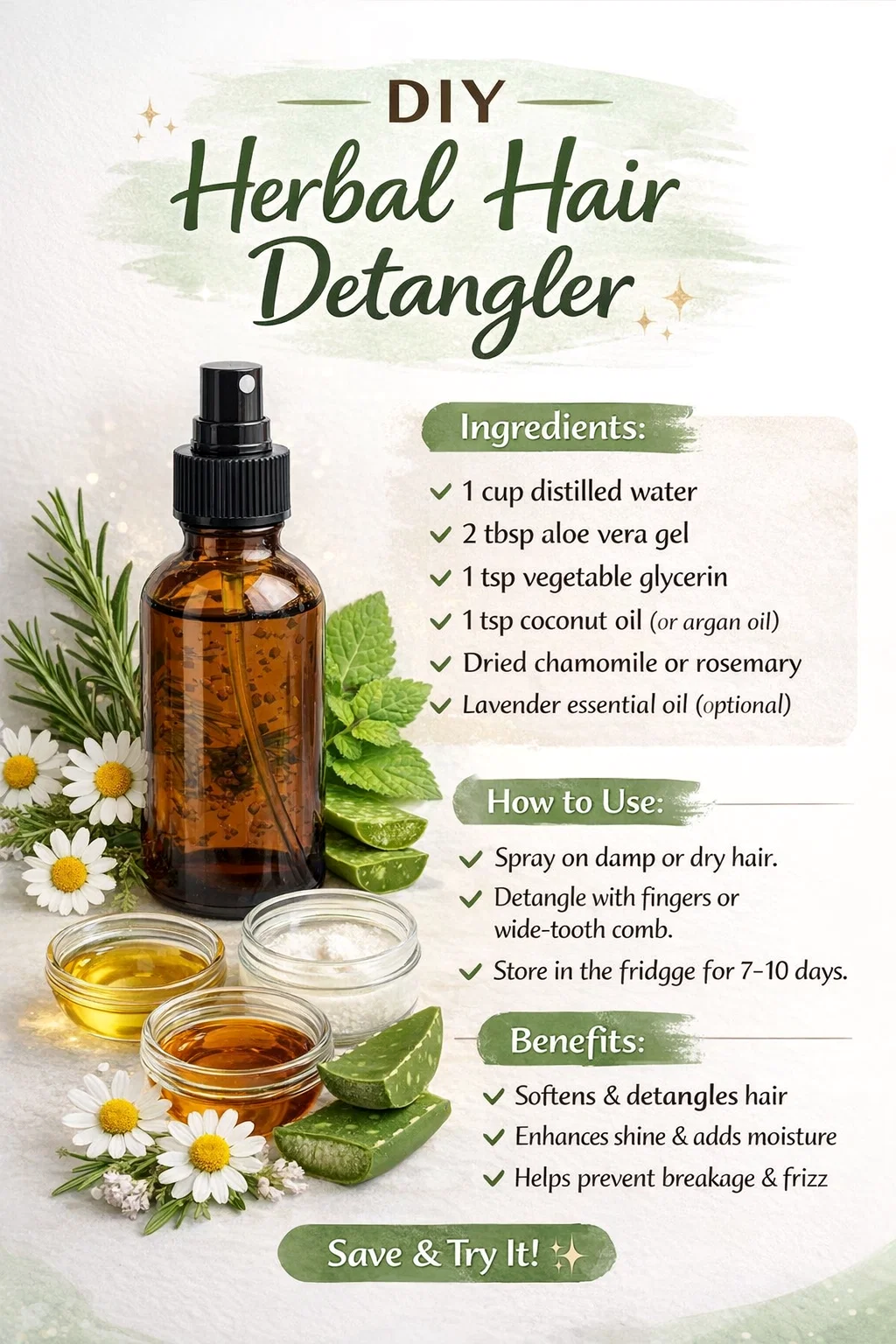
- Storage is Key: Because this is a fresh, preservative free product, it belongs in the refrigerator. Not only does this keep it fresh for 7 to 10 days, but the cold temperature of the spray also helps to close the hair cuticle instantly, adding even more shine.
The Benefits of Going Chemical Free
Switching to a DIY herbal detangler offers more than just knot free hair. It is a step toward a more sustainable and health conscious lifestyle. Most store bought sprays contain “fragrance” or “parfum,” a catch all term for hundreds of undisclosed chemicals that can cause scalp irritation or hormonal disruption. By making your own, you have total control over what goes onto your body.
Furthermore, this approach is significantly more cost effective. A single bottle of high end organic detangler can cost a fortune, but the ingredients for this DIY version can be bought in bulk and used for dozens of batches. You are also reducing plastic waste by reusing the same glass spray bottle over and over again.
Customizing the Recipe for Your Hair Type
One of the best things about DIY beauty is that you can tweak the formula to suit your specific needs. No two heads of hair are the same, and your detangler should reflect that.
For Fine or Oily Hair
If your hair gets weighed down easily, reduce the amount of oil to just half a teaspoon, or swap the coconut oil for a very light oil like jojoba or grapeseed oil. You might also want to increase the ratio of distilled water to aloe vera for a lighter mist.
For Thick, Curly, or Coarse Hair
Those with curls often need extra lubrication. You can safely double the amount of vegetable glycerin and use a full tablespoon of aloe vera gel. Adding a bit of marshmallow root to your herbal infusion step will also provide incredible “mucilage,” which is the gold standard for natural slip in the curly hair community.
For Scalp Health
If you struggle with an itchy or flaky scalp, try using peppermint or tea tree essential oil instead of lavender. These oils have powerful antifungal and cooling properties that can provide instant relief while you detangle.
Conclusion: Embrace the Power of Plant Based Beauty
Transitioning to a natural hair care routine does not have to be complicated or expensive. This DIY Herbal Hair Detangler proves that with just a few pantry staples and some dried herbs, you can create a high performance product that rivals anything found on a salon shelf. By taking the time to craft your own beauty solutions, you are not just caring for your hair; you are practicing a form of self care that honors both your body and the environment.
Give this recipe a try and notice how your hair responds. You will likely find that it feels softer, looks shinier, and becomes much easier to manage over time. There is a certain peace of mind that comes from knowing every single ingredient in your bottle is nourishing your strands from the outside in. So, clear a little space in your fridge and get ready to say goodbye to tangles and hello to healthy, botanical beauty.