
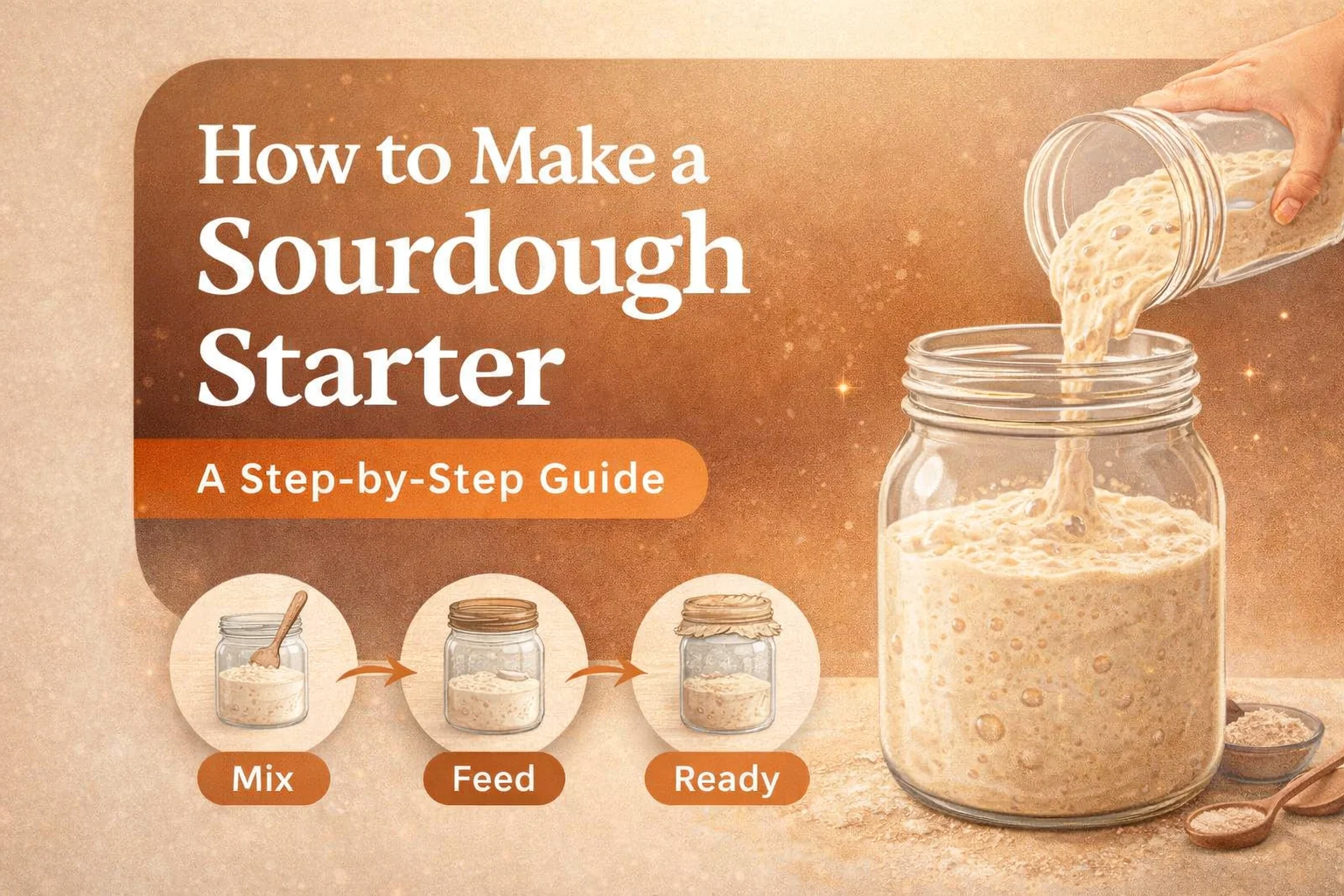
Easy 7-Day Sourdough Starter Guide How to Make Your Own Bread Starter
There is something incredibly grounding about the smell of fresh bread wafting through a kitchen. It is a scent that carries centuries of tradition, connecting us to a simpler time when food was made slowly and with intention. If you have ever stared at a crusty, golden loaf of artisan sourdough and wondered how such magic is possible from just flour and water, you are in the right place. Creating a sourdough starter is not just a culinary project; it is an act of bringing a living, breathing ingredient into your home. This guide will walk you through the rhythmic, rewarding process of cultivating your very own wild yeast from scratch.
The Magic of Wild Yeast and Bacteria
To understand why we wait seven days for a starter to be ready, we have to look at what is happening on a microscopic level. A sourdough starter is a symbiotic culture of bacteria and wild yeast. Unlike commercial yeast, which is engineered for speed and consistency, wild yeast is found everywhere—in the air, on your hands, and especially on the grains of the flour you use.
When you mix flour and water, you are essentially creating an invitation for these microorganisms to move in and start a colony. The primary players are lactic acid bacteria, which give sourdough its signature tang and preservative qualities, and wild yeasts, which provide the lift and airy structure. Over the first few days, there is a bit of a microbial battle as “bad” bacteria are phased out by the increasing acidity of the environment, eventually leaving behind a stable, healthy culture that is perfect for baking.
Preparation: What You Need Before Day One
Before you mix your first batch, you need to gather a few essential tools. The beauty of sourdough is its simplicity, but having the right equipment makes the process much more manageable.
Choosing the Right Jar
You want a glass jar that can hold at least 500ml to 1 liter of volume. As your starter becomes active, it will double or even triple in size after a feeding. If your jar is too small, you will wake up to a sticky mess on your kitchen counter. Glass is preferred over plastic because it is non-reactive and allows you to clearly see the bubbles and growth levels.
Selecting Your Flour
While you can make a starter with all-purpose flour, many bakers find that starting with a whole grain flour like rye or whole wheat gives the culture a “jumpstart.” These flours contain more nutrients and minerals that wild yeast loves. Once the starter is established, you can easily transition it to regular unbleached all-purpose or bread flour.
Water Quality Matters
If your tap water is heavily chlorinated, it might inhibit the growth of the yeast. If you can smell chlorine in your water, let a pitcher sit out on the counter overnight to allow the gas to dissipate, or use filtered water. The water should be room temperature—neither hot nor ice cold.
Day 1: The Initial Mix
This is where the journey begins. On the first day, you are simply setting the stage. You will mix 100 grams of flour with 100 grams of water. Using a digital scale is highly recommended because volume measurements like cups can vary significantly depending on how the flour is packed.
Stir the mixture until no dry flour remains. The texture should be like a very thick, pasty pancake batter. Once mixed, scrape down the sides of the jar so you can clearly see the level of the mixture. Cover the jar loosely. You want air to be able to escape, but you don’t want the surface to dry out or bugs to get inside. A cloth with a rubber band or a lid rested on top without being screwed down works perfectly. Place it in a warm, draft-free spot in your kitchen.
Day 2: The Waiting Game
On the second day, you might be tempted to do something, but the best course of action is often to just observe. Check your jar for any signs of life. You might see a few tiny bubbles or a slight change in the aroma. It might smell like wet flour or have a slightly sweet, earthy scent.
If you don’t see any bubbles yet, don’t panic. The microbes are still waking up. Give the mixture a good stir once or twice during the day. This aerates the starter and ensures that the yeast has access to fresh “food” within the flour. Stirring also helps distribute the moisture and prevents a skin from forming on top.
Day 3: The First Feeding
By day three, you should start to see some activity. There may be more bubbles, and the scent might start to turn slightly sour or even a bit like gym socks. This is a normal part of the process! Today is the day you begin the feeding cycle.
The Importance of Discarding
You will remove and discard about half of your mixture. This step is often the most confusing for beginners, but it is vital. If you didn’t discard, and kept adding 100 grams of flour and water every day, you would eventually have a massive amount of starter that requires huge quantities of flour to stay fed. Discarding keeps the volume manageable and ensures the acidity levels stay in check.
After discarding half, add 100 grams of fresh flour and 100 grams of water. Stir it well and cover it back up. You are now officially a sourdough parent.
Day 4 and 5: Establishing Consistency
On days four and five, you repeat the process from day three. Discard half, feed with equal parts flour and water. You should notice that the bubbles are becoming more uniform and the starter is starting to “rise.” This means the volume of the starter increases after a feeding and then eventually falls back down as the yeast consumes the sugars.
At this stage, the aroma should start to shift from “strange” to “pleasantly tangy.” It might remind you of yogurt or vinegar. If you see a dark liquid forming on top, don’t worry. This is called “hooch,” and it is simply a sign that your starter is hungry and has run out of food. Just pour it off or stir it back in before your next feeding.
Day 6 and 7: Reaching Maturity
As you approach the end of the week, your starter should be looking very healthy. It should be riddled with bubbles, from tiny pinpricks to larger pockets of air. The ultimate test of readiness is how quickly it reacts to a feeding.
The Doubling Test
A ready-to-use starter should double in size within 4 to 6 hours after being fed. If your starter is still sluggish, continue the daily discard and feed routine for a few more days. Factors like kitchen temperature can greatly impact the speed of development. If your house is cool, it might take 10 or 12 days to reach full strength.
The Float Test
Another popular way to check for activity is the float test. Drop a small teaspoon of your active starter into a glass of room temperature water. If it floats, it means there is enough carbon dioxide trapped in the structure to lift a loaf of bread. If it sinks, it needs more time to develop or another feeding.
Maintaining Your Starter for the Long Term
Once your starter is active and strong, you don’t have to keep it on your counter and feed it every single day unless you plan to bake daily. For most home bakers, the refrigerator is your best friend.
The Fridge Method
You can store your starter in the fridge and feed it just once a week. When you are ready to bake, take it out the night before, give it a feeding to wake it up, and it will be bubbly and ready by morning. This drastically reduces the amount of flour you use and makes sourdough baking fit into a busy lifestyle.
Creative Ways to Use Discard
If you hate the idea of throwing away the discard during your weekly feedings, there are hundreds of recipes designed specifically for “sourdough discard.” From tangy pancakes and waffles to crackers, biscuits, and even chocolate cake, the discard adds a wonderful depth of flavor and texture to almost any baked good.
Common Troubleshooting Tips
Even with a perfect guide, nature can be unpredictable. Here are a few things to keep an eye on:
- Mold: If you see fuzzy growth that is pink, green, or black, the starter has been contaminated. This is rare but if it happens, you must throw it away, sanitize your jar, and start over.
- The Smell: A healthy starter should smell tangy, fruity, or like yeast. If it smells like rotten eggs or putrid, something has gone wrong with the bacterial balance.
- Temperature: If your kitchen is very cold, try keeping your starter on top of the refrigerator or inside an oven that is turned off but has the light on.
Enjoying the Fruits of Your Labor
There is a profound sense of accomplishment that comes with pulling a loaf of bread out of the oven that was raised entirely by a culture you created. Sourdough is more than just a recipe; it is a lesson in patience and observation. It teaches us that good things take time and that the simplest ingredients—flour, water, and air—can produce something extraordinary.
As you move forward into baking your first boules, baguettes, or sandwich loaves, remember that your starter will only get better with age. Some bakeries have starters that have been kept alive for over a hundred years! Yours is just beginning its story. Keep feeding it, keep baking, and most importantly, keep sharing the bread you make with the people you love. Happy baking!