
Fridge Storage Guide How to Organize Your Refrigerator for Food Safety and Freshness
Have you ever opened your refrigerator, stared at a shelf full of groceries, and wondered if you were actually keeping everything in the right place? Most of us grew up just shoving items wherever they fit, but the truth is that the way you organize your fridge has a massive impact on food safety, shelf life, and your grocery budget. When food is stored at the wrong temperature or in the wrong climate, it spoils faster, leading to unnecessary waste and potential health risks.
Mastering your fridge layout is one of the easiest home hacks you can implement today. It is not just about aesthetics or making your fridge look pretty for social media. It is about understanding the science of cold air circulation and humidity control. By placing items in their optimal zones, you ensure that your milk stays fresh, your produce remains crisp, and your raw ingredients do not cross-contaminate your ready-to-eat meals.
Understanding the Temperature Gradient of Your Refrigerator
A refrigerator is not a uniform box of cold air. Because of how cooling systems function and where the cold air is introduced, different shelves and compartments have distinct temperature profiles. Understanding these gradients is the first step toward effective organization.
The general rule of thumb is that the bottom of the fridge is typically the coldest spot, while the door is the warmest area. This happens because cold air sinks, and every time you open the fridge door, the items inside are exposed to room-temperature air. If you are placing highly perishable items in these warm spots, you are unknowingly shortening their lifespan significantly.
The Bottom Shelf: The Danger Zone and Coldest Point
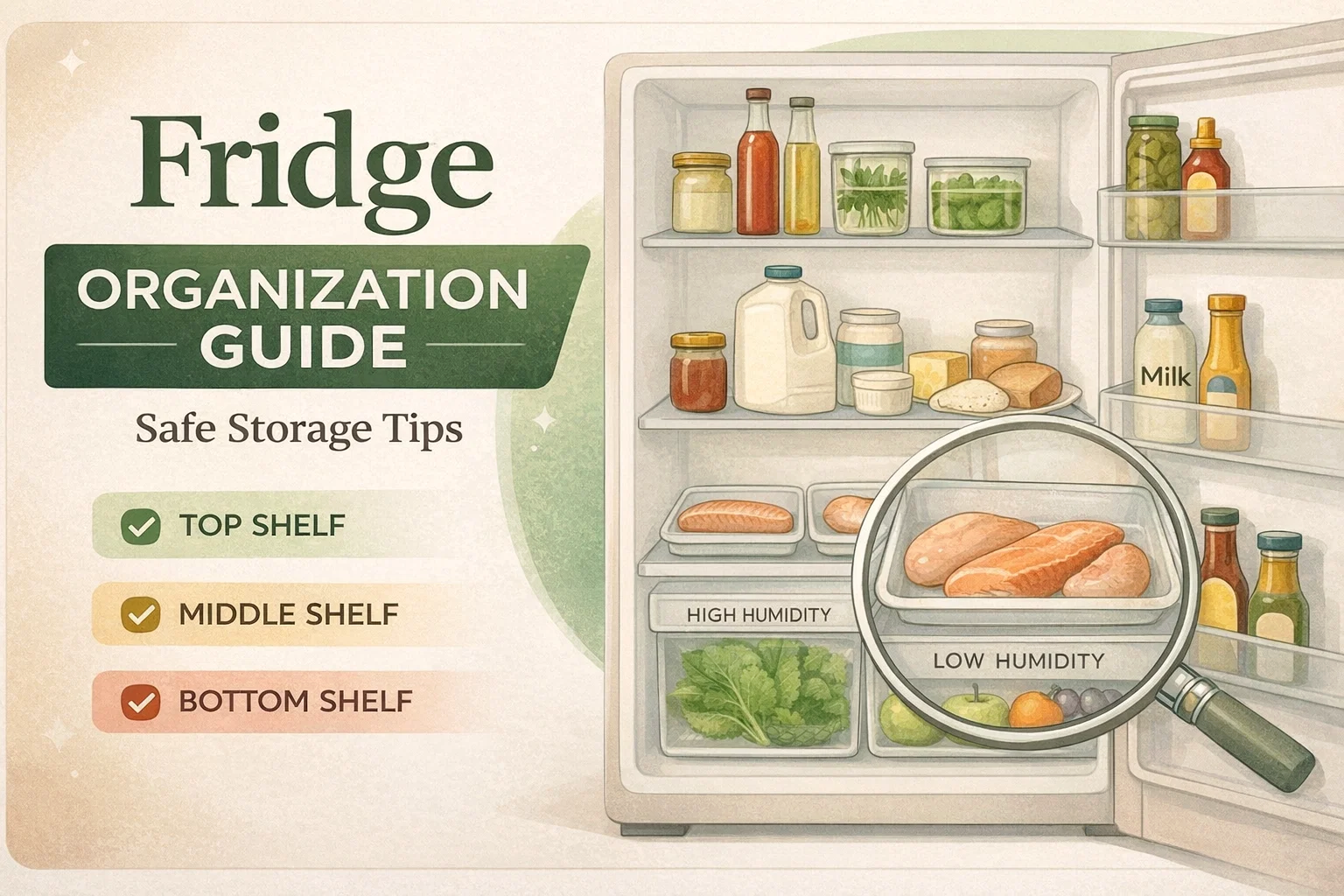
You might think the bottom shelf is just for leftover space, but it is actually the most critical zone in your appliance. This area is generally the coldest part of the main compartment. Because of this, it is the safest place for raw meat, poultry, and seafood.
When storing raw animal proteins, safety is the top priority. Always keep these items on the bottom shelf in a sealed, leakproof tray. This serves two purposes. First, it keeps them at the ideal temperature to inhibit bacterial growth. Second, it prevents any juices from leaking and dripping onto other foods below, which is a major food safety hazard known as cross-contamination.
The Middle Shelf: Consistency is Key
As we move up to the middle shelves, the temperature becomes more stable and consistent. This makes it the perfect “prime real estate” for items that need steady cold temperatures but aren’t quite as sensitive as raw proteins. This is where you should store your dairy products, ready-to-eat cooked meals, and prepared foods.
Many people make the mistake of storing milk in the fridge door. Because the door is the area most susceptible to temperature fluctuations every time you reach for a snack, your milk is likely to spoil much faster than it needs to. Move that gallon to the middle or bottom-middle shelf to keep it at a consistent, safe temperature.
Optimizing Your Fridge Door and Top Shelves
The top shelf and the door compartments are often treated like the junk drawer of the refrigerator, but they have specific functions that can help you manage your kitchen inventory more effectively.
The Top Shelf for Low-Maintenance Items
The top shelf is typically the warmest area of the main compartment, just a bit warmer than the bottom shelves. Since it is stable but not the coldest spot, it is perfect for items that do not require intense cooling. Drinks, leftovers, and items like jars of fresh herbs in water do very well here. It is also a great place for ready-to-eat snacks or deli meats that you plan to consume quickly.
The Door: The Warmest Spot
The door is the most unstable area regarding temperature because it experiences the most movement and exposure to the outside air. Only store items here that have natural preservatives or are shelf-stable for long periods even after opening. Think condiments, sauces, pickles, and bottled beverages. Avoid putting anything highly perishable like eggs or dairy products in the door, regardless of whether your fridge has dedicated shelves for them.
Mastering Humidity Control in Produce Drawers
One of the most overlooked features of a modern refrigerator is the humidity-controlled produce drawer. Most people assume these are just for hiding away extra fruits and veggies, but they are designed to regulate moisture levels. Different types of produce have different respiration rates, meaning they release or absorb moisture at different speeds.
- High Humidity Drawers: These are designed to keep moisture in. This is the ideal environment for leafy greens, herbs, and any produce that wilts quickly. By closing the vent, you create a humid microclimate that keeps your kale, lettuce, and spinach crisp for days longer.
- Low Humidity Drawers: These drawers usually have a vent that allows some moisture to escape. This environment is perfect for fruits that produce ethylene gas, such as apples, pears, and stone fruits. Keeping these in a lower humidity setting prevents them from rotting or becoming mushy too quickly.
Common Mistakes to Avoid
Even with the best intentions, it is easy to fall into bad habits. One of the biggest mistakes is overstuffing the fridge. Your refrigerator needs room for cold air to circulate efficiently. If you pack every inch of space, the air cannot flow properly, creating hot spots where food can spoil before its time.
Another issue is keeping the door open for too long while you decide what to eat. Every second the door is open, the internal temperature rises, forcing the compressor to work harder and increasing the risk for your perishables. Try to know what you need before you reach in.
Final Thoughts on Fridge Organization
Taking the time to organize your fridge is an act of self-care. It simplifies your meal prep, helps you keep track of what you have, and ensures that the food you spend your hard-earned money on actually makes it to your plate rather than the trash bin.
Start small today. Maybe move your milk off the door or create a designated spot for your raw meat on the bottom shelf. As you shift your habits, you will notice that your produce stays crispier and your leftovers are safer to consume. A little bit of planning goes a long way in creating a healthy, efficient, and well-organized kitchen environment. Happy organizing!