
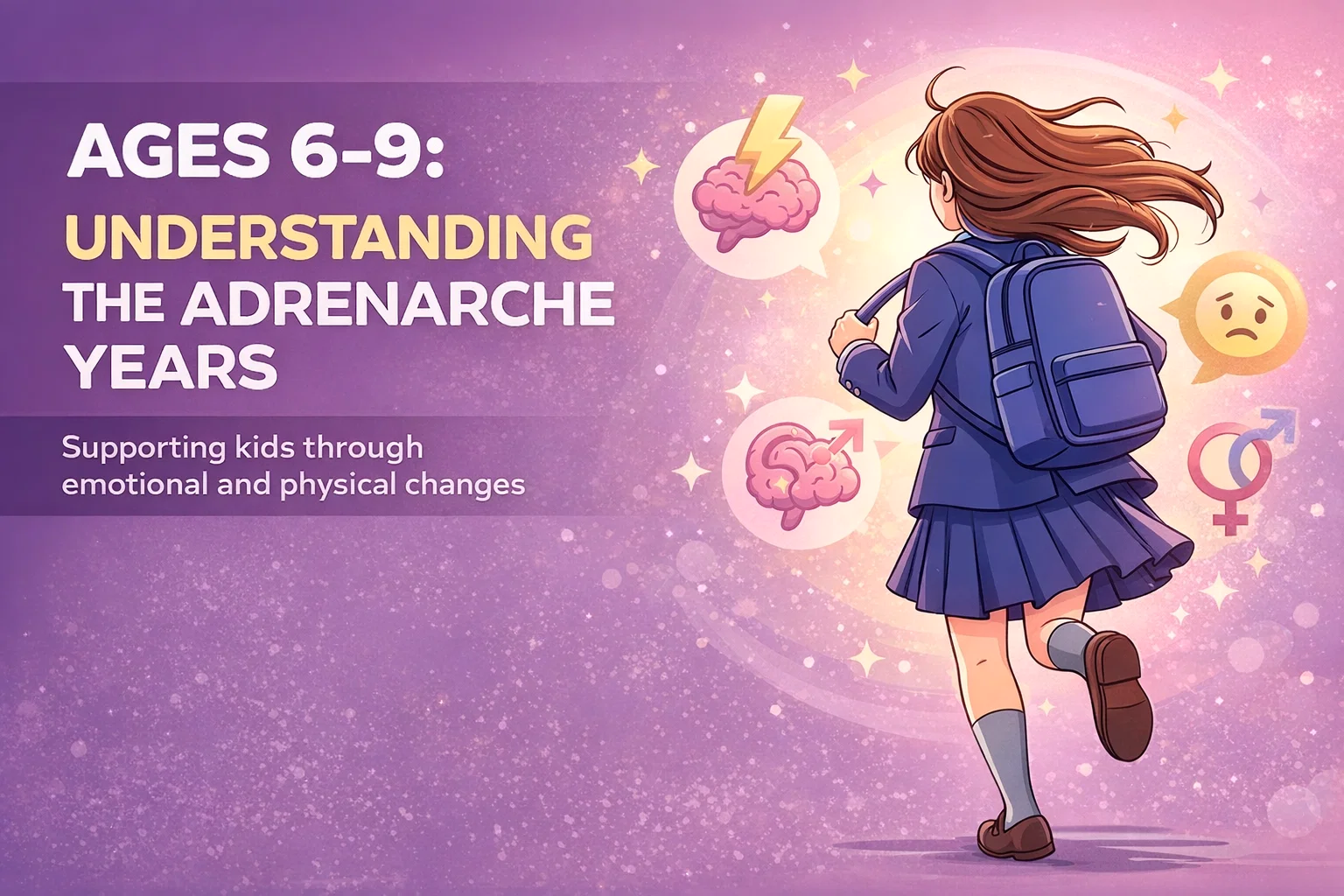
Helping Your Child Navigate Adrenarche Ages 6-9 Understanding Emotions Brain Changes
Parenting is often described as a series of stages, from the sleepless nights of infancy to the turbulent storms of the teenage years. However, there is a significant, often overlooked period that sits right in the middle, specifically between the ages of 6 and 9. If you have noticed your once easy going child suddenly experiencing intense mood swings, becoming more sensitive to social dynamics, or even sporting a bit of unexpected body odor, you are not alone. You have entered the Adrenarche years. This stage is a vital biological rehearsal for adolescence, yet it remains one of the least discussed phases of childhood development. Understanding what is happening inside your child’s brain and body during this time can transform your parenting approach from one of frustration to one of deep connection.
What Exactly is Adrenarche?
While most parents are well prepared for the onset of puberty, Adrenarche often catches families off guard because it starts much earlier. Occurring typically between ages 6 and 9, Adrenarche is a quiet biological shift initiated by the adrenal glands. These small glands, located on top of the kidneys, begin producing low levels of weak androgens. While these hormones are not the same as the ones that trigger full puberty, they serve as the opening act for the major changes to come.
Think of Adrenarche as a practice run. The body is beginning to test out new chemical signals, and the brain is starting to rewire itself in preparation for the complexities of the teenage years. It is a time of incredible internal growth that is not always visible on the outside, which is why it can be so confusing for both the child and the parent. Your child is still very much a little kid, but their internal chemistry is starting to tell a different story.
The Battle Between the Emotional and Logical Brain
One of the most fascinating aspects of these years happens deep within the brain. During Adrenarche, the amygdala, which is the part of the brain responsible for processing emotions, becomes significantly more active. At the same time, the prefrontal cortex, the area responsible for reasoning, logic, and self regulation, is still very much under construction. This creates a physiological gap where big feelings arrive much faster than a child’s ability to manage them.
When your 8 year old has a meltdown over a seemingly minor issue, it is not because they are being dramatic or difficult. It is because their emotional brain has taken the wheel, and their logical brain does not have the tools yet to pump the brakes. This stage brings a heightened sensitivity to the world. They are more likely to feel deep sadness, intense frustration, or even overwhelming joy. The emotional volume is simply turned up higher than it was before.
The Social Shift and Fairness
During these years, you might notice a greater sensitivity to fairness and friendship. This is directly linked to the brain changes mentioned above. Children in the Adrenarche stage are starting to view the world through a more complex social lens. They care deeply about being treated fairly and can become quite distressed if they perceive an injustice in the classroom or on the playground. Their friendships become more intense, and the fear of exclusion can lead to significant anxiety. This is all part of the process of learning how to navigate social hierarchies and build deeper interpersonal connections.
Signs Your Child is Navigating Adrenarche
Because Adrenarche is a internal process, it often manifests in outward behaviors that can be misinterpreted as bad behavior. Recognizing these signs is the first step in providing the support your child needs.
- Intense Emotional Fluctuations: Sudden shifts from happy to tearful without a clear external cause.
- Physical Changes: You might notice mild body odor or slightly oilier skin and hair, which are direct results of the new androgens in their system.
- Heightened Self Consciousness: A new awareness of their body and how they appear to others, often leading to moments of confusion or embarrassment.
- Sensitivity to Criticism: Even gentle corrections can feel like a major personal attack to a child whose emotional brain is on high alert.
- Need for Autonomy: An increased desire to make their own choices, often clashing with parental guidance.
How to Support Your Child Through Big Feelings
As a parent or educator, your role during the Adrenarche years is to act as an external regulator for your child’s internal chaos. Since their prefrontal cortex cannot yet do the heavy lifting of emotional management, they rely on your steady presence to help them find their balance. This is not about fixing their problems, but rather about holding space for their experiences.
The Power of Co-Regulation
Co-regulation is the process by which an adult’s calm nervous system helps soothe a child’s stressed nervous system. When your child is in the middle of a mood swing, the most effective tool you have is your own composure. Taking a deep breath, lowering your voice, and staying physically present sends a signal to their brain that they are safe. Over time, this helps them build the neural pathways they will eventually use to regulate themselves.
Naming Emotions to Tame Them
Children in this age group often feel overwhelmed by their emotions because they do not have the vocabulary to describe them. By helping them name what they are feeling, you move the experience from the reactive amygdala to the logical prefrontal cortex. Phrases like, It looks like you are feeling really frustrated right now, or I can see that your heart is feeling a bit heavy, can be incredibly grounding. It validates their experience and makes the emotion feel less like a scary, uncontrollable force.
Creating a Safe Environment for Growth
Consistency is the ultimate antidote to the internal instability of Adrenarche. When the world inside feels unpredictable, the world outside needs to be a steady anchor. This is why predictable routines are so vital for children aged 6 to 9. Knowing what to expect when they wake up, after school, and before bed provides a sense of security that allows them to process their internal changes more effectively.
Listening Without Judgement
Your child needs to know that their big feelings are not wrong or bad. If they feel judged for their outbursts, they will likely start to hide their emotions, which can lead to greater anxiety down the road. Create a culture in your home where feelings are discussed openly. Encourage them to talk about their day, their friendships, and their worries. Even if their concerns seem small to you, remember that to their developing brain, these issues are monumental.
Reassurance is Key
Perhaps the most important thing you can do is offer constant reassurance. Children in this stage often feel confused by their own reactions. They might even feel guilty after an emotional outburst. Remind them often that what they are going through is a normal part of growing up. Use language that emphasizes growth and rehearsal. Tell them, You are learning how to handle big feelings, and it takes practice. I am here to help you through it.
The Long Term Benefits of Understanding Adrenarche
Investing the time and patience to support your child through Adrenarche pays dividends when they reach full blown puberty. By establishing a foundation of trust and emotional literacy now, you are setting the stage for a much smoother transition into the teenage years. You are teaching them that you are a safe harbor, that their emotions are manageable, and that they have the strength to navigate internal change.
Furthermore, this stage offers a unique window of opportunity to strengthen the parent child bond. When you choose empathy over discipline in response to a mood swing, you are sending a powerful message of unconditional love. You are showing them that you are on their team, even when they are struggling to be on their own team.
Conclusion: A Journey of Connection
The Adrenarche years, spanning from age 6 to 9, are a remarkable period of human development. It is a time when the brain and body begin a complex dance of preparation, turning little kids into the adolescents they will soon become. While the intense emotions and sudden mood swings can be challenging, they are also a sign of a healthy, growing brain. By understanding the science behind these changes, we can move away from viewing this behavior as dramatic or difficult and instead see it for what it truly is: a child learning to navigate a bigger, more complex world.
As you move through these years with your child, remember to prioritize patience, routine, and open communication. Your steady presence is the most valuable gift you can give them. Embrace the big feelings, celebrate the moments of growth, and keep in mind that this is just a rehearsal. You are both learning, you are both growing, and you are doing a great job. Save these insights and keep them close as you navigate the beautiful, chaotic, and deeply rewarding journey of the Adrenarche years.