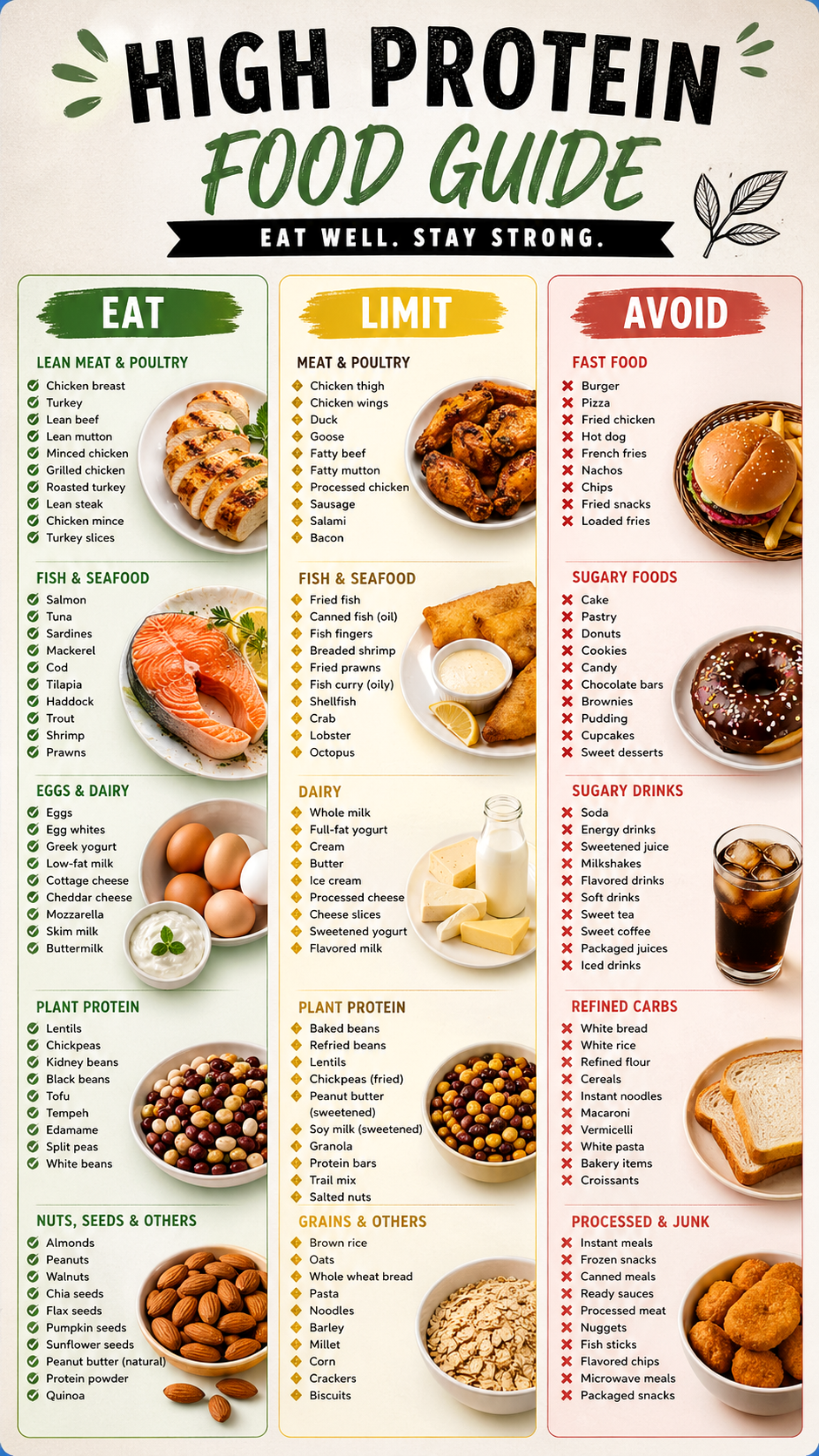
High Protein Food List Printable, Low Carb Grocery Chart, Healthy Diet Guide
Building a high-protein diet becomes much easier when you can see your best food choices clearly. A simple protein food list helps you shop smarter, plan balanced meals, and avoid common foods that can slow your progress. Whether your goal is weight management, muscle support, low-carb eating, or simply feeling fuller for longer, the right protein-rich foods can make everyday meals more satisfying and nutritious.
This guide breaks down the foods commonly included in a high-protein grocery list, including lean meats, seafood, eggs, dairy, plant proteins, nuts, seeds, and smart pantry staples. It also explains which foods are best to limit and which ones are better to avoid when you want a cleaner, more balanced diet.
Key Takeaways
- Lean meats, fish, eggs, dairy, beans, tofu, nuts, and seeds are strong high-protein choices.
- A printable high protein foods chart makes meal planning and grocery shopping easier.
- Low-carb protein meals often work best when paired with vegetables and healthy fats.
- Processed meats, sugary drinks, fried foods, and refined carbs are best limited or avoided.
- Plant protein options can support a balanced diet, especially when meals include variety.
Why a High-Protein Food List Is So Helpful
A high-protein food list is more than a grocery reference. It is a practical tool for building meals that support energy, fullness, and better nutrition. Protein helps the body repair tissue, maintain muscle, and stay satisfied after eating. That makes it especially useful for people following a low-carb diet, meal prepping for busy weeks, or trying to improve food choices without overcomplicating their routine.
One of the biggest benefits of using a printable protein foods chart is that it removes guesswork. Instead of wondering what to buy, you can quickly scan a list of protein-rich foods and build a shopping plan around simple staples like chicken breast, salmon, eggs, Greek yogurt, lentils, tofu, almonds, and cottage cheese.
Important: A high-protein diet does not have to mean eating only meat. The best approach usually includes a mix of animal proteins, seafood, dairy, plant proteins, nuts, seeds, and whole-food ingredients that fit your preferences and lifestyle.
Best Foods to Eat on a High-Protein Diet
The strongest high-protein choices are usually whole, minimally processed foods. These foods provide protein along with vitamins, minerals, and other nutrients that support overall wellness. A balanced protein-rich grocery list often includes lean meat, poultry, seafood, eggs, dairy, legumes, soy foods, nuts, seeds, and selected grains.
Lean Meat and Poultry
Lean meat and poultry are classic high-protein staples because they are versatile, filling, and easy to prepare in many different ways. Chicken breast, turkey, lean beef, lean steak, chicken mince, turkey slices, grilled chicken, and roasted turkey are useful options for lunches, dinners, and meal prep bowls.
For a low-carb high-protein meal, pair grilled chicken or turkey with salad greens, roasted vegetables, avocado, or cauliflower rice. For a heartier plate, lean beef or lean steak can work well with steamed vegetables and a small serving of whole grains, depending on your goals.
Fish and Seafood
Fish and seafood are excellent protein-rich foods that can bring variety to your diet. Salmon, tuna, sardines, mackerel, cod, tilapia, haddock, trout, shrimp, and prawns are all commonly included in high-protein meal plans. Seafood can be especially helpful when you want meals that feel light but still satisfying.
Salmon and mackerel are richer options, while cod, tilapia, haddock, and shrimp are often leaner. Tuna can be convenient for quick lunches, while sardines are a compact pantry-friendly option. The key is to choose grilled, baked, steamed, or lightly sautéed preparations more often than fried or heavily breaded versions.
Eggs and Dairy
Eggs are one of the easiest high-protein foods to use throughout the week. Whole eggs and egg whites can be used in omelets, breakfast bowls, salads, wraps, and snack plates. They are quick to cook, budget-friendly, and easy to combine with vegetables.
Dairy can also be a valuable part of a protein-rich diet. Greek yogurt, low-fat milk, cottage cheese, cheddar cheese, mozzarella, skim milk, and buttermilk can support quick meals and snacks. Greek yogurt and cottage cheese are especially popular because they are easy to pair with fruit, nuts, seeds, or savory toppings.
Pro Tip: Keep ready-to-eat protein foods in your fridge, such as boiled eggs, cottage cheese, Greek yogurt, roasted turkey slices, or cooked chicken breast. This makes it much easier to build a high-protein snack or meal when you are short on time.
Plant-Based Protein Foods
Plant protein is a smart addition to a high-protein diet, even if you are not vegetarian or vegan. Lentils, chickpeas, kidney beans, black beans, soybeans, tofu, tempeh, edamame, split peas, and white beans can add protein, fiber, and texture to meals.
Tofu and tempeh are especially useful for stir-fries, salads, bowls, and wraps. Lentils and beans work well in soups, stews, chili, and meal prep containers. Edamame can be a quick snack or a protein boost for salads and grain bowls.
Nuts, Seeds, and Other Protein Staples
Nuts and seeds provide protein along with healthy fats, which makes them satisfying in small portions. Almonds, peanuts, walnuts, chia seeds, flax seeds, pumpkin seeds, sunflower seeds, and natural peanut butter can support snacks, smoothies, yogurt bowls, and salads.
Protein powder and quinoa are also helpful for some people. Protein powder can make smoothies more filling, while quinoa offers a plant-based option that works well in bowls and salads. These foods are easy to add to a weekly routine without needing complicated recipes.
Foods to Limit on a High-Protein Diet
Some foods can still fit into a balanced diet, but they are better used in moderation. These foods may contain protein, but they can also be higher in saturated fat, sodium, added sugar, refined carbohydrates, or calories. Limiting them helps keep your protein-focused diet cleaner and more consistent.
Higher-Fat Meats and Processed Protein
Chicken thighs, chicken wings, duck, goose, fatty beef, fatty mutton, processed chicken, sausage, salami, and bacon are examples of foods that may be higher in fat or sodium. They can be flavorful, but they are not usually the best everyday protein choices if your goal is lean eating or low-carb weight management.
This does not mean every higher-fat protein is off-limits. It simply means portion size and frequency matter. Choosing grilled or baked preparation methods and balancing the plate with vegetables can make these foods easier to fit into an occasional meal.
Fried and Breaded Seafood
Fish is a great protein source, but fried fish, fish fingers, breaded shrimp, fried prawns, and oily fish curries can quickly shift a meal from light and nutritious to heavy. Breaded and fried foods often add refined carbs and extra oil, which may not align with low-carb or high-protein meal goals.
When possible, choose grilled fish, baked salmon, tuna salad, shrimp skewers, or steamed seafood. These options keep the focus on protein without adding unnecessary coatings or heavy sauces.
Why This Matters
The way protein is prepared can change the quality of the meal. Grilled chicken and fried chicken may both contain protein, but they support different nutrition goals. For everyday meals, choose cooking methods that keep protein simple, flavorful, and balanced.
Sweetened Dairy and Snack-Style Protein Foods
Full-fat yogurt, cream, butter, ice cream, processed cheese, cheese slices, sweetened yogurt, and flavored milk are best limited if you are trying to focus on protein quality. Some of these foods may be tasty and convenient, but they can include added sugars, extra fat, or more processing than basic protein-rich options.
Protein bars, granola, salted nuts, trail mix, sweetened peanut butter, sweetened soy milk, baked beans, and fried chickpeas can also be easy to overeat. These foods may have a place in your routine, but it is worth reading labels and watching portions.
Important: Foods marketed as “high protein” are not always the most nutritious choice. Some protein bars, flavored drinks, and packaged snacks contain added sugar or refined ingredients. Whole foods should make up most of your protein grocery list.
Foods to Avoid for a Cleaner High-Protein Lifestyle
A high-protein diet works best when it is not crowded out by ultra-processed foods, sugary drinks, and refined carbs. These foods can make it harder to stay full, manage cravings, and keep meals balanced.
Fast Food and Fried Snacks
Burgers, pizza, fried chicken, hot dogs, French fries, nachos, chips, fried snacks, and loaded fries are common foods to reduce when following a high-protein or low-carb plan. They may be convenient, but they are often high in calories, refined carbs, sodium, and unhealthy fats.
If cravings hit, try recreating a healthier version at home. A lettuce-wrapped turkey burger, grilled chicken bowl, or homemade baked fries can feel satisfying while keeping ingredients more balanced.
Sugary Foods and Drinks
Cakes, pastries, donuts, cookies, candy, chocolate bars, brownies, pudding, cupcakes, and sweet desserts can quickly add sugar without much nutritional value. Sugary drinks like soda, energy drinks, sweetened juice, milkshakes, flavored drinks, soft drinks, sweet tea, sweet coffee, packaged juices, and iced drinks are also worth avoiding or saving for rare occasions.
Replacing sugary drinks with water, sparkling water, unsweetened tea, or black coffee can make a noticeable difference in daily habits. For sweet cravings, Greek yogurt with berries or cottage cheese with fruit can offer a more protein-focused option.
Refined Carbs and Packaged Meals
White bread, white rice, refined flour, sugary cereals, instant noodles, macaroni, vermicelli, white pasta, bakery items, and croissants are refined carb sources that may not support low-carb goals. These foods can be easy to overeat and may leave you feeling hungry sooner than protein-rich meals.
Processed and junk foods like instant meals, frozen snacks, canned meals, ready sauces, processed meat, nuggets, fish sticks, flavored chips, microwave meals, and packaged snacks should also be limited. They are convenient, but they often come with added sodium, refined oils, preservatives, and fewer whole-food nutrients.
How to Use a Protein Rich Grocery List for Meal Planning
A protein rich grocery list works best when you turn it into simple meals. Start by choosing two or three proteins for the week. For example, chicken breast, eggs, and Greek yogurt can cover several breakfasts, lunches, and snacks. Then add vegetables, healthy fats, and optional smart carbs based on your diet goals.
For low-carb meal planning, build plates around lean protein and non-starchy vegetables. Try grilled chicken with salad, tuna lettuce cups, salmon with broccoli, tofu stir-fry, or egg muffins with spinach. If you are not strictly low-carb, add brown rice, oats, barley, quinoa, or whole wheat bread in moderate portions.
Simple High-Protein Meal Ideas
- Breakfast: Eggs with spinach, Greek yogurt with chia seeds, or cottage cheese with berries.
- Lunch: Grilled chicken salad, turkey lettuce wraps, tuna bowl, or lentil soup.
- Dinner: Salmon with vegetables, lean steak with salad, shrimp stir-fry, or tofu with edamame.
- Snacks: Boiled eggs, almonds, protein smoothie, cottage cheese, or natural peanut butter with celery.
Pro Tip: Do not wait until you are hungry to decide what to eat. Keep a printable high protein food list near your fridge or grocery planner so you can quickly choose balanced meals before cravings take over.
High-Protein Eating for Low-Carb Goals
Low-carb diets often work well with protein-rich foods because protein helps create satisfying meals without relying heavily on bread, pasta, rice, or sugary snacks. The best low-carb high-protein choices usually include chicken breast, turkey, lean beef, fish, shrimp, eggs, Greek yogurt, cottage cheese, tofu, tempeh, edamame, nuts, seeds, and protein powder.
However, low-carb does not have to mean zero-carb. Many people do well with a balanced approach that includes vegetables, beans in moderate portions, and small servings of whole grains when appropriate. The goal is to choose carbs intentionally rather than letting refined carbs become the center of every meal.
Smart Low-Carb Pairings
- Chicken breast with cucumber salad and avocado
- Salmon with roasted asparagus
- Egg omelet with mushrooms and cottage cheese
- Shrimp with zucchini noodles
- Tofu with stir-fried broccoli and sesame seeds
Printable Food Charts Make Healthy Eating Easier
A printable high protein foods chart is useful because it turns nutrition goals into a visual system. Seeing foods grouped into “eat,” “limit,” and “avoid” categories makes daily decisions much simpler. It can be placed on a fridge, added to a meal planning binder, saved on a phone, or used while writing a grocery list.
This type of chart is especially helpful for beginners who want a quick reference without tracking every detail. It gives structure while still allowing flexibility. You can choose your favorite foods from each category and build meals that fit your taste, budget, and schedule.
At a Glance
- Choose lean proteins most often.
- Add seafood and eggs for variety.
- Use beans, tofu, and tempeh for plant-based protein.
- Limit fried, processed, and sweetened foods.
- Keep a printable chart nearby for quick meal planning.
Conclusion: Build Better Meals With a High-Protein Food List
A high-protein diet becomes much more realistic when you have a clear food list to follow. Instead of guessing what belongs in your cart, you can focus on lean meats, fish, eggs, Greek yogurt, cottage cheese, tofu, beans, lentils, nuts, seeds, and other nutrient-rich staples.
The most effective approach is not about perfection. It is about making better choices more often. Eat more whole protein foods, limit heavily processed options, reduce sugary drinks and refined carbs, and keep your meals simple enough to repeat. With a helpful high protein foods chart and a practical grocery plan, healthy eating can feel organized, flexible, and much easier to maintain.
Tags
High Protein Diet Protein Food List Low Carb Foods Healthy Grocery List Meal Planning Protein Rich Foods Printable Food Chart