
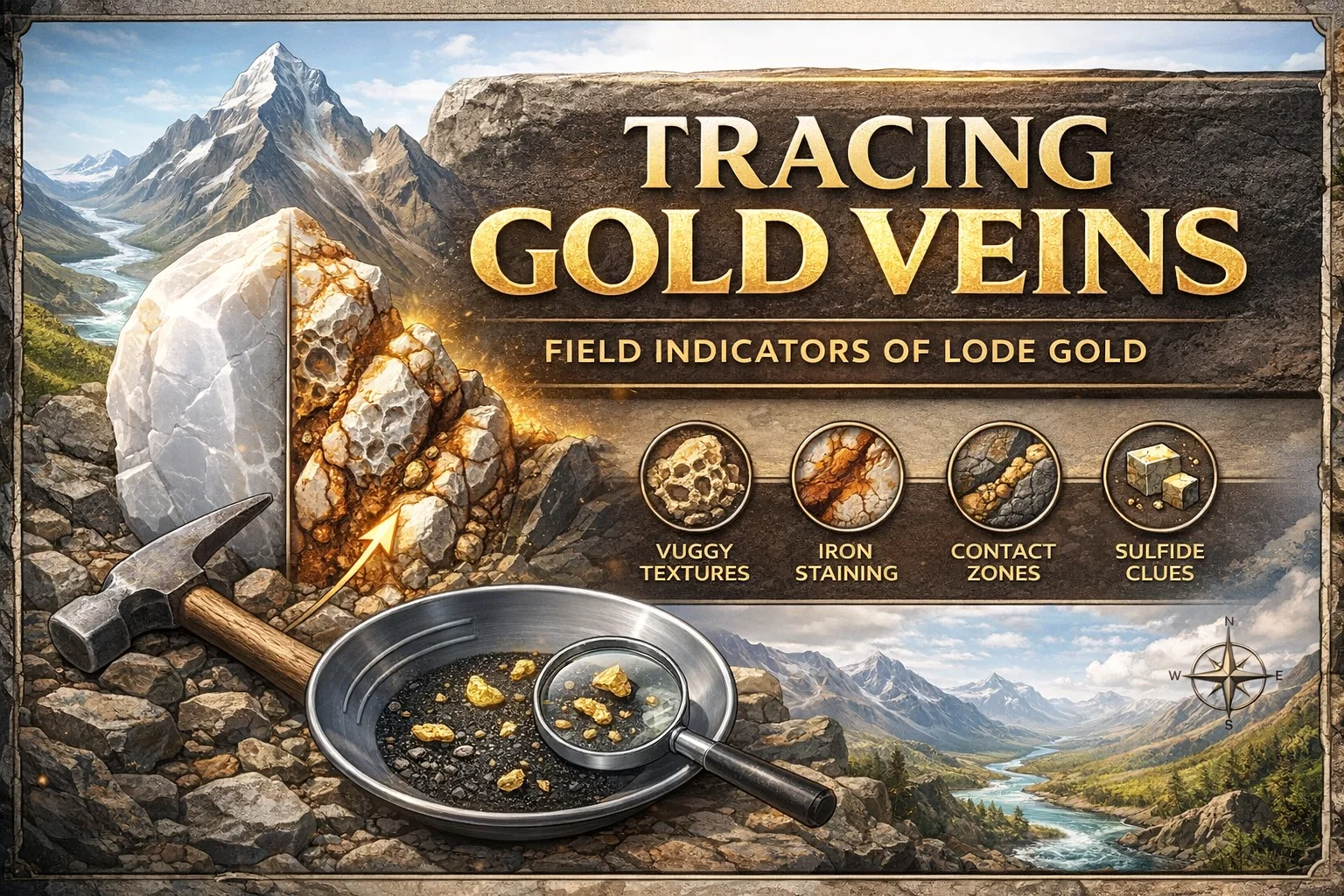
How to Find Lode Gold in Quartz Veins Prospecting Guide
There is an undeniable thrill that comes with the glimmer of gold at the bottom of a pan. For centuries, that brilliant flash of yellow has captivated adventurers, dreamers, and geologists alike. However, a common misconception among novice prospectors is that gold simply materializes in rivers and streams. The reality is far more fascinating. As the old saying goes, gold does not grow in the water; it is born in the fire of the earth. Understanding this fundamental truth is the key to transitioning from casually panning in creeks to actually tracking down the rich, hidden sources of this precious metal. Today, we are going to dive deep into the science and strategy of tracing the vein, moving from the riverbed all the way up to the mountain peaks.
The Journey of Gold: From Mountain Peak to Riverbed
To truly master gold prospecting, you must first understand the geological lifecycle of the metal. Gold originates deep within the earth, brought closer to the surface through hydrothermal activity and volcanic forces. Over millions of years, these mineral-rich fluids cool and crystallize, often forming massive quartz veins inside cracks and faults in the bedrock. This is known as lode gold, or hard rock gold.
But how does it end up in a river? The answer is time, weather, and gravity. Powerful natural forces like freezing, thawing, glacial movement, and heavy rains constantly batter the mountains. This erosion path breaks down the solid rock, slowly liberating the gold trapped inside. As the host rock crumbles, gravity and sediment transport take over, washing these heavy materials down the slopes and eventually into the waterways. The rivers act as nature’s sluice box, sorting the heavy gold from the lighter gravels. When you pan in a river, you are essentially catching the final act of a geological play that started millions of years ago high up in the mountains.
The Tale of Two Rocks: Barren Quartz vs. Gold Bearing Quartz
Quartz is the most common host rock for gold, but not all quartz is created equal. If you spend time wandering the hills, you will undoubtedly stumble upon large, striking outcroppings of white quartz. It is visually impressive, but it might not hold a single speck of gold. Recognizing the difference between barren quartz and gold-bearing quartz is a critical skill for any serious prospector.
The Illusion of Barren Quartz
Barren quartz is often what people picture when they think of crystals. It is typically bright white, milky, and massive. The structure is usually solid and unbroken. Because it lacks fractures and cracks, mineral-rich hydrothermal fluids never had the chance to flow through it and deposit precious metals. It might look beautiful in a rock garden, but it is effectively a dead end for a gold miner.
The Promise of Gold Bearing Quartz
Gold-bearing quartz, on the other hand, tells a story of violence and transformation. This rock has been fractured, crushed, and baked. It is rarely pure white. Instead, it is characterized by cracks, seams, and heavy discoloration. These fractures provided the exact pathways needed for gold and other heavy minerals to precipitate out of boiling subsurface waters. When you are looking for lode gold, you want to find the ugly, broken, and stained rock.
Five Essential Field Indicators for Lode Gold
Tracing gold back to its source requires keen observation. You must become a geological detective, reading the clues left behind in the rocks and soil. Here are five of the most reliable field indicators to look for when searching for lode gold.
1. Vuggy Textures and Honeycomb Cavities
One of the most promising signs of a mineralized vein is a “vuggy” texture. When you examine a piece of quartz, look for a structure that resembles a honeycomb or a sponge. These empty pockets and cavities were once filled with other minerals, such as iron-rich sulfides. Over time, acidic groundwater dissolved and leached these softer minerals away, leaving behind a skeletal, porous rock. Because gold is highly resistant to chemical weathering, it often remains trapped inside these very cavities. If you find quartz that looks like a rusty sponge, you are in a highly prospective area.
2. Iron Staining and Rusty Hues
Color is a massive giveaway in the field. Pure white quartz is generally uninteresting, but quartz that is heavily stained with rusty red, deep orange, or dark brown colors should immediately grab your attention. This iron staining is the result of oxidized iron-rich sulfides breaking down. Since gold is frequently deposited alongside these sulfide minerals, a heavy presence of iron oxide, often called “gossan,” is a bright neon sign pointing toward potential gold deposits. The rustier and uglier the rock looks, the better your chances.
3. Contact Zones Between Rock Types
Gold rarely deposits in the middle of a uniform rock formation. It prefers the boundaries. A contact zone is the exact point where two different types of rock meet, such as a white quartz vein cutting through dark schist, slate, or greenstone. These boundaries represent areas of structural weakness in the earth’s crust, making them the perfect conduits for gold-bearing fluids to travel and pool. Whenever you are hiking and notice a sudden change in the bedrock type, slow down and investigate that dividing line thoroughly.
4. Sulfide Clues and Associated Minerals
Gold is a very social element when it comes to geology; it loves to travel with certain companion minerals. The presence of sulfides is a major indicator of nearby lode gold. Look for minerals like pyrite, commonly known as fool’s gold. While pyrite itself is not gold, its presence means the conditions were right for gold to form. Other crucial companion minerals include galena, a heavy lead sulfide, and arsenopyrite. If you crack open a rock and see the metallic flash of these sulfides, you know you are on the right track. Remember, where there is fool’s gold, real gold might be hiding just around the corner.
5. Angularity: Reading the Flakes in Your Pan
Your gold pan is not just a collection tool; it is an invaluable diagnostic instrument. When you find gold in a riverbed, pay close attention to the shape of the flakes and nuggets. Water and gravel act like a giant rock tumbler. If a piece of gold has traveled for miles down a river, its edges will be completely worn down, resulting in smooth, rounded, and flat flakes.
However, if the gold in your pan is rough, wire-like, and features sharp, jagged edges, you have uncovered a massive clue. This high degree of angularity means the gold has barely traveled at all. It has recently broken off from its host rock and dropped directly into the stream. When you find sharp, angular gold, you know that the mother lode, the primary quartz vein, is sitting very close by, likely just up the nearest hill or embankment.
The Strategy of Tracing the Vein
Armed with these field indicators, you can begin the actual process of tracing the vein. It requires patience, a methodical approach, and a lot of sampling. The standard practice is called “loaming” or soil sampling.
You begin at the bottom of a hill where you found sharp, angular placer gold in the water. You then take a sample of the dirt from the bank, pan it, and count the “colors” or specks of gold. You move a few yards up the hill in a grid pattern, taking another sample. As long as you keep finding gold in your pan, you keep moving up the slope. Eventually, you will take a sample and find absolutely nothing. This means you have just stepped over the source. You then backtrack to your last positive sample and begin digging deeper, looking for the telltale signs of vuggy, iron-stained quartz and contact zones hidden beneath the topsoil.
It is a process of elimination, using gravity and logic to follow a microscopic trail of breadcrumbs back to the hidden treasure.
Conclusion: Your Prospecting Adventure Awaits
Finding lode gold is a challenging but deeply rewarding pursuit that requires a mix of hard work, geological knowledge, and a little bit of luck. By shifting your focus from simply panning the river bottoms to actively reading the mountainsides, you elevate your skills from a casual hobbyist to a true prospector. Remember that gold is born in the fire of the earth. Look for the ugly, fractured, and rusty quartz. Hunt for the contact zones where different rocks collide, and always let the shape of the gold in your pan dictate your next move. Grab your rock hammer, pack your gold pan, and get out there into the field. The mountains are hiding their secrets, but with the right knowledge, you can uncover exactly where the vein leads.