How to Test Hair Porosity at Home Water, Spray Slip Test Guide for Healthy Hair
Have you ever spent a fortune on high-rated hair masks, luxurious oils, and salon-grade conditioners, only to find that your hair still feels like straw or, conversely, looks like a greasy mess? It is a common frustration that leads many of us to believe our hair is just “difficult.” However, the truth often has nothing to do with the quality of your products and everything to do with how your hair absorbs and retains moisture. This biological gatekeeper is known as hair porosity. Understanding your hair porosity is the ultimate “cheat code” for a perfect hair day, every day. By learning how your cuticles behave, you can stop guessing and start giving your strands exactly what they need to thrive.
What Exactly is Hair Porosity?
Before diving into the tests, it is essential to understand the science behind the term. Hair porosity refers to your hair’s ability to soak up and hold onto moisture. This is determined by the condition of the cuticle, which is the flexible, outer protective layer of your hair strand. Think of the cuticle as the shingles on a roof. In some people, these shingles are tightly packed together, making it hard for water to get in. In others, the shingles are raised or even missing in spots, allowing water to rush in but also to evaporate almost instantly.
Porosity is often genetic, but it can also be altered by external factors. Frequent heat styling, chemical treatments like bleaching or relaxing, and even excessive sun exposure can lift the cuticles over time, turning low porosity hair into high porosity hair. Identifying where you fall on the spectrum is the first step toward a customized hair care routine that actually delivers results.
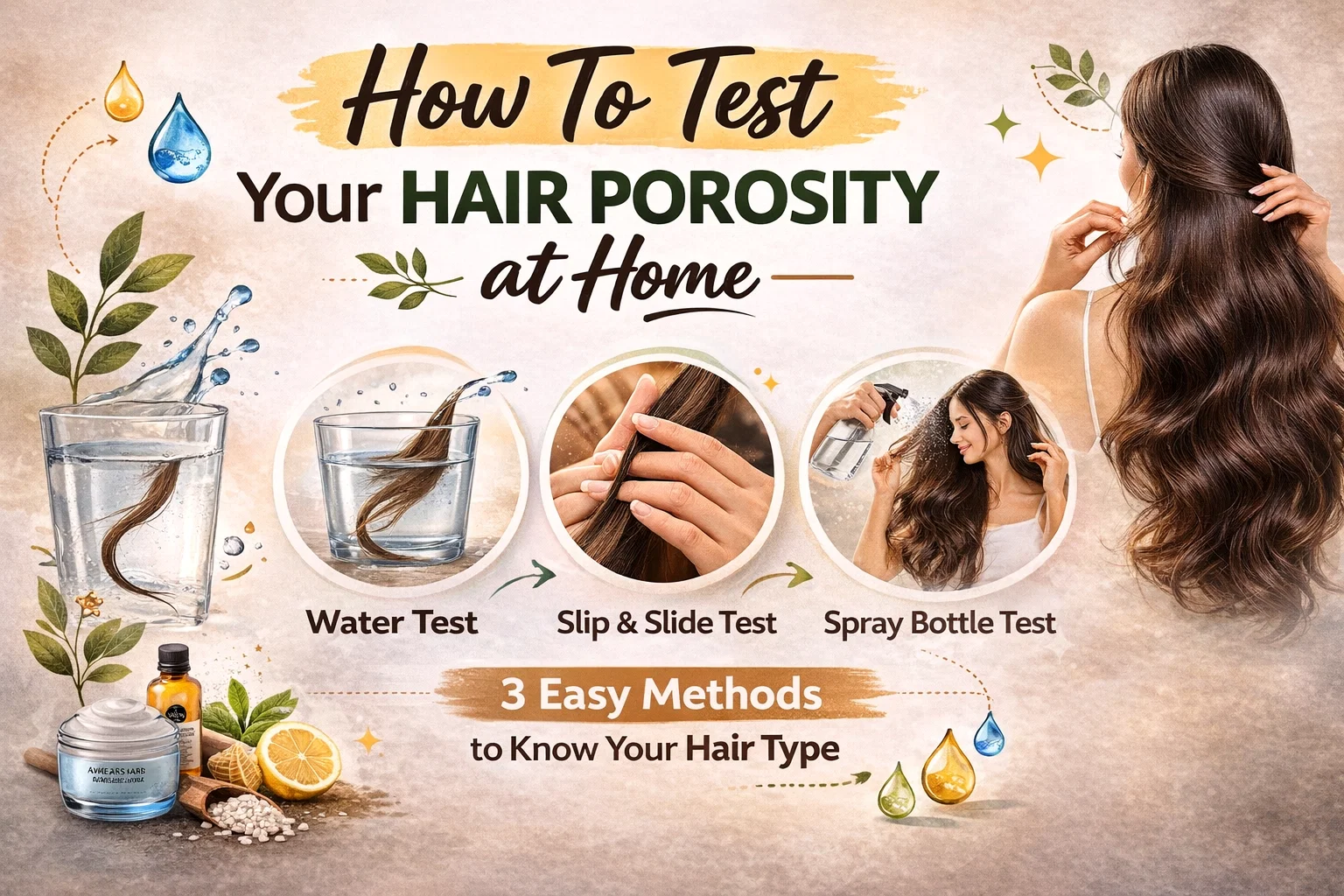
Method 1: The Water Float Test
The Water Test is perhaps the most famous and visually satisfying way to check your hair type at home. It relies on the simple principle of buoyancy to determine how quickly your hair fibers absorb liquid. Here is how you can perform it accurately to get the best results.
How to Perform the Water Test
- Step 1: Start with clean, product-free hair. This is crucial because oils or leave-in conditioners can coat the hair and cause it to float regardless of its true porosity.
- Step 2: Fill a clear glass with room-temperature water. Using a clear glass allows you to see the strand from all angles.
- Step 3: Pluck a single strand of hair from your brush or head and gently drop it into the water.
- Step 4: Watch the strand for 2 to 3 minutes.
Analyzing Your Water Test Results
The position of the hair in the glass tells the story of your cuticle health. If the hair floats on the surface, you have Low Porosity hair. This means your cuticles are so tight that the water cannot penetrate the strand, keeping it light and buoyant. If the hair hovers in the middle of the glass, you have Medium Porosity, which is considered the ideal balance. If the hair sinks to the bottom quickly, you have High Porosity hair. In this case, the water rushed into the open cuticles, making the strand heavy and causing it to drop.
Method 2: The Slip and Slide Test
If you prefer a more tactile approach, the Slip and Slide Test allows you to literally feel the texture of your hair cuticles. This method is great because it does not require any tools and can be done anywhere, even while you are standing in front of the bathroom mirror.
Step-by-Step Instructions
Take a single strand of hair and hold it firmly at the tip. Using your other hand, place your thumb and index finger at the very end of the strand and slide them slowly up toward the scalp. You are essentially sliding “against the grain” of the cuticles.
What the Texture Tells You
Pay close attention to what your fingers feel as they move. If the strand feels smooth and your fingers glide easily, you likely have Low Porosity hair. This indicates that the cuticles are lying flat and tight against the shaft. If you feel slight bumps or a bit of resistance, you are in the Medium Porosity range. However, if the hair feels rough, stringy, or very bumpy, you have High Porosity hair. Those bumps are the raised edges of the cuticles catching against your skin.
Method 3: The Spray Bottle Test
The Spray Bottle Test is an excellent way to see how your hair reacts to moisture in real-time. This is particularly helpful for those with curly or coily hair who might find the float test inconsistent due to the natural shape of their strands.
Testing with a Mist
Take a small section of dry, clean hair and spray a fine mist of water onto it. Do not soak the hair; just a light spritz will do. Observe the hair closely for about 5 minutes to see how the droplets behave on the surface.
Interpreting the Droplets
If the water beads up and sits on top of the hair like morning dew on a leaf, you have Low Porosity hair. The water is struggling to find a way inside. If the water is absorbed quickly and the hair feels damp almost immediately, you have High Porosity hair. If the water stays on the surface for a moment and then slowly disappears into the strand, you have Medium Porosity hair.
Deep Dive into Low Porosity Hair
If your tests concluded that you have low porosity, do not be discouraged. While it can be “hard to moisturize,” low porosity hair is actually very healthy because once you get moisture inside, it stays there for a long time. The challenge is simply opening the door.
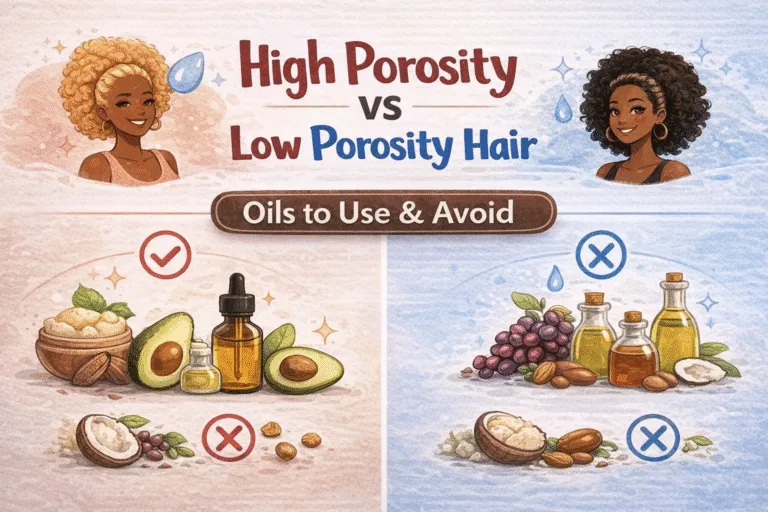
Low porosity hair often suffers from product buildup because creams and oils sit on the surface rather than sinking in. To care for this type, you should use lightweight, water-based products. Avoid heavy butters like shea or cocoa butter as your primary moisturizers. One of the best tips for low porosity hair is to use heat. Using a steamer or a heated cap during deep conditioning treatments helps to gently lift those tight cuticles so the nutrients can actually enter the hair shaft. The L.O.C. (Liquid, Oil, Cream) method is also highly effective here, provided the products are light.
Understanding Medium Porosity Hair
Consider yourself lucky if you fall into this category! Medium porosity hair is the “Goldilocks” of hair types. The cuticles are loose enough to let moisture in but tight enough to prevent it from escaping too quickly. This hair type requires the least amount of maintenance and usually holds styles very well.
For medium porosity, most products work well. You can experiment with a variety of leave-ins, oils, and creams without much trouble. The goal here is maintenance. Be careful not to over-process your hair with chemicals or excessive heat, as this can easily push your hair into the high porosity category. A regular routine of balanced hydration and light protein treatments will keep your hair in this healthy middle ground.
Caring for High Porosity Hair
High porosity hair is often the result of damage, though it can be natural for some. Because the cuticles are wide open, your hair is like a sponge; it absorbs water instantly but loses it just as fast. This leads to chronic dryness, frizz, and tangling.
The key to managing high porosity hair is sealing. You need deep moisture, heavy oils, and thick butters to fill in the gaps in the cuticle and “lock” the water inside. Products containing proteins are also vital, as they help to temporarily patch the holes in the hair shaft, providing much-needed strength. Look for ingredients like avocado oil, olive oil, and silk proteins. Using a cold water rinse at the end of your shower can also help to flatten the cuticles and add shine.
Pro Tips for Every Hair Type
Regardless of your specific porosity, there are a few universal rules that will help everyone achieve that elusive “healthy glow.” First and foremost, always use a sulfate-free shampoo. Sulfates are harsh detergents that strip away natural oils, which can mess with your cuticle health regardless of your starting point. Secondly, never skip the weekly hair mask. Deep conditioning provides a concentrated dose of nutrients that daily conditioners simply cannot match.
Another game-changing tip is to watch your water temperature. While a steaming hot shower feels great, it can excessively lift the cuticles. Aim for lukewarm or cold water when rinsing out your conditioner to ensure the cuticle is as smooth as possible before you step out to style. Finally, consistency is everything. Your hair porosity can change over time based on the seasons or your styling habits, so it is a good idea to re-test your hair every few months.
Conclusion: Your Path to Better Hair Days
Learning how to test your hair porosity at home is more than just a fun DIY project; it is a fundamental part of self-care. When you understand the unique biology of your hair, you stop fighting against it and start working with it. Whether you discovered you have low, medium, or high porosity, you now have the knowledge to select the right products and techniques that will bring out your hair’s natural beauty. Remember that hair care is a journey of trial and error, but with these three tests in your toolkit, you are already miles ahead of the crowd. Take the time to listen to what your strands are telling you, and you will be rewarded with the healthy, shiny, and vibrant hair you have always wanted.
Would you like me to generate a specific hair care routine or a shopping list of products based on one of these porosity types?