Lower Ab Workout for a Flat Tummy 4×12 Reverse Crunches Routine
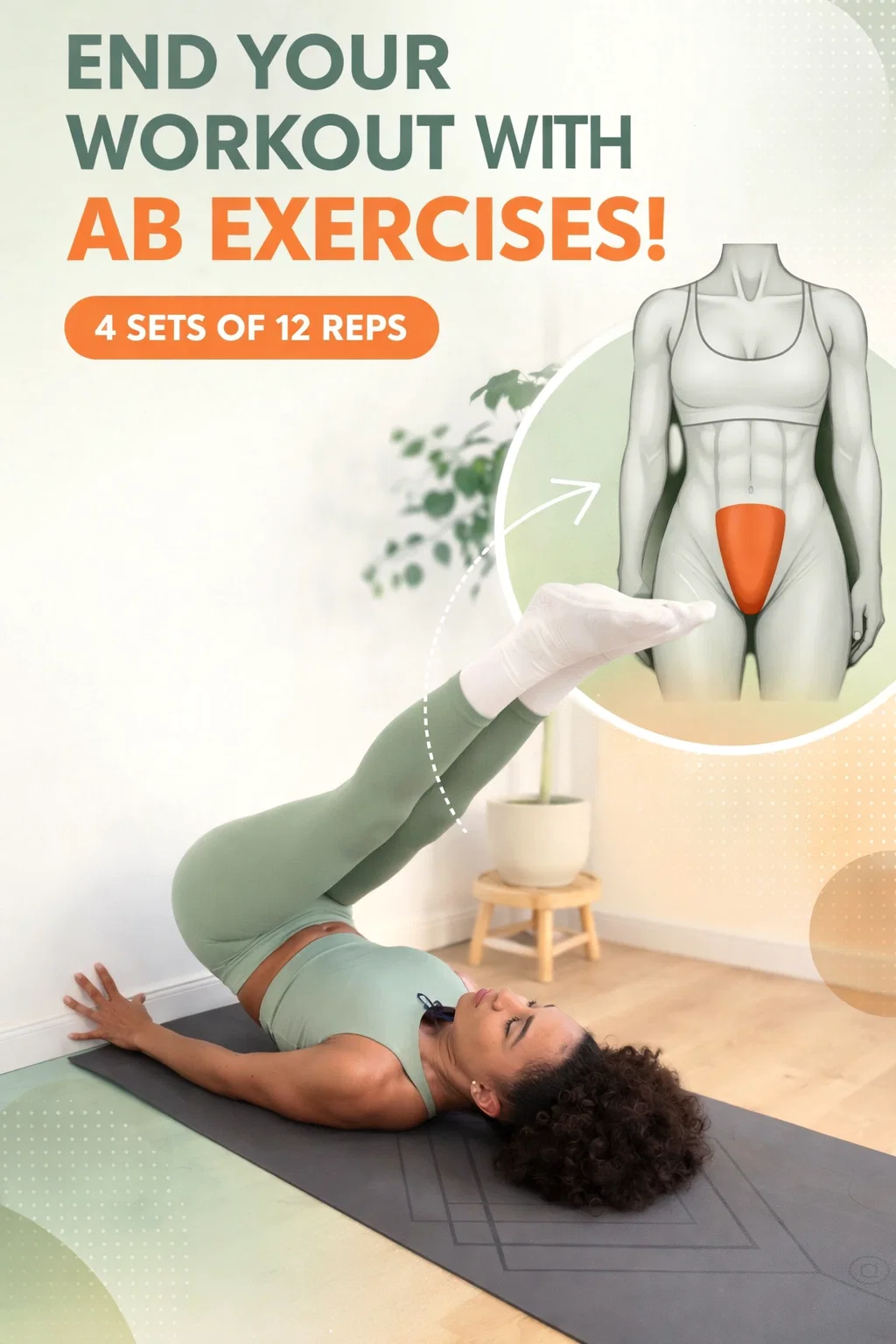
Have you ever felt like you are doing endless crunches and planks without ever seeing results in that stubborn lower belly area? You are definitely not alone. Many fitness enthusiasts find that while their upper abs start to pop relatively quickly, the lower region of the rectus abdominis remains elusive. The image we are looking at today captures a powerhouse move often referred to as the Reverse Crunch or Leg Lift-to-Hip Raise, a staple in any serious core finishing routine. The caption Concludi con gli addominali (Finish with abs) suggests that this is the perfect way to wrap up a workout, and the prescribed 4×12 rep scheme is a classic hypertrophy range designed to build real strength and definition.
In this comprehensive guide, we are going to break down why this specific movement is so effective, how to master the form to avoid back pain, and why targeting the lower abdominals requires a unique approach compared to traditional sit-ups. If you are ready to stop guessing and start sculpting, let’s dive into the science and strategy of the lower ab finish.
The Anatomy of the Lower Core
Before we jump into the movement, it is important to clear up a common fitness myth. Technically, your rectus abdominis is one long muscle that runs from your chest down to your pelvis. You cannot completely isolate the top from the bottom. However, you can change the emphasis. While a standard crunch initiates movement from the shoulders toward the hips, the exercise shown in the image initiates movement from the hips toward the shoulders. This posterior pelvic tilt is what creates that intense burn in the lower region of the stomach.
The orange highlighted area in the diagram specifically points to the lower portion of the rectus abdominis and the deep-seated transversus abdominis. These muscles are responsible for stabilizing your spine and tilting your pelvis. Strengthening them doesn’t just help with aesthetics; it is vital for improving posture and reducing the risk of lower back injury.
The Role of the Hip Flexors
One reason people struggle with lower ab exercises is that the hip flexors often take over. If you feel a pinching sensation in the front of your thighs rather than a burn in your belly, your hip flexors are doing too much work. The key to the exercise shown in the image is the slight lift of the hips off the mat. That small “pop” at the top is what forces the abs to take the load away from the legs.
Step-by-Step Guide to the Reverse Crunch
To get the most out of the 4×12 routine, form is everything. Let’s break down exactly how to replicate the position seen in the image for maximum efficiency.
- The Setup: Lie flat on your back on a high-quality yoga mat. As seen in the visual, your arms should be out to your sides or slightly tucked under your glutes for extra support. Keep your palms pressed firmly into the floor to help stabilize your upper body.
- The Leg Lift: Raise your legs until they are at a roughly 90-degree angle with the floor. You can keep a slight bend in the knees if your hamstrings are tight.
- The Contraction: Instead of just swinging your legs, focus on curling your hips toward your ribcage. Imagine you are trying to imprint your belly button into the floor.
- The Lift: Use your lower abs to lift your tailbone off the mat. The movement should be vertical. You aren’t trying to throw your feet behind your head; you are trying to push your feet toward the ceiling.
- The Descent: This is the most important part. Slowly lower your hips and legs back to the starting position. Do not let gravity do the work. The “negative” portion of the rep is where the most muscle fiber damage—and subsequent growth—occurs.
Why 4 Sets of 12 Reps?
The image suggests a 4×12 protocol. In the world of strength training, this is often considered the “sweet spot.” Here is why this specific volume works so well for the core:
Building Muscle Endurance
The abdominals are primarily composed of slow-twitch muscle fibers because they have to work all day to keep you upright. To see change, you need enough volume to fatigue those fibers. Four sets provide enough total repetitions to ensure the muscle is thoroughly challenged by the end of the session.
Focusing on Quality over Quantity
Doing 100 fast, sloppy crunches is far less effective than 12 slow, controlled reverse crunches. By capping the reps at 12, you are encouraged to add “time under tension.” If you reach the 12th rep and feel like you could easily do 20 more, you aren’t moving slowly enough or lifting your hips high enough.
Common Mistakes to Avoid
Even seasoned gym-goers often make mistakes with lower abdominal movements. Avoid these pitfalls to keep your spine safe and your progress steady.
Using Momentum
If you are rocking back and forth quickly, you are using physics rather than muscle. Each rep should start from a dead stop. If you find yourself swinging your legs to get your hips up, take a breath and reset. It is better to do 5 perfect reps than 12 “swinging” reps.
Arching the Lower Back
When you lower your legs back down toward the floor, your lower back will want to arch off the mat. This puts immense pressure on the lumbar spine. If you cannot keep your back flat against the floor as you lower your legs, don’t go as low. Only lower your legs to the point where you can maintain total spinal contact with the mat.
Holding Your Breath
It is a natural instinct to hold your breath during a difficult lift, but this increases internal pressure and can make the exercise less effective. Exhale forcefully as you lift your hips (the exertion phase) and inhale as you lower them back down.
Complementing the Workout: Nutrition and Consistency
We have all heard the phrase “abs are made in the kitchen.” While the 4×12 reverse crunch routine will build the muscle, those muscles won’t be visible if they are covered by a layer of body fat. To truly see the results of your hard work, you need a holistic approach.
The Importance of Protein
Since the core is a muscle group like any other, it needs protein to repair and grow. Ensure you are consuming enough lean protein sources like chicken, fish, tofu, or legumes to support the recovery of your 4×12 sessions.
Hydration and Bloat
Sometimes, what we perceive as “lower belly fat” is actually inflammation or water retention. Drinking plenty of water helps flush out excess sodium and keeps your digestive system moving, which leads to a flatter appearance in the lower abdominal region.
Advanced Variations to Try
Once you have mastered the standard 4×12 reverse crunch, you might find that you need a new challenge. Here are a few ways to level up the intensity:
- Weighted Reverse Crunches: Hold a small dumbbell or medicine ball between your feet. The added resistance will force the lower abs to work significantly harder.
- Declined Reverse Crunches: Perform the move on a decline bench with your head at the top. The angle increases the range of motion and the resistance provided by gravity.
- Pulse Ups: Instead of lowering your legs all the way down, keep them vertical and only perform the hip-lift portion of the move in small, rapid pulses.
The Mental Aspect: Mind-Muscle Connection
Success in core training is largely psychological. Because the lower abs are often “quiet” muscles that we don’t use intentionally in daily life, you have to consciously think about them during your workout. Close your eyes and visualize the muscles at the very bottom of your stomach contracting to pull your pelvis up. This “mind-muscle connection” can increase muscle activation by up to 20 percent.
Conclusion: Stay the Course
Consistency is the final piece of the puzzle. Adding this 4×12 routine to the end of your workouts three times a week will yield noticeable results over time. Remember that the image shows a “finisher”—it is meant to be the final burn that leaves your core feeling tight and strong. Do not rush the process, focus on the squeeze at the top of every rep, and keep your movements controlled.
By treating your lower abs with the same respect and technical focus as your chest or legs, you will unlock a new level of core strength and definition. Now, grab your mat, find a space on the floor, and get started on those 4 sets of 12. Your future, stronger self will thank you.
Would you like me to create a 7-day meal plan to accompany this ab routine and help maximize your results?