Master Your Self-Discipline 8 Proven Steps to Build Consistency and Mental Toughness
Building strong self-discipline is like training a muscle; it takes consistent effort but the results can transform your entire life. While many people attribute success solely to talent or luck, the truth is that a strong foundation of self-control is often the differentiating factor. Fortunately, self-discipline is not a fixed trait you are born with; it is something you can intentionally develop and strengthen over time. In this post, we will delve into practical, actionable tips, inspired by Jim Kwik, author of Limitless, to help you cultivate the self-discipline you need to achieve your goals and live a more focused, fulfilling life.
Understanding Self-Discipline as a Skill
Often, we think of self-discipline as sheer willpower, an internal battle to resist immediate temptations. While willpower plays a role, focusing solely on it is exhausting and ultimately unsustainable. A much more effective approach is to view self-discipline as a system of habits, routines, and strategic decisions that make doing the right thing easier. It is about creating an environment and a mindset where consistency becomes second nature.
Jim Kwik’s approach, detailed in his best-selling book Limitless, focuses on optimizing brain function and developing powerful mental models. His tips for strengthening self-control align perfectly with this systems-based perspective. Let’s break down his 8 steps to master self-discipline and understand how you can apply them to your daily life.
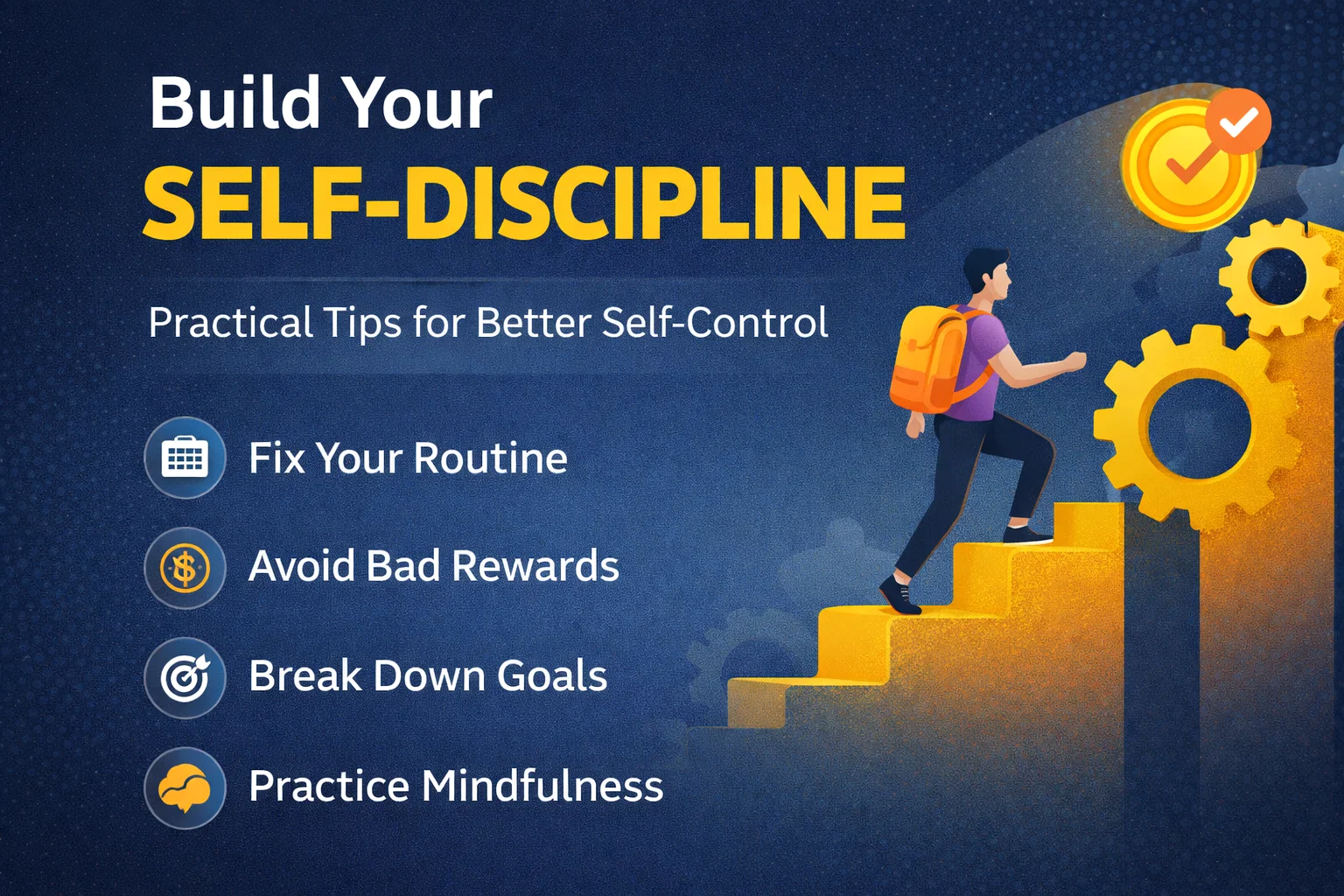
Fix Your Routines: The Foundation of Structure
Consistency is key to self-discipline, and consistency is built on a foundation of solid routines. Think of your routines as the framework for your day. They automate the initial decisions and actions you take, reducing mental friction and allowing you to start your day with purpose. When you have a fixed morning and evening routine, you spend less mental energy debating what to do next.
For example, if your morning routine is established as: wake up at 6:30 AM, drink a glass of water, do a 15-minute workout, and then meditate, you don’t need to summon willpower to decide which activity to do first. The consistency of doing these actions in order helps build structure and discipline, setting a positive tone for the rest of your day. Similarly, an evening routine can help you wind down effectively and prepare you for a restful night’s sleep, ensuring you have the energy required for self-control the next day.
Designing Your Empowering Routines
- Start small; don’t try to overhaul your entire day overnight. Pick one or two key habits to establish first.
- Anchor new habits to existing activities, e.g., “After I brush my teeth (existing habit), I will meditate for 5 minutes (new habit).”
- Make your routines enjoyable; if your workout is something you dread, you will be less likely to stick with it consistently.
- Review and adjust; what works for one person might not work for another. Regularly assess your routines to see what’s serving you well and what needs changing.
Avoid Bad Rewards: Protecting Your Progress
Rewards are a powerful tool for building discipline, but only if they reinforce positive behavior. Far too often, we work hard towards a goal and then celebrate with something that directly undermines that effort. Think of the person who completes a successful week of healthy eating and then “rewards” themselves with an entire weekend of binge-eating unhealthy foods. This doesn’t just slow down progress; it creates a cycle of sabotage and makes it significantly harder to maintain discipline long-term.
Avoid bad rewards and choose those that celebrate your achievements without compromising your ultimate goals. For a fitness goal, a better reward might be purchasing a new piece of activewear or a rejuvenating sports massage. For professional achievements, perhaps it’s taking a personal day to engage in a hobby or spending quality time with loved ones. Positive rewards should feel motivating, not destructive.
Practice Mindfulness: Staying Present and Intentional
Much of our lack of discipline stems from living on autopilot, reacting impulsively to impulses or external stimuli. Practice mindfulness to cultivate the awareness needed to stay present and intentional in your decisions. Mindfulness allows you to recognize an urge to procrastinate, for instance, without immediately giving in to it. You can observe the thought or feeling and then choose a different response, aligning with your goals.
There are many ways to weave mindfulness into your daily life. Regular meditation is a powerful practice, but you can also practice mindfulness by simply taking a few deep, intentional breaths before starting a new task, dedicating focused attention to each activity, or using reminders throughout the day to bring yourself back to the present moment. By being more present, you gain control over your actions and decisions.
Break Down Goals: Tackling Complexity with Small Steps
Large, ambitious goals can be incredibly inspiring, but they can also be overwhelming and lead to analysis paralysis. When you view a massive project as one single task, it’s easy to feel intimidated and put it off. To counteract this, break down goals. Tackle big tasks by dividing them into smaller, manageable steps, and suddenly the path forward becomes clear.
Focusing on one small, achievable step at a time builds momentum and provides regular opportunities for accomplishment. This positive reinforcement strengthens your resolve. For instance, instead of “write a book,” the goal becomes “write 500 words today.” Accomplishing that feels much more attainable and keeps you moving forward without getting lost in the complexity of the entire project.
Use Positive Language: Reframing Your Mindset
The language we use has a profound impact on our mindset. Using positive language involves replacing restrictive phrases with empowering ones. When you say, “I can’t eat that,” you’re adopting a mindset of deprivation and restriction. This often creates resistance and makes the forbidden thing more desirable.
On the other hand, framing it as “I choose not to eat that because it doesn’t align with my energy goals,” puts you in control. It reinforces your personal reasons for making that choice. Similarly, instead of saying, “I have to work,” try “I get to work on this exciting project.” This subtle shift transforms obligations into opportunities, fostering a more positive and disciplined outlook.
Be Authentic: The Power of True Alignment
True self-discipline is far more sustainable when your actions align with your core values and beliefs. When you are pursuing goals because someone else thinks you should, or because they seem like the “right” thing to do according to external standards, you are fighting against yourself. Over time, that disconnect will erode your willpower and motivation.
Be authentic. Take the time to understand your true values: what genuinely matters to you? When your goals and daily actions are authentically yours, the discipline to follow through comes much more naturally. It’s about doing the work that brings you joy and satisfaction, rather than just checking boxes.
Avoid Decision Fatigue: Conserving Mental Energy
Every decision we make, from what to eat for breakfast to which major project to tackle next, consumes mental energy. Over the course of a day, this can lead to decision fatigue. When our mental energy is depleted, our ability to exercise self-control and make good choices diminishes significantly.
Avoid decision fatigue by automating as many small decisions as possible to save mental energy. This is another reason why strong routines are so effective. You can also plan your meals for the week on Sunday, pre-select your work outfit for the next day, or create standard operating procedures for repetitive tasks. By reducing the number of micro-decisions, you conserve the cognitive resources needed for the truly important choices.
Putting Jim Kwik’s Tips into Practice
Mastering self-discipline isn’t about implementing all eight of these steps simultaneously. Instead, pick one or two that resonate most with your current challenges. Start there. For example, you might focus on fixing your morning routine and breaking down your work goals for the next week. As these practices become more comfortable and ingrained, you can gradually incorporate more of the strategies. Remember, the journey towards greater self-discipline is one of continuous, incremental improvement.