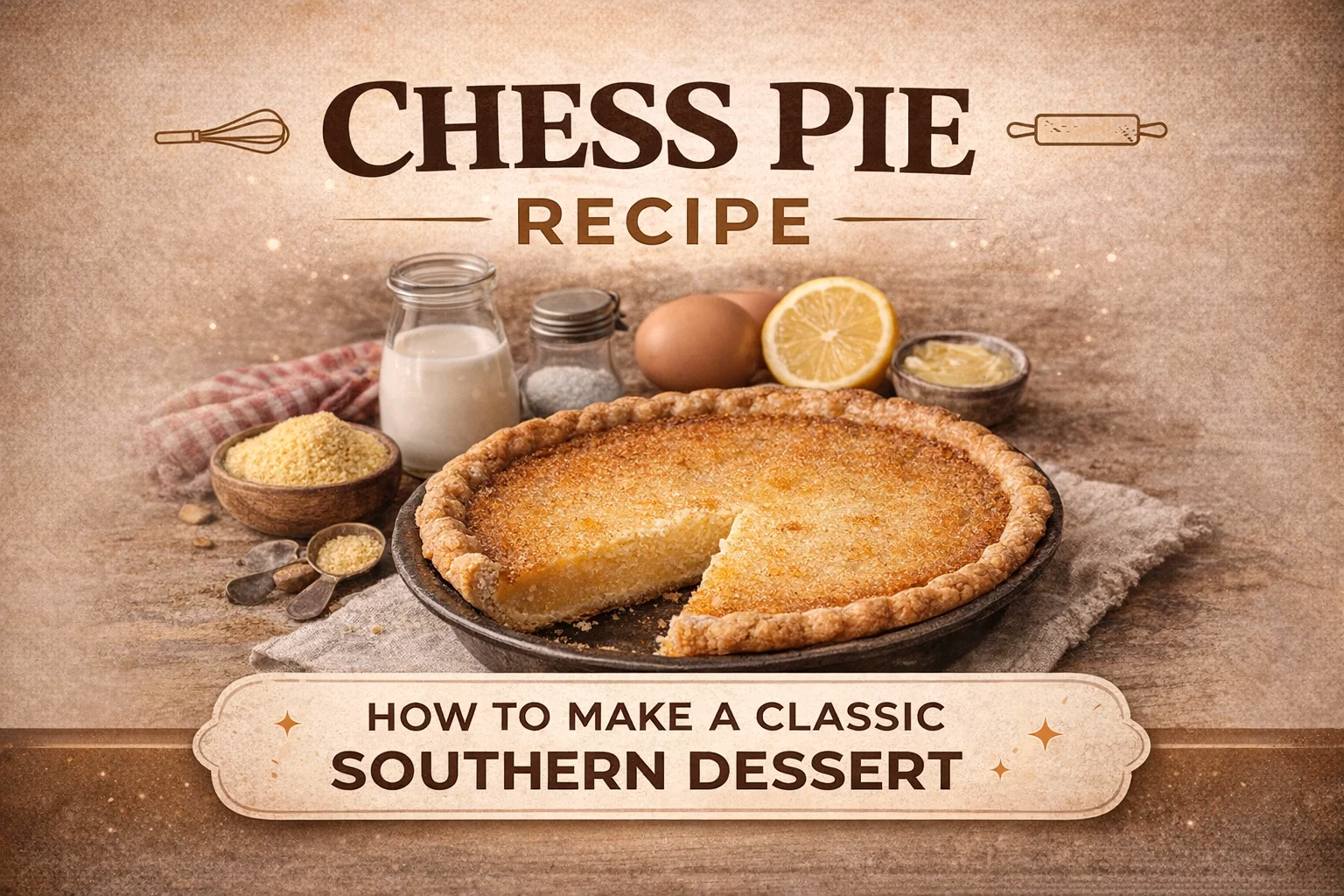
Old-Fashioned Southern Chess Pie Recipe Easy Homemade Classic Custard Pie
There is something deeply nostalgic about a golden brown pie cooling on a wire rack. It evokes memories of farmhouse kitchens, Sunday potlucks, and the kind of simple, honest baking that defines American comfort food. Among the pantheon of classic desserts, few hold a candle to the humble yet sophisticated Chess Pie. This legendary Southern staple is proof that you do not need exotic ingredients to create a masterpiece. With just a few pantry basics like sugar, butter, and eggs, you can produce a custard-like filling with a crackly, sugary crust that has delighted generations of dessert lovers.
If you have ever wondered why this particular dessert has stood the test of time, you are in the right place. Today, we are diving deep into the history, the science, and the art of making the perfect Chess Pie. Whether you are a seasoned baker looking to refine your technique or a newcomer curious about this sweet tradition, this guide will walk you through everything you need to know to bring a slice of the South into your own home.
The Fascinating Origins of the Chess Pie
The history of Chess Pie is as rich as its filling. While it is firmly rooted in Southern United States culture today, its ancestors likely traveled across the Atlantic from England. Early English cookbooks feature recipes for lemon curds and cheese-less cheese cakes that bear a striking resemblance to what we now call Chess Pie. As settlers moved to the American South, they adapted these recipes based on what was readily available in their larders.
The name itself is a bit of a mystery, leading to several charming folk theories. One popular story suggests that when a baker was asked what they were making, they replied in a thick Southern drawl, it is jes pie (just pie), which eventually morphed into chess pie. Another theory posits that because the high sugar content acted as a natural preservative, the pie could be kept in a pie chest rather than a refrigerator, leading to the name chest pie. Regardless of where the name came from, the result remains a beloved cornerstone of Southern hospitality.
What Makes a Chess Pie Unique?
To the uninitiated, a Chess Pie might look like a standard custard pie, but several key characteristics set it apart. The most notable difference is the inclusion of a small amount of cornmeal or flour, which acts as a stabilizer and gives the filling its distinct texture. Furthermore, Chess Pie almost always includes an acidic component like lemon juice or white vinegar. This acidity is crucial because it cuts through the intense sweetness of the sugar and prevents the eggs from tasting too sulfurous.
Deconstructing the Ingredients: A Pantry Miracle
The beauty of this recipe lies in its simplicity. You likely already have every single item needed in your kitchen right now. Let us take a closer look at what each component brings to the table and why quality matters even in a simple bake.
The Role of Sugar and Butter
Sugar is the primary flavor profile here. It does more than just sweeten; it creates that iconic thin, shatteringly crisp top layer that occurs during the baking process. When combined with a full stick of melted butter, it creates a rich, toffee-like base. Using high quality unsalted butter is recommended so you can control the salt content yourself with a precise pinch of fine sea salt.
Eggs: The Structural Foundation
Large eggs are the binding agent that transforms liquid ingredients into a set custard. It is important to use room temperature eggs to ensure they emulsify properly with the melted butter. Over-beating the eggs can incorporate too much air, leading to a souffle-like rise and fall, so a gentle whisking is all you need for that dense, creamy interior.
The Secret Acidic Kick
Traditionalists often debate between using lemon juice or white vinegar. Lemon juice adds a bright, citrusy note that complements the sweetness beautifully. However, white vinegar is the old school choice. In the days before fresh lemons were easily accessible year round, vinegar provided the necessary chemical reaction to balance the pH of the filling. Both work perfectly, so choose based on the flavor profile you prefer.
Step by Step Guide to Baking Success
Baking a Chess Pie is remarkably straightforward, but the order of operations is key to achieving the right consistency. Follow these steps to ensure your pie looks exactly like the one in a professional bakery window.
Preparing the Crust
While this recipe calls for an unbaked 9 inch pie crust, the choice of crust can change the experience. A standard flaky pastry crust provides a buttery contrast to the sweet filling. If you are short on time, a high quality store bought crust works wonders. Just ensure the crust is chilled before you pour in the filling to help it maintain its shape and prevent a soggy bottom.
Mixing the Filling
Start by whisking your dry ingredients together: the sugar, a tablespoon of flour, and that essential pinch of salt. In a separate bowl, combine your melted butter, eggs, vanilla extract, and your choice of lemon juice or vinegar. Gradually incorporate the wet ingredients into the dry. The goal is a smooth, uniform mixture. Avoid using a high speed electric mixer; a hand whisk or even a sturdy fork is sufficient to keep the texture dense and velvety.
The Baking Process
Preheating your oven to 350 degrees Fahrenheit is non-negotiable. Place the pie on the middle rack to ensure even heat distribution. You are looking for a bake time of 50 to 55 minutes. The pie is done when the edges are set and slightly puffed, but the center still has a very slight jiggle when moved. Residual heat will finish the cooking process as the pie cools.
Pro Tips for a Picture Perfect Pie
To take your Chess Pie from good to great, consider these professional tips that make a world of difference in the final result.
Preventing Over-Browning
Because of the high sugar content, the crust and the top of the pie can brown quickly. If you notice the edges of your crust getting too dark before the center is set, loosely tent the pie with aluminum foil or use a silicone pie shield. This allows the custard to continue cooking without burning the pastry.
The Importance of Cooling
Patience is perhaps the hardest ingredient in this recipe. A Chess Pie must cool completely to room temperature before you slice into it. This allows the fats and sugars to solidify, giving you those clean, sharp slices. For the best texture, many bakers prefer to let the pie sit for several hours or even overnight.
Variations on a Classic
Once you have mastered the basic recipe, you can experiment with different flavors. The Chess Pie is a versatile canvas for creativity.
- Chocolate Chess Pie: Add 1/4 cup of high quality cocoa powder to the dry ingredients for a deep, fudgy twist.
- Coconut Chess Pie: Fold in a cup of shredded sweetened coconut for added texture and a tropical flair.
- Nutmeg and Spice: Add a half teaspoon of freshly grated nutmeg or cinnamon for a warm, autumnal flavor profile.
- Buttermilk Chess Pie: Substitute a portion of the liquid for buttermilk to create a tangier, even creamier version of the classic.
Serving and Storage
Chess Pie is quite rich, so it is often served in smaller slices. While it is delicious on its own, a dollop of unsweetened whipped cream or a handful of fresh berries can provide a nice contrast to the sweetness. It is a fantastic companion to a strong cup of black coffee or a cold glass of milk.
Because of the sugar and acidity, Chess Pie keeps remarkably well. You can store it at room temperature for a day, but for longer storage, keep it in the refrigerator for up to five days. It can also be frozen! Wrap the cooled pie tightly in plastic wrap and foil, and it will stay fresh for up to three months. Simply thaw in the fridge overnight before serving.
The Enduring Appeal of Homemade Baking
In a world of complex molecular gastronomy and over the top desserts, there is something incredibly grounding about a Chess Pie. It reminds us that luxury does not have to be expensive or complicated. It is about the transformation of basic elements through heat and time into something greater than the sum of its parts. This pie carries with it the history of resourceful cooks who knew how to make magic out of nothing.
When you pull this pie out of the oven, with its golden crust and sweet aroma filling the air, you are participating in a long standing tradition of home baking. It is a dish designed to be shared, whether at a festive celebration or a quiet Tuesday night dinner. The joy of Chess Pie lies not just in the eating, but in the simplicity of the process and the satisfaction of creating something beautiful from scratch.
Conclusion
The Southern Chess Pie remains a quintessential dessert for a reason. Its perfect balance of textures, its sweet and tangy flavor profile, and its ease of preparation make it a must have in every baker’s repertoire. By following these simple steps and understanding the role of each ingredient, you can create a dessert that tastes like a warm hug from the past. So, preheat your oven, grab your whisk, and get ready to enjoy one of the finest slices of Americana you will ever taste. Don’t forget to save a slice for yourself before it disappears! Happy baking.