Purple Dead Nettle Folklore, Uses Old-World Herbal Remedies
Purple dead nettle is one of those humble wild herbs that seems to carry a little magic in every leaf. With its dusky purple tops, soft green foliage, and early spring flowers, it has long been associated with cottage gardens, folk remedies, foraging baskets, and old-world herbal traditions. The visual story of this plant is rich with symbols: lantern light, handwritten herbals, mortar and pestle, wild tea, protective folklore, and a sense of seasonal renewal.
For anyone drawn to herbal folklore, spring foraging, natural remedies, or cottagecore garden inspiration, purple dead nettle offers a beautiful mix of practicality and legend. It is edible, approachable, easy to recognize when compared carefully with reliable field guides, and often appears when winter is fading and the first fresh greens return.
Key Takeaways
- Purple dead nettle is strongly associated with spring foraging and seasonal renewal.
- Its folk charm comes from old-world herbalism, protective symbolism, and cottage remedies.
- The plant has traditionally been used in teas, tinctures, poultices, and wild green recipes.
- Its purple flowers and leaves make it a favorite subject for herbal journals and nature study.
- Proper identification is essential before harvesting any wild plant.
What Is Purple Dead Nettle?
Purple dead nettle, often known by the botanical name Lamium purpureum, is a low-growing wild plant commonly found in gardens, fields, pathsides, and disturbed soil. Despite the name, it is not the same as stinging nettle. The word “dead” in its common name refers to the fact that it does not sting.
Its look is distinctive: square stems, heart-shaped or triangular leaves, and a crown of purple-tinted upper foliage with small pinkish-purple flowers. The plant often appears in early spring, making it one of the first wild greens that foragers notice after winter.
Important: Purple dead nettle is often valued because it bridges two worlds: it is both a practical edible spring herb and a plant wrapped in charming folklore. That combination makes it especially appealing for herbalists, gardeners, nature lovers, and seasonal living enthusiasts.
Why Purple Dead Nettle Feels So Magical
The old-world appeal of purple dead nettle comes from more than its color. It tends to appear when the land is waking up, which naturally connects it with hope, resilience, and renewal. In folklore-inspired herbal imagery, it is easy to see why the plant becomes part of a larger seasonal story.
Its purple tones suggest mystery and protection. Its early growth suggests endurance. Its usefulness as a wild edible adds a practical layer to its charm. When paired with candles, books, baskets, mortar and pestle, and moonlit garden scenes, purple dead nettle becomes more than a weed. It becomes a symbol of folk wisdom and the quiet abundance of nature.
Common Folk Names and Associations
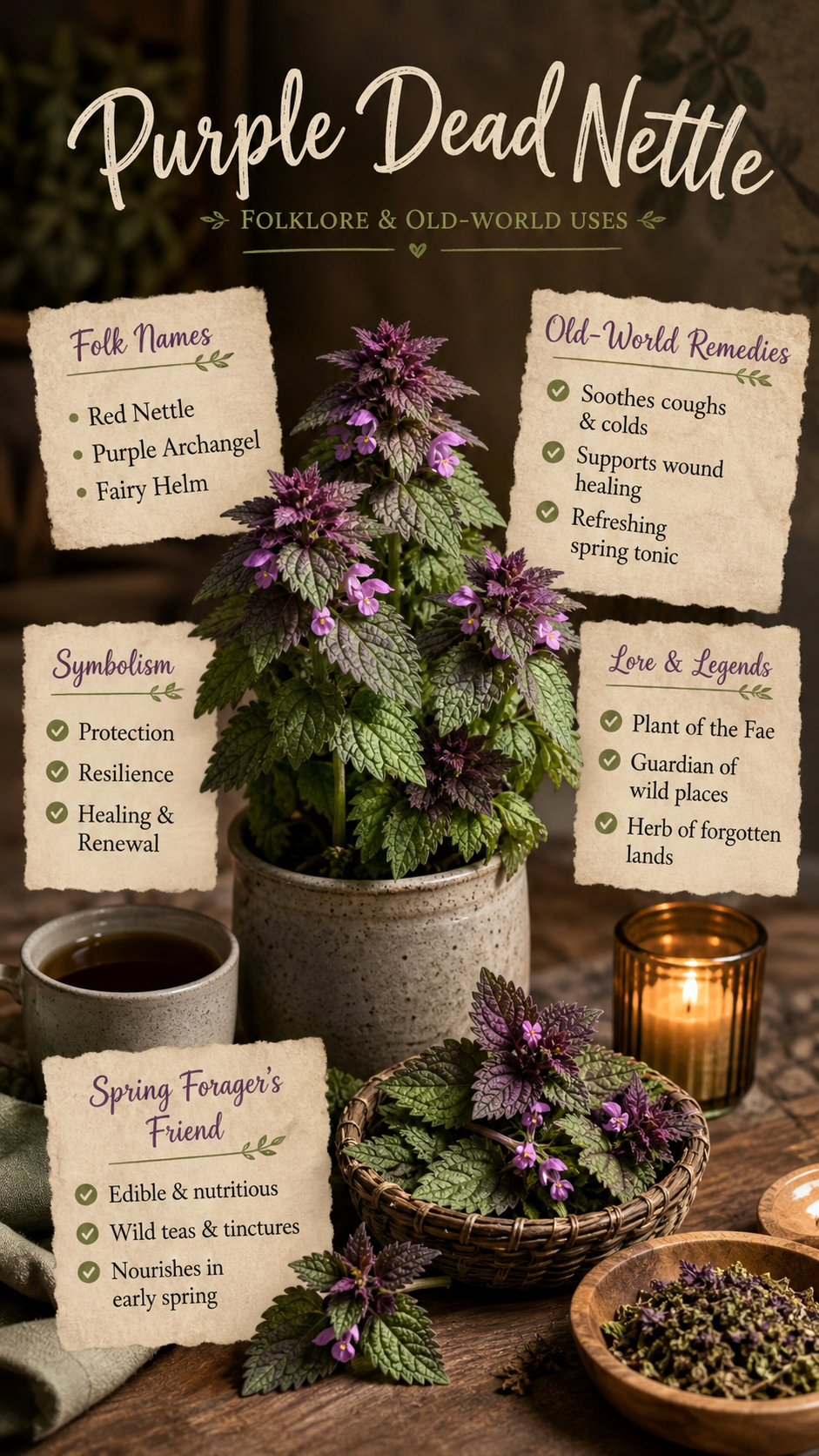
Purple dead nettle has gathered a variety of names and associations over time. Some people know it simply as red dead nettle. Others connect it with the name purple archangel, a name that gives the plant a more mystical character. Folk names often reveal how people related to plants in daily life. A plant’s color, shape, bloom time, or use could all inspire the names passed down through gardens and communities.
Names like “purple archangel” fit beautifully with the plant’s upright shape and purple flowering tops. In a folklore context, the name feels protective, gentle, and almost guardian-like.
Old-World Uses of Purple Dead Nettle
Old-world herbal use often blended observation, seasonal rhythm, and practical household care. Purple dead nettle was one of many common plants that could be gathered close to home and used in simple preparations. While modern readers should avoid treating folk tradition as medical instruction, these uses remain valuable as cultural history and herbal inspiration.
Spring Tonic Traditions
Early spring greens were historically welcomed after a long winter diet. Plants like purple dead nettle were part of that seasonal shift. Fresh wild greens offered color, flavor, and nutrients when gardens were not yet producing much. This is why purple dead nettle fits so naturally into the idea of a “spring tonic.”
A spring tonic did not have to be complicated. It could be as simple as adding tender young leaves to a meal, steeping herbs into a tea, or using fresh greens as part of a seasonal cleansing ritual. The deeper idea was renewal: welcoming light, movement, and freshness back into the body and home.
Wild Teas and Herbal Infusions
Purple dead nettle is often discussed in the context of wild teas. Its flavor is usually mild and earthy, which makes it suitable for blending with other gentle spring herbs. Many modern foragers dry the leaves and flowers for later use, especially when they want to preserve a little of the spring season.
Herbal infusions made from edible wild plants are popular with people who enjoy slow living, nature journaling, and seasonal kitchen rituals. A cup of wild tea is not only about taste. It is also about paying attention to place, season, and plant life.
Poultices and Folk Wound Care
In traditional herbal practice, soft leafy plants were sometimes crushed and used externally as simple poultices. Purple dead nettle appears in folk remedy discussions around skin comfort and minor outdoor mishaps. This does not replace proper medical care, but it does show how people once turned to common plants for everyday household needs.
Pro Tip: When writing about or using purple dead nettle, separate folklore from modern health advice. It is fine to appreciate traditional remedies, but any internal or external use should be approached with careful identification, clean harvesting, and common-sense safety.
Purple Dead Nettle in Folklore and Symbolism
The symbolism of purple dead nettle is easy to understand when you look at how it grows. It appears early, often in cool weather, and it spreads confidently across forgotten corners of gardens and pathways. This gives it a natural connection to resilience.
Its purple coloring adds another layer. Purple is often associated with mystery, intuition, spiritual protection, and old-world charm. In folklore-inspired storytelling, purple dead nettle can represent the hidden value of overlooked things. What some call a weed can become food, tea, medicine, color, beauty, and meaning.
Protection and Warding Symbolism
Many traditional plant stories include the idea of protection. Herbs were hung near doors, tucked into bundles, carried in pockets, or planted around homes. Purple dead nettle’s association with protection likely comes from its hardy growth and its place in springtime folk herbalism.
In a symbolic sense, the plant teaches that protection does not always look dramatic. Sometimes it looks like a low-growing patch of purple flowers quietly covering bare soil, feeding pollinators, and returning year after year.
Healing and Renewal
Healing symbolism is another natural fit. Purple dead nettle arrives during a seasonal turning point. The landscape is moving from dormancy into growth. That makes the plant a beautiful emblem of recovery, fresh starts, and gentle transformation.
For gardeners and foragers, it can also symbolize a change in perspective. Instead of seeing every volunteer plant as a nuisance, purple dead nettle invites curiosity. What is growing here? What does it offer? What does its presence reveal about the season?
Why This Matters
Purple dead nettle is a perfect example of how folklore, foraging, and ecological awareness can overlap. Learning about one common wild plant can deepen your connection to seasonal living, pollinators, herbal traditions, and the overlooked beauty growing close to home.
A Spring Forager’s Friend
Purple dead nettle is often considered beginner-friendly because it is common and visually memorable, but beginner-friendly does not mean careless. Good foraging always starts with confident identification. Look closely at the leaf shape, stem structure, flower form, growth habit, and location. Compare with several reputable field guides before harvesting.
Foragers appreciate purple dead nettle because it is usually abundant, tender when young, and available early. It can be gathered in small amounts for teas, salads, cooked greens, pestos, or herbal vinegars. The mild flavor makes it easy to blend with stronger herbs or everyday kitchen ingredients.
Simple Ways to Use Purple Dead Nettle
- Fresh garnish: Add a few clean flowers or tender leaves to spring salads.
- Herbal tea: Steep fresh or dried leaves with other mild herbs.
- Wild green blend: Mix with cooked greens, soups, or savory fillings.
- Herbal vinegar: Infuse clean plant material in vinegar for a seasonal kitchen project.
- Nature journal subject: Sketch the leaves, flowers, and growth pattern for identification practice.
Harvesting Etiquette
Harvest only from clean areas away from roadsides, sprayed lawns, pet traffic, and polluted soil. Take a modest amount, leaving plenty for pollinators and for the plant to continue growing. Early flowers are especially useful to bees, so thoughtful harvesting matters.
Important: Never eat a wild plant based on appearance alone. Purple dead nettle has recognizable features, but responsible foraging requires multiple points of identification and awareness of lookalikes in your region.
How Purple Dead Nettle Supports a Cottagecore Herbal Aesthetic
Part of purple dead nettle’s current popularity comes from its visual charm. The plant looks like it belongs in an old herbarium, a handwritten remedy book, or a basket carried through a misty spring garden. Its color palette of moss green, dusty purple, and soft pink fits beautifully with cottagecore, woodland, witchy, and old-world apothecary themes.
For creative projects, purple dead nettle can inspire pressed flower art, botanical illustrations, seasonal recipe cards, garden journals, herbal labels, and folklore-themed decor. Its story feels gentle and grounded, making it ideal for anyone who loves plants with both practical and poetic value.
Ideas for Herbal Journaling
A purple dead nettle journal page can include sketches, bloom dates, location notes, traditional names, pollinator observations, recipe experiments, and folklore associations. This kind of journaling turns a common plant into a seasonal landmark.
- Record the first date you notice purple dead nettle blooming.
- Sketch the leaves and flowers from different angles.
- Note nearby plants and pollinator activity.
- Write down traditional uses, clearly labeling them as folklore or historical practice.
- Add a small seasonal recipe or tea blend idea.
Purple Dead Nettle and Pollinators
Another reason to appreciate purple dead nettle is its value in the early spring landscape. Because it blooms when many other flowers are still waiting, it can provide nectar for bees and other early pollinators. This makes it more than just a foraging plant or folklore subject. It can also be part of a pollinator-friendly yard.
Gardeners who prefer tidy beds may still choose to leave a small patch for wildlife. Even a modest corner can support early insects and bring a soft wash of purple to the garden.
Should You Remove It or Keep It?
That depends on your garden goals. Purple dead nettle can spread in open soil, so some gardeners manage it before it goes to seed. Others allow it to grow in certain areas as a living seasonal ground cover. The best approach is balance. Learn where it is helpful, where it is crowding plants, and where it can be enjoyed without taking over.
At a Glance
- Best known for early spring growth and purple-tinted leaves.
- Popular in herbal folklore, foraging, and cottage garden themes.
- Often used for teas, wild greens, and nature journaling inspiration.
- Valued by pollinators during the early growing season.
- Always confirm identification before harvesting.
Bringing Purple Dead Nettle Into Seasonal Living
Purple dead nettle fits beautifully into a seasonal lifestyle because it asks you to slow down and notice the small signs of spring. It is not a flashy garden flower or rare woodland treasure. It is common, accessible, and easy to overlook. That is part of its charm.
You might notice it while walking a garden path, clearing a bed, or watching bees move through the first flowers of the year. From there, it can become a tea, a sketch, a pressed specimen, a journal note, or a reminder that nature’s gifts are often hiding in plain sight.
Pro Tip: If you are building a seasonal herbal practice, start with observation before use. Spend a few weeks watching how purple dead nettle grows, flowers, spreads, and supports insects. This creates a stronger connection than harvesting right away.
Conclusion: A Humble Herb with Old-World Charm
Purple dead nettle is a wonderful reminder that ordinary plants can carry extraordinary meaning. It has a place in spring foraging, folk herbalism, pollinator gardens, and old-world plant lore. Its purple flowers and soft leaves make it visually enchanting, while its edible and traditional uses make it practical and memorable.
Whether you see it as a spring tonic herb, a symbol of resilience, a pollinator-friendly wildflower, or a cottagecore botanical treasure, purple dead nettle invites a deeper relationship with the natural world. It encourages curiosity, careful observation, and appreciation for the quiet abundance growing right at winter’s end.
Tags
Purple Dead Nettle Herbal Folklore Spring Foraging Wild Herbs Old World Remedies Cottagecore Herbs Herbalism Plant Symbolism