
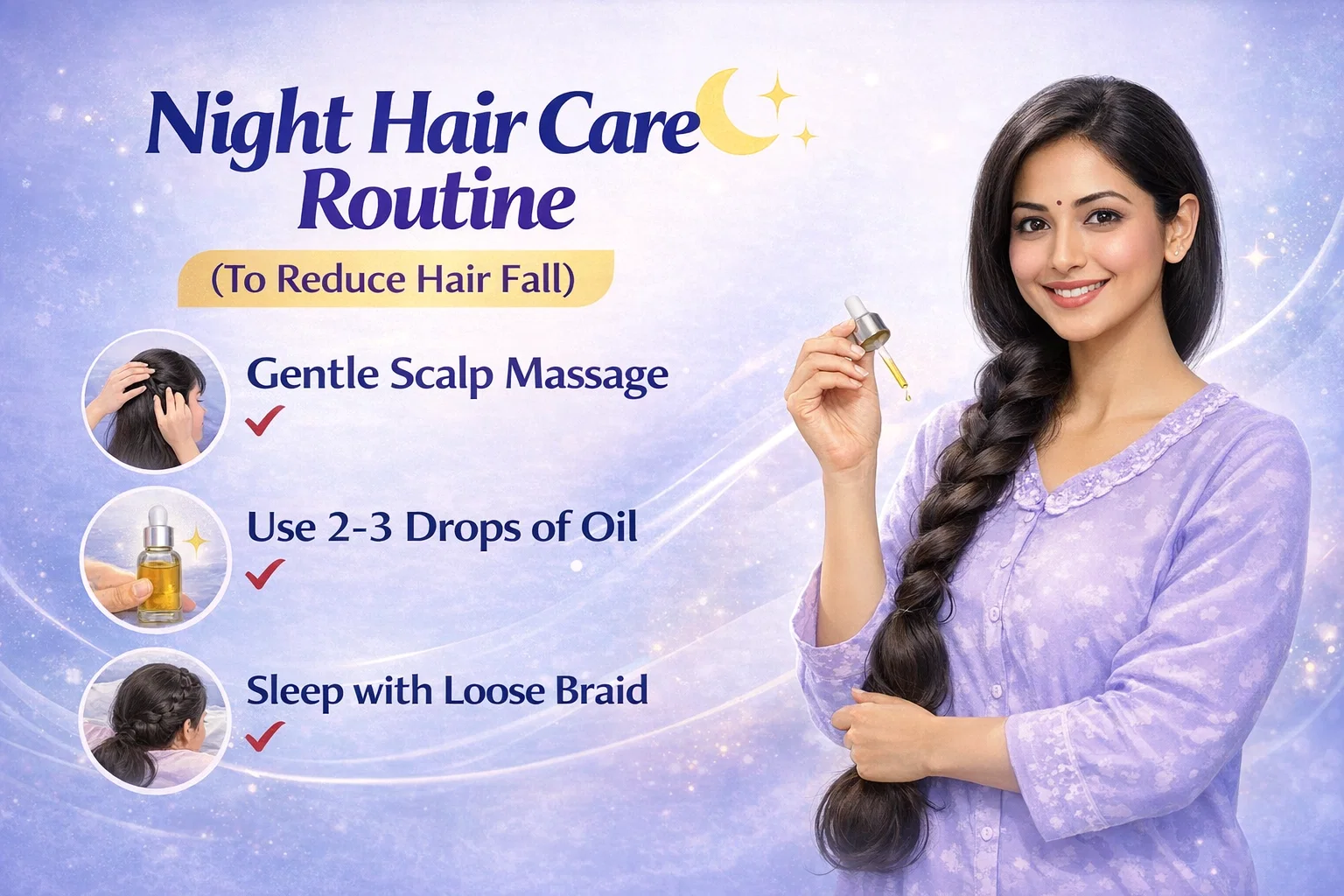
Stop Hair Fall 4-Step Night Hair Care Routine for Stronger Roots Growth
Do you ever wake up and find more hair on your pillow than you would like to see? It is a common frustration that many of us face, but the secret to thicker, more resilient hair might actually lie in your nighttime habits. While we often focus on the shampoos and serums we use in the morning, the hours we spend sleeping are when our bodies, including our hair follicles, go into repair mode. By implementing a dedicated night hair care routine focused on hair fall control, you can significantly reduce breakage and encourage healthier growth without adding hours to your daily schedule.
The Science of Nighttime Hair Recovery
Our hair is surprisingly vulnerable while we sleep. Between the friction of moving against a pillowcase and the tension caused by tight hairstyles, our strands endure a lot of stress throughout the night. This is precisely why a PM routine is so vital. When we sleep, our scalp’s blood flow increases, providing an optimal window for nutrient absorption and follicle stimulation. If we ignore our hair at night, we miss out on a prime opportunity to strengthen the roots and prevent the mechanical damage that leads to thinning and shedding.
Focusing on hair fall control during these quiet hours allows you to address the root causes of shedding, such as poor circulation and brittle strands. Instead of playing catch-up with damaged hair in the morning, these simple evening steps create a protective environment that fosters strength from the inside out.
Step 1: The Power of a Gentle Scalp Massage
One of the most effective yet overlooked ways to combat hair fall is a consistent scalp massage. Spending just two to three minutes massaging your head before you hit the sheets can transform your hair health. This simple action serves a dual purpose: it stimulates blood circulation and helps to relieve the stress of the day, which is a known contributor to hair loss.
Improving Blood Circulation
When you massage your scalp, you are essentially “waking up” the blood vessels that surround your hair follicles. This increased blood flow brings a fresh supply of oxygen and essential nutrients to the roots. Think of it as feeding your hair. Healthy, well-nourished roots are much less likely to prematurely enter the shedding phase, leading to a fuller appearance over time.
Strengthening the Roots
Regular stimulation helps to anchor the hair more firmly within the follicle. By gently manipulating the scalp, you also help to loosen any tension in the skin, allowing the follicles to function at their peak capacity. It is a natural way to encourage your hair to stay in the growth phase longer.
The Golden Rule: Use Your Fingertips, Not Your Nails
It is crucial to be gentle during this process. You should always use the fleshy pads of your fingertips to apply light pressure in circular motions. Never use your fingernails, as this can cause micro-tears on the scalp, leading to irritation, inflammation, and even potential infections that could further damage the hair follicles. The goal is relaxation and stimulation, not abrasion.
Step 2: Mindful Oiling and Nourishment
In many cultures, oiling the hair is a sacred ritual for growth and shine. However, when it comes to a nighttime routine specifically for hair fall control, less is definitely more. Heavy oiling at night can actually be counterproductive for those struggling with shedding.
Why You Should Avoid Heavy Oiling at Night
While a deep conditioning oil treatment is great as a pre-shampoo mask, leaving a large amount of oil on your scalp overnight can clog the pores and weigh down the roots. Furthermore, excess oil can attract dust and allergens from your bedding, which may irritate a sensitive scalp. Most importantly, too much oil can make the hair slippery and prone to sliding out of the follicle if the hair is already weakened.
The Two-Drop Rule
If you feel your scalp or ends need a bit of extra nourishment, stick to just two or three drops of a lightweight oil, such as rosemary, jojoba, or almond oil. Focus on the mid-lengths to the ends to prevent split ends, or lightly dab it onto areas of the scalp that feel particularly dry. This provides the benefits of the fatty acids and vitamins without the greasy residue that leads to increased hair fall.
Step 3: The Danger of Sleeping with Wet Hair
We have all had those nights where we are too tired to blow-dry or wait for our hair to air-dry after a late shower. However, sleeping with wet hair is one of the quickest ways to cause breakage and root damage. Hair is at its weakest and most elastic state when it is saturated with water.
Friction and Breakage
When wet hair meets the surface of a pillow, the friction is significantly higher than when the hair is dry. As you toss and turn, the wet strands stretch beyond their limit and eventually snap. This leads to those short, frizzy “baby hairs” that are actually just broken shafts. Furthermore, the combination of moisture and warmth from your head creates a breeding ground for fungus and bacteria on your pillowcase, which can lead to scalp issues like dandruff.
Ensure Your Hair is Completely Dry
Make it a priority to let your hair dry completely before your head hits the pillow. If you must wash your hair at night, try to do it several hours before bedtime. If you are in a rush, use a microfiber towel to gently squeeze out excess moisture and use a hair dryer on a cool setting to finish the job. Your roots will be much more secure if they are dry and set before you sleep.
Step 4: The Protective Loose Braid
How you wear your hair to bed is just as important as the products you apply. Many people fall into the trap of using tight elastics to keep their hair out of their face, but this constant tension is a major cause of traction alopecia and thinning around the hairline.
Avoiding Tight Ponytails and Buns
A tight ponytail or a “top knot” pulls on the hair follicles for eight hours straight. This constant mechanical stress weakens the bond between the hair and the scalp. Over time, this leads to thinning and a receding hairline. If you wake up with a sore scalp, it is a clear sign that your hairstyle was too tight.
The Benefits of a Loose Braid
The best way to secure your hair at night is a simple, loose braid. A braid keeps the hair contained, which prevents tangles and matting. Tangles are a hidden cause of hair fall because you end up pulling out perfectly healthy hair when you try to brush through the knots the next morning. A loose braid allows for airflow and ensures that there is zero tension on the roots. It also has the added bonus of giving you beautiful, heat-free waves when you wake up.
Maximizing Your Results with Supportive Habits
While the four steps mentioned above are the foundation of a great night routine, there are a few extra “pro tips” that can level up your hair care game. Consistency is the most important factor, but these small adjustments to your environment can make your routine even more effective.
Invest in a Silk or Satin Pillowcase
Standard cotton pillowcases have a rough texture that can snag hair fibers. Switching to a silk or satin pillowcase allows your hair to glide smoothly across the surface. This reduces friction, prevents frizz, and helps your hair retain its natural moisture rather than having it absorbed by the cotton fabric.
Use Seamless Hair Ties
When securing your loose braid, stay away from rubber bands or ties with metal clasps. Instead, use silk scrunchies or seamless nylon bands. These are much gentler on the hair shafts and will not cause “dents” or breakage where the tie is fastened.
Keep Your Bedding Clean
Since your hair spends so much time in contact with your pillow, keeping your pillowcase clean is essential for scalp health. Oils, sweat, and skin cells can build up quickly, potentially clogging follicles. Aim to change your pillowcase at least once or twice a week to ensure a fresh environment for your hair growth.
Conclusion: Consistency is the Key to Success
Transforming your hair does not require expensive salon treatments or complicated procedures. Often, the most profound changes come from the smallest daily habits. By committing to a gentle scalp massage, being mindful of how much oil you use, ensuring your hair is dry before bed, and protecting your strands with a loose braid, you are taking proactive steps to end the cycle of hair fall.
Remember that hair growth is a journey that requires patience. You likely will not see a massive difference overnight, but within a few weeks of consistent care, you will notice less shedding in your brush and a healthier, shinier texture to your mane. Start tonight by giving yourself those few minutes of care. Your hair works hard for you every day, so give it the rest and protection it deserves while you sleep. Here is to waking up every morning with stronger, more beautiful hair!