6 Best Ways to Extract Herbs Tinctures, Glycerites, Oils and Infusions
Herbal extracts are one of the most practical ways to turn simple plants into useful preparations for daily routines. Whether you are building a home apothecary, learning traditional herbalism, or simply curious about natural wellness, understanding the different ways to extract herbs can help you choose the right method for the right purpose.
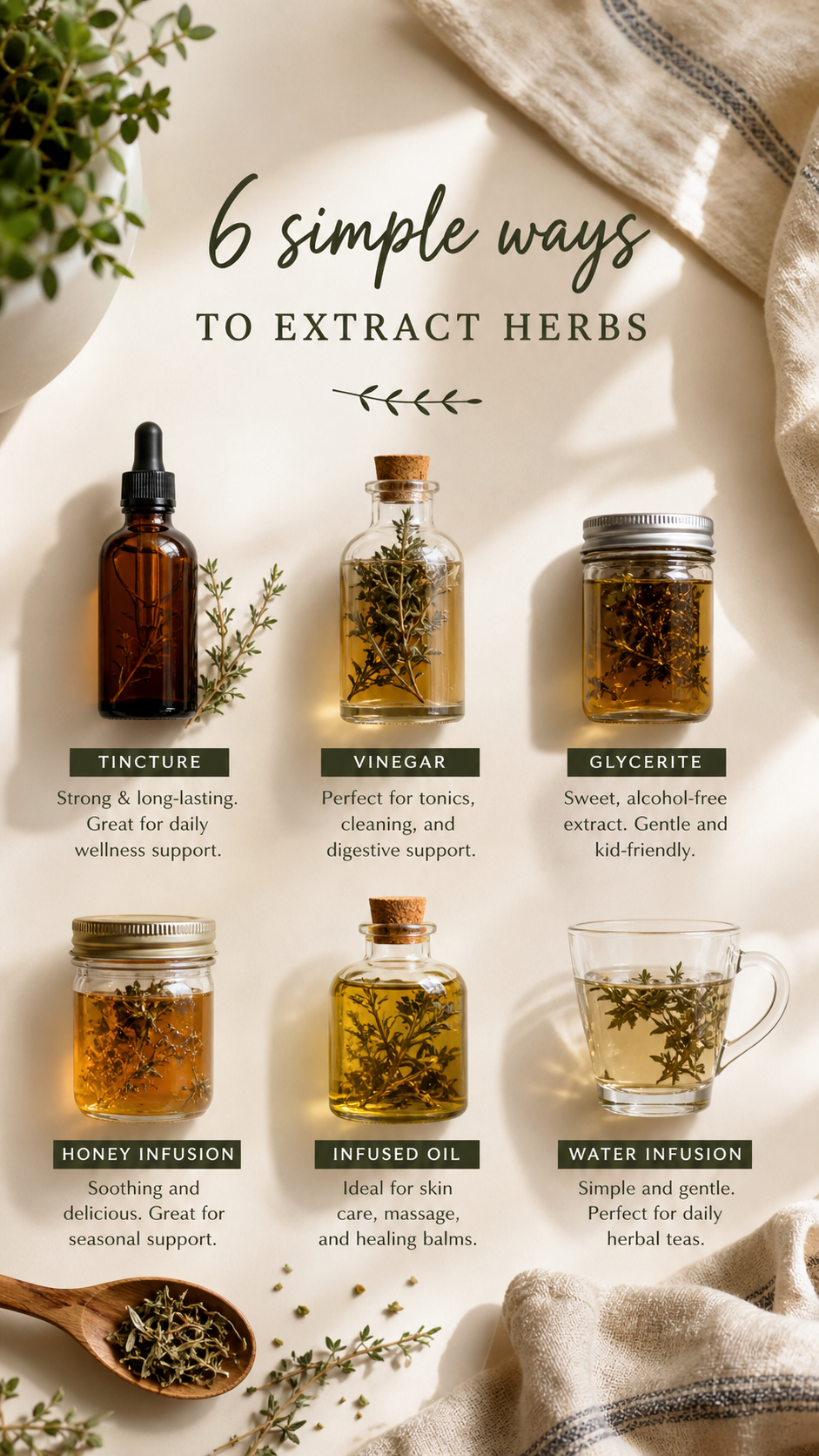
The most common herbal extraction methods include tinctures, acetums, glycerites, oxymels, infused oils, and water-based infusions. Each one uses a different liquid, also called a solvent, to pull beneficial plant compounds from herbs. Some methods are best for long-term storage, while others are ideal for alcohol-free remedies, topical use, or quick preparations.
What makes this topic so useful is that there is no single “best” herbal extraction method. The right choice depends on your goal, the herb you are using, your preferred ingredients, and how quickly you plan to use the finished preparation. Once you understand the strengths of each option, herbal preparations become much less intimidating and much more enjoyable.
Key Takeaways
- Tinctures use alcohol and are known for strength and long shelf life.
- Acetums use vinegar and offer a milder, food-friendly, alcohol-free option.
- Glycerites are sweet, alcohol-free herbal extracts often preferred for children.
- Oxymels combine honey and vinegar, making them popular for respiratory and immune blends.
- Infused oils are best for topical use, salves, massage oils, and skin care.
- Water infusions are quick and simple, but they are not shelf-stable.
What Is Herbal Extraction?
Herbal extraction is the process of using a liquid to draw out useful compounds from plants. These compounds may include flavors, aromas, minerals, resins, mucilage, essential oil components, tannins, and other plant constituents. The liquid used for extraction matters because different plant compounds dissolve better in different types of liquids.
For example, alcohol is excellent at extracting a wide range of plant compounds and preserving them for long periods. Water is perfect for teas and quick infusions, especially when working with gentle leaves and flowers. Oil is useful when preparing herbs for external use, while vinegar and glycerin offer alcohol-free alternatives.
Important: Herbal extraction is not just about soaking herbs in liquid. It is about matching the plant, the solvent, and the intended use so the finished preparation is practical, safe, and effective for your needs.
Tinctures: Strong Herbal Extracts With Long Shelf Life
A tincture is an herbal extract made with alcohol. In traditional herbalism, tinctures are popular because alcohol can extract many different plant compounds and preserve them for a long time. This makes tinctures a convenient choice for anyone who wants a compact, shelf-stable preparation that is easy to store and use.
Tinctures are often made by placing dried or fresh herbs in a jar, covering them with alcohol, and allowing the mixture to steep for several weeks. The liquid is then strained and stored in a dropper bottle. Because tinctures are concentrated, they are usually taken in small amounts.
Best Uses for Tinctures
Tinctures are helpful when you want an herbal preparation that is portable, concentrated, and long-lasting. They are commonly used in home apothecaries because they take up little space and do not require refrigeration when made properly.
- Long-term herbal storage
- Concentrated herbal preparations
- Travel-friendly remedies
- Herbs that extract well in alcohol
However, tinctures are not ideal for everyone. Some people avoid alcohol for personal, health, religious, or family reasons. In those cases, vinegar extracts, glycerites, and water infusions may be better options.
Acetums: Vinegar-Based Herbal Extracts
An acetum is an herbal extraction made with vinegar. This method is milder than alcohol extraction and has the benefit of being food-grade and alcohol-free. Vinegar extracts are especially appealing for people who like to incorporate herbs into everyday meals, tonics, dressings, and kitchen remedies.
Apple cider vinegar is a common choice, although other food-grade vinegars may be used depending on the recipe. Vinegar is particularly good at extracting minerals from herbs, which makes acetums a popular choice for nourishing herbs.
Why Choose an Acetum?
Acetums are approachable and practical. They can be used as part of a wellness routine without feeling too medicinal. Their tart flavor pairs well with honey, citrus, spices, and culinary herbs.
They are also a useful choice for beginners because vinegar is easy to find and familiar to most households. The finished extract can often be used creatively in recipes, making herbalism feel less complicated and more connected to daily life.
Glycerites: Sweet, Alcohol-Free Herbal Extracts
Glycerites are herbal extracts made with vegetable glycerin. They are sweet, gentle, and alcohol-free, which makes them a popular option for people who prefer a milder taste. The natural sweetness of glycerin can help make stronger-tasting herbs easier to take.
Because glycerites are alcohol-free and pleasant in flavor, they are often associated with family-friendly herbal preparations. They can be especially useful when taste matters, such as when preparing herbs for children or for anyone sensitive to the sharpness of alcohol or vinegar.
Pro Tip: Glycerites are a smart option when you want an alcohol-free herbal extract that still feels convenient and easy to use. Their sweet flavor can make daily herbal routines more enjoyable.
When Glycerites Make Sense
Choose a glycerite when you want a preparation that is sweet, mild, and simple to take. They work well for many aromatic herbs and gentle botanicals. While they may not extract every plant compound as strongly as alcohol, they are still highly valued for their accessibility and flavor.
- Alcohol-free herbal extracts
- Sweet herbal preparations
- Family-friendly apothecary recipes
- Herbs with pleasant aromatic qualities
Oxymels: Honey and Vinegar for Herbal Wellness
An oxymel combines honey and vinegar, creating a sweet and tangy herbal preparation. The word itself points to the balance of sour and sweet. Oxymels have a long history in traditional herbal practices and are often associated with respiratory and immune-supportive formulas.
The vinegar helps extract plant compounds while the honey softens the flavor and adds a soothing quality. This makes oxymels especially enjoyable during colder months or whenever you want a comforting herbal blend.
Why Oxymels Are So Popular
Oxymels are practical because they taste good and can be used in several ways. A spoonful can be taken on its own, stirred into warm water, or added to sparkling water for a refreshing herbal drink. The flavor is more approachable than plain vinegar and often more enjoyable than bitter herbal extracts.
Why This Matters
Many beginners give up on herbal preparations because the taste feels too strong or unfamiliar. Oxymels offer a balanced flavor that can make herbs feel more inviting, especially when working with bold botanicals, roots, spices, or respiratory-focused blends.
Infused Oils: Herbal Preparations for Skin and Salves
Infused oils are made by steeping herbs in oil. Unlike tinctures, acetums, glycerites, and oxymels, infused oils are generally intended for topical use rather than internal use. They are commonly used for salves, balms, body oils, massage oils, and natural skin care recipes.
Oil works well with herbs that contain fat-soluble components or soothing properties useful for the skin. Calendula, plantain, comfrey leaf, lavender, chamomile, and rosemary are common examples in general herbal skin care traditions.
Best Uses for Infused Herbal Oils
Infused oils are ideal when your goal is external application. They can be used alone as a body oil or combined with beeswax to create a salve. They also make a strong foundation for homemade balms and simple herbal skin care products.
- Herbal salves and balms
- Massage oils
- Dry skin support
- After-gardening hand care
- Gentle body care recipes
Important: Water and oil do not mix well, and moisture can shorten the shelf life of infused oils. Dried herbs are often preferred for oil infusions because they reduce the chance of unwanted spoilage.
Water Infusions: The Quickest Herbal Method
Water is the simplest and most familiar way to extract herbs. Herbal teas, infusions, and decoctions all rely on water. This method is immediate, affordable, and easy to prepare with basic kitchen tools.
Water is especially useful for extracting minerals, mucilage, and gentle plant compounds from leaves, flowers, and some roots. A simple cup of herbal tea is one of the easiest ways to begin working with herbs.
The Limitation of Water-Based Extracts
The biggest drawback is shelf life. Water infusions are not shelf-stable. They should be prepared for immediate use and stored carefully if kept for a short period. Unlike alcohol or vinegar, water does not preserve herbs for long-term storage.
That does not make water less valuable. It simply means water infusions belong in a different category. They are perfect when you want something fresh, quick, and simple.
How to Choose the Right Herbal Extraction Method
Choosing the right extraction method becomes easier when you start with your goal. Are you making something for long-term storage? Do you need an alcohol-free option? Will the preparation be used on the skin? Do you want something sweet and pleasant, or something strong and concentrated?
Choose Based on Your Main Goal
- For long shelf life: Choose a tincture.
- For alcohol-free use: Choose an acetum or glycerite.
- For sweet flavor: Choose a glycerite or oxymel.
- For respiratory-style blends: Choose an oxymel.
- For topical use: Choose an infused oil.
- For immediate use: Choose a water infusion.
It also helps to consider the herb itself. Some herbs are better suited to alcohol, while others shine in water, vinegar, or oil. Delicate flowers may work beautifully in tea or oil. Mineral-rich herbs may pair well with vinegar. Strong roots may require longer extraction times or a more powerful solvent.
Beginner-Friendly Herbal Extraction Tips
If you are new to herbal extraction, start simple. You do not need a fully stocked apothecary or complicated equipment. A clean glass jar, dried herbs, a suitable liquid, labels, and patience are enough for many basic preparations.
Label Everything Clearly
Always label your herbal preparations with the herb name, solvent, date made, and any important notes. This small habit prevents confusion later and helps you track what works best.
Use Clean, Dry Tools
Clean jars and utensils are essential. For oil infusions especially, keeping water out of the preparation helps protect quality. For all herbal extracts, cleanliness supports better results.
Start With Common Herbs
Begin with familiar herbs before moving into more advanced formulas. Chamomile, peppermint, lavender, calendula, rosemary, thyme, and lemon balm are approachable choices for many beginner projects.
Pro Tip: Make one type of extract at a time when learning. Comparing a tincture, glycerite, oil, and tea all at once can be fun later, but beginners often learn faster by mastering one method first.
Common Mistakes to Avoid
Herbal extraction is simple, but a few common mistakes can affect the quality of the finished preparation. One of the biggest is using the wrong solvent for the intended purpose. For instance, an infused oil is not the same as a tincture, and a water infusion cannot be stored like an alcohol extract.
Another common mistake is forgetting to label jars. After a few weeks, many herbal mixtures can look similar. A clear label saves time and prevents waste.
It is also important to respect shelf life. Water infusions should be used quickly. Oils should be checked for freshness. Alcohol and vinegar preparations usually last longer, but they still need proper storage away from excessive heat and light.
Building a Simple Home Apothecary
A home apothecary does not need to be large. In fact, a small, thoughtful collection is often more useful than a crowded shelf full of preparations you rarely use. A good beginner setup might include one tincture, one glycerite, one oxymel, one infused oil, and a few loose herbs for tea.
This gives you a range of options: something strong and shelf-stable, something alcohol-free, something sweet and soothing, something topical, and something quick. Over time, you can add more herbs and methods based on what you actually enjoy using.
A Balanced Starter Approach
Try choosing one herb and preparing it in different ways. For example, you might make a tea, a glycerite, and an infused oil with the same herb if appropriate. This helps you understand how the same plant can feel different depending on the extraction method.
At a Glance
- Tincture: alcohol-based, strong, long-lasting.
- Acetum: vinegar-based, mild, alcohol-free.
- Glycerite: sweet, gentle, alcohol-free.
- Oxymel: honey plus vinegar, flavorful and soothing.
- Infused oil: topical, ideal for salves and skin care.
Conclusion: Herbal Extraction Is a Skill Worth Learning
Learning the different ways to extract herbs opens the door to a more confident and creative herbal practice. Tinctures, acetums, glycerites, oxymels, infused oils, and water infusions each have their own strengths. Some are best for long-term storage, some are better for alcohol-free routines, some are perfect for skin care, and some are meant to be enjoyed right away.
The beauty of herbal extraction is that it can be as simple or as detailed as you want it to be. You can begin with a cup of tea or a small jar of infused oil, then gradually explore more advanced preparations as your confidence grows. With a few basic methods, clear labels, quality herbs, and an understanding of which solvent fits each purpose, you can build a practical herbal toolkit that supports everyday wellness in a grounded and enjoyable way.
Start with one method that matches your needs, keep the process simple, and let your herbal knowledge grow one preparation at a time.
Tags
Herbalism Herbal Remedies Herb Extraction Tinctures Glycerites Infused Oils Natural Wellness Home Apothecary