6 Natural Fertilizers That Can Kill Your Plants Common Gardening Mistakes To Avoid
Many of us dream of a lush, chemical-free garden where everything grows in perfect harmony. We gather kitchen scraps, collect wood ash from the fireplace, and source manure from local farms, believing that if it is natural, it must be good for the earth. However, gardening is a delicate science of balance. Sometimes, our well-intentioned efforts to feed the soil can lead to unexpected disasters. Understanding the hidden risks of common organic amendments is the key to moving from a struggling plot to a professional-level harvest.
The Hidden Science of Natural Fertilizers
Soil health is about more than just adding nutrients; it is about managing chemistry and biological activity. When we add materials like wood ash or raw sawdust, we are not just adding food for plants. We are changing the pH level and the nitrogen availability of the entire ecosystem. If these changes happen too quickly or at the wrong time, the results can be devastating for sensitive root systems and young seedlings. To grow a successful garden, you must learn to match the right amendment with the right plant species.
Why Wood Ash Can Be Dangerous for Acid-Loving Plants
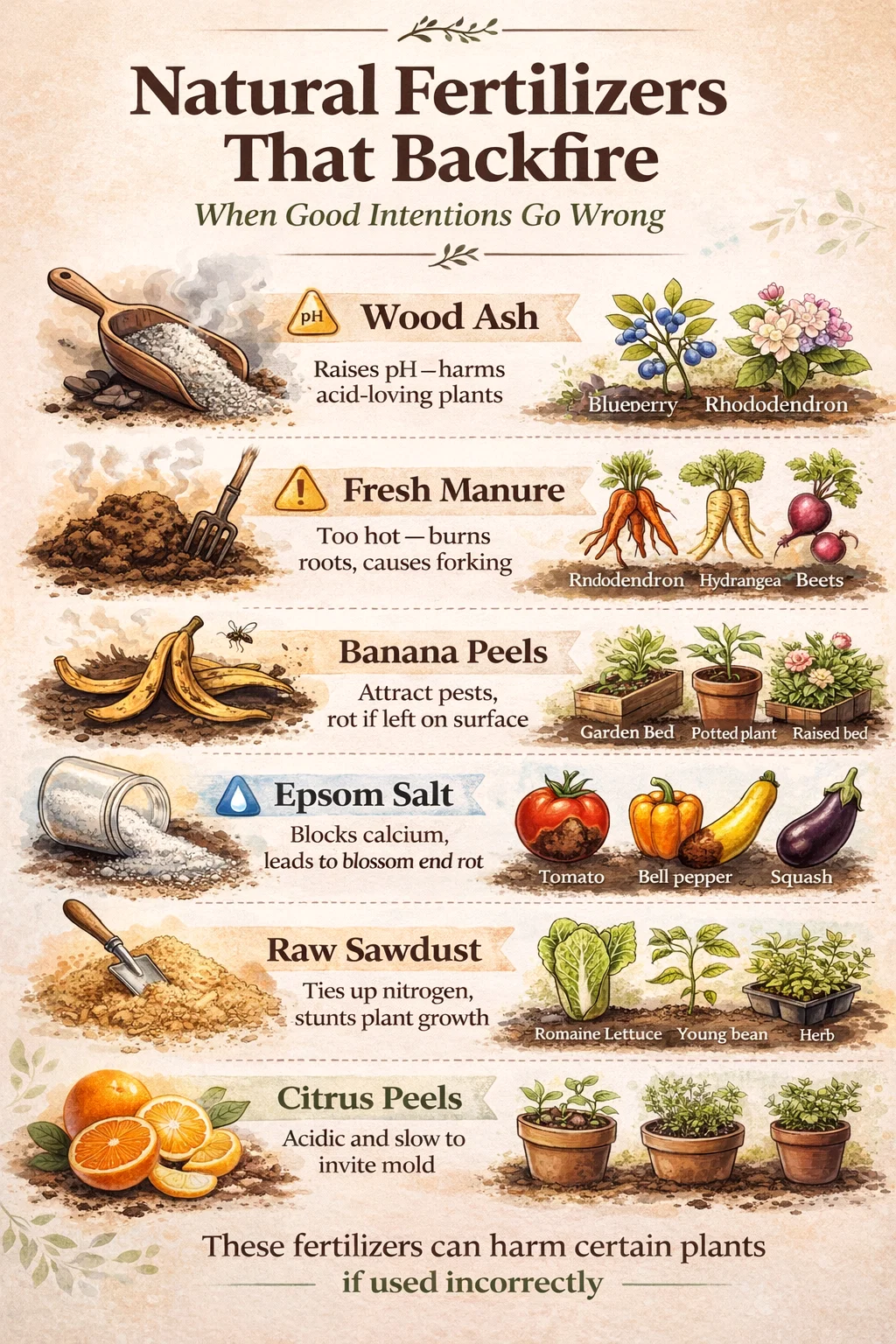
Wood ash is often praised as a free source of potassium and lime, but it is one of the most powerful pH-altering substances you can put in your garden. Because it is highly alkaline, it can rapidly raise the soil pH. This is great if you have overly acidic soil, but it is a nightmare for plants that thrive in lower pH environments.
The Danger to Blueberries and Azaleas
Plants like blueberries, azaleas, and rhododendrons require acidic soil to absorb nutrients effectively. When wood ash is applied to these areas, it neutralizes the acidity they need. This leads to iron chlorosis, a condition where the leaves turn yellow while the veins stay green. Eventually, the plant becomes stunted and may die because it can no longer “eat” the nutrients present in the soil. If you want to use wood ash, always perform a soil test first to ensure your ground actually needs a pH boost.
Hydrangeas and Color Shifts
For gardeners who love the vibrant blue of Hydrangea macrophylla, wood ash is a hidden enemy. The blue color is dependent on aluminum availability, which only happens in acidic soil. Adding ash will turn your beautiful blue flowers pink or a muddy purple, signifying a shift in the soil chemistry that may take years to reverse.
The Burn of Fresh Manure on Root Crops
Fresh manure is packed with nitrogen, which sounds like a gardener’s dream. However, raw manure is often referred to as being “hot.” This refers to the intense microbial activity and high ammonia levels that occur before the manure has been properly composted. Applying this directly to your vegetable beds can lead to physical damage that ruins your harvest.
Deformed and Forked Root Vegetables
Root crops like carrots, parsnips, and radishes are particularly sensitive to high nitrogen levels found in fresh manure. Instead of growing a single, straight taproot, the plant becomes confused and sends out multiple roots, resulting in forked, twisted, and unusable vegetables. For a smooth, store-quality carrot, it is essential to use well-rotted compost rather than fresh animal waste.
The Risk of Root Burn
Beyond cosmetic damage, the high salt and ammonia content in fresh manure can chemically burn the delicate roots of young plants. This causes the foliage to wither and turn brown at the edges, a sign that the plant is unable to take up water properly. Always age your manure for at least six months to a year before letting it touch your vegetable garden.
The Surface Problem with Banana Peels
We have all heard the tip to toss banana peels into the garden for a potassium boost. While the intent is good, the execution often fails. Leaving peels on the surface of the soil does very little for the plants in the short term and creates several immediate problems for the gardener.
Attracting Unwanted Pests
Raw fruit scraps sitting on top of your garden bed act as a magnet for pests. Fruit flies, gnats, and even larger scavengers like raccoons or rodents are drawn to the scent of decaying sugar. Furthermore, the slow breakdown of the peel on the surface means the potassium is not reaching the root zone where it is actually needed. To get the benefits of bananas without the pests, bury them deep or, better yet, chop them up and add them to a controlled compost bin first.
Epsom Salt and the Blossom End Rot Myth
Epsom salt, or magnesium sulfate, is a common “hack” for tomatoes and peppers. Many gardeners believe it prevents blossom end rot, the dark, leathery patch that appears on the bottom of the fruit. However, the science suggests that excessive Epsom salt can actually make the problem worse.
The Calcium-Magnesium Imbalance
Blossom end rot is caused by a calcium deficiency within the fruit. Since magnesium and calcium compete for uptake by the plant roots, adding too much magnesium through Epsom salts can block the plant from absorbing the calcium it truly needs. This results in a beautiful-looking plant that produces ruined, rotting tomatoes. Unless a soil test specifically shows a magnesium deficiency, it is best to keep the Epsom salts in the bathroom and out of the garden.
The Nitrogen Trap of Raw Sawdust
Using sawdust as a mulch or soil amendment seems like a great way to recycle wood waste. However, raw, uncomposted sawdust is a “carbon heavy” material. To break it down, soil bacteria require a significant amount of nitrogen.
Yellowing and Stunted Growth
When you mix raw sawdust into your soil, the bacteria will “steal” nitrogen from your plants to fuel the decomposition process. This is known as nitrogen drawdown. Plants like romaine lettuce, beans, and young transplants will quickly turn yellow and stop growing because they are starving for nitrogen. If you use sawdust, keep it on the very surface as a light mulch, or ensure it is fully composted until it is dark and earthy before mixing it into the beds.
Seedling Sensitivity and Citrus Peels
Citrus peels are highly acidic and contain natural oils that can act as a growth inhibitor for certain microbes. While they eventually break down, they are not suitable for the nursery or seed-starting tray.
Stunting Seed Germination
Young herbs and seedlings have very little energy stored in their seeds. The acidic environment created by decaying citrus can stunt these fragile starts before they even have a chance to establish. Additionally, citrus peels take a long time to decompose, often inviting blue or green molds that can spread to your vulnerable young plants. Keep the orange and lemon scraps in the compost pile where they have time to break down fully before meeting your “steedled” or uneven seedlings.
How to Use Natural Amendments Safely
The goal is not to stop using natural materials, but to use them with wisdom. Here are a few ways to ensure your organic gardening efforts always move you forward rather than backward:
- Composting is King: Almost every “backfire” mentioned above can be solved by composting. The composting process stabilizes pH, neutralizes “hot” nitrogen, and breaks down carbon-heavy materials like sawdust.
- Know Your Plants: Group your plants by their needs. Keep the wood ash for the brassicas and lilacs, and keep it far away from the blueberries and azaleas.
- Soil Testing: A twenty-dollar soil test can save you hundreds of dollars in lost plants. Knowing your baseline pH and nutrient levels takes the guesswork out of fertilizing.
- Bury Your Scraps: If you must use kitchen scraps directly, trench composting—burying the scraps at least twelve inches deep—is much safer than surface application.
The Path to a Productive Organic Garden
Gardening is a journey of constant learning. It is easy to get caught up in the excitement of “free” fertilizers, but the health of your soil is an investment that requires patience. By moving away from quick fixes and focusing on long-term soil health through proper composting and targeted feeding, you can avoid the common pitfalls that cause natural fertilizers to backfire. Your plants will be stronger, your harvests will be more abundant, and your garden will become the thriving ecosystem you always envisioned.
Conclusion
Using natural fertilizers is a wonderful way to garden sustainably, but as we have seen, the “natural” label does not mean it is always safe. From the pH-shifting power of wood ash to the nitrogen-stealing tendencies of raw sawdust, every amendment has a specific role and a specific danger. By understanding the chemistry behind these materials, you can protect your tomatoes from blossom end rot, save your blueberries from chlorosis, and ensure your carrots grow straight and true. Take the time to compost your scraps, test your soil, and observe your plants closely. With these professional habits, your garden will flourish like never before.