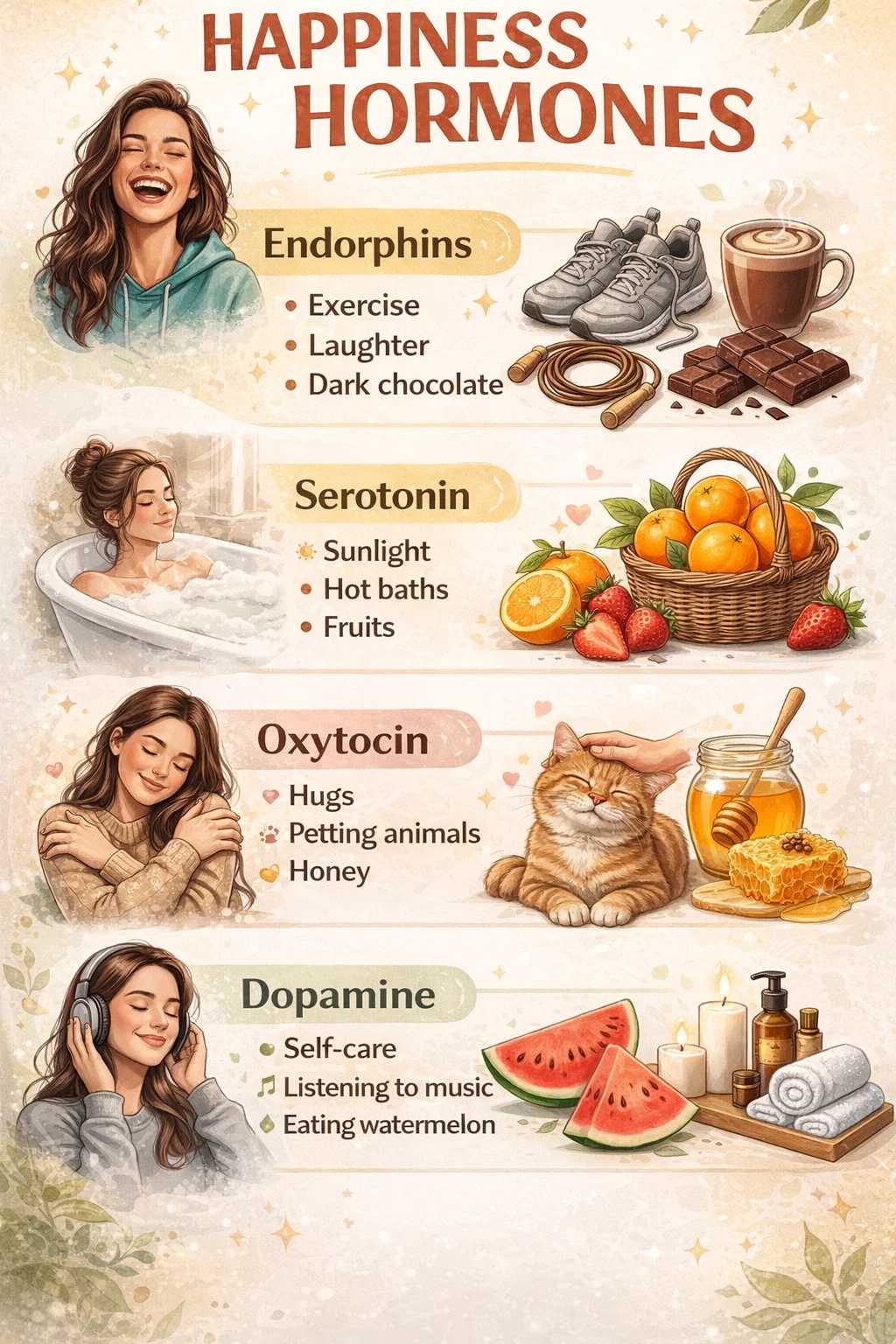
Natural Ways to Boost Your Happiness Hormones Endorphins, Serotonin, Oxytocin Dopamine
Understanding the internal chemistry of your brain is like holding the master key to your emotional well-being. Our bodies are equipped with a complex and beautiful messaging system made up of neurotransmitters and hormones that dictate how we feel, react, and process the world around us. Often referred to as the happiness hormones, these chemical messengers work behind the scenes to regulate everything from your sleep cycle to your social bonds. While life can certainly throw challenges your way, knowing how to naturally stimulate these four powerhouses can be a game-changer for your mental health and daily energy levels.
The Quartet of Joy: Understanding Your Brain Chemistry
The human brain produces a wide variety of chemicals, but when it comes to feeling good, four specific hormones take center stage: endorphins, serotonin, oxytocin, and dopamine. Each one serves a unique purpose and is triggered by different activities. By learning the specific functions of these hormones, you can begin to intentionally curate a lifestyle that supports a more consistent state of happiness and calm. This is not about forced positivity; it is about biological optimization. When you understand the triggers shown in our visual guide, you transition from being a passive observer of your moods to an active participant in your emotional health.
Endorphins: Your Internal Pain Reliever and Euphoria Booster
Endorphins are often associated with the famous runners high, but their role in the body goes far beyond athletic performance. These chemicals act as natural painkillers, helping the body manage stress and discomfort while producing a sense of well-being. Evolutionarily, endorphins allowed our ancestors to push through physical pain when survival was on the line. Today, we can tap into this reservoir of energy through several enjoyable and accessible channels.
The Power of Movement and Exercise
Physical activity is perhaps the most well-known way to release endorphins. When you engage in moderate to high-intensity exercise, your body releases these chemicals to help you cope with the physical exertion. This is why you often feel a sense of clarity and accomplishment after a workout, even if you felt sluggish before starting. Whether it is a brisk walk, a weightlifting session, or a yoga flow, getting your heart rate up is a direct signal to your brain to start the endorphin flow.
Laughter as a Biological Reset
There is deep truth in the saying that laughter is the best medicine. Genuine, deep laughter causes a physical contraction of muscles that triggers the release of endorphins. It reduces the levels of stress hormones like cortisol and adrenaline, making it an incredible tool for social bonding and personal stress relief. Seeking out comedy, spending time with funny friends, or simply finding the humor in daily life can provide a significant biological boost.
Indulging in Cocoa and Dark Chocolate
Food also plays a role in our hormonal health. Cocoa contains compounds that stimulate the brain to release endorphins. Choosing high-quality dark chocolate with a high cocoa percentage can offer a quick and delicious mood lift. It provides a sensory experience that combines taste and chemistry, proving that a little indulgence can actually be part of a healthy wellness routine.
Serotonin: The Mood Stabilizer and Confidence Builder
Serotonin is the heavy hitter of emotional stability. It helps regulate your mood, sleep, appetite, and even your ability to learn and remember. High levels of serotonin are linked to feelings of confidence and belonging, while low levels are often associated with anxiety and irritability. Because a large portion of serotonin is actually produced in the gut, your lifestyle choices and environment are crucial to maintaining healthy levels.
The Vital Importance of Sunlight
Exposure to natural light is one of the most effective ways to boost serotonin. When sunlight hits your skin and eyes, it cues the brain to produce this vital hormone. This is why many people feel a dip in their mood during winter months or when they spend too much time indoors. Aiming for at least fifteen to twenty minutes of morning sun can set your circadian rhythm and ensure your serotonin production is on track for the day.
Hydrotherapy and the Ritual of a Hot Bath
The sensation of warmth on the body can have a profound effect on the nervous system. Taking a hot bath is more than just a hygiene ritual; it is a form of self-care that promotes relaxation and serotonin release. The combination of warmth and solitude allows the mind to decompress, signaling to the body that it is safe to relax and recharge.
Nourishing Your Body with Fresh Fruit
Dietary choices directly impact your brain. Fruits, especially those rich in carbohydrates and specific amino acids like tryptophan, help facilitate the production of serotonin. Integrating a variety of colorful fruits into your daily meals ensures that your body has the raw materials it needs to synthesize the chemicals that keep you feeling balanced and calm.
Oxytocin: The Cuddle Hormone and Foundation of Trust
Often called the love hormone or the cuddle hormone, oxytocin is essential for creating social bonds and building trust. It is released during physical touch, social interaction, and even through acts of kindness. Oxytocin is what makes us feel connected to others and provides a sense of security and safety in our relationships.
The Simple Magic of Hugs
Human touch is a fundamental need. A long, heartfelt hug can lower blood pressure and immediately increase oxytocin levels. This physical connection reduces feelings of loneliness and fosters a sense of intimacy and support. In a digital world, making time for physical presence and touch is more important than ever for our emotional health.
The Healing Bond with Animals
You do not need human interaction alone to trigger oxytocin. Spending time with pets is an incredible way to boost this hormone. The simple act of petting a cat or playing with a dog creates a feedback loop of affection that benefits both the human and the animal. Pets provide unconditional love, which is a powerful catalyst for emotional well-being.
The Sweetness of Honey and Shared Meals
While oxytocin is primarily about connection, the act of nurturing oneself and others with food can also play a role. Using natural sweeteners like honey and enjoying comforting, healthy foods can create a sense of internal warmth and satisfaction. Sharing these treats with others further enhances the oxytocin release through the social aspect of dining.
Dopamine: The Reward System and Driver of Motivation
Dopamine is the hormone of anticipation and achievement. It is what drives you to set goals and gives you that rush of satisfaction when you reach them. It is heavily involved in the brains reward system, helping us stay motivated and focused on the tasks at hand. However, it is important to seek out healthy sources of dopamine rather than relying on quick, addictive fixes.
Self-Care as a Reward
Engaging in intentional self-care routines provides a steady stream of dopamine. Whether it is a skincare routine, a grooming session, or simply taking time to organize your space, these small wins signal to the brain that you are looking after yourself. Completing these small tasks provides a sense of order and accomplishment that keeps your motivation high.
The Rhythmic Influence of Music
Listening to music you love is one of the fastest ways to get a dopamine hit. Music has a unique ability to stimulate the reward centers of the brain, evoking strong emotions and even physical sensations like chills. Creating playlists for different moods or activities can help you manage your energy and focus throughout the day.
Hydration and Nutrition through Watermelon
Watermelon is a fantastic food for dopamine support because it contains vitamin B6, which is necessary for the production of several neurotransmitters. Its high water content also keeps you hydrated, which is essential for cognitive function. When your brain is properly fueled and hydrated, it is much easier to maintain the focus and drive associated with healthy dopamine levels.
Creating a Personalized Happiness Routine
The beauty of understanding these four hormones is that you can mix and match activities to suit your specific needs. If you are feeling lonely, you might prioritize oxytocin-heavy activities like calling a friend or spending time with a pet. If you feel stuck and unmotivated, focusing on dopamine triggers through music and small task completion can help get you back on track. By looking at the visual prompts provided, you can create a daily checklist that ensures you are touching on each of these biological pillars.
It is also helpful to recognize that these hormones often work in tandem. For example, a group fitness class can provide endorphins from the exercise, serotonin from the movement, oxytocin from the social interaction, and dopamine from completing the session. Finding activities that offer multiple benefits is an efficient way to support your mental health.
Conclusion: Empowering Your Mental Well-Being
Taking control of your happiness does not always require massive life changes or expensive interventions. Sometimes, the most profound shifts come from the smallest daily habits. By intentionally incorporating exercise, laughter, sunlight, touch, and music into your life, you are providing your brain with the environment it needs to thrive. These happiness hormones are natural resources that you have access to every single day.
As you move forward, try to view your self-care not as a luxury, but as a biological necessity. Pay attention to how your body and mind feel after trying the different triggers mentioned today. Whether it is a morning walk in the sun or a quiet evening with a hot bath and your favorite album, these moments are building blocks for a more resilient and joyful life. Start small, be consistent, and watch as your internal chemistry begins to work in your favor, creating a lasting foundation for mental and emotional wellness.