Epsom Salt Foot Detox Bath Recipe for Softer Feet in 30 Minutes
A warm foot soak can feel like a small luxury, especially when your feet are tired, dry, or in need of a little extra care. A salt detox bath for feet is one of those simple self-care rituals that looks easy, feels relaxing, and fits beautifully into an at-home spa routine. With ingredients like Epsom salt, sea salt, baking soda, apple cider vinegar, and optional essential oils, this type of soak is often shared as a comforting way to refresh the feet and unwind after a long day.
The visual idea behind this foot bath is clear: soak your feet for around 30 minutes and enjoy the soothing, cleansing, spa-like experience. While the dramatic color transformation shown in many foot detox graphics can be eye-catching, the real value of a salt foot soak is more practical and grounded. Warm water can help relax the feet, salts can soften rough skin, and the ritual itself can support a calmer evening routine.
Key Takeaways
- A salt foot bath is a simple at-home spa idea for tired feet.
- Epsom salt, sea salt, and baking soda are common ingredients in relaxing foot soaks.
- Warm water helps create a calming, soothing experience.
- Essential oils can add fragrance and a spa-like feel when used carefully.
- A 20 to 30 minute soak is usually enough for a refreshing foot care routine.
- Claims about “detox color changes” should be viewed with caution.
What Is a Salt Detox Foot Bath?
A salt detox foot bath is a warm foot soak made with mineral salts and other household ingredients. The most common version includes Epsom salt, sea salt, baking soda, and sometimes apple cider vinegar or essential oils. The goal is to create a relaxing soak that helps soften the feet, freshen the skin, and provide a comforting break from daily stress.
The word “detox” is often used in wellness content because it sounds refreshing and restorative. However, it is important to understand what a foot soak can realistically do. A warm salt bath may help cleanse the surface of the skin, loosen dead skin, reduce foot odor temporarily, and encourage relaxation. It should not be treated as a medical detox treatment or a cure for health conditions.
Important: A salt foot soak can be a wonderful self-care ritual, but it does not pull toxins out of the body in the way many viral detox graphics suggest. Think of it as a relaxing foot care practice rather than a medical treatment.
Why Epsom Salt Is Popular for Foot Soaks
Epsom salt is one of the most recognizable ingredients in foot bath recipes. It dissolves easily in warm water and gives the soak a mineral-rich feel. Many people enjoy Epsom salt baths because they make the water feel soft and soothing, which can be especially pleasant after standing, walking, exercising, or wearing tight shoes.
In a foot soak, Epsom salt is commonly used to support relaxation and skin softening. When paired with warm water, it creates a gentle soaking environment that can help loosen dry patches around the heels, toes, and soles. This makes it easier to follow up with a pumice stone, foot file, or moisturizer.
Sea Salt for a Clean, Spa-Like Feel
Sea salt is another ingredient often featured in salt bath recipes. It adds texture, minerals, and a classic spa-like quality to the soak. While sea salt should not be expected to perform miracles, it can help create a cleansing bath that feels refreshing on the feet.
If your feet feel sweaty or tired, a sea salt foot soak can be a nice way to reset. The warm water helps rinse away surface impurities, while the salt adds a crisp, clean bathing experience. For best results, fully dissolve the salt before placing your feet in the tub.
Baking Soda for Softness and Freshness
Baking soda is often included in DIY foot soak recipes because it is inexpensive, easy to find, and commonly associated with freshness. In a foot bath, it can make the water feel silky and may help with temporary odor control.
It is also useful before exfoliation. After soaking, the skin on the heels and soles may feel softer, making it easier to gently remove rough or flaky areas. The key word is gently. Over-scrubbing can irritate the skin, especially if your feet are sensitive.
A Simple Salt Foot Bath Recipe Inspired by the Visual
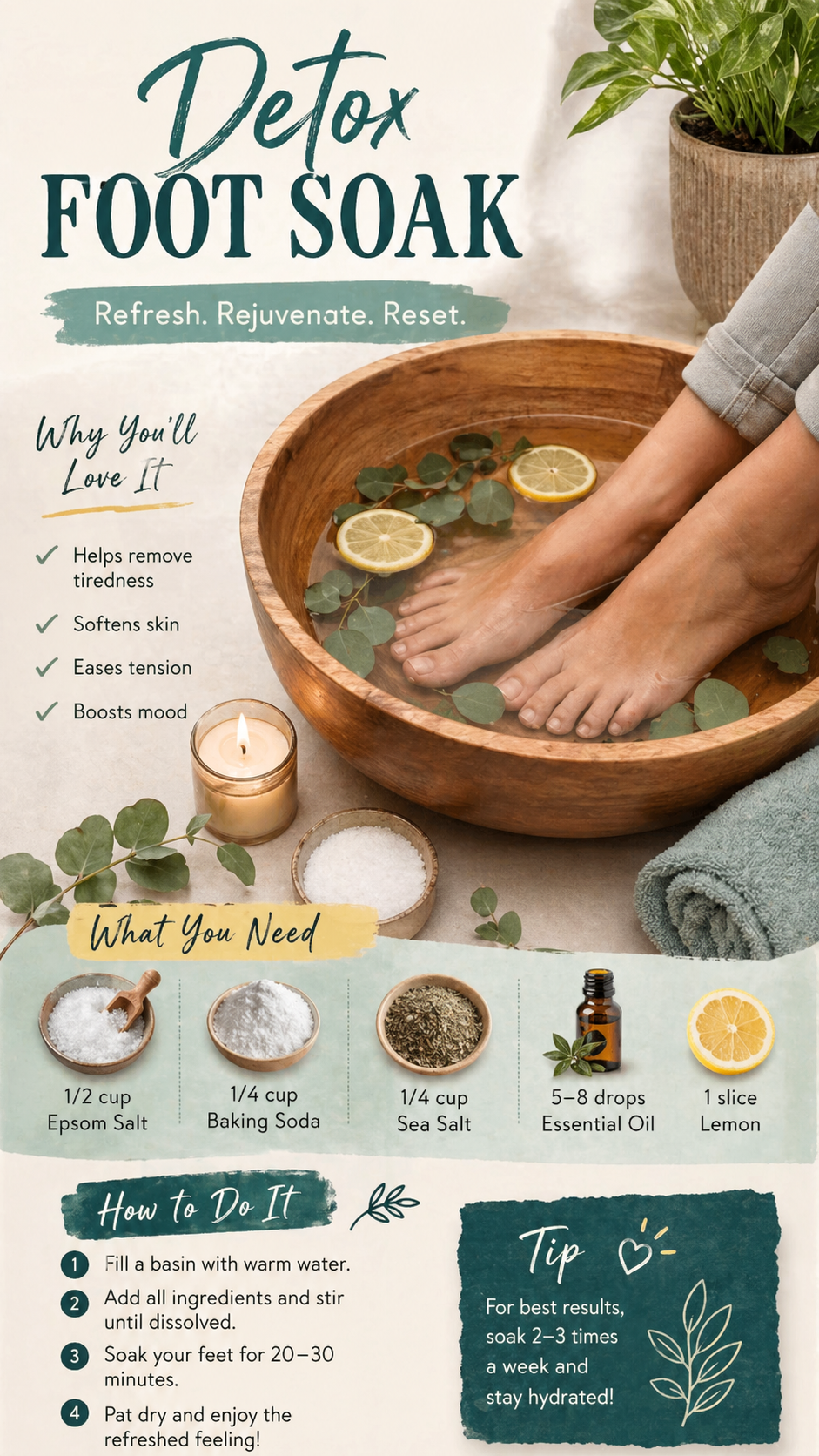
The recipe shown centers around a generous blend of salts and baking soda, with essential oils as an optional addition. Here is a practical version you can use as a starting point for a relaxing foot soak at home.
- 1 cup Epsom salt
- 1 cup sea salt
- 1 to 2 cups baking soda
- Warm water, enough to cover the feet
- Optional: a few drops of skin-safe essential oil
- Optional: a small splash of apple cider vinegar
To prepare the soak, dissolve the dry ingredients in very warm water first, then add enough comfortable warm water to fill your foot basin. Always test the temperature before putting your feet in. The water should feel warm and soothing, not hot.
Pro Tip: If you use essential oils, mix them with a carrier oil or a dispersing ingredient before adding them to water. Essential oils do not naturally dissolve in water and may irritate skin if they sit directly on the surface.
How Long Should You Soak Your Feet?
The visual suggests a 30-minute soak, which is a common timeframe for foot bath routines. For many people, 20 to 30 minutes is enough to soften the feet and create a relaxing experience. If you are new to foot soaks or have sensitive skin, start with 10 to 15 minutes and see how your skin feels afterward.
Longer is not always better. Soaking for too long can leave the skin overly soft or dry once the water evaporates. The best routine is simple: soak, gently pat dry, exfoliate only if needed, then moisturize.
Step-by-Step Foot Soak Routine
- Fill a clean foot basin with warm water.
- Dissolve the Epsom salt, sea salt, and baking soda.
- Add optional essential oils or apple cider vinegar if your skin tolerates them.
- Soak your feet for 20 to 30 minutes.
- Pat your feet dry with a clean towel.
- Apply a rich foot cream or body moisturizer.
- Wear cotton socks for extra softness.
What About the Color Transformation?
One of the most attention-grabbing parts of the visual is the changing water color over time. It shows the foot bath shifting from clear blue to yellow, orange, brown, and greenish tones. This type of image is common in viral foot detox content because it creates the impression that impurities are leaving the body.
In real life, water color changes can happen for many ordinary reasons. Ingredients may tint the water. Skin oils, dirt, dead skin, soap residue, or natural minerals can affect the appearance of the soak. If a special device is used, reactions with metal components or minerals can also change the water color. A darker bath does not automatically prove that toxins have been removed from the body.
Quick Note
Color change may look dramatic, but it is not the best way to judge whether a foot soak is useful. Focus instead on how your feet feel afterward: softer, cleaner, calmer, and more comfortable.
Benefits of a Warm Salt Foot Soak
A well-prepared foot soak can offer several everyday benefits. These benefits are mostly related to comfort, hygiene, and relaxation rather than deep internal detoxing.
It Can Help Relax Tired Feet
Warm water is naturally comforting. After a long day on your feet, soaking can help you slow down and release tension. The warmth may also make stiff feet feel more flexible and comfortable.
It Can Soften Rough Skin
Dry heels and rough soles are common, especially if you walk barefoot, wear sandals, or spend long hours standing. A salt and baking soda foot bath can soften the outer layer of dry skin, making it easier to moisturize effectively.
It Can Support a Better Pedicure Routine
A foot soak is a great first step before trimming nails, pushing back cuticles gently, exfoliating dry patches, or applying foot cream. It helps prepare the skin and nails so the rest of your foot care routine feels easier.
It Can Create a Calming Self-Care Moment
Sometimes the biggest benefit is the pause itself. A warm foot bath gives you permission to sit still, breathe, and enjoy a quiet moment. Add soft music, a towel, and your favorite moisturizer, and you have a simple at-home spa experience without much effort.
Important: For the best results, moisturize immediately after soaking. Water can soften the skin temporarily, but a cream or balm helps seal in that softness and keeps your feet feeling smooth longer.
Essential Oils: Optional, Fragrant, and Best Used Carefully
The visual includes essential oils as an optional ingredient, which makes sense for a spa-inspired foot soak. Essential oils can add a pleasant scent and make the routine feel more luxurious. Lavender, peppermint, tea tree, eucalyptus, and lemon are popular choices in foot care content.
However, essential oils are concentrated. A few drops are usually enough. Avoid adding large amounts, and do not use oils that irritate your skin. If you have sensitive skin, allergies, eczema, open cuts, or cracked heels, skip essential oils or ask a qualified professional before using them.
Best Essential Oil Ideas for Foot Soaks
- Lavender: Great for a calming evening soak.
- Peppermint: Cooling and refreshing, but use sparingly.
- Tea tree: Common in foot care routines, but may be strong for sensitive skin.
- Eucalyptus: Fresh and spa-like.
- Lemon: Bright and clean-smelling, but may irritate some skin types.
Should You Add Apple Cider Vinegar?
The instructions in the visual mention apple cider vinegar. This ingredient is often used in DIY foot soak recipes because it has a sharp, clean scent and is commonly associated with freshness. Some people like it for foot odor routines, while others find it too strong or drying.
If you want to try apple cider vinegar, keep the amount small. A splash in a basin of warm water is usually enough for a mild soak. Avoid vinegar if you have broken skin, irritation, cuts, or very dry cracked heels, because it may sting.
Who Should Be Careful With Foot Soaks?
Foot baths are simple, but they are not ideal for everyone. People with diabetes, poor circulation, nerve issues, skin infections, open wounds, or severe swelling should be cautious with soaking routines. Warm water can feel different if you have reduced sensation in your feet, and small skin issues can become more serious if ignored.
If your feet are painful, numb, infected, cracked deeply, or unusually swollen, a foot soak should not replace proper care. In those cases, it is better to check with a healthcare professional.
Safety Tips for a Better Soak
- Use warm water, not boiling water, for the actual soak.
- Test the temperature with your hand before soaking.
- Keep the basin clean before and after use.
- Do not soak open cuts, blisters, or irritated skin.
- Stop if you feel burning, itching, dizziness, or discomfort.
- Moisturize after soaking to prevent dryness.
How to Turn a Foot Soak Into an At-Home Spa Ritual
A salt foot bath becomes even more enjoyable when you treat it like a mini spa session. You do not need expensive tools. A basin, warm water, a towel, and a good moisturizer are enough to create a relaxing setup.
Choose a comfortable spot where you can sit for 20 to 30 minutes. Keep a towel nearby so you do not have to walk around with wet feet. You can also prepare a book, podcast, calming playlist, or cup of herbal tea to make the experience more peaceful.
After-Soak Foot Care
Once your soak is finished, gently dry your feet, especially between the toes. If your heels feel rough, use a gentle foot file while the skin is softened. Do not remove too much skin at once. Finish with a thick moisturizer, then put on breathable socks to help lock in hydration.
This simple aftercare step can make a big difference. The soak softens the feet, but the moisturizer helps keep them comfortable and smooth.
At a Glance
- Best soak time: 20 to 30 minutes.
- Best water temperature: warm and comfortable.
- Best follow-up: dry well, moisturize, and wear socks.
- Best mindset: relaxation first, detox claims second.
Common Mistakes to Avoid
One common mistake is using water that is too hot. The recipe-style visual mentions boiling water to dissolve ingredients, but boiling water should never be used directly on the feet. If you use hot water to dissolve salts, let it cool and dilute it with warm water before soaking.
Another mistake is using too many strong ingredients at once. Salt, baking soda, vinegar, and essential oils can be a lot for sensitive skin. Start simple. You can always adjust the recipe later based on how your feet respond.
Finally, avoid expecting instant transformation. A foot soak can make your feet feel refreshed, but dry heels and rough skin usually improve with consistent care. Weekly soaks, gentle exfoliation, and regular moisturizing are more effective than one intense session.
Conclusion: A Simple Foot Soak Can Be a Powerful Self-Care Habit
A salt detox bath for feet is best enjoyed as a relaxing, skin-softening, at-home spa ritual. The combination of Epsom salt, sea salt, baking soda, warm water, and optional essential oils creates a soothing soak that can help tired feet feel refreshed. While bold detox claims and dramatic water color changes should be approached with a healthy dose of skepticism, the comfort of a warm foot bath is real.
Use this ritual when your feet need attention, when your evening needs a calming pause, or when you want an easy self-care idea that does not require much preparation. Keep it gentle, keep it safe, and always follow with moisturizer for the softest results.
Tags
Foot Soak Epsom Salt Bath Foot Detox At Home Spa Natural Foot Care Self Care Routine DIY Beauty Tips