How to Get Rid of Gnats in the House Naturally DIY Gnat Traps Fungus Gnat Tips
Gnats may be tiny, but they can quickly become one of the most frustrating household pests. Whether they are hovering around your kitchen, gathering near houseplants, or appearing from sink drains, these small flying insects can multiply rapidly if the source of the problem is not addressed. Fortunately, you do not need harsh chemicals to regain control. Simple DIY solutions and a few smart prevention habits can dramatically reduce gnat populations while keeping your home fresh and comfortable.
Natural gnat control focuses on eliminating breeding sites, trapping adult insects, and preventing future infestations. With common household ingredients like apple cider vinegar, dish soap, baking soda, lemons, and hot water, you can create effective remedies that are affordable, easy to use, and safe for most homes.
Key Takeaways
- Identify where gnats are breeding before treating the problem.
- Apple cider vinegar traps help reduce adult gnat populations.
- Houseplants and drains are the most common indoor breeding areas.
- Natural cleaning routines help prevent recurring infestations.
- Consistent maintenance is more effective than one-time treatments.
Why Gnats Suddenly Appear Indoors
Many homeowners are surprised by how quickly gnats seem to appear. In reality, these insects are usually attracted to moisture, organic matter, and standing water. Even a small amount of damp soil or food residue can create an ideal breeding environment.
Common indoor attractants include:
- Overwatered houseplants
- Dirty sink drains
- Fruit left on countertops
- Garbage bins with food residue
- Standing water around the home
- Compost containers
Important: The fastest way to eliminate gnats is not simply killing the flying adults. Finding and removing their breeding source prevents new generations from appearing every few days.
Identify the Type of Gnat
Different gnats prefer different environments. Understanding where they are coming from helps you choose the most effective treatment.
Fungus Gnats
These tiny dark insects are commonly found around indoor plants. They lay eggs in damp potting soil where larvae feed on organic material.
Drain Gnats
Drain gnats are attracted to the organic buildup inside kitchen and bathroom drains. Moist conditions make these areas perfect breeding grounds.
Fruit Gnats
Often confused with fruit flies, these insects gather around ripened fruit, sugary liquids, and food waste.
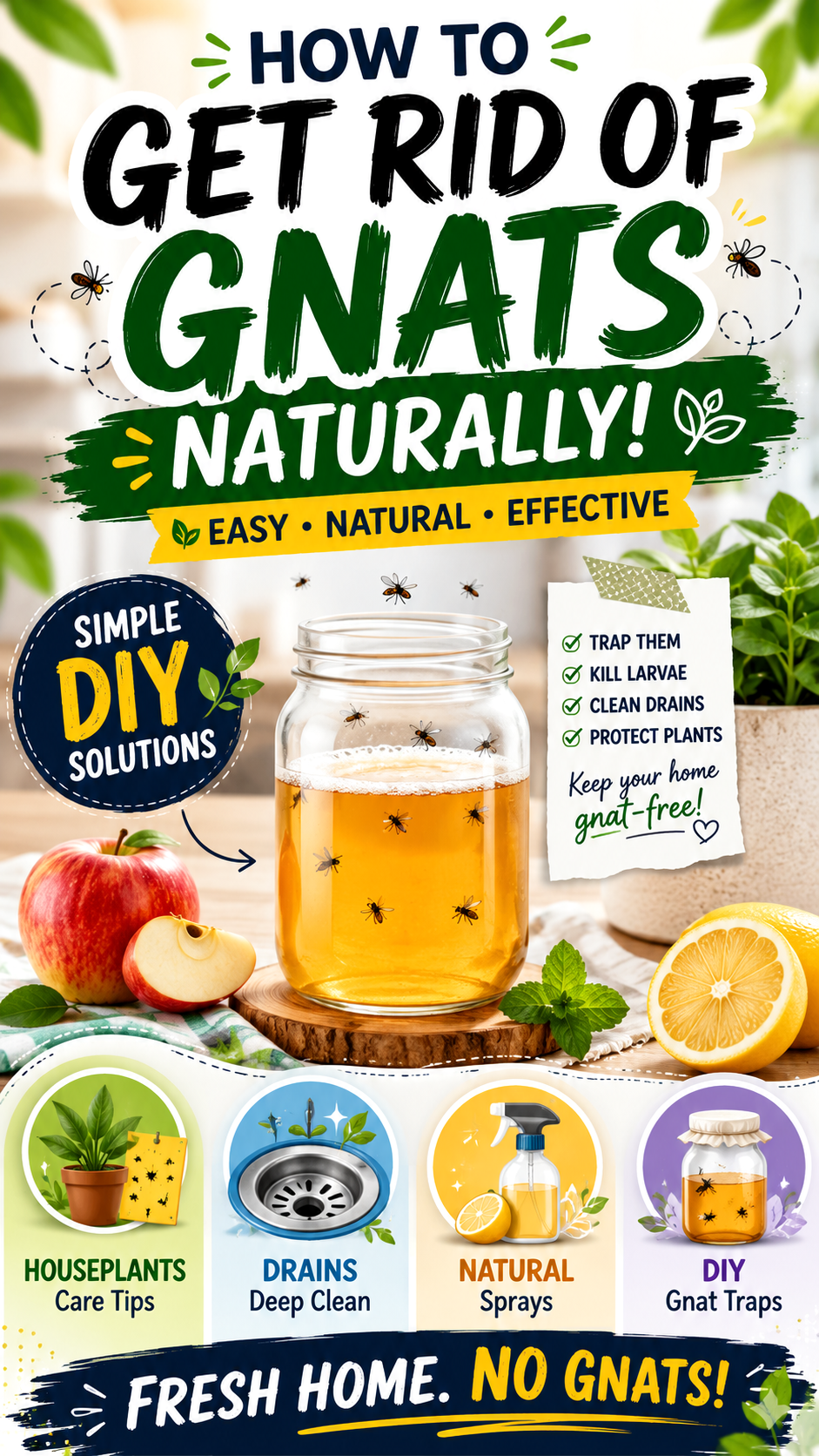
Make an Easy DIY Apple Cider Vinegar Trap
One of the simplest natural solutions uses ingredients already found in many kitchens.
What You Need
- Apple cider vinegar
- A mason jar or small bowl
- A few drops of liquid dish soap
How It Works
The vinegar attracts the gnats while the dish soap breaks the liquid’s surface tension. Instead of landing safely, the insects become trapped.
- Fill the container about halfway with apple cider vinegar.
- Add two or three drops of dish soap.
- Place the trap near plants, fruit bowls, or sink areas.
- Replace the mixture every few days for the best results.
This inexpensive trap can noticeably reduce adult gnat activity within several days when combined with proper cleaning.
Natural Remedies for Fungus Gnats
Indoor plants often become the primary source of recurring infestations because consistently damp soil provides an ideal environment for eggs and larvae.
Allow Soil to Dry Slightly
Most fungus gnats prefer moist conditions. Allowing the top inch of soil to dry before watering again makes the environment less attractive.
Remove Dead Leaves
Decaying organic matter provides food for larvae. Regular pruning helps reduce available food sources.
Use Sticky Traps
Yellow sticky traps placed near pots capture flying adults before they lay additional eggs.
Expert Insight
Healthy watering habits are one of the most effective long-term solutions for fungus gnats. Avoid watering on a fixed schedule. Instead, check the soil moisture first and water only when necessary.
How to Clean Drains to Remove Gnats
Kitchen and bathroom drains collect grease, soap residue, and organic debris that attract drain gnats.
Simple Cleaning Method
- Pour baking soda into the drain.
- Add vinegar to create a cleaning reaction.
- Allow the mixture to sit for several minutes.
- Flush thoroughly with hot water.
Repeat this routine several times during the week if the infestation is severe.
Pro Tip: Even after adult gnats disappear, continue cleaning drains weekly. Eggs hidden inside organic buildup can hatch later if maintenance stops too soon.
Natural Lemon Spray for Light Gnat Activity
Citrus scents can help freshen indoor spaces while complementing other natural pest-control methods. A homemade lemon spray is simple to prepare and works well as part of an overall prevention routine.
Basic Ingredients
- Fresh lemon juice
- Water
- Spray bottle
Lightly mist areas where gnats gather, avoiding delicate surfaces or plants that may be sensitive to acidic solutions.
Prevent Gnats Before They Return
Natural remedies work best when combined with consistent household maintenance.
Keep Kitchens Clean
- Store ripe fruit properly.
- Empty garbage regularly.
- Clean spills immediately.
- Wash recycling containers.
Maintain Healthy Houseplants
- Avoid excessive watering.
- Improve drainage.
- Remove fallen leaves.
- Inspect new plants before bringing them indoors.
Improve Ventilation
Good airflow helps reduce excess moisture. Open windows when weather permits and use exhaust fans in kitchens and bathrooms.
Common Mistakes That Keep Gnats Coming Back
Many people successfully eliminate adult insects only to see another wave appear days later. This usually happens because the breeding source remains untouched.
- Overwatering plants repeatedly
- Ignoring sink drain buildup
- Leaving standing water indoors
- Using only sprays without removing larvae
- Stopping treatment too early
Important: Consistency matters more than intensity. A combination of cleaning, moisture control, and simple DIY traps usually produces better long-term results than relying on one solution alone.
Frequently Asked Questions
How long does it take to get rid of gnats?
Minor infestations often improve within a few days, while larger infestations may require several weeks of consistent treatment and prevention.
Can vinegar alone eliminate gnats?
Vinegar attracts gnats, but adding a small amount of dish soap makes traps much more effective because it prevents insects from escaping.
Why do fungus gnats keep returning?
Repeated overwatering and damp soil allow larvae to continue developing. Adjusting watering habits is one of the most important long-term solutions.
Should every drain be cleaned?
Yes. Even drains that are rarely used can accumulate organic matter and become breeding sites.
Quick Points
- Find and eliminate breeding sources first.
- Use apple cider vinegar traps for adult gnats.
- Reduce excess moisture around plants and drains.
- Clean kitchens and sinks consistently.
- Maintain prevention habits for lasting results.
Conclusion
Getting rid of gnats naturally is completely achievable with a combination of smart cleaning habits, moisture control, and easy DIY remedies. Apple cider vinegar traps, regular drain maintenance, proper plant care, and improved household hygiene work together to stop infestations at their source. Rather than relying on temporary fixes, focus on preventing breeding conditions so your home stays comfortable and free from unwanted flying pests throughout the year.
Tags
Gnat Control DIY Pest Control Fungus Gnats Natural Cleaning Houseplant Care Drain Cleaning Home Cleaning Tips Indoor Pest Prevention