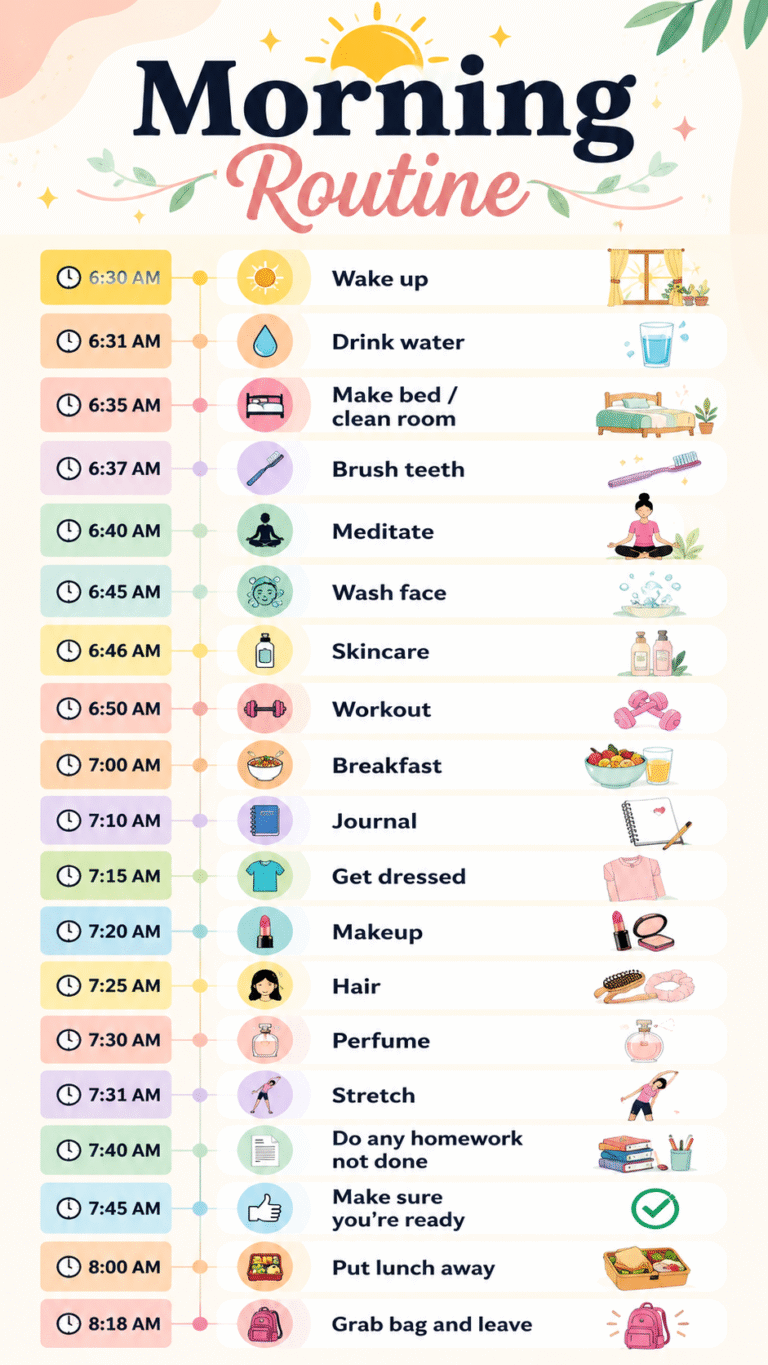
Pretty Girl Night Routine Checklist for Self Care, Productivity Better Sleep
A consistent evening routine can transform the way you feel, sleep, and show up each day. While mornings often get most of the attention, the hours before bed are just as important for supporting mental clarity, emotional balance, productivity, and overall well-being. A thoughtful nighttime routine helps you slow down, release stress, reflect on your day, and prepare for tomorrow with intention.
Whether you are working toward personal growth, building healthier habits, improving your sleep quality, or simply creating more peace in your daily life, establishing a structured evening routine can make a meaningful difference. By combining relaxation, reflection, preparation, self-care, and quality sleep habits, you can create an environment that supports both your mind and body.
Key Takeaways
- A consistent nighttime routine improves sleep quality and overall wellness.
- Reducing screen time before bed helps calm the mind.
- Reflection and gratitude practices encourage positive thinking.
- Preparing for tomorrow reduces morning stress.
- Self-care rituals support confidence and relaxation.
- Intentional sleep habits help improve energy and productivity.
Why a Night Routine Matters More Than You Think
Many people spend their evenings scrolling through social media, watching television until late hours, or completing last-minute tasks. While these activities may feel relaxing in the moment, they often leave the mind overstimulated and make it harder to achieve restful sleep.
A dedicated nighttime routine creates a transition between the busy demands of the day and the restorative process of sleep. This transition signals to your brain that it is time to relax, recharge, and prepare for a new day.
Important: Your evening habits often determine how you feel the next morning. Small actions taken before bed can significantly influence sleep quality, stress levels, focus, and overall productivity.
Instead of viewing bedtime as simply the end of the day, think of it as an opportunity to invest in your future self. Every intentional choice made during your evening routine contributes to a healthier and more balanced lifestyle.
Step 1: Unwind and Decompress
The first stage of a successful evening routine is creating space to unwind. After a busy day filled with responsibilities, your body and mind need time to shift into a calmer state.
Reduce Screen Exposure
Digital devices expose us to constant stimulation. Notifications, emails, videos, and social feeds can keep the brain active long after we intend to sleep.
Consider limiting screen time at least 30 to 60 minutes before bed. During this period, focus on activities that encourage relaxation instead of stimulation.
Create a Cozy Environment
Lighting plays an important role in preparing for sleep. Bright lights can signal wakefulness, while softer lighting creates a calming atmosphere.
- Dim overhead lights.
- Use warm-toned lamps.
- Light a candle safely if desired.
- Reduce unnecessary noise.
Refresh and Reset
A warm shower or simple face wash can help wash away the stress of the day. Beyond hygiene benefits, these rituals create a psychological cue that bedtime is approaching.
Many people also enjoy a warm herbal tea or comforting beverage during this stage. The goal is not only physical relaxation but also mental decompression.
Step 2: Reflect and Reset Your Mindset
Reflection is a powerful habit that allows you to learn from your experiences while maintaining a positive perspective.
Instead of rushing into bed with unresolved thoughts, spend a few minutes evaluating your day.
Ask Yourself Meaningful Questions
Simple reflection prompts can provide valuable insight:
- What went well today?
- What challenge did I overcome?
- What can I improve tomorrow?
- What lesson did I learn?
These questions encourage growth without focusing excessively on mistakes or setbacks.
Build a Journaling Habit
Journaling is one of the most effective ways to process emotions, organize thoughts, and reduce mental clutter.
You do not need to write pages of content every night. Even recording three to five thoughts can help clear your mind and create a sense of closure before sleep.
Why This Matters
- Reflection helps identify personal growth opportunities.
- Journaling reduces mental overwhelm.
- Gratitude practices improve emotional well-being.
Practice Gratitude
Ending the day with gratitude shifts attention toward positive experiences. Even on difficult days, identifying a few things you appreciate can improve your outlook.
Try listing three things you are grateful for each night. These can be simple moments, achievements, relationships, or experiences.
Pro Tip: Consistent gratitude journaling can help train your mind to notice positive moments more frequently throughout the day, creating a lasting mindset shift.
Step 3: Prepare for Tomorrow
One of the easiest ways to reduce morning stress is to spend a few minutes preparing the night before.
Many people underestimate how much mental energy is consumed by making small decisions early in the morning.
Plan Your Outfit
Selecting clothes in advance saves time and removes unnecessary decision-making during busy mornings.
This simple habit can help create a smoother and more efficient start to the day.
Prepare Meals and Snacks
Meal preparation does not have to be complicated. Preparing breakfast ingredients, lunch containers, or healthy snacks can make healthy choices easier throughout the day.
Even small steps can improve consistency and reduce reliance on convenience foods.
Review Your Schedule
Take a few moments to check your calendar, appointments, and to-do list.
Knowing what lies ahead creates a sense of control and reduces anxiety about upcoming responsibilities.
Pack Essentials Ahead of Time
Whether you are heading to work, school, the gym, or running errands, preparing bags and essentials in advance eliminates unnecessary morning rushing.
Small preparations often have a surprisingly large impact on daily productivity.
Step 4: Prioritize Self-Care and Personal Wellness
Self-care is not about perfection. It is about consistently making time to support your physical, mental, and emotional well-being.
Follow a Simple Skincare Routine
Nighttime is an excellent opportunity to care for your skin. A basic routine may include cleansing, moisturizing, and applying products suited to your individual needs.
More importantly, skincare creates a calming ritual that encourages mindfulness and consistency.
Hydrate and Nourish Your Body
Applying body lotion or oils can become a relaxing part of your evening routine while supporting healthy skin.
These small acts of care help create a stronger connection with your overall wellness goals.
Stretch or Practice Gentle Movement
Light stretching, yoga, or mobility exercises can release physical tension accumulated throughout the day.
- Reduce muscle tightness.
- Improve relaxation.
- Support flexibility.
- Encourage better sleep.
Even five to ten minutes of movement can help the body transition into rest mode.
Important: Self-care works best when approached consistently rather than perfectly. Small nightly habits practiced regularly often create greater results than occasional intensive routines.
Use Positive Affirmations
Affirmations encourage supportive self-talk and reinforce personal growth goals.
Repeating a simple statement such as “I am becoming my ideal self” can help create a more encouraging internal dialogue before sleep.
Step 5: Sleep with Intention
The final stage of a successful evening routine focuses on quality rest.
Sleep is not merely a passive activity. It is an active process that supports recovery, learning, emotional regulation, and overall health.
Release Daily Stress
Carrying unresolved worries into bed can make it difficult to fall asleep. Consider writing down concerns, practicing deep breathing, or simply acknowledging that the day is complete.
Allow yourself permission to rest without continuing to solve every problem before bedtime.
Read Before Sleep
Reading a few pages of a book can provide a peaceful transition into sleep. It encourages relaxation while reducing exposure to screens.
Choose content that feels calming rather than highly stimulating.
Put Your Phone Away
Many people use their phones as alarms, which can lead to late-night scrolling. Setting your alarm and placing your phone out of reach can help establish healthier boundaries.
Aim for Consistent Sleep
Most adults benefit from seven to nine hours of sleep each night. Consistency is often just as important as duration.
Going to bed and waking up at similar times helps support the body’s natural sleep cycle.
Creating a Routine That Fits Your Lifestyle
The best evening routine is one that feels realistic and sustainable. You do not need to implement every habit immediately.
Start with one or two practices that feel manageable and gradually build from there.
Some people may prioritize journaling and gratitude, while others focus on skincare, stretching, or preparing for the next day. Personalization is key.
The goal is not to create a perfect routine. The goal is to create a supportive routine that helps you feel calmer, healthier, and more prepared for daily life.
At a Glance
- Unwind by limiting screens and creating a relaxing environment.
- Reflect through journaling and gratitude practices.
- Prepare for tomorrow to reduce morning stress.
- Practice self-care with skincare and gentle movement.
- Prioritize quality sleep and consistent bedtime habits.
Conclusion
A well-designed nighttime routine is one of the simplest yet most powerful ways to improve your daily life. By dedicating time to relaxation, reflection, preparation, self-care, and intentional sleep habits, you create a foundation for greater wellness, productivity, and emotional balance.
Remember that lasting change comes from consistency rather than perfection. Even a few intentional habits practiced each evening can create meaningful improvements over time. As you build a routine that supports your unique goals and lifestyle, you may discover that your evenings become more peaceful and your mornings become more energized and focused.
Tags
Night Routine Self Care Healthy Habits Sleep Wellness Personal Growth Productivity Tips Mindful Living Bedtime Routine