9 Common Cooking Mistakes To Avoid For A Healthier Kitchen And Better Food Safety
Cooking is a beautiful blend of art and science, a daily ritual that brings nourishment and joy to our homes. However, many of our most common kitchen habits can actually be detrimental to both our health and the longevity of our favorite tools. While we often focus on recipes and ingredients, the chemical reactions happening between our food and our cookware are just as important. Understanding these interactions is the first step toward creating a safer, healthier kitchen environment for you and your family.
The Chemistry of Cookware: Why Certain Pairings Fail
Every time you turn on the stove, you are essentially conducting a chemistry experiment. Metals, plastics, and organic compounds react to heat and acidity in ways that are not always visible to the naked eye. When we pair highly acidic ingredients like tomatoes or lemons with reactive metals like aluminum or copper, we risk leaching metallic ions into our meals. This not only alters the flavor profile of the dish, giving it a tinny or metallic aftertaste, but it also poses long term health risks through metal accumulation in the body.
Similarly, the modern convenience of nonstick pans and plastic storage containers comes with a hidden cost. High temperatures can cause these materials to break down, releasing synthetic chemicals and microplastics directly into the steam and sauces of our dinner. By learning which pairings to avoid, you can ensure that the only things you are serving are fresh flavors and wholesome nutrition.
Reactive Metals and Acidic Ingredients
The Tomato and Aluminum Trap
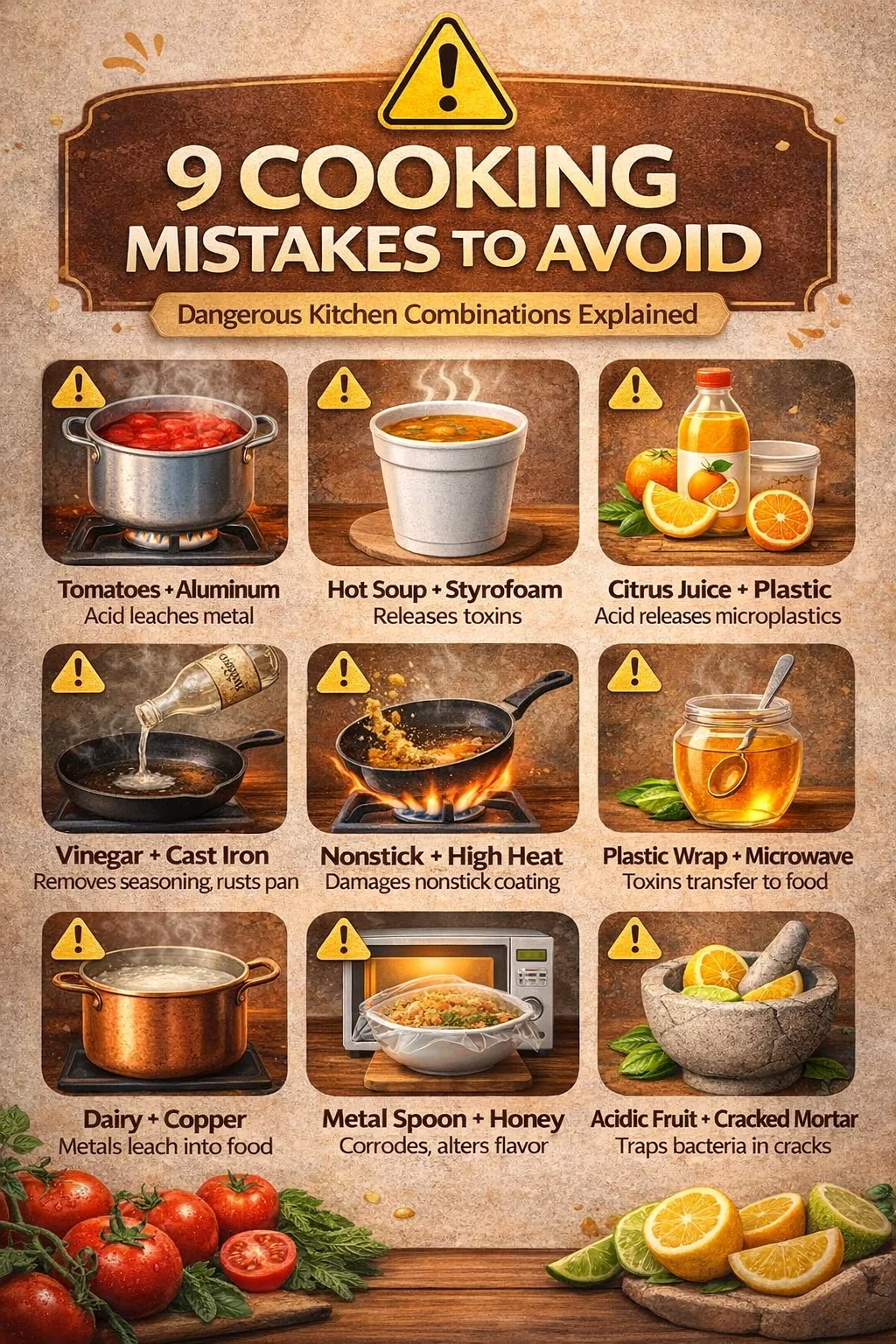
One of the most frequent mistakes in home kitchens is simmering a rich tomato sauce in an aluminum pot. Tomatoes are naturally high in acid, and when that acid sits against an untreated aluminum surface, it begins to dissolve the metal. This process is known as leaching. Over time, this can lead to a significant amount of aluminum ending up in your food. To keep your sauces vibrant and safe, always reach for stainless steel or enameled cast iron when working with acidic bases.
Copper Cookware and Dairy Risks
Copper is prized by professional chefs for its incredible heat conductivity, but it requires careful management. When unlined copper comes into contact with dairy products or acidic liquids, it creates a risk of metal contamination. While many modern copper pots are lined with stainless steel or tin to prevent this, older or damaged pieces can be dangerous. Always inspect the lining of your copper pots before whisking up a creamy bechamel or a custard.
Vinegar Versus Cast Iron
Cast iron is the workhorse of the kitchen, loved for its ability to develop a natural nonstick seasoning. However, that seasoning is essentially a layer of polymerized oil that can be stripped away by vinegar or heavy wine reductions. If you pour a vinegar based marinade directly into a cast iron skillet, you risk dissolving the protective coating and causing the iron to rust. This not only ruins the pan but also imparts a harsh, rusty flavor to your ingredients.
Heating Risks: Plastic, Foam, and Nonstick Surfaces
The Danger of Styrofoam and Hot Liquids
We have all been tempted to heat up a quick cup of soup in a styrofoam container, but this is a habit that should be avoided at all costs. Styrofoam is made from polystyrene, which can release harmful chemicals when exposed to high heat. When boiling hot liquid touches the foam, these toxins can migrate into your food. It is always worth the extra minute to transfer your soup into a ceramic or glass bowl before heating it.
Microplastics and Citrus Juice
Plastic bottles are ubiquitous, but they are not the best companions for citrus juices. The citric acid found in lemons, limes, and oranges can actually degrade certain types of plastic over time, leading to the shedding of microplastics into the juice. This is especially true if the juice is stored in the plastic for long periods or exposed to sunlight. Glass bottles are a much safer and more eco friendly alternative for your morning orange juice or lemonade.
Overheating Nonstick Coatings
Nonstick pans are incredible for delicate eggs and pancakes, but they are not designed for high heat searing. When a nonstick pan is heated to extreme temperatures, the coating can begin to break down and release fumes that are harmful to breathe and toxic if they enter the food. For high heat frying, it is better to use carbon steel or stainless steel, saving the nonstick surface for low to medium heat tasks.
Maintaining Food Safety in Daily Prep
Microwaving with Plastic Wrap
Covering a bowl with plastic wrap before popping it in the microwave is a common way to prevent splatters, but it can lead to chemical transfer. As the food steams, the heat causes the plastic to soften, and potentially harmful additives can drip down into your meal. A better solution is to use a glass lid or a simple paper towel to cover your dishes while reheating.
Honey and Metal Spoons
Many people are surprised to learn that honey should ideally be handled with wooden or plastic spoons rather than metal ones. Honey is naturally acidic, and prolonged contact with a metal spoon can cause the metal to corrode slightly. This interaction can alter the delicate enzymes and flavor profile of the honey. While a quick dip usually does not cause harm, storing a metal spoon inside a honey jar is a definite mistake.
The Hidden Bacteria in Cracked Mortars
A stone mortar and pestle is a fantastic tool for grinding spices and making pastes. However, as these tools age, they can develop small cracks or pits. These tiny crevices become the perfect breeding ground for bacteria, especially if you are grinding wet ingredients like garlic or herbs. It is essential to scrub your mortar thoroughly and inspect it regularly for any structural damage that might trap food particles.
Practical Tips for a Healthier Kitchen
- Choose Glass or Ceramic: These materials are non reactive and safe for both high heat and acidic storage.
- Monitor Heat Levels: Never leave an empty pan on a hot burner, especially if it has a nonstick coating.
- Upgrade Your Storage: Replace old plastic containers with glass versions to minimize exposure to microplastics.
- Check Your Tools: Regularly inspect your pots, pans, and wooden utensils for signs of wear, cracks, or peeling coatings.
Cultivating a Mindful Cooking Practice
Transitioning to a safer kitchen does not happen overnight, and it does not require throwing away everything you own. It starts with awareness. By simply changing which pot you use for your marinara sauce or choosing glass over plastic for your leftovers, you are making a significant investment in your long term wellness. Cooking is meant to be a source of health, and by aligning your tools with the science of food safety, you ensure that every meal you serve is as safe as it is delicious.
As you continue your culinary journey, remember that the best tools are the ones that work in harmony with your ingredients. Taking the time to care for your cookware and choosing the right materials for the job will not only make your food taste better but will also provide peace of mind for you and your loved ones. Happy, healthy cooking begins with the choices you make before the stove is even turned on.