9 Daily Habits That Damage Your Body Organs and How to Protect Your Health
Your body is a masterpiece of biological engineering. Every single second, your organs work in perfect harmony to keep you breathing, thinking, and moving. However, in our fast paced modern world, it is incredibly easy to overlook the small daily habits that might be quietly undermining this complex system. We often wait until we feel a symptom before we pay attention to our health, but true wellness is about proactive care. By understanding what causes our organs to deteriorate, we can make informed choices that extend our vitality and improve our quality of life.
The Silent Impact of Daily Choices on Your Health
Most of the damage done to our internal systems does not happen overnight. It is the result of cumulative stress and repeated behaviors. Whether it is the way we use technology or the food we grab on the go, our environment is constantly interacting with our biology. The good news is that the human body is remarkably resilient. When we identify the specific factors that cause strain, we can implement simple changes to reverse the trend and support our long term longevity.
Protecting Your Digestive Power: The Stomach and Pancreas
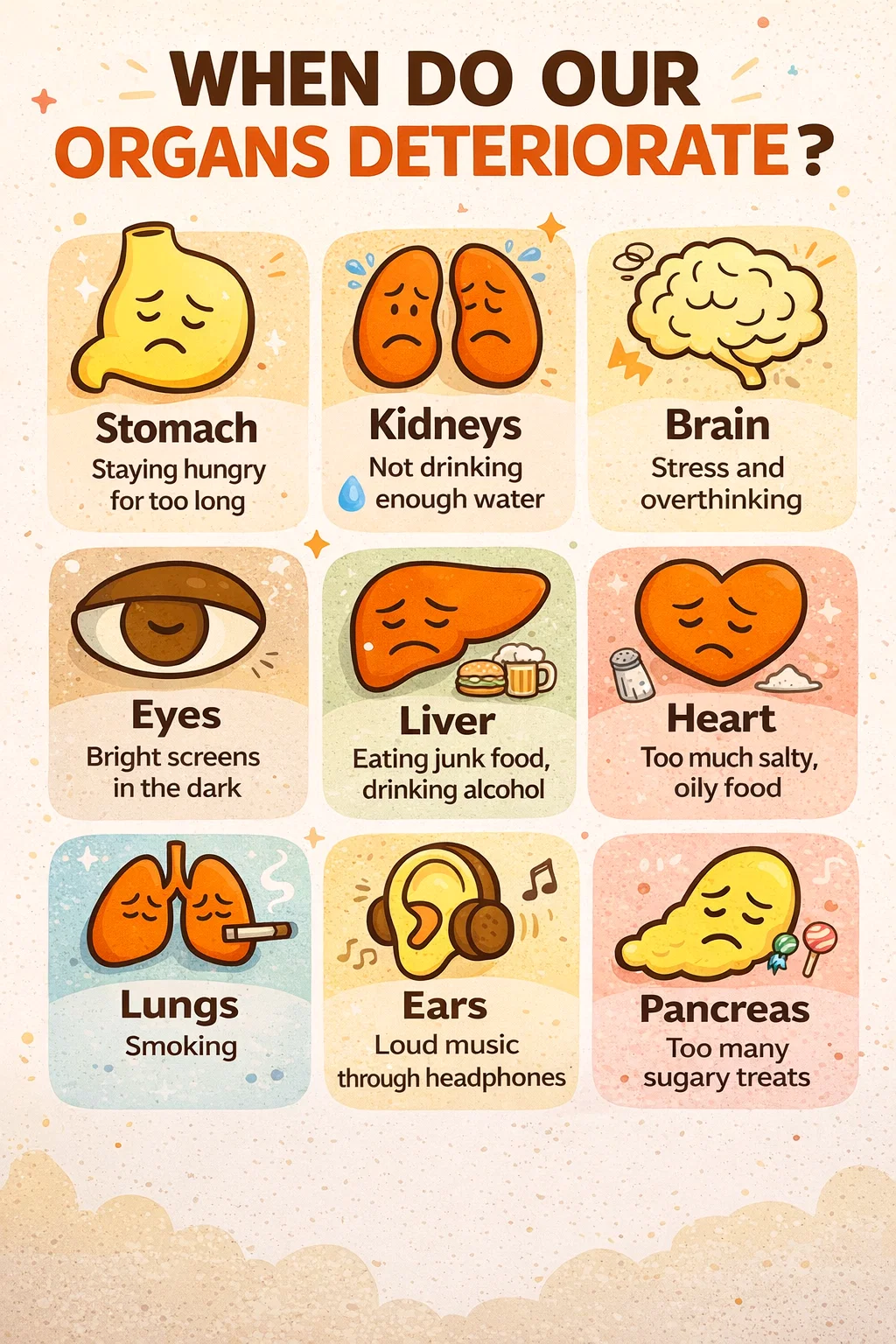
Your digestive system is the engine of your body, turning food into the energy that fuels every other process. However, two of its most important players, the stomach and the pancreas, are often the first to suffer from modern lifestyle habits. Many people believe that skipping meals is a good way to manage weight, but staying hungry for a long time can actually be detrimental to your stomach lining. When the stomach is empty for extended periods, gastric acids have nothing to break down, which can lead to irritation and long term discomfort.
On the other hand, the pancreas is highly sensitive to our intake of sweets and refined sugars. The pancreas is responsible for producing insulin to regulate blood sugar levels. When we consume excessive amounts of sugar, the pancreas has to work overtime to keep up. Over time, this constant demand can lead to insulin resistance and a decline in pancreatic function. To protect these organs, try to maintain a consistent eating schedule and swap processed sweets for natural fiber rich snacks like fruits and nuts.
The Vital Filters: Caring for Your Liver and Kidneys
The liver and kidneys act as the body’s primary filtration system. They are responsible for removing toxins, balancing fluids, and ensuring that your blood remains clean. Because they work behind the scenes, it is easy to forget how much pressure we put on them through our dietary choices.
The Liver and the Cost of Convenience
The liver is an incredible organ capable of regeneration, but it has its limits. Regularly consuming fast food and alcohol puts a massive strain on liver cells. Fast foods are often loaded with trans fats and high levels of sodium, which can lead to fat buildup in the liver. Alcohol acts as a direct toxin that the liver must prioritize processing over other essential metabolic tasks. Reducing your intake of processed oils and limiting alcohol consumption gives your liver the space it needs to perform its 500 plus functions effectively.
Hydration and Kidney Longevity
Your kidneys rely on a steady flow of water to flush out waste products through urine. One of the most common mistakes people make is waiting until they feel extremely thirsty before drinking water. By the time you feel thirst, your body is already experiencing a mild level of dehydration. This lack of fluid makes the kidneys work much harder to concentrate urine and remove toxins. Keeping a reusable water bottle with you and sipping throughout the day is one of the easiest ways to prevent kidney deterioration.
The Command Center: Supporting Brain and Eye Health
In the digital age, our brains and eyes are under more pressure than ever before. We are constantly bombarded with information and artificial light, which can have a lasting impact on our cognitive and sensory health.
Mental Well-being and Brain Function
We often think of brain health in terms of nutrition or puzzles, but emotional health plays a massive role. Chronic stress and persistent negative thinking patterns release cortisol, a hormone that, in high amounts, can actually shrink the prefrontal cortex. This area of the brain is responsible for memory and learning. To keep your brain sharp, it is vital to incorporate stress management techniques such as meditation, deep breathing, or simply taking breaks from the digital world to reconnect with nature.
Digital Eye Strain in the Dark
Our eyes were not designed to stare at bright, high contrast screens for hours on end, especially in dark environments. Using a mobile phone or laptop in a dark room forces your pupils to dilate while the bright light hits the retina, causing significant strain. This habit can lead to dry eyes, blurred vision, and even long term macular issues. To protect your vision, always use devices in well lit areas and follow the 20-20-20 rule: every 20 minutes, look at something 20 feet away for at least 20 seconds.
The Rhythms of Life: Heart and Lung Maintenance
The heart and lungs work together in a constant cycle to deliver oxygen to your cells. Because these organs are so central to survival, their deterioration can have immediate and severe consequences on your energy levels and physical capability.
Heart Health and Dietary Balance
The heart is a muscle that needs the right fuel to stay strong. Diets that are excessively high in salt and oily, fried foods are the primary enemies of cardiac health. Too much sodium causes the body to retain water, which increases blood pressure and puts extra pressure on the arteries. Meanwhile, unhealthy fats can lead to plaque buildup. Transitioning toward a Mediterranean style diet rich in leafy greens, healthy fats like olive oil, and lean proteins can significantly reduce the risk of heart related issues.
The Lungs and the Danger of Smoke
Smoking remains the leading cause of lung deterioration. The delicate air sacs in your lungs are easily damaged by the toxins and tar found in cigarettes. This damage reduces the lungs’ ability to exchange oxygen, leading to shortness of breath and decreased stamina. Even secondhand smoke can be harmful. Protecting your lungs means avoiding tobacco products and being mindful of air quality in your living and working environments.
Sensory Care: Protecting Your Hearing
Hearing is a sense we often take for granted until it starts to fade. In the age of personal audio, many people are unintentionally damaging their ears through high volume levels. Listening to loud music through headphones for extended periods can damage the tiny hair cells in the inner ear that are responsible for sending sound signals to the brain. Once these cells are destroyed, they do not grow back. To preserve your hearing, keep your volume at no more than 60 percent of the maximum and take frequent “quiet breaks” to let your ears rest.
- Eat regularly: Avoid long periods of hunger to protect your stomach lining.
- Hydrate early: Drink water throughout the day, don’t wait for intense thirst.
- Manage stress: Practice positive thinking to support brain plasticity.
- Screen safety: Use devices in bright rooms and take breaks to save your eyesight.
- Clean breathing: Avoid smoking and polluted environments to keep lungs clear.
- Listen safely: Keep headphone volume at a moderate level to prevent hearing loss.
Conclusion: Small Changes for Lasting Vitality
Maintaining the health of your organs does not require a complete lifestyle overhaul in a single day. Instead, it is about becoming more mindful of the small, repetitive actions you take every morning, afternoon, and night. By choosing water over soda, managing your screen time, and finding ways to reduce stress, you are sending a powerful signal to your body that you value its hard work. Your organs have been taking care of you since before you were born. Now is the perfect time to return the favor. Start by picking just one or two habits to improve this week, and your body will thank you with more energy, better focus, and a longer, healthier life.