Simple Teen Girl Skincare Routine Step-by-Step Pink Glow Guide Daily Tips
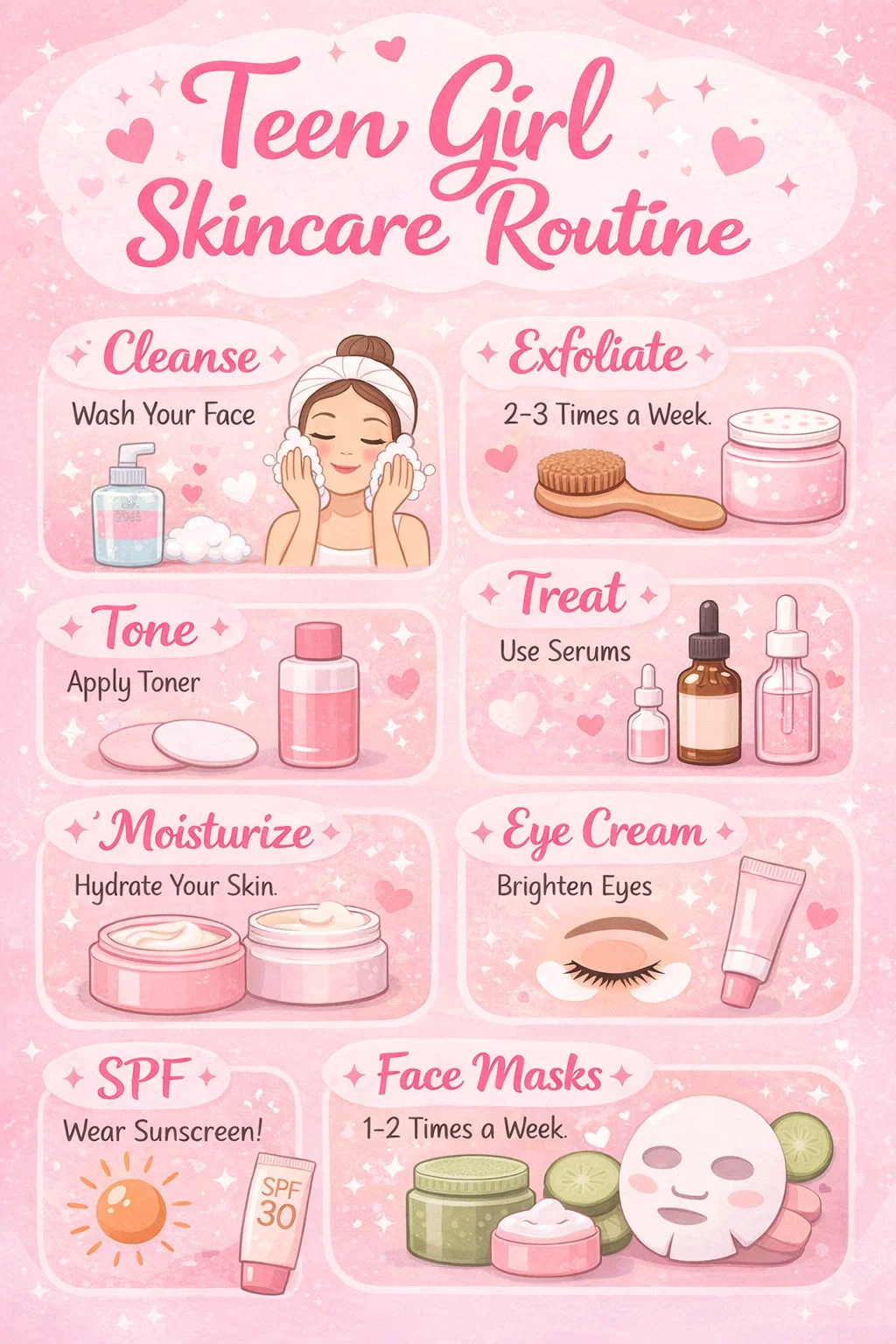
Navigating the teenage years is a whirlwind of new experiences, changes, and for many, a major introduction to the world of skincare. It’s often when those first persistent breakouts appear, skin texture changes, and you realize your skin needs some focused attention. This infographic, with its charming aesthetic, is more than just cute; it offers a fantastic, simplified roadmap. Many teens feel overwhelmed, jumping from one harsh product to another, which can often make things worse. This guide is your foundation, a straightforward breakdown of how to build a routine that supports and improves your skin without being overly complex or breaking your budget.
The beauty of this plan is its structure. It provides a daily baseline while incorporating necessary weekly treatments. It doesn’t promise overnight miracles, but it sets you up for consistency, which is the absolute most important factor in seeing real, lasting results. This post will break down each step in the infographic, explaining not only what to do, but why it matters and how to choose the right products for you.
Establishing Your Essential Daily Foundation
Your daily routine is about two key moments: morning and night. While the infographic lists many steps, you don’t do all of them every single time. Here is the split for your daily checklist.
Your AM (Morning) Routine
Think of your morning routine as preparation and protection for the day ahead.
- Cleanse: Start with a gentle face wash. This removes sweat, excess oil produced overnight, and any remnants of your nighttime products, giving you a fresh slate.
- Tone: Gently swiping on a toner helps balance your skin’s pH and prepares it to better absorb moisture.
- Serum (Treat): If you’re using specific serums, especially ones for brightening or daytime protection (like vitamin C), this is the spot.
- Moisturize: Don’t skip this, even if you have oily skin. Dehydrated skin can sometimes produce more oil to overcompensate. Choose an oil-free moisturizer if you’re prone to breakouts.
- SPF: The absolute most critical step. Your daily routine should always end with sunscreen to protect your skin from sun damage, which is a key contributor to discoloration from acne scars.
Your PM (Evening) Routine
Your nighttime routine is all about repairing, treating, and deeply cleansing the day away.
- Double Cleanse (Optional but Highly Recommended): If you wore sunscreen and/or makeup, start with an oil-based cleanser or micellar water to melt it away. Then follow with your regular water-based cleanser (the one you used in the morning) to clean your skin.
- Tone: Re-balance your skin after a deeper clean.
- Exfoliate (Weekly): This is where you incorporate those non-daily treatments (more on that below).
- Serum (Treat): This is the ideal time for treatment serums, particularly those that work to reduce breakouts. Retinoids or acne-spot treatments are great PM options.
- Eye Cream: This helps keep the delicate eye area hydrated and bright.
- Moisturize: Use your moisturizer again, or even a slightly richer night cream if you need extra hydration.
Breaking Down Each Core Step (with Product Guides)
Now, let’s dig into the details of the specific steps listed in the infographic and how to navigate them.
Cleanse: The Fundamental First Step
Think of cleansing as preparing a clean canvas for your art. It’s the baseline from which all other products can work effectively. However, the most common mistake teens make is using a cleanser that is way too harsh.
Why it Matters
Cleansing removes dirt, sweat, impurities, and oil that can clog pores and lead to breakouts. It’s a non-negotiable step to keep your skin clear.
Choosing Your Cleanser
- Look for: A gentle, pH-balanced cleanser that doesn’t leave your skin feeling tight, stripped, or squeaky clean. This “squeaky” feeling means you’ve washed away your natural oils, which can ironically prompt your skin to overproduce oil.
- Oily or Acne-Prone Skin: Consider a cleanser with ingredients like salicylic acid (which helps deep-clean inside pores) or benzoyl peroxide (which kills bacteria). A foaming or gel texture is often preferred.
- Dry or Sensitive Skin: Focus on hydrating ingredients like glycerin, ceramides, or hyaluronic acid. A creamy, non-foaming cleanser is generally better.
- How Often: Cleanse twice a day. Morning and night is the optimal rhythm.
Exfoliate: The Weekly Deep Clean
Your skin naturally sheds its top layer of dead cells, but sometimes it needs a little help. The infographic recommends exfoliating 2 to 3 times per week, which is a great rule of thumb to avoid over-exfoliation.
Why it Matters
Exfoliating helps remove that buildup of dead cells that can sit on the surface, dulling your complexion and leading to clogs. Regular exfoliation can significantly improve skin texture and help other products, like moisturizers and serums, to be more effective.
Choosing Your Exfoliant
Ditch the harsh apricot scrubs! They can cause micro-tears in your skin, which can make acne and sensitivity worse. There are two main types to consider.
- Chemical Exfoliants (Often the Better Choice): These aren’t as scary as they sound! Instead of physically scrubbing, they use mild, natural acids to gently dissolve the “glue” that holds dead skin cells together.
- BHA (Salicylic Acid): The gold standard for breakouts. It’s oil-soluble, meaning it can travel inside your pores to clear out gunk, dissolve blackheads, and calm inflammation.
- AHA (like Glycolic or Lactic Acid): Better for improving texture and surface brightening. They work well on the surface of your skin to smooth rough patches. Lactic acid is the gentlest.
- Physical Exfoliants: If you must use a scrub, choose one with super-fine, gentle grains and don’t scrub too hard! Avoid scrubs with walnut shells or large, jagged particles.
How Often
Stick to the guide’s suggestion of 2 to 3 times a week, especially when starting out. Start with just once a week to see how your skin reacts, and gradually increase only if your skin needs it.
Tone: Balance and Prep Your Skin
Toner is a step that many people skip, and the infographic shows it coming right after cleansing, which is correct. Think of it as the final, balancing touch to your cleansing routine.
Why it Matters
A good toner does three key things: it removes any trace impurities your cleanser might have missed, it hydrates and balances your skin’s pH, and it creates a plump, damp surface that allows your following products to be absorbed more effectively.
Choosing Your Toner
The key here is to avoid the alcohol-heavy, stripping toners of the past. Those will only dry out your skin and damage its protective barrier.
- Hydrating Toners: Look for ingredients like rosewater, aloe, glycerin, or witch hazel. These soothe and calm.
- Acne-Fighting Toners: These will usually have a low percentage of an exfoliating ingredient like BHA (salicylic acid) or tea tree oil, which is great for addressing breakouts and controlling oil.
Treat: Target Specific Skin Goals with Serums
This is where the real personalization happens. Serums are powerful, concentrated formulas designed to deliver specific active ingredients directly into your skin. While the guide shows a couple of bottles, you only need to choose the ones that match your goals.
Why it Matters
Your cleanser cleans, your moisturizer hydrates, but a serum is where you can truly target specific concerns like breakouts, dark spots from acne scars, or a bumpy texture.
Choosing Your Serum
Start with one or two that address your biggest concerns.
- For Breakouts (The Most Common): Choose a serum with BHA (salicylic acid) or, even better, a retinoid. Retinoids (including retinol or adapalene, available over-the-counter) work deep in your pores to clear existing clogs and prevent new ones from forming. If you’re using a retinoid, use it only at night and must wear sunscreen in the morning, as it makes your skin more sensitive to the sun. Niacinamide is another fantastic serum ingredient that reduces redness, calms inflammation, and regulates oil.
- For Dullness and Scars: A serum with Vitamin C is brilliant. It brightens skin, evens out tone, and helps fade post-acne dark spots. This is best used in the morning under your SPF.
- For Deep Hydration: Look for a pure hyaluronic acid serum. It acts like a sponge, drawing water into your skin for a plump, healthy glow.
Moisturize: Keep that Glow and Protect Your Barrier
Moisturizing is a non-negotiable, every-single-day step. Hydrated skin is healthy skin. The infographic correctly identifies this step as being about hydration.
Why it Matters
Moisturizer helps lock in the hydration from your products and prevents it from evaporating. Critically, it also supports and strengthens your skin’s barrier, which is its first line of defense against irritants, bacteria, and external stressors. A weak barrier makes you more prone to breakouts and sensitivity.
Choosing Your Moisturizer
Finding a texture you like is key to staying consistent.
- Oily or Combo Skin: Go for a lightweight, oil-free moisturizer, perhaps with a gel texture. Hyaluronic acid is often a core ingredient, providing deep hydration without feeling heavy.
- Dry or Sensitive Skin: A creamier, richer formula will be more beneficial. Look for barrier-supporting ingredients like ceramides, fatty acids, and cholesterol, which can help repair and comfort your skin.
Eye Cream: Gentle Care for a Delicate Area
The skin around your eyes is thinner and more delicate than the rest of your face, which is why it has its own special product. The infographic’s benefit is “Brighten Eyes,” which is a perfect description.
Why it Matters
Because the skin is so thin, it’s one of the first places to show signs of tiredness or dryness. Using a specifically formulated eye cream can keep this area hydrated, reduces the appearance of fine lines, and helps with puffiness or dark circles.
Choosing Your Eye Cream
- For Hydration: Look for hyaluronic acid or ceramides.
- For Brightening: Vitamin C, niacinamide, or caffeine are great options.
- For Puffiness: A formula containing caffeine or green tea extract can help de-puff and revitalize.
- How to Apply: Use your ring finger to gently pat a tiny pea-sized amount from the outer to the inner corner of your lower eye area. Be careful not to pull or tug.
SPF: Your Ultimate Daily Defense
This is, bar none, the absolute most important part of your skincare routine, no matter your skin type, age, or goals. If you do only one thing, make it sunscreen every single day.
Why it Matters
The sun is the single biggest cause of skin damage and premature aging. But for teens particularly, sun damage makes acne-related dark spots and scars darker and harder to treat. Daily sunscreen is your first, best, and most fundamental layer of prevention. All those expensive serums? Their work can be undone by the sun without SPF protection.
Choosing Your Sunscreen
Look for a sunscreen that says “Broad Spectrum” and is at least SPF 30. This ensures you’re protected from both UVA rays (which cause aging and long-term damage) and UVB rays (which cause burning).
- The Big Concern: “Sunscreen breaks me out!” This is a valid fear! But there are plenty of amazing sunscreens that won’t. Look for terms like “oil-free” and “non-comedogenic,” which means it’s specifically formulated not to clog pores.
- Types of Sunscreen:
- Chemical Sunscreens: These absorb into the skin and are often lighter and leave no white cast, making them great for deeper skin tones and active people. However, some can be irritating to very sensitive skin.
- Mineral Sunscreens (Zinc Oxide or Titanium Dioxide): These sit on top of your skin and deflect UV rays like a shield. They can be better for sensitive or acne-prone skin as they are less likely to cause irritation. The main drawback is that older mineral formulas can leave a noticeable white cast, though modern formulations are vastly improved.
Face Masks: The Perfect Weekly Bonus
Face masks are the self-care cherry on top of your routine! The infographic correctly labels them as a 1 to 2 times a week activity, and that’s a perfect rhythm.
Why it Matters
Consider face masks to be a focused, intensive treat for your skin. They contain a high concentration of specific active ingredients that work to deep clean, intensely hydrate, or soothe your skin over a set period of 10 to 20 minutes.
Choosing Your Mask
There is a mask for every concern, but for teens, these two categories are often the most beneficial:
- For Breakouts and Deep Cleansing (pictured with a jar): Clay masks are amazing for this. Clay acts like a magnet to pull excess oil, dirt, and impurities out of your pores. They also have a calming effect on existing breakouts.
- For Hydration and Soothing (pictured with a sheet mask and cucumbers): Sheet masks are soaked in a rich serum or essence. They physically trap the moisture against your skin, forcing it to absorb and resulting in a bouncy, plump, and deeply hydrated complexion. They’re a perfect treat when your skin feels dry, dull, or irritated.
- Soothe inflamed acne: A mask with calming ingredients like honey, aloe, green tea, or chamomile is a perfect choice to reduce redness and speed up healing.
A Step-by-Step for Creating and Sustaining Your Simple Skincare Journey
Okay, you have all the pieces. Now, how do you actually make this happen and stick with it?
1. Identify Your Major Skin Goals
What is the one thing you want to work on? Breakouts? Discoloration? Dullness? Redness? Focus on that first concern when choosing your products, especially your serum.
2. Build from the Daily Three
Don’t try to go from zero to a 10-step routine in one day! Start with the core daily three: Cleanse, Moisturize, SPF (in the morning) and Cleanse, Moisturize (at night). Do this consistently for two or three weeks to let your skin get used to the products and, just as importantly, to build the habit.
3. Introduce New Products Gradually
Once your daily three is a consistent habit, introduce other steps. Add one new product at a time (like a toner or serum) and give it a week or two to see how your skin reacts. This is crucial; if you introduce five things at once and have a reaction, you’ll have no idea which product caused it!
4. Spot-Treat Active Breakouts
When you have an active pimple, use a spot treatment. This is a concentrated, leave-on cream or gel applied only to that single spot. It helps to quickly reduce inflammation, dry out the pimple, and speed up healing without affecting the rest of your skin. Look for ingredients like sulfur, salicylic acid, or a small amount of benzoyl peroxide.
5. Be Patient and Stick With It!
Skincare is not a quick fix! Real, meaningful change takes time, often months rather than weeks. Your skin cells need about 28 days to complete a full cycle of turnover, and for many treatment ingredients (like retinoids), you won’t see their full effects for three to six months. Be patient, stick to your simple routine, and trust the process. Consistency is truly your superpower!
Getting your first skincare routine is a major, and very exciting, step! By starting with the foundational daily steps, and slowly adding targeted treatments based on your specific skin needs and the lovely, simplified template in this infographic, you are building the habits for healthy, glowing skin that will last for years. Remember, it’s not about being perfect or having a 15-step vanity full of products; it’s about finding a simple, consistent, and effective routine that works for you and that you enjoy. Your skin is your body’s largest organ, and treating it well is a fundamental form of self-care. So, pick out your favorite gentle products, stick to your routine, and get ready to love your glow!