7 Natural Ways to Whiten Teeth at Home DIY Natural Teeth Whitening Remedies
A bright, confident smile is often the first thing people notice, yet many of us find ourselves reaching for expensive, chemical laden whitening strips that leave our teeth feeling sensitive and our gums irritated. If you have been searching for a more gentle approach to oral aesthetics, you are in the right place. Natural teeth whitening is not just about bleaching your teeth; it is about embracing holistic habits that promote overall dental health while gradually lifting surface stains. By using simple ingredients already found in your pantry, you can achieve a noticeably whiter smile without the harsh side effects of synthetic treatments.
The Foundations of a Naturally Brighter Smile
Before diving into specific remedies, it is essential to understand that the whitest teeth are often the healthiest teeth. Your enamel is the hard, protective outer layer of your teeth, and underneath it lies dentin, which is naturally yellowish. When enamel thins due to acidic foods or poor hygiene, the yellow dentin shows through more prominently. Therefore, the primary goal of any natural whitening routine should be to remove external stains while protecting the integrity of your enamel.
Consistency is the secret ingredient that most people overlook. Unlike professional chemical bleaching which provides instant results at a cost to tooth sensitivity, natural remedies work progressively. They require patience and a commitment to a daily or weekly routine. By incorporating these methods into your lifestyle, you are not just whitening your teeth; you are cultivating a sustainable beauty ritual that respects your body’s natural chemistry.
Prioritizing Oral Hygiene Basics
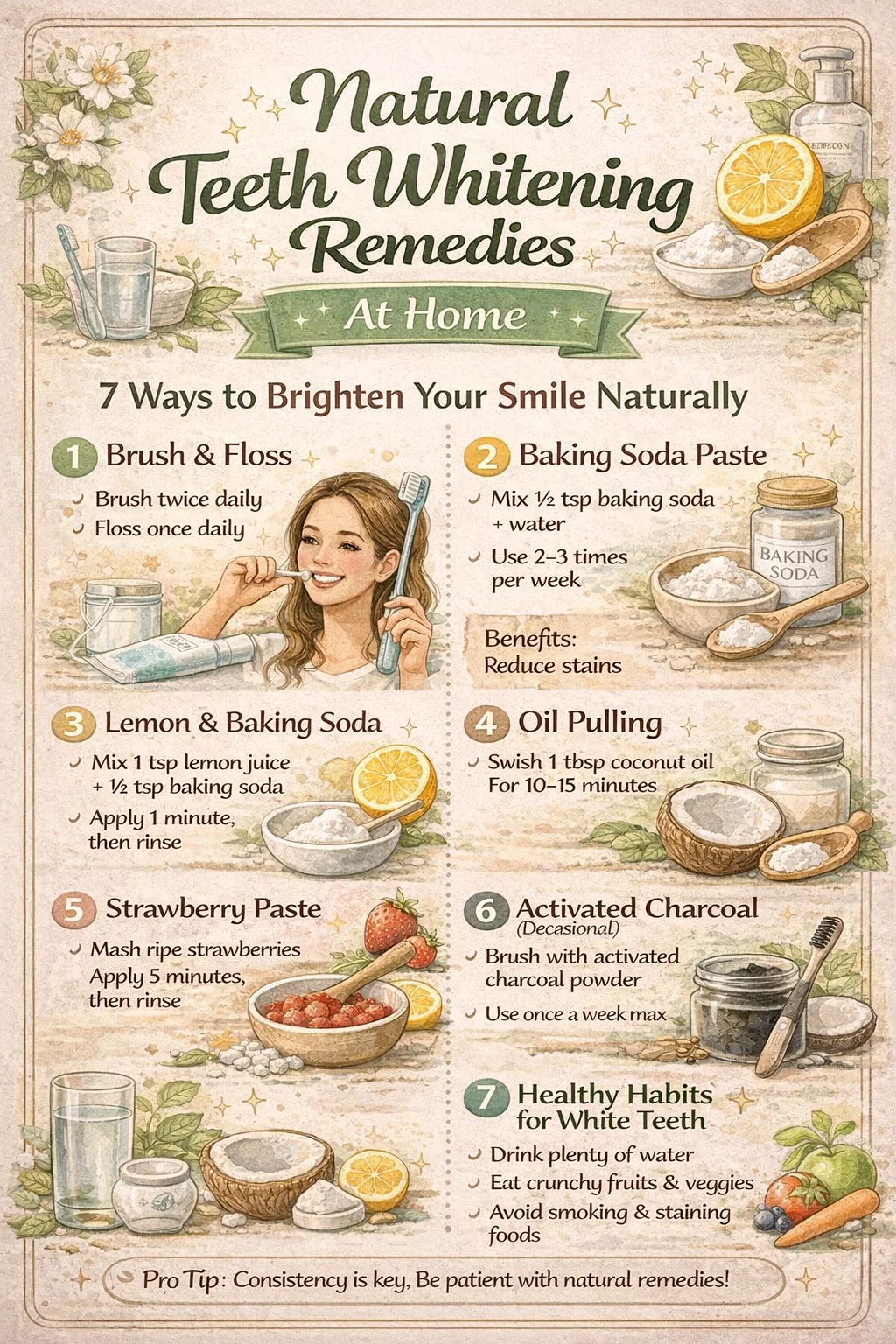
It might sound basic, but the most effective way to keep your teeth white is through rigorous brushing and flossing. Plaque buildup can make teeth look dull and yellow. By brushing twice daily and flossing once, you remove the food particles and bacteria that eventually turn into tartar. A soft-bristled brush is highly recommended because it cleans effectively without scrubbing away your precious enamel. Think of your daily hygiene as the canvas; you cannot paint a masterpiece on a dirty surface.
1. The Magic of Baking Soda Paste
Baking soda, or sodium bicarbonate, has long been a staple in natural dental care. It is a mild abrasive that helps scrub away surface stains caused by coffee, tea, and red wine. Because it is alkaline, it also helps balance the pH levels in your mouth, creating an environment where harmful bacteria struggle to survive. This is one of the most accessible and cost effective ways to brighten your grin at home.
To create a simple paste, mix about half a teaspoon of baking soda with just enough water to reach a paste like consistency. Brush your teeth gently with this mixture for about two minutes. It is crucial not to overdo it. Because of its abrasive nature, using baking soda every single day could eventually wear down your enamel. Limit this treatment to two or three times per week for the best balance of safety and effectiveness.
Why Baking Soda Works
- Surface Stain Removal: The tiny granules physically lift discoloration from the enamel.
- Plaque Prevention: Its alkaline properties disrupt the biofilm that leads to plaque.
- Breath Freshening: It neutralizes odors rather than just masking them.
2. Ancient Wisdom: The Power of Oil Pulling
Oil pulling is an ancient Ayurvedic practice that has gained massive popularity in the modern wellness world. The process involves swishing a tablespoon of oil, typically coconut oil, in your mouth for about 10 to 15 minutes. While it might feel strange at first, the benefits extend far beyond just whitening. The fatty acids in the oil “pull” bacteria, fungus, and other toxins out of the crevices of your teeth and gums.
Coconut oil is the preferred choice because it contains lauric acid, which is known for its antimicrobial properties. As you swish, the oil turns into a thin, milky liquid that reaches areas your toothbrush simply cannot. Many users report that after a few weeks of consistent oil pulling, their teeth feel smoother and look noticeably glossier. Plus, it is a fantastic way to freshen your breath naturally without the sting of alcohol based mouthwashes.
3. Brightening with Strawberries and Malic Acid
It might seem counterintuitive to use a bright red fruit to whiten your teeth, but strawberries are a secret weapon in the world of DIY beauty. These berries contain malic acid, a natural enzyme that acts as a gentle astringent to remove surface discoloration. When mashed and applied to the teeth, strawberries can help break down the stains that cling to your enamel.
To try this method, mash one or two ripe strawberries and mix them with a pinch of baking soda to create a pulp. Apply this mixture to your teeth and let it sit for about five minutes. Afterward, rinse thoroughly and brush your teeth with your regular toothpaste to ensure all the fruit sugars are removed. This is a perfect “occasional” treatment to give your smile an extra boost before a big event.
4. Activated Charcoal for Deep Detoxification
Activated charcoal has become a trendy ingredient in everything from face masks to smoothies, but its use in dental care is particularly fascinating. This is not the charcoal you use for your grill; it is a highly porous substance treated to trap toxins. When you brush with activated charcoal powder, it binds to the rough parts of your teeth, typically surface stains and plaque, and pulls them away as you rinse.
Because activated charcoal is quite potent, it should be used sparingly. Applying it once a week is usually sufficient to see results without risking enamel erosion. It is also important to be careful during application, as the black powder can be messy! Simply dip a damp toothbrush into the powder, brush gently for a minute, and rinse until the water runs clear. The result is a deep clean feeling that few other products can match.
5. The Cautionary Use of Lemon Juice
Lemon juice is often cited as a natural bleach due to its high citric acid content. When combined with baking soda, it can create a powerful foaming reaction that targets tough stains. However, this is a remedy that must be used with extreme caution. Acid is the enemy of tooth enamel, and frequent exposure to lemon juice can soften the surface of your teeth, making them more prone to cavities and sensitivity.
If you choose to use lemon juice, limit it to once every few weeks. Mix a few drops with baking soda, apply for no more than one minute, and rinse immediately with plenty of water. While it offers a natural bleaching effect, your enamel’s health should always come first. Always listen to your teeth; if you feel any zing or sensitivity, stop the treatment immediately.
Balancing Acidity and Alkalinity
The key to using acidic fruits like lemons or strawberries is neutralization. Always follow up an acidic treatment by rinsing with water or a slightly alkaline mouthwash to ensure your mouth’s pH returns to a safe level quickly.
6. Dietary Habits for Whiter Teeth
What you put into your body is just as important as what you put on your teeth. Some foods act as natural toothbrushes. Crunchy fruits and vegetables like apples, carrots, and celery increase saliva production and physically scrub the teeth as you chew. Saliva is your body’s natural defense against decay, as it washes away food particles and neutralizes harmful acids.
On the flip side, being mindful of staining agents can prevent the need for heavy whitening later on. Coffee, black tea, soy sauce, and dark berries are common culprits. You do not have to give them up entirely, but drinking water alongside them or using a straw can significantly reduce the amount of pigment that comes into contact with your front teeth. It is all about moderation and proactive care.
7. Lifestyle Tips for Long Term Success
A white smile is a reflection of a healthy lifestyle. Staying hydrated by drinking plenty of water throughout the day helps keep your mouth clean and prevents stains from setting in. Furthermore, avoiding habits like smoking is perhaps the single best thing you can do for the color of your teeth and your overall health. Tobacco is notorious for causing deep, stubborn yellowing that is difficult to remove even with professional treatments.
Incorporating a “Pro Tip” into your mindset: be patient. Natural remedies are a marathon, not a sprint. You are working with your body’s biology, and that takes time. Enjoy the process of caring for yourself. Whether it is the ten minutes of quiet during oil pulling or the refreshing feeling of a baking soda scrub, these moments of self care add up to a more radiant you.
Conclusion: Embracing Your Natural Glow
Achieving a pearly white smile doesn’t require a trip to the dentist for expensive procedures. By utilizing the 7 remedies we have discussed, from the deep cleaning power of activated charcoal to the enzymatic brightening of strawberries, you can take control of your dental aesthetics in a way that is safe, affordable, and holistic. Remember that your smile is unique to you. Natural whitening focuses on revealing your teeth’s best version, rather than achieving an artificial, fluorescent white.
Start small by picking one or two methods that fit easily into your current routine. Maybe you start oil pulling while you get ready in the morning, or perhaps you swap your evening snack for a crunchy apple. Over time, these small changes will manifest in a brighter, healthier smile that you will be proud to show off to the world. Consistency matters, so stay patient, stay positive, and let your natural beauty shine through!